How to Clean Your Coffee Grinder Daily to Prevent Oil Buildup and Ensure Flavor Consistency
Clean your grinder daily by brushing out leftover grounds with a soft or stiff-bristled brush right after use-this stops oils from turning rancid and clogging burrs. Wipe the chute and hopper with a dry microfiber cloth, and use canned air to blow out stubborn particles. Unplug the grinder and brush burrs clean every few weeks to manage oil buildup, especially with dark roasts. Skip weekly cleaning tablets-they can harm cheaper grinders. Use them only when switching beans or after heavy use to break down oils and minimize flavor transfer. A quick 60-second shutdown routine keeps your grind consistent and your coffee tasting fresh. Better habits start with knowing what comes next.
Notable Insights
- Brush out coffee grounds immediately after each use to prevent oil retention and moisture buildup.
- Use a soft brush or coffee-specific tool to clean burrs and chute daily without causing damage.
- Wipe down grinder surfaces and burrs every few weeks with a dry microfiber cloth to control oil accumulation.
- Employ canned air or a bulb blower weekly to remove trapped particles from hard-to-reach areas.
- Perform a 60-second shutdown routine daily: unplug, brush, and wipe all parts before reassembling.
Why Daily Grinder Cleaning Prevents Bitter Coffee
You might not realize it, but leftover coffee grounds and oils from yesterday’s brew can start turning rancid by the next day, and that’s one of the main reasons your morning coffee tastes unexpectedly bitter. Old oils clog your grinder’s burrs, disrupting consistent grind size and interfering with proper extraction. When particles are uneven, some over-extract while others under-extract, amplifying bitterness. You can’t fix this just by adjusting brew temperature-you need a clean grinder first. A consistent grind size is essential for balanced flavor, and buildup skews that precision. Daily cleaning prevents stale residue from contaminating fresh beans. Unlike brushing weekly, a daily wipe keeps oils from hardening and affecting performance. Tools like grinder cleaning tablets or rice grit help, but thorough brushing works reliably. For best results, unplug the grinder and clean it before humidity rises. This simple habit guarantees your grind size stays accurate and your coffee tastes fresh, not flat or sour. A dedicated coffee grinder cleaning brush removes fine particulates more effectively than improvised tools.
What You Need for a 60-Second Clean
A quick daily clean doesn’t require fancy tools-just a soft brush, a dry microfiber cloth, and access to your grinder’s burr chamber. For effective dry brushing, use a clean pastry or coffee-specific brush to sweep grounds from the burrs and chute. This removes loose residue and supports flavor clarity. Follow with air blasting: a few short bursts from a canned air duster or bulb blower clears trapped particles without moisture risk. Skip compressed air meant for electronics if it contains propellants-opt for food-safe air canisters instead. A microfiber cloth wipes exterior buildup fast. These steps take under a minute and prevent oil accumulation that dulls taste. Dry brushing works best when done consistently, not when gunk piles up. Air blasting is ideal between deeper cleans, especially in high-humidity areas where moisture could promote clumping or corrosion. Use both methods daily for peak performance.
Brush Residue After Every Use
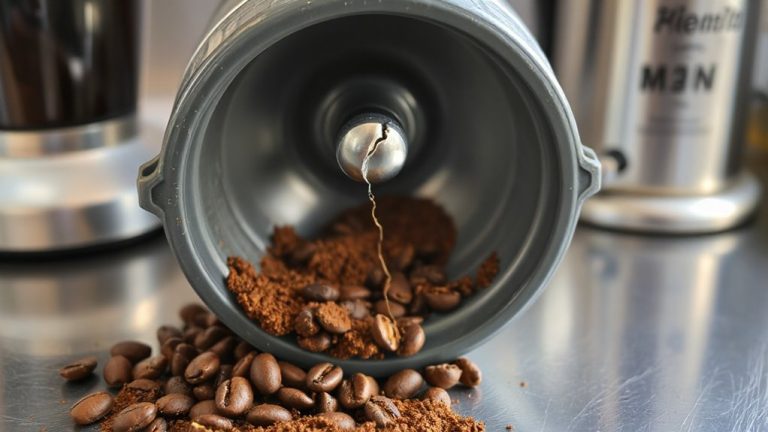
Keeping your grinder in top shape starts with a simple habit: brushing out residue right after each use. Coffee grounds trap moisture and oils, so quick residue removal helps prevent stale flavors. Use a stiff-bristled brush-like a dedicated grinder brush or small pastry brush-and gently sweep away leftover grounds from the burrs and chamber. Your brush technique matters: angle the bristles to dislodge particles without forcing them deeper. Avoid metal brushes on ceramic burrs-they can cause damage. Dry brushing is fast and effective for daily upkeep, taking less than a minute. It’s not a full clean, but it sharply reduces buildup between deeper maintenance sessions. Regular brushing extends grind quality and protects flavor accuracy. Skip it, and you risk inconsistent extraction and off-tastes. Make it routine, just like emptying the grounds bin. Consistency here supports long-term performance without extra effort. For optimal results, choose a grinder with easy-to-clean burrs designed to minimize trapped oils and residues.
Wipe Burrs to Stop Oil Buildup
Every few weeks, or more often if you use dark roasts, oils from coffee beans start to gunk up the burrs-this sticky buildup can seriously mess with grind consistency and flavor. You’ll want to wipe them down with a dry microfiber cloth or a soft brush to remove oily residue. If left too long, the oils can cause burr corrosion over time, especially in humid environments, which ruins precision and shortens lifespan. Plus, old oils contribute to static buildup, making grounds stick and creating messy clumps. For best results, unplug the grinder and carefully access the burrs according to the manufacturer’s instructions-most models allow quick removal. Ceramic burrs resist corrosion better than steel, but both need cleaning. Regular wiping cuts down on maintenance later and keeps your coffee tasting clean, sweet, and true to roast. A high-quality manual coffee grinder will often feature easily accessible burrs for straightforward cleaning and maintenance.
When to Use (And Skip) Cleaning Tablets
Why are cleaning tablets so often debated among coffee enthusiasts? It comes down to tablet effectiveness and machine safety. You’ll want to use them when switching beans or after heavy use, as they break down stubborn oils better than brushing alone. Brands like Grindz work well for this-just follow dosage instructions. But there’s a time to skip them too. Weekly use can harm burrs or motors, especially in cheaper grinders. For daily upkeep, brushing and wiping are safer. Skip safety also matters if you’re using tablets not designed for your grinder model-always check the manual. They’re not needed after every brew. Use tablets monthly or as needed, not routinely. Overuse risks residue or damage. When used right, they help maintain flavor consistency. When misused, they cost more in repairs than they save in cleanliness.
Stop Smells When Changing Beans
How do you keep your grinder from tasting like yesterday’s dark roast when you switch to a light, fruity bean? The key is preventing bean cross contamination, which dulls coffee freshness and skews flavor. Residual oils and fine particles from old grounds linger in burrs and crevices, transferring unwanted notes to your new batch. When switching beans-especially from dark to light roasts-run a small amount of the new coffee through the grinder, then discard it. This flush grind clears old residues without wasting much. For frequent switches, consider designating separate grinders or cleaning manually with a brush and dry cloth. While cleaning tablets help with oils, they don’t fully stop odor transfer. Staying proactive guarantees each brew reflects its true profile, protecting both taste and freshness. Consistency isn’t just about grind size-it’s about clean shifts.
Your Daily 60-Second Grinder Shutdown
You’ve cleared the old beans and made sure the new ones taste as they should-now it’s time to keep that consistency going with a quick daily cleanup. Unplug the grinder, then remove the burrs according to the manufacturer’s instructions-common in most blade or flat-burr models like Baratza Encore or Fellow Ode. Brush out coffee grounds with a soft brush or use a small handheld vacuum to avoid residue buildup. Wiping the chute and hopper with a dry microfiber cloth prevents oil accumulation. This simple step supports motor maintenance by reducing strain from trapped particles. Reassemble carefully to avoid misalignment, which can mess with grinder calibration and grind size accuracy. Run a few grams of old beans through if you’re unsure the unit’s clean. Doing this 60-second shutdown daily keeps performance reliable and extends the machine’s lifespan-especially important for high-use settings or light roasts sensitive to contamination.
On a final note
You’ll keep your coffee tasting clean and consistent by wiping the burrs and brushing out old grounds daily. This quick habit prevents stale oils from mucking up your grind. Skip cleaning tablets unless switching between oily beans or dark roasts-they can leave residue. For most routines, dry brushing is enough. If you change bean types often, a quick wipe stops flavor mixing. A clean grinder runs smoother and tastes better, no fuss needed.