How to Adjust Grind and Dose for a Lower-Acidity Espresso Using Dark Roasts
Use a medium-dark to dark roast-it lowers acidity through longer roasting. Grind coarser to avoid over-extraction, which can bring out bitterness, not sweetness. Aim for 18–20g dose in your double basket and stick to it. Pull shots at 195–200°F with a 1:2 ratio for balance. Tamp evenly with about 30 pounds of pressure. If the shot’s sour, adjust the grind slightly finer. You’ll find the sweet spot with small tweaks.
Notable Insights
- Use a medium-dark to dark roast to naturally reduce acidity through prolonged roasting and increased caramelization.
- Grind coarser to slow extraction and prevent over-extraction, which can amplify bitterness in dark roasts.
- Dose consistently at 18–20g for double shots to ensure balanced extraction and flavor stability.
- Lower brew temperature to 195–200°F to minimize harsh compounds and preserve smooth, sweet notes.
- Tamp evenly with ~30 pounds of pressure to prevent channeling and promote uniform extraction.
Why Dark Roasts Make Espresso Less Acidic
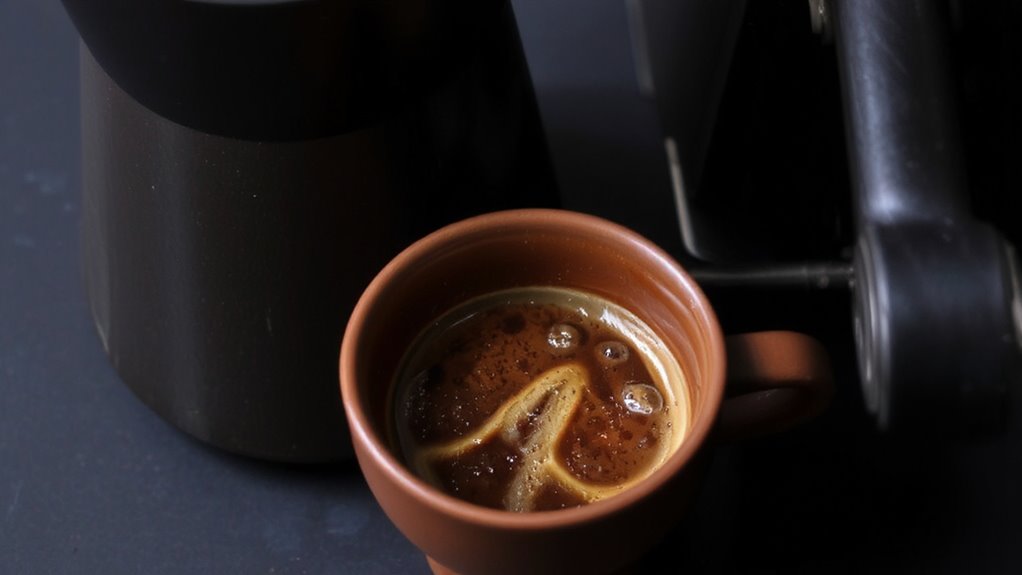
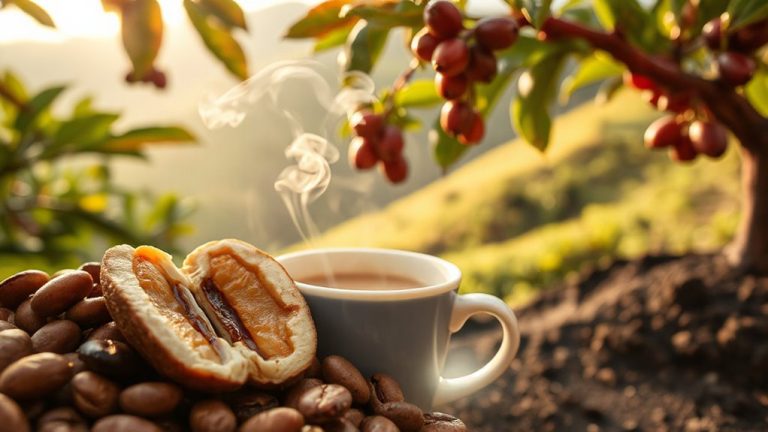
While light roasts preserve more of a bean’s natural acidity, dark roasts reduce it through longer exposure to heat, which breaks down acid compounds and develops deeper, smokier flavors. You’ll notice fewer bright, tangy notes and more caramel notes and chocolate undertones, which balance the cup and mute sourness. This makes dark roasts ideal when you’re aiming for a smoother espresso with less perceived acidity. Beans like Italian roasts or French roasts often exhibit these traits, offering a fuller body and richer finish. The darker the roast, the more sugars are caramelized, enhancing sweetness without raising acidity. However, over-roasting can lead to bitter or ashy flavors, so choose medium-dark to dark roasts from reputable roasters. Look for labels indicating roast level and tasting notes. When pulling shots, expect more oil on the bean surface, which affects extraction but supports lower acidity when dialed in correctly. For those seeking the best options, consider exploring top-rated Italian roast coffee picks from trusted reviews.
Grind Coarser to Reduce Sourness in Dark Roast Shots
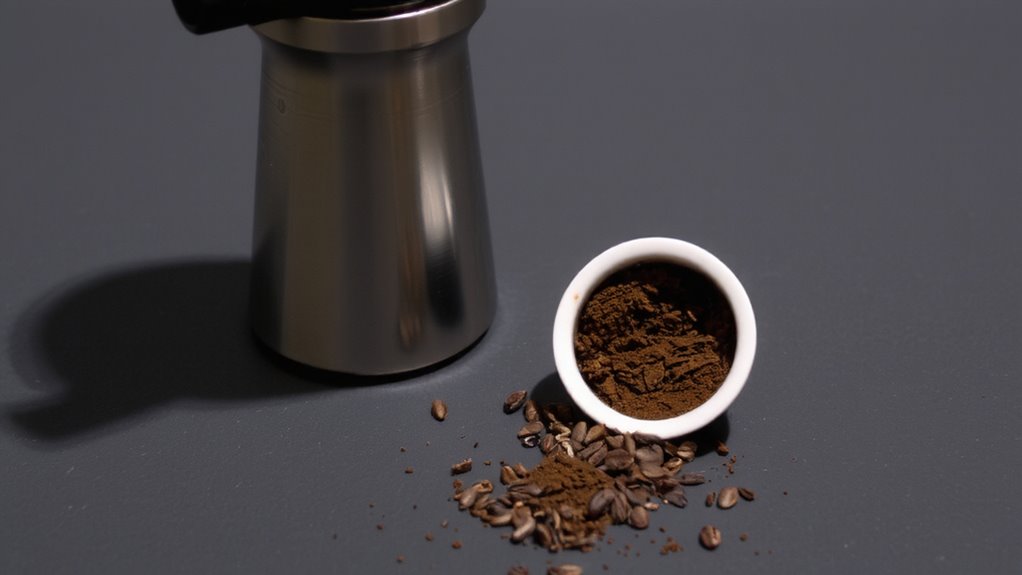
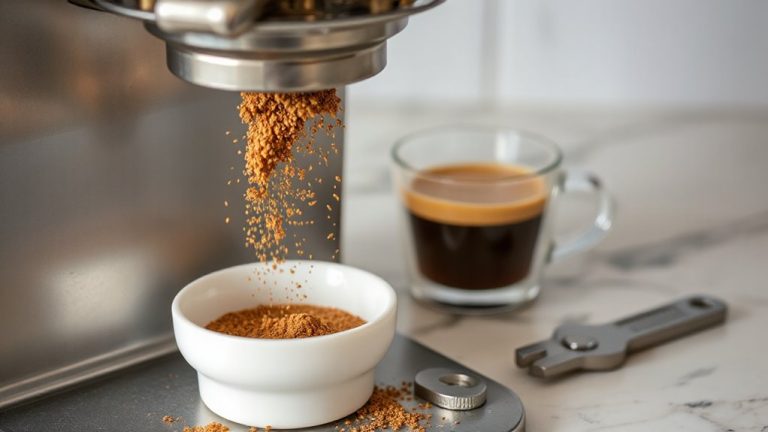
If you’re extracting espresso from dark roast beans and still tasting unwanted sourness, adjusting your grind coarser could be the fix. Dark roasts extract faster, and if your grind is too fine, you risk over-extraction with sharp, acrid notes instead of sweetness. Going coarser slows water flow, promoting more even extraction. A burr grinder helps maintain consistent particle distribution, reducing fines that amplify bitterness or sourness. Finer grinds also create more grind heat, which can degrade volatile compounds and distort flavor. With a coarser setting, you minimize heat buildup during grinding, preserving balance. Try adjusting in small increments-like 1–2 clicks on a grinder like the EK43 or Faema E98-to avoid going too far. If the shot pulls too fast or tastes weak, tweak the dose next. Coarser isn’t always better, but it’s often key to dialing out sourness in dark roasts. For more precision in your adjustments, consider using one of the best mill grinders recommended for espresso consistency.
Use the Right Dose for Balanced, Smooth Espresso
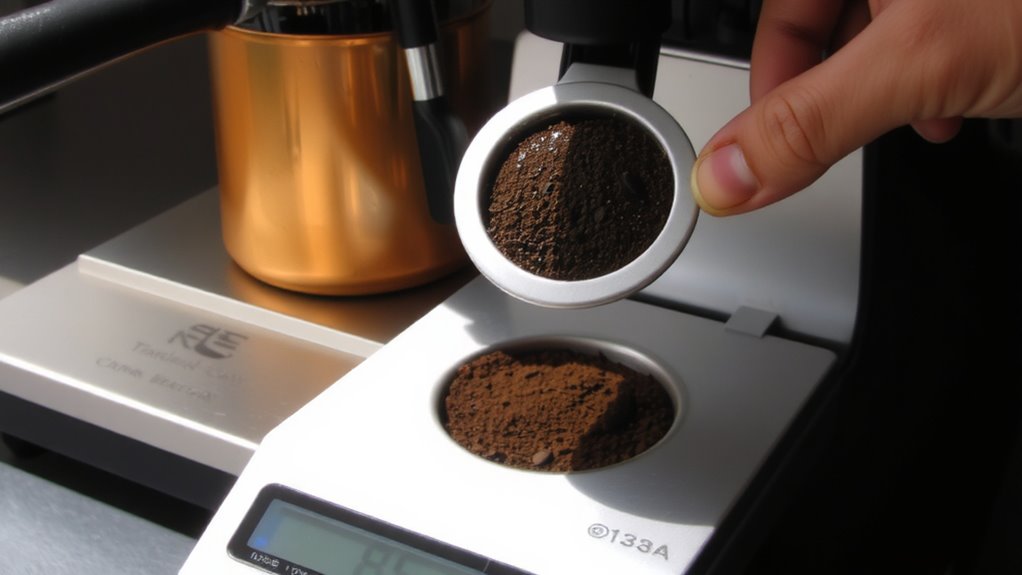
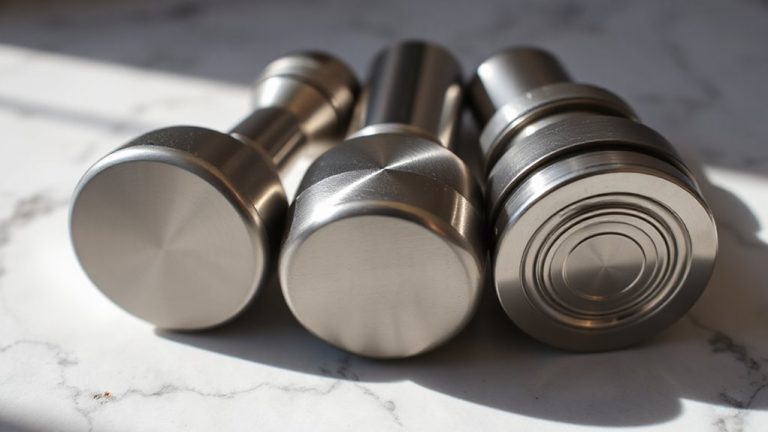
You’re not always going to fix sour or harsh shots just by changing the grind-sometimes, it’s the dose that’s off. Using the right dose helps balance extraction, especially with dark roasts that can easily slip into sharp or flat flavors. Aim for dose consistency to guarantee each shot starts the same; even 0.5 grams matters. Most double baskets work best between 18–20 grams, but check your portafilter’s specs-VST baskets are more precise than stock ones. Pair your dose with a shot volume of about 36–40 grams for a 1:2 ratio, which often smooths out acidity. If your shot volume is erratic, revisit your tamping and distribution. A scale with 0.1-gram precision improves dose consistency fast. Too low a dose risks under-extraction and thinness, while too high can stall the shot. Adjust in small steps, measure everything, and log results. For consistent tamping pressure, consider using a calibrated coffee tamper.
Fix Sour or Bitter Shots From Your Dark Roast
Dark roast espresso shouldn’t be sour or bitter-it should taste deep, rich, and balanced. If your shot tastes sour, your water temperature might be too low or your grind too coarse, leading to under-extraction. Bitter shots usually mean over-extraction, often from a grind that’s too fine or excessive tamping pressure. For dark roasts, aim for a slightly coarser grind than you’d use for medium roasts. This helps prevent over-extraction and lowers acidity. Check your tamping pressure-apply about 30 pounds of force, just enough to compact the puck evenly without over-pressing. Too much pressure restricts flow and increases bitterness. Also, lower your water temperature to 195–200°F if your machine allows it; this reduces harsh compounds and balances flavor. These tweaks help you fix common off-notes and get back to smooth, true espresso.
Pull Sweeter, Richer Espresso With These Dial-In Tips
Though espresso might seem finicky, dialing in a sweeter, richer shot comes down to small, deliberate changes you can make to your grind size, dose, and technique. Start by adjusting your grind slightly finer to slow extraction and pull out more sweetness from dark roasts, which are less acidic. Make sure your dose is consistent-typically 18–20 grams for a double shot-so results stay reliable. Use even tamping pressure to avoid channeling; too light and the water rushes through, too hard and you risk stalling the shot. Try lowering your shot temperature to around 200°F to reduce bitterness and preserve body. Many machines, like the Breville Dual Boiler or Rancilio Silvia, allow this fine-tuning. Small adjustments, tracked over a few shots, make a clear difference.
On a final note
You’ve got the tools to dial in smoother, less acidic espresso from dark roasts. Grind coarser to avoid sourness, stick to a dose that fills your basket evenly-usually 18–20g for most double baskets-and watch shot time. If it’s sour, adjust grind or dose; if bitter, your grind might be too fine or your roast overdeveloped. Pull shots between 25–30 seconds for best balance.