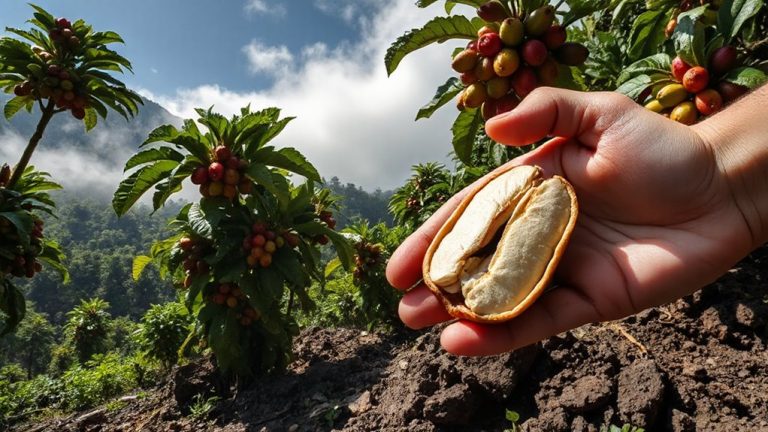
How the Bourbon Lineage Influences Sweetness in South and Central American Coffees
You get sweeter coffee from Bourbon beans because their genetics boost sucrose levels, giving them a natural edge over varieties like Typica or Catuai. Grown at high altitudes-especially above 5,000 feet-these beans develop more sugar due to slower maturation. Volcanic soils in regions like Antigua or Jinotega further enhance sweetness with rich minerals. Honey processing and light roasting preserve those delicate flavors. Pick beans from Rwanda or Colombia for the clearest, honeyed results.
Notable Insights
- Bourbon coffee, a natural mutation of Typica, inherently possesses higher sucrose levels, contributing to its signature sweetness.
- Genetic traits in Bourbon promote consistent sugar development, giving it a sweet flavor edge across Central and South American regions.
- Grown at high altitudes (5,001–6,000+ ft), Bourbon beans develop greater density and sugar concentration due to slower maturation.
- Volcanic soils in regions like Antigua enhance nutrient uptake, fostering sweeter profiles with notes of brown sugar and stone fruit.
- Processing methods like honey fermentation and light roasting preserve Bourbon’s natural sweetness by minimizing over-caramelization.
What Is the Bourbon Coffee Varietal?
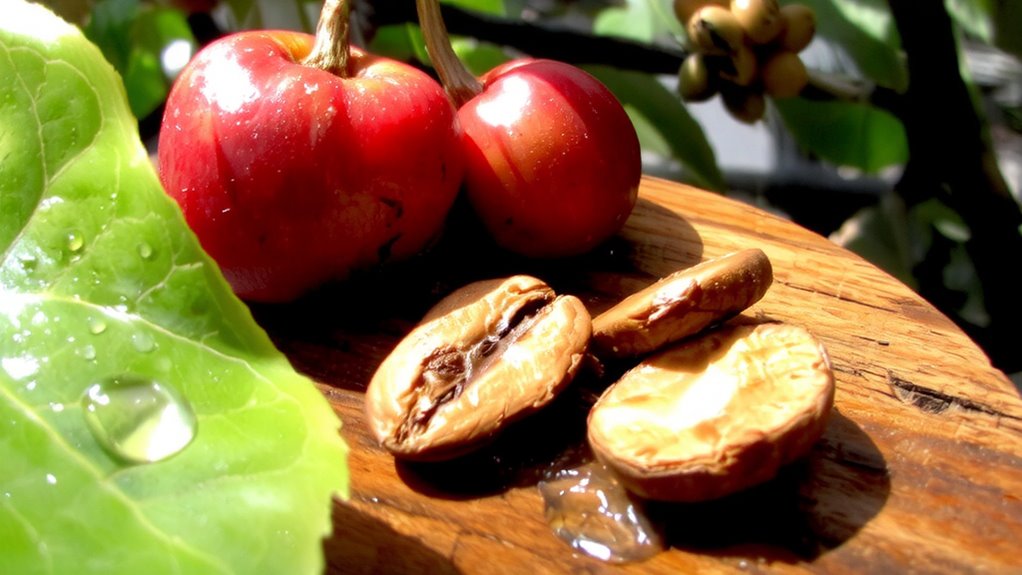
One of the most respected names in specialty coffee, Bourbon is a natural mutation of the Typica variety that first appeared on Réunion Island-then called Bourbon-back in the 18th century. Its historical origin traces to French missionaries who brought coffee to the island, where it evolved in isolation. You’ll find Bourbon widely grown today in Central and South America, especially in Colombia, El Salvador, and Rwanda. This varietal typically yields medium-sized beans with a balanced, sweet flavor profile-think caramel, red fruit, and mild acidity. While it delivers high cup quality, Bourbon is less disease-resistant than modern hybrids and produces lower yields than crops like Castillo. Growers choose it for quality, not ease. If you’re roasting or brewing Bourbon, expect clarity and sweetness, best highlighted with light to medium roasts and clean brew methods like pour-over or vacuum.
Why Bourbon’s Genetics Create Sweeter Beans
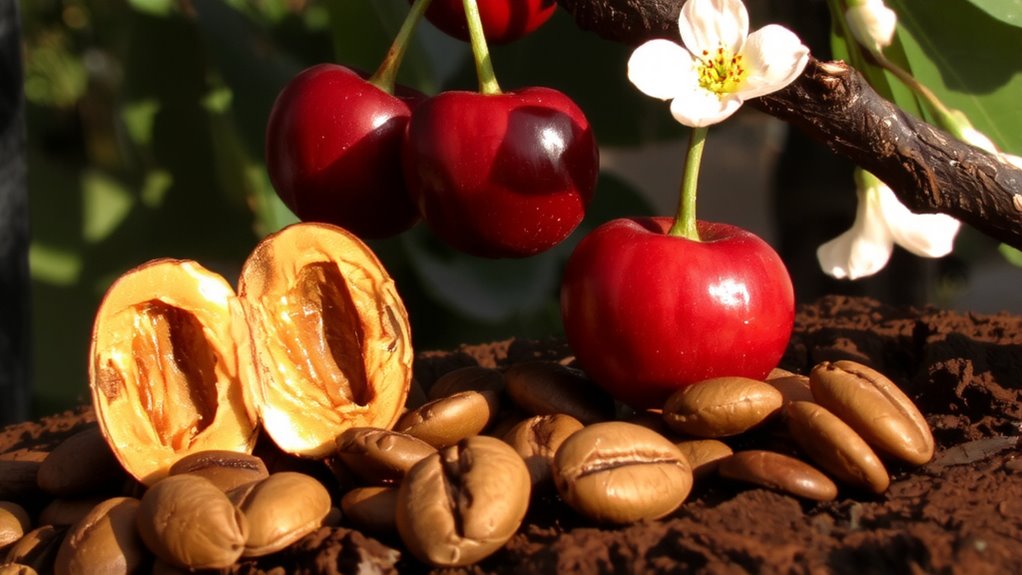
Sweetness in coffee isn’t just about roast level or brew method-genetics play a key role, and Bourbon’s DNA gives it a natural edge. You’ll notice its beans often taste sweeter because of how its genetic expression influences sugar development during growth. Compared to other varieties like Typica or Catuai, Bourbon naturally produces higher concentrations of sucrose in the bean. This isn’t accidental-it’s tied to specific genes that regulate how sugars form and accumulate before harvest. These traits are consistent across regions, so even when grown in different farms, Bourbon delivers more predictable sweetness. While processing and roasting still matter, starting with a variety built for sugar development gives you a head start. If you’re roasting or brewing for sweetness, choosing Bourbon gives you a more reliable base. You don’t need fancy gear to taste the difference-just compare a well-roasted Bourbon side by side with a lower-sugar variety. The contrast is clear.
How High Altitude Builds Sweeter Bourbon Beans
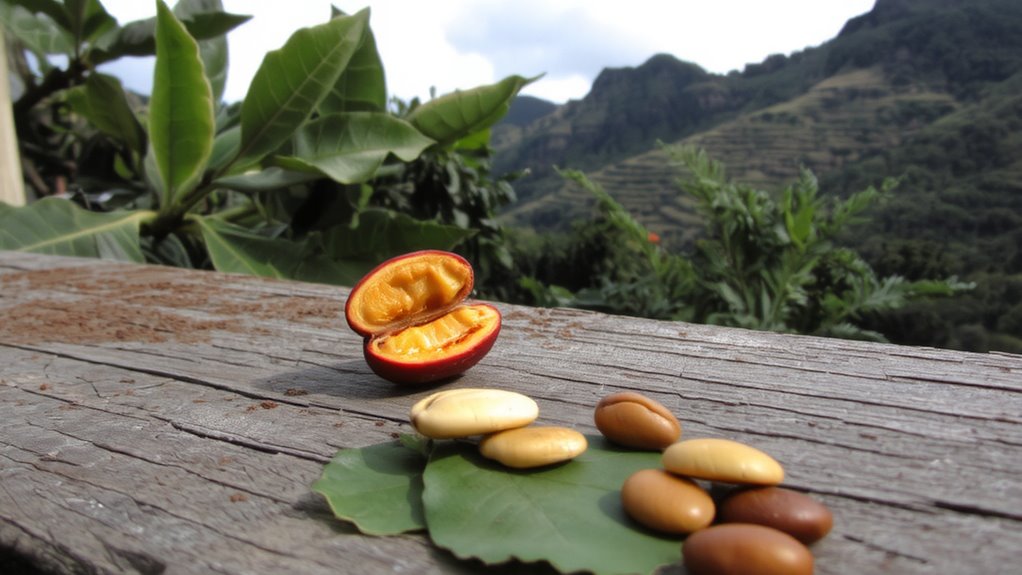
What makes high-altitude Bourbon beans taste noticeably sweeter? You’ll find the answer in cooler temperatures and stronger microclimate effects. At higher elevations, Bourbon plants grow slower, developing denser bean density-key for complex sugar development. The extended maturation lets sugars concentrate, boosting sweetness without altering genetics. These beans also withstand roasting better, preserving flavor clarity.
| Elevation (ft) | Flavor & Density Impact |
|---|---|
| 3,000–4,000 | Mild density, basic sweetness |
| 4,001–5,000 | Moderate density, cleaner sugars |
| 5,001–6,000 | High density, pronounced sweetness |
| 6,001+ | Very high density, intense, balanced sweetness |
Choose high-altitude Bourbons for syrupy body and bright sweetness. Just guarantee your roaster can handle dense beans-otherwise, you risk underdevelopment. Microclimate effects mean consistency varies; source carefully from proven farms above 5,000 feet for best results.
Why Volcanic Soil Makes Bourbon Taste Sweeter
While soil type doesn’t change the genetics of a Bourbon coffee plant, it can substantially shape how those beans taste-especially when that soil comes from volcanic origins. You’ll find these rich, mineral-heavy soils in places like Guatemala’s Antigua region or Nicaragua’s Jinotega, where erupted volcanoes long ago left behind nutrient-dense deposits. That volcanic soil mineralization releases potassium, magnesium, and phosphorus slowly, giving Bourbon plants steady access to essential nutrients. Your coffee benefits because enhanced root absorption means stronger growth and more efficient sugar development in the beans. The result? Cleaner, sweeter profiles with notes of brown sugar and stone fruit. Unlike compacted or sandy soils, volcanic types hold moisture and nutrients well-boosting plant health without over-fertilizing. You’re not just buying beans; you’re tasting the effect of geology meeting agriculture. Volcanic soil won’t guarantee sweetness alone, but paired with Bourbon’s genetic potential, it’s a proven advantage.
How Processing Enhances Bourbon’s Sweetness
When you’re aiming to bring out the natural sweetness in Bourbon variety beans, the way they’re processed after harvest makes a significant difference. Honey fermentation is a method where you leave some of the coffee fruit mucilage on the bean during drying, which boosts sugar development. This process requires careful monitoring-too much moisture and the beans can spoil. You’ll need consistent airflow and frequent turning to avoid over-fermentation. Sun drying, done on raised beds or patios, further concentrates sweetness by slowly reducing moisture while preserving delicate flavors. It’s essential to spread beans evenly and cover them during rain or midday heat to prevent defects. When done right, sun drying enhances the Bourbon’s inherent caramel and brown sugar notes. Compared to washed or fully natural processes, honey fermentation paired with sun drying offers a balanced profile-sweeter than washed, cleaner than natural. It’s a practical choice if you prioritize sweetness and clarity.
Top Latin American Regions Growing Sweet Bourbon Coffee
Though not every region treats Bourbon beans the same, several Latin American countries have perfected conditions for growing this variety with pronounced sweetness. You’ll find that historical trade routes helped spread Bourbon stock, while colonial farming practices shaped long-standing cultivation techniques still in use today.
| Region | Flavor Notes |
|---|---|
| Tarrazú, Costa Rica | Bright citrus, brown sugar |
| Antigua, Guatemala | Cocoa, honeyed sweetness |
| Huila, Colombia | Red fruits, caramel |
| Copán, Honduras | Maple syrup, almond |
| Cusco, Peru | Stone fruit, mild acidity |
These areas combine altitude, volcanic soil, and careful harvesting to enhance natural sweetness. You’re more likely to taste clean, balanced profiles here-ideal for pour-over or drip methods. The legacy of early coffee expansion still influences how farms operate, giving you consistent, high-quality beans rooted in tradition.
Light vs. Dark Roast: Preserving Bourbon’s Natural Sugars
If you’re after the bright, delicate sugars Bourbon beans are known for, a light roast is your best bet-this approach locks in the varietal’s natural sweetness by applying less heat over a shorter time. Your roast profile matters: light roasts preserve more of the bean’s inherent flavors, letting floral, honeyed, and fruit-forward notes shine. Pushing into medium or dark roasts increases sugar caramelization, which can mute those delicate traits. While some enjoy the deeper, chocolatey tones from longer roasting, that comes at the cost of Bourbon’s signature sweetness. For the clearest expression of the varietal, stick with a roast that stops before second crack. Roasters like Ikawa or Lassen Artisan offer precise control, helping you fine-tune heat application. If sweetness is your goal, shorter roast times and lower final temperatures keep sugar caramelization minimal-letting the Bourbon lineage speak for itself.
On a final note
You’ll get the sweetest results from Bourbon varietal beans grown at high altitudes in volcanic soil, especially from regions like Antigua, Guatemala, or Tarrazú, Costa Rica. Use a light to medium roast to preserve natural sugars, and choose washed or honey processing for cleaner sweetness. A quality grinder and brewer like the Hario V60 or Fellow Stagg X help highlight those delicate notes without overpowering them.