The Perfect Brew Time and Ratio for Turkish Coffee Preparation
Use one heaping teaspoon of extra-fine coffee per 3 ounces of water in your cezve, heating it slowly over low flame for 4–5 minutes. Don’t stir after the initial mix-this preserves the foam. Remove the pot just as froth nears the rim. Pour gently to keep the crema intact. Bitterness? Try a slightly coarser grind. Weak? Check bean freshness. The right tools make it easier.
Notable Insights
- Use one heaping teaspoon of extra-fine coffee per 3 ounces of water for the ideal coffee-to-water ratio.
- Grind coffee to a powdery consistency, finer than espresso, for proper extraction and foam formation.
- Brew over low heat, removing the cezve just before boiling when foam reaches the rim.
- Allow 3–5 minutes total brew time, heating slowly to preserve nuanced flavor notes.
- Maintain foam by avoiding stirring after initial mixing and pouring slowly into cups.
Use the Perfect Turkish Coffee Ratio
One heaping teaspoon of finely ground coffee per 3 ounces of water is the standard starting point for a balanced cup. You can adjust this ratio slightly based on taste, but deviating too much may lead to weak or overly strong results. The origin of your coffee matters-beans from Ethiopia offer floral notes, while Colombian or Sumatran beans bring deeper, earthier flavors. Always check the roast date; bean freshness directly impacts flavor and aroma. Coffee roasted more than two weeks ago loses volatile compounds, resulting in a flat brew. Use whole beans and store them in an airtight container away from light and moisture. Turkish coffee demands precision, so measuring consistently guarantees repeatable results. A small cezve, preferably copper or brass, works best for even heat distribution. Avoid pre-ground coffee unless you’re certain of its grind size and freshness. Stick to this ratio and fresh, high-quality beans for authentic, rich results every time. For the finest consistency required, use a Turkish coffee grinder designed specifically to achieve the ultra-fine powder essential for traditional preparation.
Grind Your Beans Extra Fine
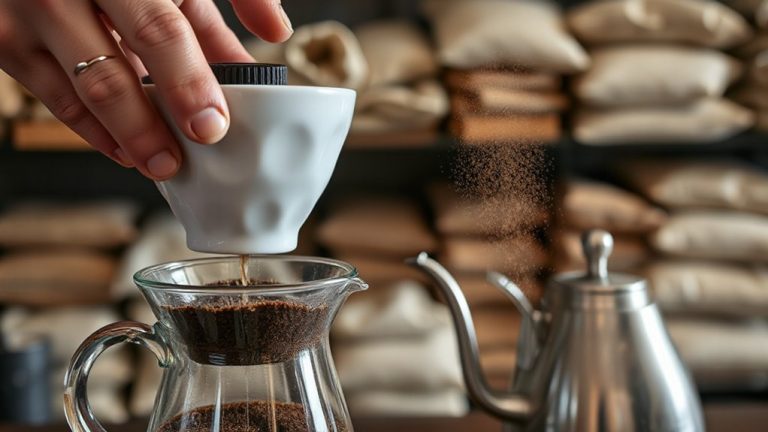
You’ll need an extremely fine grind-finer than espresso-for authentic Turkish coffee, almost like powdered sugar in texture. Regular drip or French press grinders won’t cut it; you’ll need a burr grinder with fine particle control, like the Baratza Encore or a manual Turkish hand grinder. Blade grinders can work in a pinch but often create uneven particles, leading to inconsistent extraction. The grind size directly impacts flavor and sediment, so consistency matters. Bean origin affects how the coffee grinds and tastes-African beans tend to be denser, while Latin American beans may grind slightly easier. Roast level also plays a role: darker roasts are brittle and powdery, while lighter roasts are harder and may need extra grinding time. Use freshly roasted beans within 2–4 weeks for best results. Always grind just before brewing to preserve aroma and prevent clogging in your ibrik. For precise and consistent results, consider investing in one of the best espresso grinders recommended by experts.
Follow This Turkish Coffee Brewing Guide
Once you’ve got your beans ground to a fine, powder-like consistency, it’s time to brew-using the proper method makes all the difference. Start by adding one heaping teaspoon of coffee per demitasse cup to a cezve (also called an ibrik), along with sugar if desired. Pour in cold water slowly-typically a 1:10 coffee-to-water ratio works best. Heat over low flame, stirring briefly until dissolved. Traditional brewing techniques require patience: let the mixture warm gradually without stirring again. This slow rise in temperature helps preserve the coffee’s complex flavor profiles, enhancing spice, floral, or chocolate notes depending on bean origin. Avoid boiling; instead, watch for the first signs of froth forming. Remove just before it overflows. The result is a rich, full-bodied brew with distinct layers. Using a thermometer isn’t common, but keeping heat low guarantees ideal extraction every time.
Create the Signature Foam
While the heat rises slowly, keeping your eye on the surface of the brew is key-this is where the foam begins to form, and timing makes all the difference. You don’t need milk frothing tools; the foam comes from the coffee itself as it heats just below boiling. Use a cezve (or ibrik) for best results-the narrow top helps concentrate the foam. Remove the pot right when the foam rises to the rim, just before it spills. Pour slowly to preserve the layer in each cup. For added depth, a light spice infusion like cardamom or cinnamon can mix well, but add it early so flavors blend. Don’t stir after heating-this breaks the foam. The ideal foam is thick, dark, and velvety, a sign of correct heat and grind. Avoid high temps; they kill texture fast. Good foam means you’ve balanced time, heat, and ratio just right.
Fix Bitter or Weak Turkish Coffee
A good foam layer doesn’t guarantee balanced flavor-if your Turkish coffee tastes too bitter or ends up weak and flat, the issue likely stems from grind size, water ratio, or heat control. You can fix this by adjusting key variables. Too bitter? Your grind may be too fine or water temperature too high. Weak coffee often means stale beans or too much water. Always use freshly ground beans for peak flavor-bean freshness matters more than people think. Control heat carefully: low and slow prevents burning.
| Issue | Likely Cause | Quick Fix |
|---|---|---|
| Bitter | Over-extraction | Coarsen grind slightly |
| Weak | Under-extraction | Use less water, fresher beans |
| Burnt taste | High water temperature | Lower heat after foam forms |
| Flat flavor | Old beans | Prioritize bean freshness |
Use the Right Tools for Turkish Coffee
The cezve-the small, long-handled pot used to brew Turkish coffee-isn’t just traditional; it’s essential for getting the process right. You need a copper cezve because it heats evenly and responds quickly to temperature changes, giving you better control over the brew. Stainless steel or brass versions work, but copper offers the best performance if lined properly for safety. The narrow top helps foam form, which is key. Always use a small flame-ideally a gas stove-so you can adjust heat easily. An electric kettle won’t work; brewing relies on gradual heating and watching the rise of the foam. Hand pouring is critical: tilt the cezve slowly to control flow and preserve the foam as you serve. Don’t rush it. A handle that stays cool helps, but many require a cloth. Using the right tools makes consistency possible every time.
On a final note
You now have the basics to make solid Turkish coffee at home. Use a 1:10 coffee-to-water ratio, an extra-fine grind, and a cezve for best results. Heat slowly to build foam, and skip sugar if you want to taste the beans. If it’s bitter, reduce heat or brew time. Weak? Adjust your grind or ratio. A digital scale and timer help. Stick to this method, and you’ll get consistent, rich results every time.