The Impact of Fines and Boulders on Coffee Extraction and Cup Quality
Fines and boulders in your coffee grind create uneven extraction, leading to bitter or sour flavors. Fine particles over-extract, making coffee harsh, while large chunks under-extract, tasting weak and sour. This inconsistency disrupts water flow, causing channeling in espresso or pour-over. Even high-end grinders like the Baratza Forté or Timemore Kono can’t eliminate it completely, but sharp, well-aligned burrs help. Roast and bean density also play a role. You’ll want to optimize grind size, brew time, and equipment to fix it-there’s a clear way to improve.
Notable Insights
- Fines cause over-extraction, leading to bitter, astringent flavors due to restricted water flow and excessive surface contact.
- Boulders result in under-extraction, producing sour, weak notes as water cannot fully penetrate their low surface area.
- Particle stratification from inconsistent grind size promotes channeling, where water bypasses dense areas, worsening extraction unevenness.
- Roast profile and bean density influence fines and boulders: darker roasts increase fines, while harder beans create more boulders.
- High-quality grinders with sharp, aligned burrs minimize extremes, improving consistency and enhancing cup clarity and balance.
What Are Fines and Boulders in Coffee Grind?
Fines and boulders refer to the uneven grind sizes that inevitably show up in your coffee grounds, no matter which grinder you use. Fines are tiny particles, almost dust-like, while boulders are the noticeably larger chunks. This variation happens because burr grinders, even high-end ones, can’t achieve perfect consistency. Your coffee origin plays a role-denser beans from high-altitude regions often fracture differently, increasing the chance of fines. The roast profile matters too; darker roasts are more brittle, producing more fines, while light roasts tend to create boulders due to their hardness. Cheaper grinders usually worsen the issue with inconsistent burr alignment. Even with premium models like the Baratza Forté or EK43, some variation remains. You can’t eliminate fines and boulders completely, but choosing the right grinder and adjusting your grind setting helps minimize them, giving you more control over extraction.
How Fines and Boulders Cause Over- and Under-Extraction
You’ve probably noticed that even with a consistent grind setting, your coffee can taste uneven from one brew to the next. That’s because fines and boulders lead to over- and under-extraction. Fines pack tightly, slowing water flow and extracting too much, while boulders resist extraction due to low surface area contact. This creates particle stratification-when smaller and larger particles separate in the bed-causing inconsistent water distribution. Water seeks paths of least resistance, leading to channeling effects where it avoids dense zones and floods open ones. As a result, some coffee over-extracts (bitter, astringent), while other parts under-extract (sour, weak). Even high-end grinders produce some fines and boulders, but conical burrs often generate fewer extremes than flat burrs. A narrow particle size distribution reduces these issues, improving balance. Proper dosing, distribution, and tamp pressure can help, but grinder quality remains key.
Why Uneven Grind Leads to Bitter and Sour Coffee
Even when you dial in your grinder carefully, an uneven particle size can still sabotage your brew by creating conflicting extraction levels in the same cup. You get bitter notes from over-extracted fines and sour tones from under-extracted boulders-all in one sip. Poor grind consistency means some particles dissolve too fast while others barely release flavor. This wide particle distribution throws off balance, making it hard to achieve a clean, harmonious cup. High-quality burr grinders reduce this spread, offering tighter grind consistency and more even extraction. Blade grinders or low-end burrs often produce erratic particle distribution, increasing the chance of both over- and under-extraction. If your coffee tastes both bitter and sour, it’s likely not your brew time or ratio-take a closer look at your grinder’s output. Better grind quality means better flavor control. For those using freshly roasted beans, choosing the right equipment like a best coffee grinder can make a significant difference in minimizing fines and boulders.
How Grind Size Affects Water Flow and Saturation
When you grind coffee too fine, water flows through the puck or bed much slower, increasing contact time and raising the risk of over-extraction, especially in espresso or pour-over setups. This slow movement encourages channel formation, where water carves paths through the least resistant areas, leading to uneven saturation. You’ll end up with some parts over-extracted and others under-extracted. A coarser grind speeds things up, but if it’s too coarse, water rushes through with insufficient contact, causing weak, sour coffee. In espresso, turbulent flow helps improve extraction by enhancing mixing, but only if the grind distribution is consistent. Your grind size directly shapes flow dynamics-too fine or too coarse disrupts balance. Adjusting grind size isn’t just about strength; it controls water behavior. Finding the right setting means optimizing both saturation and flow for even extraction, without relying on extreme pressure or time. Manual devices like portable espresso makers allow greater control over extraction variables in mobile settings.
Choose a Grinder That Minimizes Fines and Boulders
A good grinder makes a noticeable difference in extraction because it limits the amount of fines-tiny particles that clog the coffee bed-and boulders-oversized chunks that under-extract. You want a grinder with sharp, well-aligned burrs that produce a consistent particle size. Poor burr alignment creates uneven grinding, increasing both fines and boulders, which leads to unbalanced cups. High-quality grinders like the Baratza Encore or Timemore Kono maintain better consistency and allow easier grinder calibration. Calibration guarantees your grind size stays accurate shot to shot, especially important if you’re switching beans or adjusting for humidity. Entry-level grinders often cut corners on burr alignment and durability, resulting in wider particle spread. You’ll taste the difference: cleaner acidity, better sweetness, and fewer off-flavors when your grinder minimizes extremes. Invest in the best grinder you can afford-it’s the foundation of good extraction. For more guidance, check out our best coffee grinders roundup and buying guide.
Fix Extraction Issues With Brew Time and Pour Control
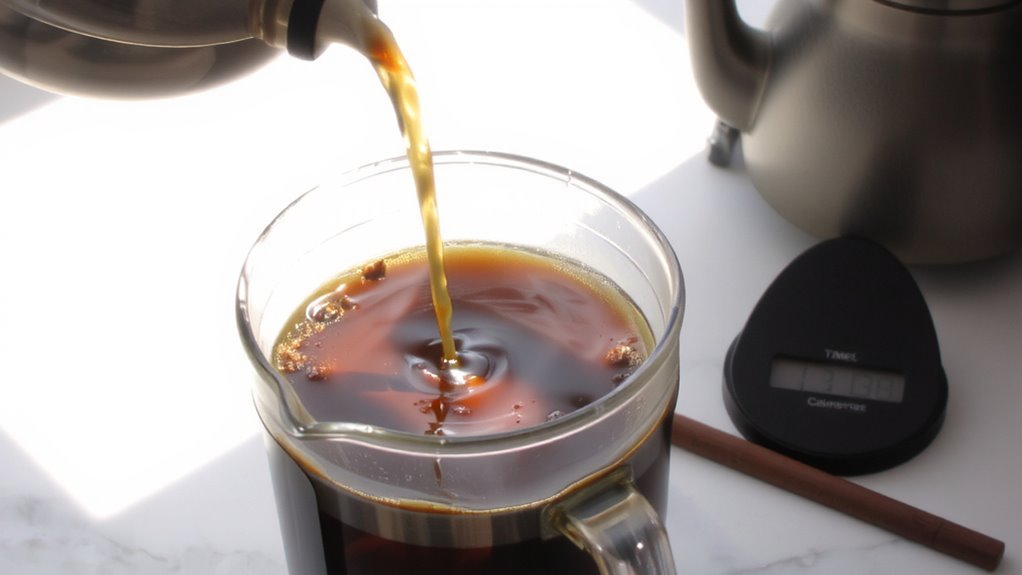
If your shots are running too fast or too slow, adjusting brew time and pour control can help correct extraction issues without changing your grind. Pulling a shot longer or shorter directly impacts how much flavor you extract-extend time for under-extracted, sour coffee, or shorten it if it’s bitter and overdone. With pour-over, your agitation method matters: a aggressive center pour stirs more fines, increasing extraction, while a gentle spiral minimizes it. You can also tweak brew temperature-hotter water extracts faster, cooler slows it-so pair that with time adjustments. A gooseneck kettle gives precise pour control, letting you manage flow rate and saturation evenly. Just don’t confuse symptoms with root causes; this fixes extraction variation, but won’t solve grind inconsistency from poor burrs. Use these levers wisely, and you’ll balance flavor reliably, especially when your grinder isn’t perfect.
Use These Tips to Reduce Fines and Remove Boulders
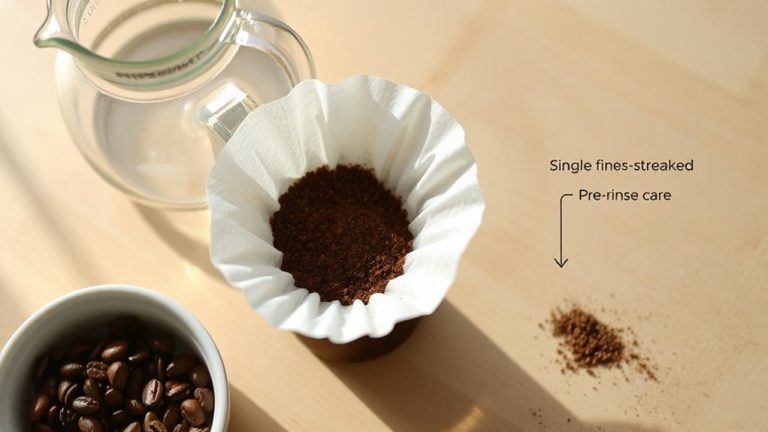
You’ve adjusted your brew time, fine-tuned your pour, and played with temperature-maybe even upgraded to a gooseneck kettle-and still, your espresso or pour-over tastes off. The issue might be fines and boulders. Fines clog filters, slowing flow and causing over-extraction, while boulders pass through fast, leading to weak, sour notes. To fix this, focus on grinder maintenance: clean burrs monthly to prevent buildup and guarantee even particle size. Old or misaligned burrs create more fines. Also, check your water temperature-too hot increases extraction from fines, amplifying bitterness; too cool under-extracts boulders. Aim for 195–205°F. Use a grinder with stepless adjustment, like the Lelit PL9, for better control. Sifting coffee with a device like Kruve can help, but consistent grinder performance reduces the need. Small tweaks make a real difference in clarity and balance.
On a final note
You can’t eliminate fines and boulders completely, but a good grinder like the Baratza Virtuoso or 1ZPresso Q2 reduces them markedly. Uneven particles lead to sour and bitter flavors, so pairing a consistent grinder with proper brew time and pour control helps balance extraction. Sieving grounds or using a distribution tool can help too. For better cups, focus on grinder quality first-it’s the most impactful gear choice you’ll make.