Organizing Blind Taste Challenges Comparing Same Farm’s Coffee Across Four Maceration Lengths
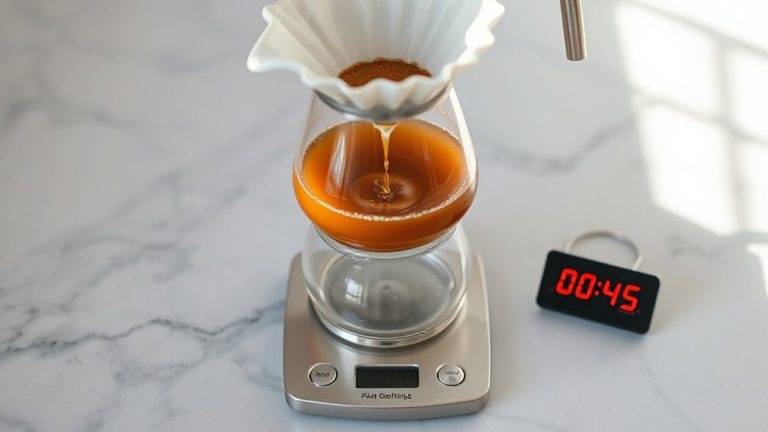
You control variables by using the same farm’s beans, identical grinders like the Mahlkönig EK43, and brew gear like Hario V60s at 93°C. Ferment lengths-12, 24, 48, 96 hours-are randomized and served blind in opaque cups to avoid bias. You’ll taste how time shifts flavor from bright to boozy, and learn what pitfalls hide in extended fermentation. There’s more to how environment shapes taste than most consider.
Notable Insights
- Use identical equipment and brew parameters to ensure consistent, comparable results across all samples.
- Randomize sample order and serve in opaque cups to maintain true blind tasting conditions.
- Control ambient temperature and humidity during fermentation and tasting to minimize external variables.
- Select fermentation durations (e.g., 12, 24, 48, 96 hours) that highlight progressive flavor development for clear differentiation.
- Train tasters to identify evolving aroma and flavor profiles linked to fermentation length for accurate evaluation.
How Fermentation Time Changes Coffee Flavor
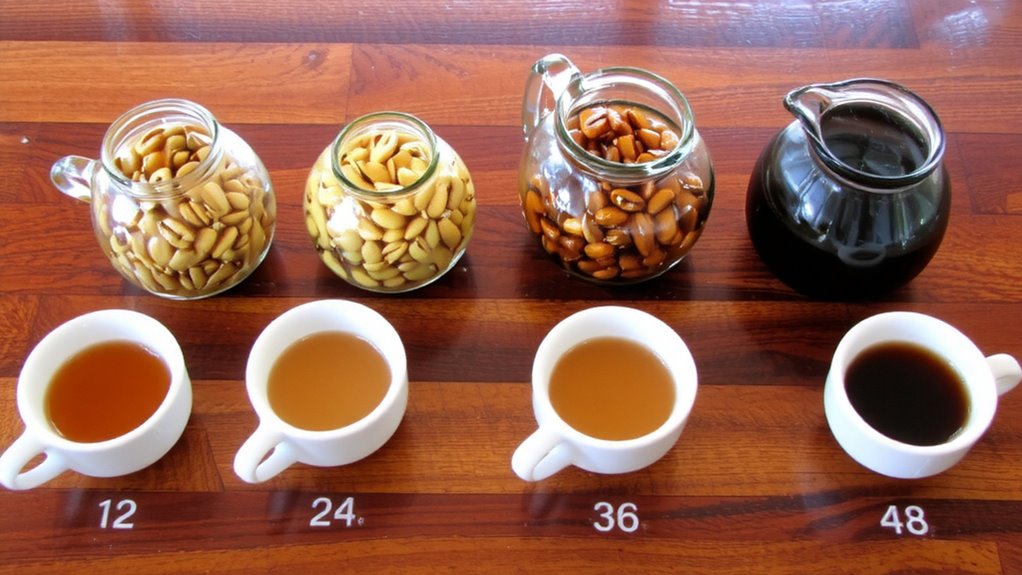
Why do some coffees taste brighter or fruitier than others? It often comes down to fermentation time. When you extend fermentation, yeast activity increases, breaking down sugars in the coffee mucilage. This sugar breakdown influences acidity, body, and flavor compounds. Shorter ferments-say, 12 hours-tend to yield cleaner, milder cups with subtle brightness. Longer periods, like 48 hours, promote more complex fruit notes but risk over-fermentation if not monitored. Temperature and humidity matter: cooler spaces slow yeast activity, while warmth accelerates it. You’ll need consistent water quality and sealed tanks to control variables. Think of it like sourdough-timing and environment shape the outcome. Too long, and flavors turn winey or funky. Too short, and you miss depth. For best results, stick to controlled environments and record each batch. This way, you can pinpoint what works for your preferred profile-bright and tea-like or rich and jammy.
How We Blind-Tasted 12 vs. 24 vs. 48 vs. 96-Hour Fermentation
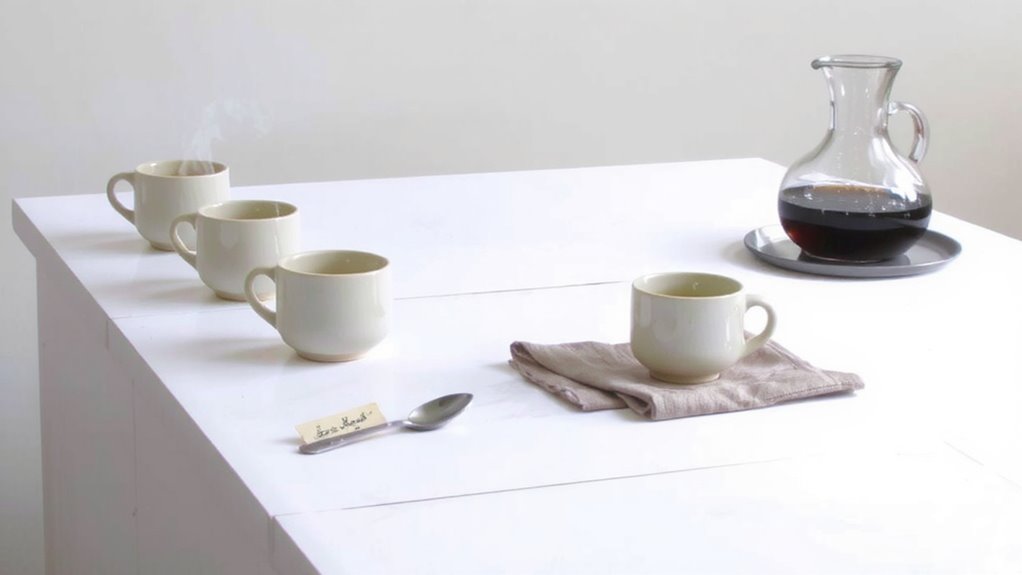
What happens when you let coffee ferment for four full days? You’re testing the limits of yeast development and sugar conversion. We blind-tasted the 12, 24, 48, and 96-hour ferments using identical brewing gear-Mahlkönig EK43 grinders, BrewTune kettles, and Hario V60s-to eliminate variables. Each sample was brewed at 93°C with a 1:16 coffee-to-water ratio and served black in opaque cups. Tasters didn’t know the fermentation time, and samples were randomized. We monitored acidity, body, and balance, knowing longer fermentation increases yeast activity, driving sugar conversion further. While 12 hours gave clean brightness, 96 hours risked over-fermentation-yeast exhaustion can create off-flavors. Controlling temperature was critical; we held all batches at 22°C. The goal wasn’t novelty, but consistency. You need precision gear and strict protocols to test these differences fairly.
How Aroma and Flavor Changed With Time
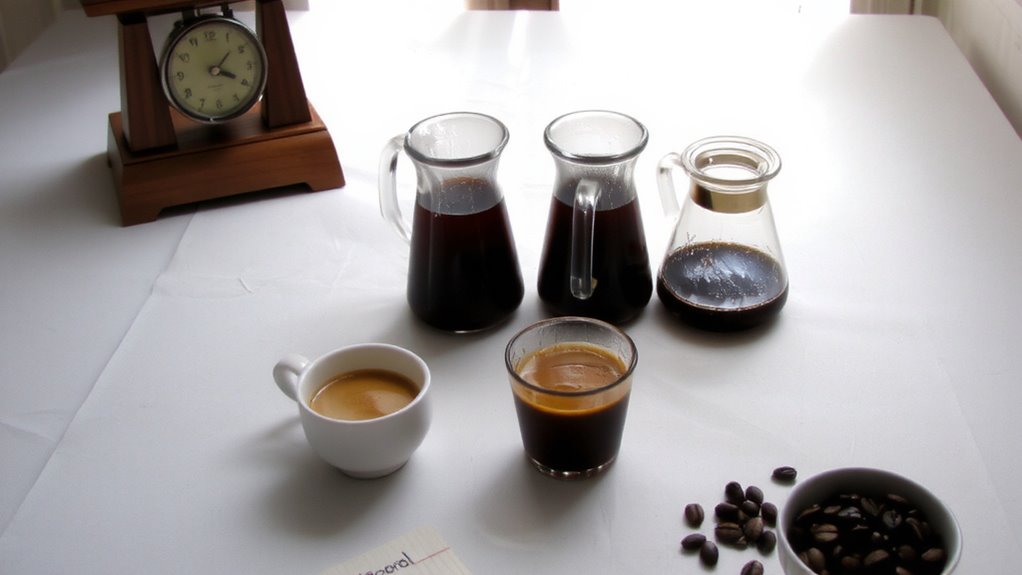
As fermentation time increases, you’ll notice clear shifts in both aroma and flavor, and these changes become more pronounced the longer the beans ferment. The aroma evolution starts with bright, fruity notes in the 12-hour batch, shifting to deeper, wine-like complexity by 48 hours. You’ll detect less floral character and more earthy tones as fermentation progresses. This flavor transformation becomes evident in the cup: shorter ferments highlight acidity and clarity, while longer ones build body and depth. By 48 hours, sugars break down further, altering sweetness and mouthfeel. Aroma becomes less volatile, more subdued. These changes aren’t automatically better-just different. You’ll need clean, consistent fermentation tanks and precise temperature control to replicate results. Glass or stainless steel vessels help monitor progress without interfering. Track time and temperature rigorously, since small shifts impact outcome. Aroma and flavor stability matter most if you’re aiming for repeatability across batches.
The Flavor Shift: From Bright to Boozy in 96 Hours
You’ve seen how aromas shift from bright and floral to deeper, more earthy notes as fermentation extends to 48 hours, and now you’re pushing further-up to 96 hours. This extended maceration drives a clear flavor evolution: fruit-forward tones deepen into winey, boozy notes, sometimes resembling fermented stone fruit or sherry. Sensory adaptation is key-you might miss these nuances at first, but repeated tasting helps your palate detect subtler changes. Monitor temperature and pH carefully; even small shifts can alter outcomes.
| Time (hrs) | Flavor Profile |
|---|---|
| 24 | Citrus, floral |
| 48 | Berry, honey |
| 72 | Plum, wine-like |
| 96 | Boozy, fermented fruit |
Flavor shifts aren’t automatic-consistent processing and clean tanks matter. Use this data to adjust for your desired profile, knowing longer isn’t always better-just different.
When Long Fermentation Goes Wrong (And Why It Matters)
While extended fermentation can deepen complexity, pushing beyond 96 hours often risks spoilage if conditions aren’t tightly controlled. You’re likely to encounter microbial imbalance, where harmful bacteria or wild yeasts overtake desirable ones, leading to rotten or vinegar-like notes. These flaws aren’t just unpleasant-they’re costly. Over fermentation risks include complete batch loss, especially in warm, humid environments where microbes multiply fast. Without precise temperature monitoring and sterile tanks, even high-quality beans can turn sour or musty. You can’t fix this in roasting. Some producers use pH meters or timed oxygen controls to reduce risk, but many small farms lack that gear. That’s why exceeding 96 hours demands experience and tools-not just ambition. When you’re chasing intense profiles, remember: control defines the line between bold and ruined.
What This Means for Specialty Coffee’s Future
How far should specialty coffee go in chasing flavor? You’re already seeing longer macerations promise complexity, but they come with risks to consistency and quality control. As you experiment, remember that pushing fermentation too far might compromise sustainable practices-extended processing uses more water and energy, and increases spoilage risk. Sensory ethics matter, too: altering flavors so drastically could misrepresent a bean’s true origin character. If you’re roasting or brewing, consider how these manipulations affect drinkability and consumer trust. Balance innovation with responsibility. Opt for methods that enhance clarity without masking terroir. Use controlled fermentations with traceable timeframes, like the 24-, 48-, and 72-hour benchmarks tested in blind trials. This data helps you decide what’s worth scaling. Choose transparency, repeatable results, and environmental care over novelty. Your choices shape not just taste, but the industry’s future direction.
On a final note
You’ll notice clear flavor shifts as fermentation time increases, from bright and clean at 12 hours to rich and boozy by 96. Going too long risks off-flavors if not carefully controlled. For best results, stick to 24–48 hours with temperature monitoring. Use stainless steel tanks or controlled fermentation devices like Fermentrack for consistency. It’s not about longest being best-it’s about matching time to desired profile.