How to Brew Pour Over Coffee With a Scale and Timer for Precision
Use a scale and timer to nail your pour over every time. Start with 16.7–18.7g coffee for 300g water, a 1:16 to 1:18 ratio. Grind fresh-fine like salt for light roasts, coarser for dark. Bloom with twice the coffee’s weight in water, wait 30–45 seconds. Pour in slow spirals with a gooseneck kettle at 200–205°F. Hit a 2:30–3:30 brew time. Adjust grind or temp if it’s sour or bitter. You’ll see how small tweaks transform flavor.
Notable Insights
- Use a scale and timer to measure coffee and water precisely, ensuring consistent 1:16 to 1:18 brew ratios.
- Start with freshly ground coffee, weighing both beans and water to 0.1-gram accuracy for optimal extraction.
- Begin brewing with a 30–45 second bloom, using twice the coffee’s weight in hot water (195–205°F).
- Pour in slow, controlled spirals, letting the timer guide you through a total brew time of 2:30–3:30.
- Adjust grind size and water temperature based on taste, using scale and timer data to replicate or refine results.
Choose the Right Pour Over Equipment
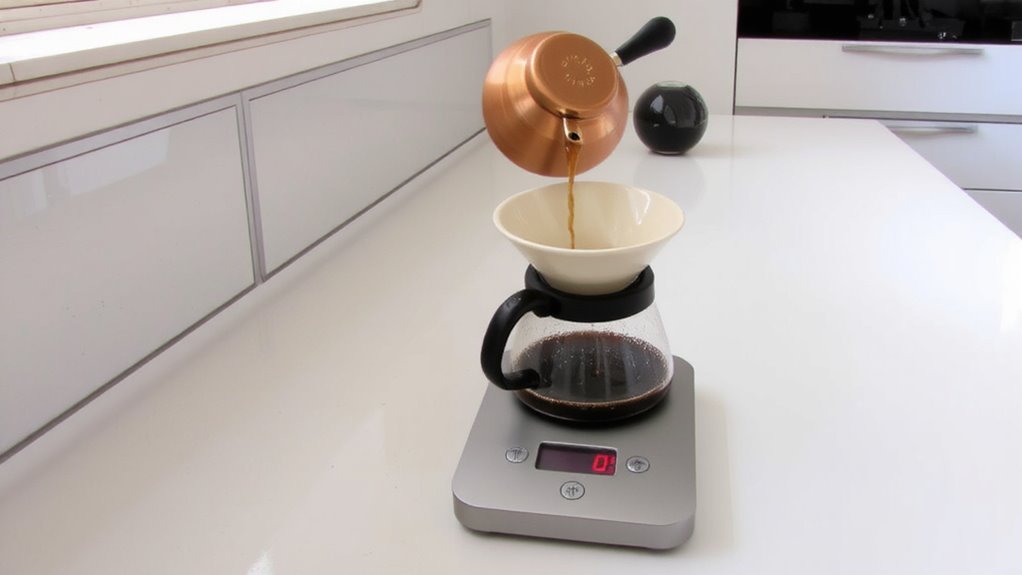
A good pour over setup starts with the right gear, and that means picking a dripper, kettle, scale, and timer that work well together. Go for a dripper like the Hario V60 or Kalita Wave-they’re proven and easy to use. A gooseneck kettle gives you precise control, essential for even saturation and managing brew temperature. Look for one with temperature control so you can hit that sweet spot around 195–205°F. Your water quality matters just as much; filtered water avoids off-flavors and mineral issues. Pair it with a reliable scale that measures to 0.1 grams and a timer that starts automatically when you pour. Together, they remove guesswork. Cheap plastic kettles or outdated scales won’t hold up. Good gear isn’t about price-it’s about consistency. When your tools support accurate temp and clean water flow, your coffee tastes better, every time. For those seeking optimal performance, consider one of the best gooseneck kettles based on design and precision.
Weigh Coffee and Water for Ideal Ratios
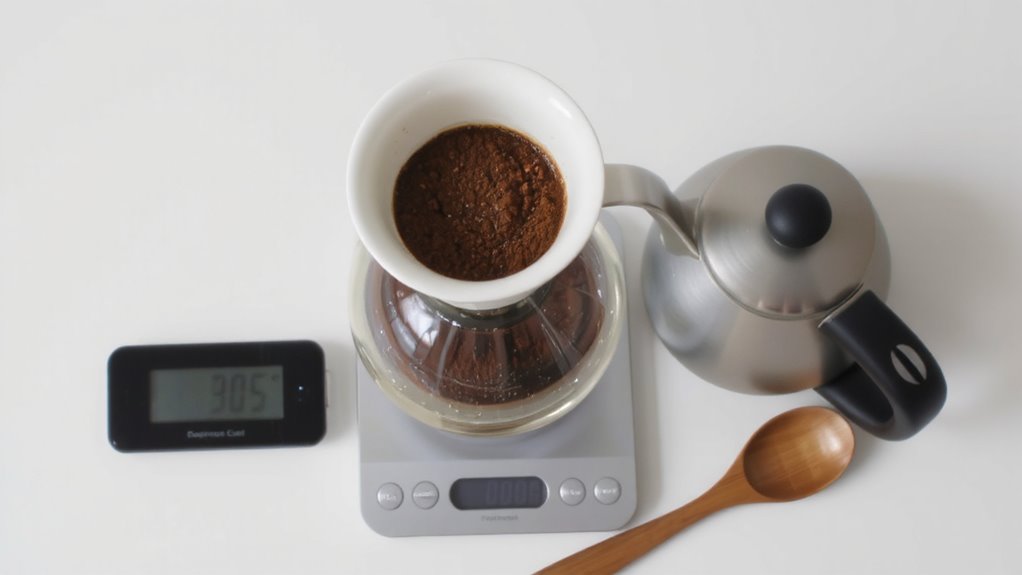
Getting the ratio right matters more than most realize-use 1 gram of coffee for every 16 to 18 grams of water as a reliable starting point. If you’re using 300 grams of water, go with 16.7 to 18.7 grams of coffee. A digital scale guarantees accuracy, which is essential since small changes affect strength and balance. Lighter roasts from Ethiopian coffee origin may need a slightly stronger ratio (1:15), while Sumatran beans might taste better at 1:17. Always pair your ratio with proper water temperature-200°F to 205°F is ideal. Too hot, and you risk scalding the grounds; too cool, and extraction falls short. The ratio and water temperature work together, so adjust both thoughtfully. This method gives consistent results, especially when you record what works. Precision here sets the stage for a clean, flavorful pour over-no guesswork, just better coffee. For repeatable results, consider investing in one of the best coffee scales that combine precision, readability, and timer functions.
Grind Size: Match Beans to Brew Time
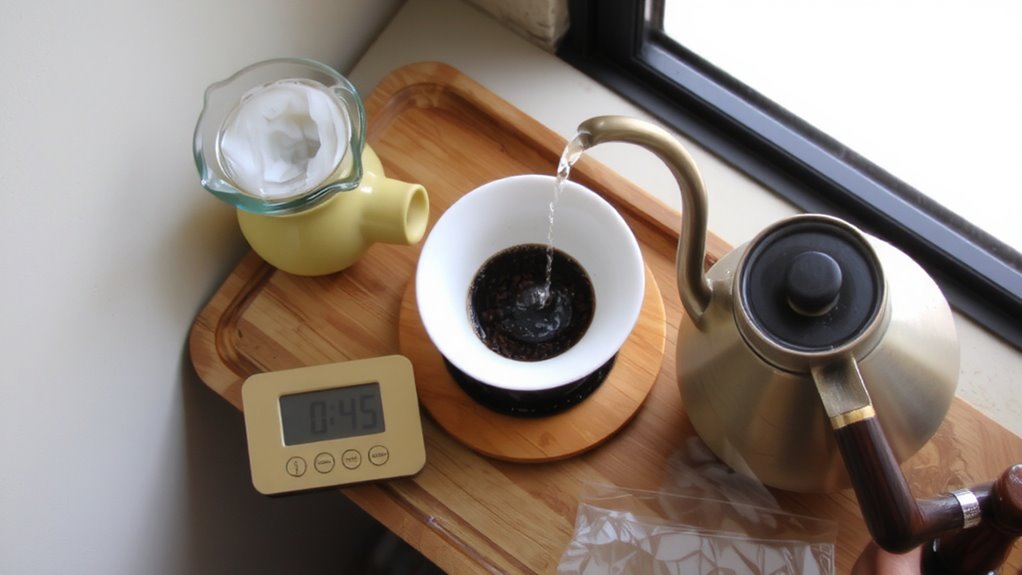
While your coffee’s grind size won’t matter if you’re not paying attention to brew time, getting the two to match is essential for even extraction. Your bean origin and roast level directly influence the ideal grind. Lighter roasts from high-altitude origins like Ethiopia need a finer grind to extract fully in the typical 2:30–3:30 brew window, while darker roasts from places like Sumatra require a slightly coarser setting to avoid bitterness.
| Roast Level | Bean Origin | Grind Suggestion |
|---|---|---|
| Light | Ethiopia | Fine (like table salt) |
| Medium | Colombia | Medium (like sand) |
| Dark | Sumatra | Coarse (like breadcrumbs) |
Adjusting grind size guarantees clarity and balance. If your coffee tastes sour, go finer. If it’s bitter or dull, go coarser. Your burr grinder is key-consistency matters more than brand. Match it to your brew time and beans, and you’ll see real improvement. Achieving pour-over mastery starts with understanding how grind size interacts with water flow and contact time.
Perfect Your Pour: Control Flow and Timing
Since pour over relies on precise water control, your pouring rhythm and timing directly shape extraction. Start with water temperature around 195–205°F-the sweet spot for most beans. If it’s too hot, you risk scalding; too cool, and extraction lags. Begin by pouring twice the coffee’s weight in water, then pause for the bloom duration-usually 30 to 45 seconds. This lets trapped CO₂ escape, ensuring even saturation. After the bloom, pour in slow, steady spirals from the center outward, avoiding the filter’s edge. Keep the water level consistent, adding in pulses to match your target brew time. A gooseneck kettle gives you far better control than a regular spout. Pausing too long between pours cools the slurry, hurting extraction. Use your timer and scale together to stay consistent-both are critical.
Fix Bland or Bitter Pour Over Coffee
Your pour technique sets the stage for a balanced cup, but even with good timing and flow, off flavors can still slip in-most often showing up as flat and lifeless or harsh and bitter. If your coffee tastes bland, check your water temperature-it’s likely too low. Aim for 195°F to 205°F; colder water under-extracts, leaving sweet and bright notes behind. On the other hand, if your brew is overly bitter, water may be too hot or your grind too fine, over-extracting harsh compounds. Freshness matters just as much: stale beans lose complexity and extract unevenly. For best results, use beans within 2–4 weeks of roast. A quick sniff test helps-dull, papery aroma means they’re past peak. Adjusting both water temperature and bean freshness gives you direct control over flavor balance without changing your grind or brew time.
Why Precision Wins in Pour Over Brewing
When you measure each variable-dose, yield, time, and temperature-you’re not overcomplicating things; you’re removing guesswork. Precision helps you control extraction, so your coffee tastes balanced, not sour or bitter. Water temperature matters: aim for 195–205°F. Too low, and you under-extract; too high, and you risk scorching your grounds. Fresh beans make a bigger difference than most realize-carbon dioxide release peaks right after roasting, so best flavor hits within 7–14 days post-roast. Use a scale to lock in your coffee-to-water ratio (like 1:16), and a timer to track brew time. Without these tools, you’re guessing, and inconsistency follows. A gooseneck kettle improves pour control, while a thermometer or temperature-controlled kettle keeps water stable. Bean freshness, exact timing, and consistent water temperature aren’t fussy details-they’re the foundation of a repeatable, great cup.
On a final note
You’ve got the tools and know-how: use your scale and timer to hit consistent ratios and brew times. A gooseneck kettle gives control, while a quality burr grinder guarantees even particles. Stick to a 1:16 coffee-to-water ratio, adjust grind size if your brew’s too fast or slow, and pour in steady spirals. When done right, pour over delivers clean, balanced coffee every time-no guesswork needed.