Using Light Roast Beans With Coarse Grind for Brighter Cold Brew Profiles
Use light roast beans with a coarse grind for a cleaner, brighter cold brew that highlights citrus, berry, and floral notes. Ethiopian Yirgacheffe or Kenyan AA work best, steeped 12–14 hours in cold water at a 1:8 ratio. A burr grinder guarantees even particles, preventing bitterness. Avoid longer steeps or fine grinds, which dull the flavor. This method preserves delicate aromas and acidity-ideal if you prefer nuanced, tea-like cold brew over heavy, chocolaty profiles. You’ll find even more precision in technique can refine your results further.
Notable Insights
- Light roast beans preserve bright, floral, and citrus notes ideal for vibrant cold brew profiles.
- Use a coarse grind to prevent over-extraction and maintain clarity in light roast cold brew.
- Ethiopian Yirgacheffe or Kenyan AA beans offer the best acidity and aromatic complexity.
- Steep coarse-ground light roast in cold water (68–72°F) for 12–14 hours for optimal balance.
- Grind fresh with a burr grinder to ensure consistency and protect delicate flavor compounds.
How Light Roast Transforms Cold Brew
While many assume dark roasts are the default for cold brew, choosing a light roast can markedly shift both flavor and acidity in your final cup. You’ll notice brighter notes-think citrus, berry, or floral hints-that dark roasts often mute. Light roasts preserve delicate compounds, boosting flavor clarity so individual origin characteristics come through cleanly. Aroma preservation is stronger too; volatile oils that contribute to scent and top notes degrade less during lighter roasting, giving your cold brew a more complex nose. This works especially well with single-origin beans from regions like Ethiopia or Kenya. Just keep in mind: lighter beans can taste underdeveloped if brewed too long or with water that’s too warm. Stick to room temp or cold water and a steep time of 12–16 hours. The result? A clean, nuanced cold brew that’s far from flat. For best results, consider using a coarse grind to prevent over-extraction during the extended steeping process.
How a Coarse Grind Prevents Bitterness in Light Roast Cold Brew
You get more control over flavor when you adjust your grind size, and that’s especially true with light roast beans in cold brew. A coarse grind slows extraction, which is key-light roasts are dense and acidic, so they can turn overly sharp or sour if over-extracted. But here’s the catch: too fine a grind ramps up bitterness, even in cold brew’s slow process. By going coarse, you reduce surface area exposure, smoothing out the profile. Grind consistency matters-uneven particles lead to mixed extraction, with some bits over-extracting while others under-extract. A quality burr grinder helps keep things even. With proper extraction control, you highlight a light roast’s bright, tea-like notes without harshness. Immersion brewers like the Toddy or Filtron work well here, but steep time still needs monitoring-typically 12–16 hours. Coarse isn’t just safer-it’s strategic for cleaner, brighter results. For precise measurements that ensure consistency, using a scale with a high-precision coffee scale is essential.
Best Beans for Bright, Fruity Light Roast Cold Brew
What makes a light roast bean shine in cold brew? You’ll want beans grown at high altitudes with dense structure and natural sweetness. Ethiopian Yirgacheffe and Kenyan AA are top picks-both deliver bright profiles that hold up during cold extraction. These beans often carry floral notes, like jasmine or bergamot, which stay vibrant even after 12+ hours in cold water. You’ll also get citrus undertones-think lemon, grapefruit, or tangerine-that cut through the smooth texture of cold brew without turning sour. Central American beans, like Guatemalan or Costa Rican, offer a balanced approach with milder fruitiness. Avoid overly processed or dark-roasted beans, as they mute the clarity you’re after. For best results, use freshly roasted beans (within 3–4 weeks) to preserve volatile compounds. The goal is complexity without bitterness-floral notes and citrus undertones should come through clean and distinct.
How to Make Cold Brew With Light Roast
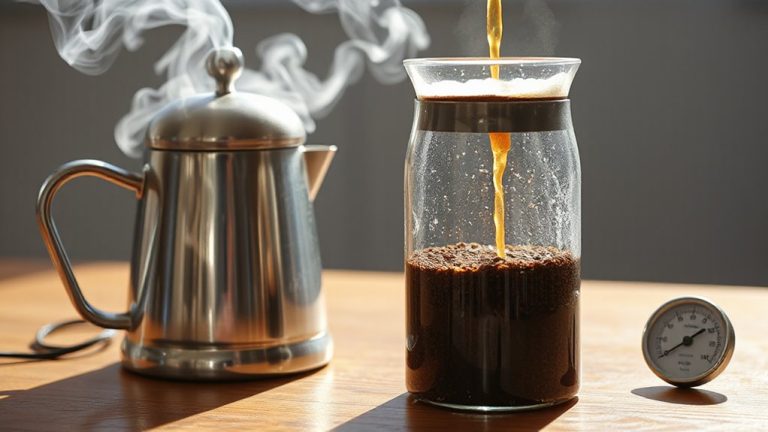
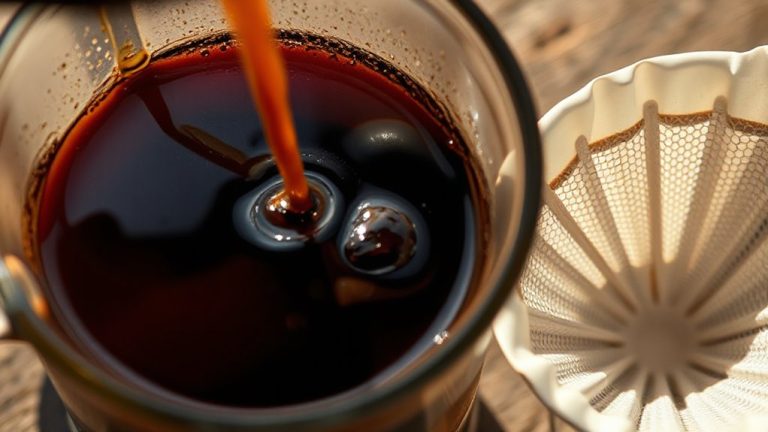
How do you keep those bright, floral notes from your light roast beans intact in cold brew? Start with coarsely ground beans-this helps prevent over-extraction and keeps acidity balanced. Use room-temperature water; cold water can under-extract, while hot water risks bitterness. Aim for about 68–72°F (20–22°C) to preserve delicate flavors without pulling harsh compounds. Combine one part coffee to eight parts water in a jar or cold brew maker, stirring briefly to saturate all grounds. Steep for 12 to 14 hours at room temperature-longer steeping duration increases strength but can mute bright notes if overdone. Avoid exceeding 16 hours. After steeping, filter through a paper or metal filter to remove sediment. The result? A smoother, cleaner concentrate with citrus, floral, or tea-like qualities unique to light roast. Dilute with water or milk to taste. For consistent results, consider using a top-rated cold brew coffee maker designed to optimize flavor extraction and filtration.
Common Mistakes in Light Roast Cold Brew
Using light roast beans for cold brew can highlight nuanced flavors like citrus, jasmine, or green tea, but achieving that balance isn’t foolproof. You’re more exposed to overextraction risks if brewing too long or using too fine a grind. Light roasts need stable conditions-temperature fluctuations during steeping can mute delicate notes or create uneven results. Avoid these pitfalls with deliberate setup.
| Mistake | Why It Happens | How to Fix |
|---|---|---|
| Bitter or astringent brew | Overextraction risks from long steep times | Limit steep to 12–16 hours |
| Flat or sour taste | Temperature fluctuations in kitchen or fridge | Steep at steady 68–72°F (20–22°C) |
| Weak flavor | Inconsistent grind size | Use a burr grinder, coarse setting |
Use a reliable grinder and insulated container. Monitor time and ambient temperature closely.
On a final note
You’ll get brighter, fruitier cold brew by using light roast beans and a coarse grind. This combo highlights delicate flavors while reducing bitterness. Go with African beans like Ethiopian Yirgacheffe for best results. Steep for 12–16 hours in cold water, then strain. Avoid fine grinds or over-steeping-they’ll bring out unwanted harshness. A French press or mason jar works fine, so no fancy gear’s needed.