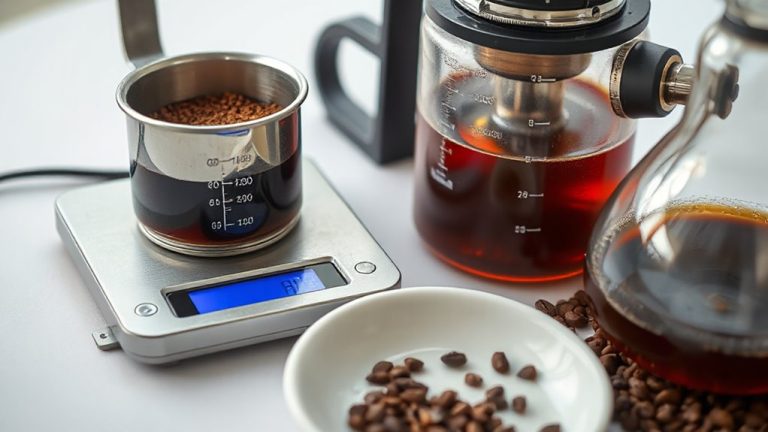
Preventing Sediment in French Press Coffee Through Uniform Coarse Grind
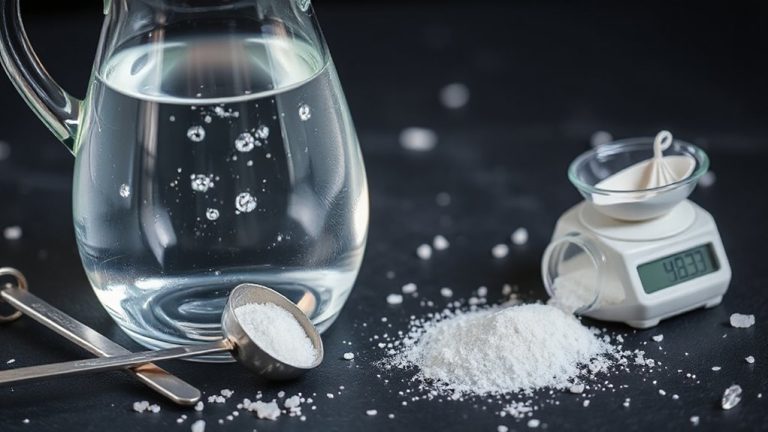
Use a uniform coarse grind, like coarse sea salt, to keep your French press coffee grit-free. A consistent grind from a burr grinder-such as the Baratza Encore or 1ZPresso Q2-means fewer fines slip through the mesh. Pair this with 200°F water, a 4-minute steep, and gentle stirring to minimize sediment. Blade grinders create uneven particles, increasing sludge. You’ll get cleaner, clearer coffee every time-and there’s more to getting it just right.
Notable Insights
- Use a coarse grind size resembling coarse sea salt to minimize fine particles that cause sediment.
- Choose a burr grinder for uniform particle size, reducing fines that pass through the mesh filter.
- Grind beans just before brewing to preserve freshness and ensure consistent extraction and settling.
- Maintain water temperature at 200°F to optimize extraction without overly agitating coffee fines.
- Limit brew time to 4 minutes and stir gently to prevent disturbing settled grounds and increasing sludge.
Why French Press Coffee Gets Gritty
Ever wonder why your French press coffee ends up with a layer of sludge at the bottom of your cup? It’s not just bad luck-it’s physics. When you brew, tiny coffee particles stay suspended if conditions aren’t right. If your water temperature is too low-below 195°F-extraction weakens and fines don’t settle fast. Too hot, above 205°F, and you risk over-extracting bitter compounds while increasing agitation, which keeps grit in suspension. Similarly, extended brew time beyond 4 minutes stirs up more sediment, especially if you stir aggressively. Even with perfect technique, some fines slip through the press’s mesh, but improper water temperature and brew time make it worse. You can’t eliminate sediment completely, but controlling these variables reduces the gunk. Aim for 200°F water and a steady 4-minute brew. It won’t fix everything, but it’s a reliable start. Using a uniform coarse grind helps minimize fines and improves sediment control.
How a Coarse Grind Stops Sediment
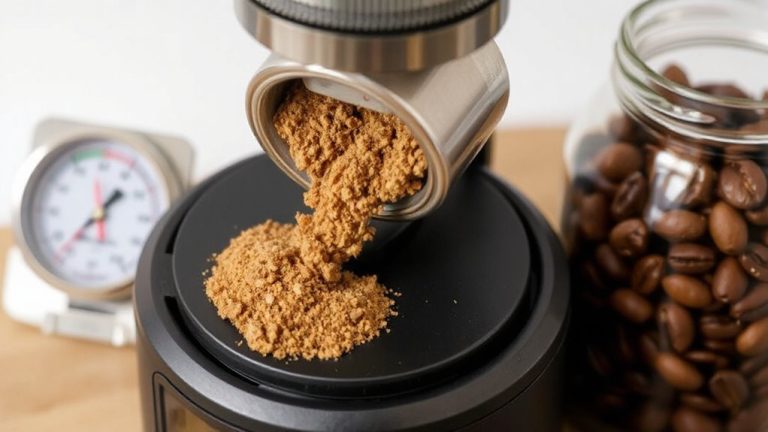
Using a coarse grind is one of the most effective ways to cut down on sediment in your French press coffee. Large particles settle faster, reducing muck at the bottom of your cup. When your grind consistency is even, you avoid tiny fines that slip through the mesh press-those are the main culprits behind grit. Uniform chunks also improve particle separation, letting water flow freely during pressing. If your grind varies too much-some coarse, some fine-the fines will migrate through the filter, no matter how careful you are. A quality burr grinder helps maintain consistency, unlike blade models that create uneven results. You’ll notice cleaner coffee with fewer grounds in each sip. Coarse doesn’t mean too chunky, just large enough to stay contained. The right consistency means better control, less mess, and a smoother brew overall. For those who also brew espresso or pour-over, investing in a versatile best coffee grinder can ensure optimal results across all brewing methods.
Pick the Right Coarse Grind for French Press
You’ve probably noticed that not all coarse grinds work the same, even if they look similar at a glance. The key is grind consistency-uneven particles let fine grounds slip through the filter, increasing sediment. You want most chunks the size of coarse sea salt, with minimal fines. A burr grinder helps achieve this; blade grinders often don’t. Also, bean freshness matters. Freshly roasted beans, ground just before brewing, keep flavors bright and extraction even. Old or stale beans lose gases and moisture, leading to inconsistent extraction, even with the right grind. Aim to use beans within 2–4 weeks of roasting. Pair a uniform coarse grind with prompt grinding and fresh beans, and you’ll reduce muck while boosting clarity. It’s not just about coarseness-it’s about quality at every step. For the best results, consider investing in one of the top-rated best grinders for filter coffee that combine precision and durability.
Best Grinders to Reduce French Press Sediment
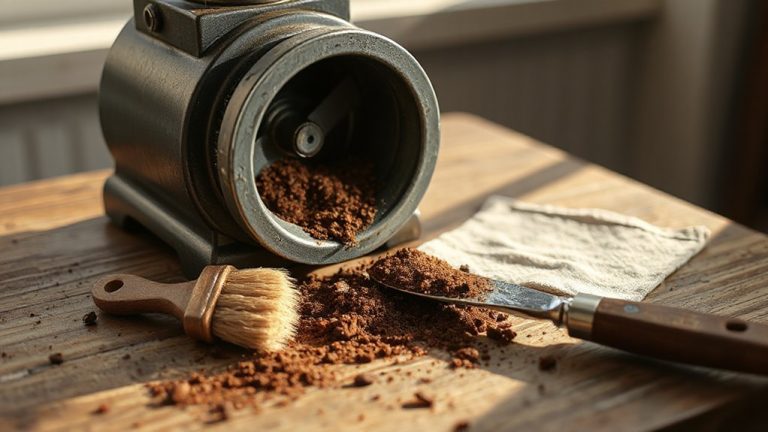
While no grinder eliminates sediment entirely, a consistent burr grinder gives you the best shot at minimizing it in French press coffee. Blade grinders create uneven particles, increasing fines that slip through the plunger and settle at the bottom. Burr grinders, especially conical or flat burr models, produce a uniform coarse grind when properly set. You’ll want to prioritize models with precise grinder calibration so you can reliably hit the right setting every time. Poor burr alignment leads to inconsistent grinding and more sediment. Look for grinders like the Baratza Encore or 1ZPresso Q2, known for their build quality and adjustability. These let you fine-tune the grind size and maintain alignment over time. Even mid-range burr grinders outperform blade models if maintained. Regular cleaning and checkups preserve performance. The right grinder won’t stop all sediment, but it’ll cut it substantially with consistency.
Brew Steps That Reduce Sediment
If you want less sediment in your French press, how you brew matters just as much as your grinder. Start with water temperature around 200°F-the sweet spot for even extraction without over-agitating grounds. Too hot, and you’ll pull out more fines; too cool, and extraction suffers. Use a gooseneck kettle for better control. After pouring, stir gently once to break the crust, then let it steep. Keep your steep time to 4 minutes-longer than that, and more sludge slips through. Don’t press too hard or fast; press slowly and steadily to avoid forcing fine particles into your cup. Use a micro-mesh filter as a backup if needed, though proper steps often make it unnecessary. These steps won’t fix a poor grind, but when paired with a coarse, even particle size, they reduce sediment markedly and improve clarity.
Fix Common Grind Problems Causing Sludge
Most of the sludge in your French press comes from inconsistent or too-fine grinding, not the brewing method itself. If your grounds look patchy-some powder, some chunks-your grinder isn’t delivering uniformity. Blade grinders often cause this; burr grinders, especially conical ones like the Baratza Encore, give you better control. Aim for a coarse, even texture, similar to sea salt. Too fine, and fine particles slip through during pressing, creating sludge, especially if your water temperature is too high or brewing time exceeds four minutes. High heat and long extraction pull out more fines and increase sediment. Stick to water just off boil-about 200°F-and don’t steep longer than recommended. Adjusting grind size improves clarity fast. It’s simpler and more effective than changing your press technique. Fix the grind, and you’ll see cleaner coffee immediately.
Pro Tips to Keep Your French Press Grit-Free
Though the right grind sets the foundation, a few smart techniques can keep that last bit of grit out of your cup. Pour water just off the boil-around 200°F-for ideal extraction without over-agitating fine particles; this water temperature control helps minimize muddiness. After stirring, let the crust form on top, then break it gently with a spoon and skim off the foam before pressing. That small step reduces sediment markedly. Always use a slow, steady press-rushing disturbs the bed of grounds at the bottom. Regular French press maintenance matters too: check the mesh filter for warps or gaps, and replace it if brew slips through. A clean carafe and filter screen prevent old residue from clouding fresh coffee. Some presses, like the Bodum Chambord, have durable filters, but even they wear over time. Small habits make a clear difference.
On a final note
Use a uniform coarse grind to cut down on sediment in your French press. A good burr grinder like the Baratza Encore or Fellow Ode keeps particles consistent, reducing sludge. Pair that with proper brew steps-stir gently, wait four minutes, then press slowly. Avoid blade grinders or uneven settings. If your coffee’s still gritty, tweak the grind or check your pour. It’s practical fixes, not magic, that deliver a cleaner cup.