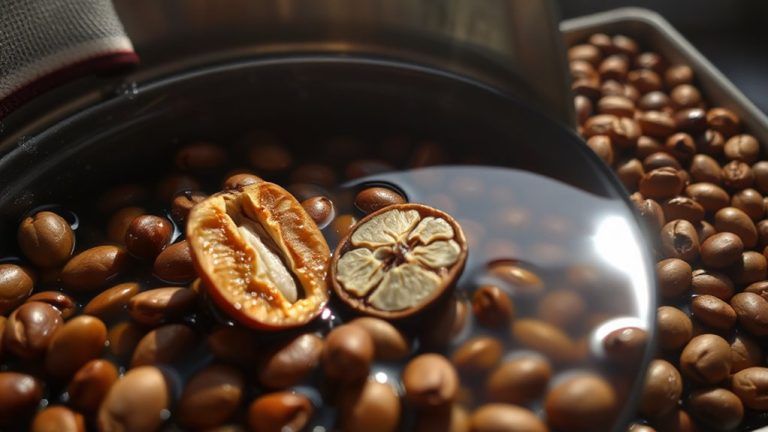
How to Modify Water for Cold Brew Using Precision Mineral Blends
Start with filtered or distilled water, then add a precision mineral blend like Third Wave Water or Morco’s Cold Brew Mix to hit 50–75 ppm hardness. These blends balance calcium, magnesium, and bicarbonate for cleaner, fuller extraction. Match the mix to your beans-brighter profiles for light roasts, low-alkalinity for dark. Use a TDS meter to verify levels, and mix fresh each time. Skip guesswork to guarantee consistency and avoid flat or bitter results-better control means better cold brew.
Notable Insights
- Start with filtered or distilled water to eliminate impurities and ensure a consistent base for mineral adjustment.
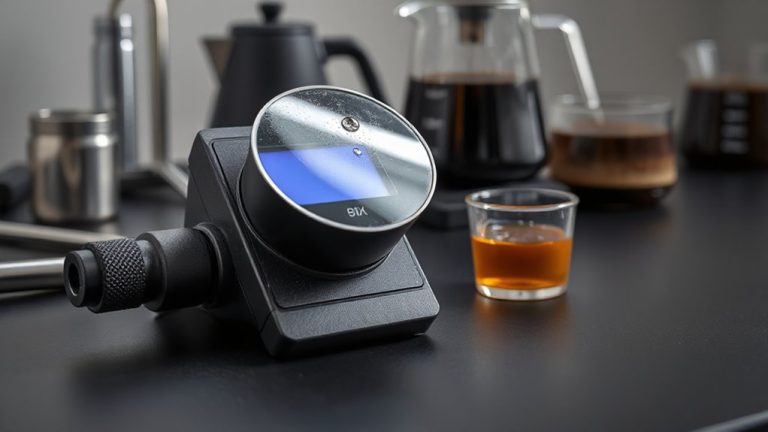
- Use a TDS meter to verify water hardness is between 50–150 ppm before adding precision mineral blends.
- Select a mineral blend tailored to your coffee’s origin and roast level for optimal flavor extraction.
- Accurately measure and mix mineral powders with water to achieve a target of 50–75 ppm hardness for balanced cold brew.
- Avoid reusing old solutions or eyeballing doses to maintain consistency, safety, and extraction quality.
Why Water Quality Makes or Breaks Cold Brew
Even if you’re using top-tier beans, poor water quality can ruin your cold brew before it’s even brewed. Water hardness directly affects how flavors extract-too soft, and your brew tastes flat; too hard, and bitterness overwhelms. Since cold brew steeps for 12–24 hours, off-mineral water amplifies flaws over time. Municipal sources vary, and bottled water isn’t always better-some lack essential minerals, while others have erratic mineral sourcing that skews taste. You need consistency. Standard filters like Brita reduce chlorine but don’t control mineral content. For better results, test your tap water’s hardness with strips or a digital meter. If it’s below 50 or above 175 ppm, consider adjusting. Reverse osmosis systems paired with re-mineralization cartridges offer control. Or, use third-party kits like Liquid Mountains or Third Wave Water, designed specifically to standardize mineral sourcing and balance water hardness for coffee.
The Ideal Mineral Balance for Cold Brew
You’ve tested your water and seen how mineral content shapes flavor, so now it’s time to get specific about the right balance for cold brew. The ideal profile emphasizes moderate hardness-around 50–75 ppm-with a focus on calcium and magnesium. These minerals support extraction without over-emphasizing bitterness. Bicarbonate helps buffer acidity, keeping the brew smooth over long steeps. When these elements work together, you get mineral synergy: each one enhancing clarity and body. Too little mineral content results in flat, underdeveloped notes; too much overwhelms delicate flavor nuance. Avoid sodium-heavy or highly alkaline tap waters-they mute brightness. Target balanced, clean water as your base. While some bottled waters come close, most aren’t consistent. Aim for reproducibility: precise ratios matter more than brand names. A stable mineral foundation guarantees your beans’ true profile comes through, every time.
Pick the Right Cold Brew Mineral Blend
A well-chosen mineral blend makes a noticeable difference in your cold brew’s flavor and consistency. You’ll want to match the blend to your bean origin and roast level for best results. Lighter roasts from Africa or Central America often benefit from a brighter, balanced profile, so go with a blend like Third Wave Water’s Specialty or Morco’s Cold Brew Mix-these enhance acidity and floral notes. Darker roasts from Indonesia or Brazil tend to be smoother and earthier; they pair well with a lower-alkalinity mix that avoids bitterness, like Concentrated Cold Brew Water. Adjusting the mineral content helps extract more evenly, especially with coarse grinds. Don’t just use tap water or distilled-targeted blends give control. Your cold brew will taste cleaner, more nuanced, and repeatable batch after batch. Pick the right one, and you’ll notice it right away.
Test Your Tap Water for Cold Brew Quality?
How good is your tap water for cold brew? You might assume it’s fine, but untreated tap water can wreck your brew’s flavor. High water hardness leads to over-extraction, leaving bitter, chalky notes, while too-soft water causes weak, sour results. Your first step? Test it. Use a digital TDS meter or a simple test strip to check mineral content and pH. Pay attention to water hardness-aim for 50–150 ppm calcium carbonate. Also, check chlorine levels; even low amounts create off-flavors. Municipal supplies often chlorinate, so a basic carbon filter can help reduce it. If your water’s unbalanced, don’t brew with it directly. Instead, start with filtered or distilled water, then add a precision mineral blend tailored for cold brew. That way, you control every variable-leading to cleaner, tastier, more consistent results every time.
Mix Your Cold Brew Water in 4 Steps
Getting the water mix right for cold brew means starting with a clean base and building in the right minerals. First, use filtered or distilled water to remove impurities that could affect flavor. Second, pick a precision mineral blend-like Third Wave Water or Magnesium and Calcium chloride-to match cold brew’s slow extraction. Third, measure the minerals accurately using a digital scale; too much can make coffee bitter, too little leads to flatness. Fourth, mix thoroughly until fully dissolved. Since cold brew relies on long brewing time-typically 12–24 hours-balanced water guarantees smooth extraction without excessive acidity or bitterness. You don’t need to adjust water temperature; this method works at room temp or fridge temps. Consistent mixing supports repeatable results, especially with immersion brewers or mason jars. This approach gives control over taste, letting you tweak hardness and mineral content based on bean origin and grind size.
Avoid These Cold Brew Water Mistakes
While you might think using tap water saves time, it’s one of the quickest ways to ruin a good cold brew-especially if your local supply has high chlorine, sulfur, or mineral content that distorts flavor. Bottled distilled or reverse osmosis water avoids those issues but lacks minerals needed for proper extraction, leading to underdeveloped flavors. Skipping mineral adjustment entirely leaves your coffee weak or flat. On the flip side, adding too many minerals, like boosting calcium too high, increases overextraction risks, making your brew bitter or astringent. Never eyeball your mineral mix-always use a digital scale for accuracy. Hard water regions should avoid adding more carbonate or calcium. And don’t reuse old mineral solutions; they can degrade or grow bacteria. Consistency matters, so label your blends and track results. Small errors add up fast in cold brew’s long steep, so precision prevents waste and bad batches.
Taste Test: How Minerals Change Flavor?
What if your water could make or break the flavor of your cold brew? It can. Minerals in your water directly shape how you experience taste. Chloride perception enhances sweetness and body, making your brew feel smoother-think of using a blend with more calcium chloride. But too much dulls clarity. Magnesium impact boosts acidity and brightness, highlighting fruity or floral notes common in light roasts. However, too much magnesium can extract harsh, bitter compounds. Try side-by-side tests: use Third Wave Water’s concentrate versus distilled water with added minerals. You’ll notice the difference fast. Balanced mineral content-typically 50–150 ppm total-gives the most consistent results. Skip extremes. For reliable flavor, control your water like you do grind size or brew time. It’s that important.
On a final note
You now know water’s role in cold brew isn’t minor-it’s essential. Using precision mineral blends like Third Wave Water or Magnesium + Calcium mixes gives consistent, balanced results. Tap water varies too much to rely on. Mix your water intentionally, taste the difference, and adjust based on your beans and preference. It’s not gimmicky; it’s practical control. Skip the guesswork-better water means better cold brew, every time.