The Role of Bicarbonate in Neutralizing Citric and Malic Acids in Coffee
Baking soda, or sodium bicarbonate, neutralizes citric and malic acids in coffee by raising the brew’s pH, reducing sourness and stomach irritation. It works well with light roasts from Ethiopia or Kenya, where bright, tart notes dominate. A pinch-about 1/8 teaspoon per cup-added to grounds before brewing cuts harshness without flattening flavor. Just stir well to dissolve. It’s cheap, fast, and effective, though too much can taste soapy. Try it if acidity bothers you-small tweaks can make a smoother cup. You’ll find more ways to balance flavor and ease digestion with a few practical changes.
Notable Insights
- Bicarbonate (baking soda) neutralizes citric and malic acids in coffee by raising the brew’s pH, reducing sourness.
- It reacts chemically with acids to form carbon dioxide, water, and salt, softening sharp flavor notes.
- Effective in light roasts where high acidity from Ethiopian or Kenyan beans is more pronounced.
- A dose of 1/8 teaspoon per cup added to dry grounds ensures even acid neutralization during brewing.
- Reduces stomach irritation from acidic coffee without eliminating flavor, enhancing smoothness and body.
Why Your Coffee Tastes Sour: and How to Fix It
Why does your coffee sometimes taste sharp or unpleasantly tart? It’s often because of mismatched bean origin and roast profile. Lighter roasts preserve more natural acidity, especially in beans from high-altitude regions like Ethiopia or Kenya. If you’re using a light roast meant for bright, fruity notes but prefer a smoother cup, the tartness can come off as sour. Darker roasts reduce perceived acidity, developing richer, more balanced flavors-think Latin American beans roasted to second crack. Your brewing method matters too: under-extraction worsens tartness, so check grind size and brew time. A consistent grinder like the Baratza Encore helps. Adjusting roast profile to match bean origin is key. If your light-roast African coffee tastes harsh, try a medium roast or tweak water-to-coffee ratio. These practical fixes target sourness at the source-no additives needed.
Citric or Malic Acid? Which Makes Your Coffee Sour?
What if the sourness in your coffee isn’t just about roast level but the type of acid in the bean? You’re likely tasting citric or malic acid-both common in coffee, but they affect your cup differently. Citric acid, found in beans from warmer regions like Ethiopia, brings a bright, lemon-like zing that can enhance the flavor profile when balanced. Malic acid, more common in beans from cooler highlands like Kenya, tastes like green apple and can feel sharper, even tart, if unchecked. The key isn’t eliminating these acids but managing their acidity balance. Light roasts preserve both, often amplifying sour tones, while medium roasts can soften malic’s bite. Your brew method matters too-pour-over highlights acidity, while espresso may mute it. Knowing your bean’s origin helps you predict which acid dominates, so you can adjust grind, time, or temp to suit your taste.
How Baking Soda Reacts With Coffee Acids
Though you might not think of baking soda as a coffee tool, it can quickly neutralize some of the acids in your brew when used in small amounts. This works through a simple chemical reaction: baking soda (sodium bicarbonate) reacts with citric and malic acids in coffee, raising the pH and reducing sourness. The result is smoother coffee, especially in lighter roasts high in acidity. This acid neutralization doesn’t remove flavor entirely but balances harsh notes. Keep in mind, using too much can dull taste or leave a soapy aftertaste. It’s effective and cheap, but not a fix for low-quality beans or poor brewing. Grounds like these apply best when you’re sensitive to acid or drink coffee on an empty stomach. The reaction happens instantly, so stir well. It’s a practical tweak-just know when it’s needed.
How to Add Baking Soda to Coffee: Dosage & Tips
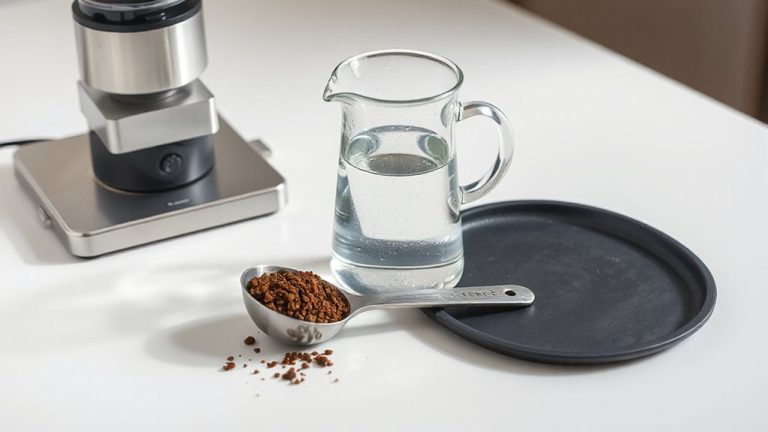
A pinch-about 1/8 teaspoon-of baking soda is all you need per cup of coffee to tone down acidity without ruining the taste. Add it directly to the grounds before brewing for even distribution. If you’re using a French press, mix the baking soda with the grounds prior to pouring hot water to help control brewing time and guarantee consistent neutralization. For drip machines, place the baking soda in the filter with fresh grounds-just remember that coffee freshness matters, as older beans may react differently, producing flat or dull flavors. Avoid exceeding the recommended dose; too much can lead to a soapy taste or unwanted bitterness. Stir well after brewing to dissolve any residue. Use this method daily only if you notice stomach discomfort from acidity, and consider storing your coffee in an airtight container to preserve flavor balance when adjusting brewing routines.
Smoother Taste, No Stomach Burn: What Bicarbonate Changes
You’ve already seen how a small amount of baking soda goes into the grounds to cut acidity, but now let’s look at what actually happens in your cup and your stomach when you use bicarbonate. It neutralizes citric and malic acids, shifting the acid balance so the coffee is gentler on your stomach-no burning or reflux for most people. That same reaction also creates a smoother taste, reducing sharpness without dulling flavor. In fact, many notice a subtle flavor enhancement, with chocolate and nutty notes becoming more pronounced. Use just ⅛ teaspoon per pot; more can leave a soapy aftertaste. Unlike acid-blocking pills or fancy low-acid beans, baking soda is cheap and works instantly. Just stir it into dry grounds before brewing-no special gear needed. It’s not ideal for espresso (pressure changes reactions), but it works perfectly in drip, pour-over, or French press.
On a final note
You’ll find that a small pinch of baking soda can quickly neutralize sourness caused by citric or malic acids in lighter roasts. It smooths flavor without overpowering it, and may reduce stomach irritation for some. Just 1/8 teaspoon per pot is enough-more can make coffee taste flat. While it won’t replace proper brewing technique, it’s a practical fix when acidity overwhelms. Fresh beans and balanced extraction remain your best tools.