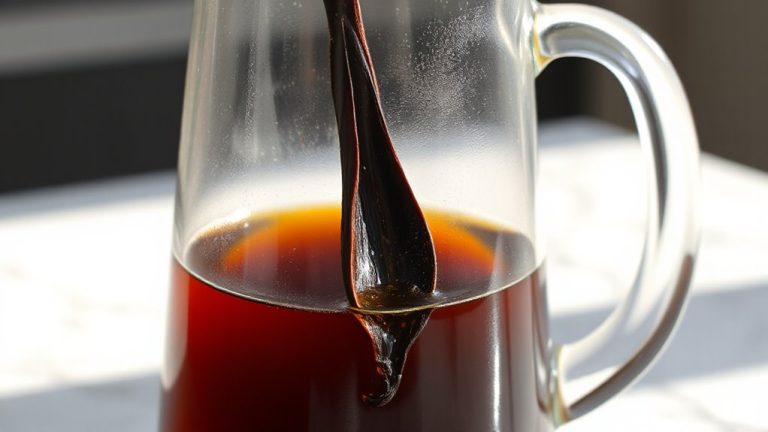
Why Tamping Pressure Must Be Reduced When Using a Coarser Grind for Lungo
You need less tamping pressure with a coarse grind because larger particles already create more space for water to flow. Over-tamping restricts that flow too much, leading to uneven extraction and channeling. This causes weak, underdeveloped lungo shots even with proper timing. Aim for 15–20 pounds of pressure to settle the puck without compacting it. Use a calibrated tamper like the Reg Barber for consistency. Getting this right improves flavor balance and flow control, especially on machines like the Breville Dual Boiler where pressure profiling helps fine-tune results.
Notable Insights
- Coarser grinds naturally create more space between particles, reducing resistance to water flow.
- High tamping pressure on coarse grounds increases the risk of over-compaction and uneven extraction.
- Over-tamping coarse coffee promotes channeling, where water flows unevenly through the puck.
- Reduced tamping pressure helps maintain consistent flow and prevents restriction in lungo shots.
- A gentle, level tamp (15–20 lbs) stabilizes the puck without impeding the longer extraction of a lungo.
Why Coarse Grinds Speed Up Water Flow
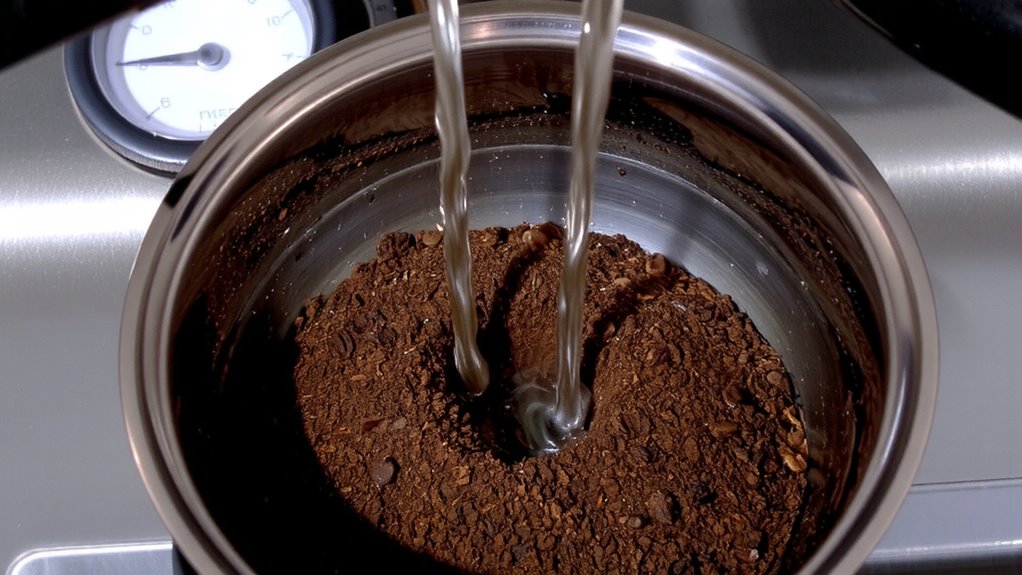
While finer grinds slow water down by packing tightly and restricting flow, a coarser grind actually speeds things up-something you’ll notice right away when pulling a lungo. The larger particles create more space between them, reducing resistance factors and allowing water to move faster through the puck. This change in water dynamics means extraction happens more quickly, which can lead to under-extracted, weak shots if not adjusted for. You’ll need to compensate with a longer brew time or lower pressure. Machines with adjustable pressure profiles, like the Breville Dual Boiler or Rocket R58, give you more control here. Even tamp consistency matters less with coarser grinds, since there’s naturally less compactability. But don’t ignore distribution-uneven grounds still cause channeling. Adjusting your grind size isn’t just about timing; it’s about balancing flow rate, extraction, and flavor. Get this right, and your lungo pulls cleanly every time.
How Over-Tamping Causes Weak Lungo Shots
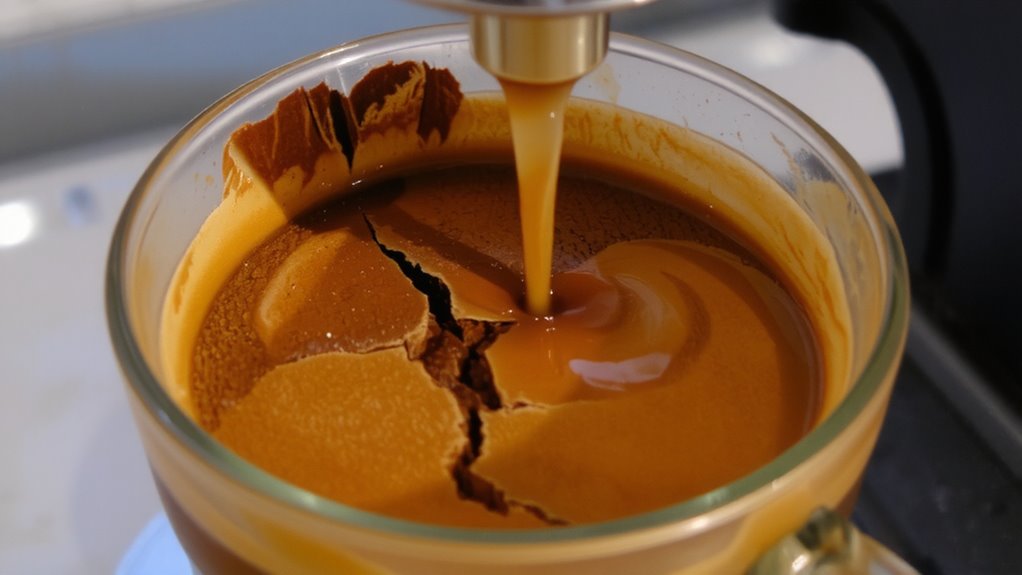
Tamping too hard is one of the sneakiest ways to ruin a lungo shot-even if you’ve nailed the coarse grind you just read about. When you press down too firmly, you compact the grounds unevenly, especially with a coarse grind meant to flow faster. This leads to uneven saturation, where water can’t move through the coffee bed consistently. Instead, it finds weak spots, creating a channeling effect. That means water bypasses most of the coffee, extracting less and yielding a weak, underdeveloped shot. You’ll notice thin body and faint flavor, even with proper brew time. A gentle, level tamp-just enough to stabilize the puck-is all you need. Tools like the Pullman Big Step tamper can help guarantee even pressure. Over-tamping doesn’t improve extraction; it disrupts flow. For lungo, where balance matters, less force gives better, more consistent results. Using a precision coffee leveler ensures an even bed of grounds before tamping, which enhances extraction uniformity.
How Grind Size Affects Flow and Extraction
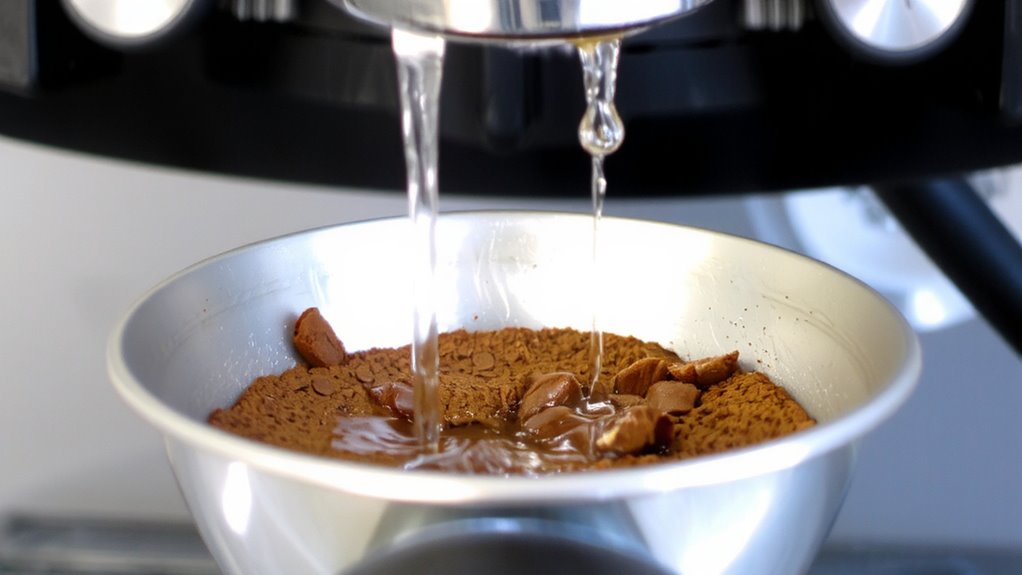
Grind size is the biggest lever you have for controlling how fast water moves through your coffee and how much flavor gets pulled out. When you go finer, water slows down and extracts more-great for espresso. But go too fine or uneven, and your grind distribution becomes inconsistent, leading to clogging or water channeling. That’s when water exploits weak spots, bypassing coffee and creating sour, uneven shots. With coarser grinds, like for lungo, water flows faster, so you risk under-extraction if things aren’t balanced. A uniform grind distribution from a quality grinder helps prevent this. Even particle size means even flow and better extraction. Water channeling is less likely when the bed is consistent. You’re not just changing grind size-you’re managing resistance and contact time. Make sure your grinder is capable and calibrated. It makes all the difference in pulling a clean, balanced shot.
Match Tamp Pressure to Coarse Grind
The sweet spot for a lungo isn’t just about grinding coarser-it’s about adjusting your tamp to match. When you go coarser, heavy tamping can restrict flow too much, leading to poor extraction. You need less pressure to allow water to move freely through the larger particles. Aim for even tamp consistency using about 15–20 pounds of force-just enough to settle the grounds without compacting them. This helps maintain portafilter stability during brewing, reducing the risk of channeling. A calibrated tamper or one with a built-in gauge, like the Reg Barber or Pullman Chisel, can help you stay consistent. Uneven or excessive tamping stresses the portafilter and affects seal integrity. For lungo, think firm but gentle-your goal is uniformity, not compression. Adjust incrementally and note how flow rate changes. Good tamp consistency supports balanced extraction without destabilizing the portafilter. Using a high-quality coffee tamping mat can further enhance stability and consistency during tamping.
Signs You’re Over-Tamping a Lungo
You might think pressing harder guarantees a better shot, but with a lungo, over-tamping works against you. It leads to over-extraction, which brings out a sharp, bitter aftertaste you can’t fix with milk or sugar. That dense puck also causes uneven saturation-water finds weak spots, channeling through one area while leaving the rest dry. You’ll notice a spotty espresso stream, maybe even sputtering, and inconsistent flavor from sip to sip. A properly tamped coarse grind should feel firm but not rock-hard; aim for about 20–30 pounds of pressure, not 40+. If you’re using a standard tamper, ease up-your wrist shouldn’t ache. A calibrated tamper like the Pullman Big Step can help, but it’s not required. Watch the flow: steady, golden lines mean good tamp. Fast or uneven streams mean trouble.
Dial In Your Coarse-Grind Lungo Step by Step
What makes your lungo taste sharp or flat? It’s often poor grind consistency or incorrect shot timing. To dial in a coarse-grind lungo, start by adjusting your grinder to a setting coarser than espresso but still uniform. Inconsistent grounds cause uneven extraction-fine particles over-extract, coarse ones under-extract. Use a burr grinder like the Baratza Sette or Eureka Mignon for better consistency. Pull a test shot with 18–20g of coffee and aim for a 45–60 second shot timing, yielding about 40–60g of output. If the shot runs too fast and tastes weak, slightly reduce the grind size. If it’s too slow or bitter, go coarser. Adjust in small increments. Check shot timing after each change. A stable grind and proper timing improve balance. You don’t need heavy tamping-just enough to level the puck.
Pro Tips for Balanced Lungo Extraction
Getting a balanced lungo means paying attention to both grind size and tamping pressure, since even small changes can shift flavor dramatically. You’ll want to adjust brew temperature slightly lower-around 92–94°C-to avoid over-extracting those extended shots. Too hot, and you’ll pull out bitter notes; too cool, and the lungo tastes sour. Aim for a shot volume of 110–130ml, depending on your beans and machine. This range gives clarity without draining the espresso’s life. Use a gooseneck kettle if pre-infusing manually, and always time your pour-25 to 30 seconds is ideal. Pair a coarser grind with lighter tamping to keep flow steady. Machines like the Lelit Bianca or Rocket R58 help maintain stability, but even入门 models can deliver if you’re consistent. Small tweaks make big differences-track each change.
On a final note
You need less tamping pressure with a coarse grind for lungo because bigger particles let water flow faster. Over-tamping slows it too much, causing weak, uneven extraction. Aim for even saturation and steady flow-usually 12–18 seconds for a 100–120ml shot. Try 15kg of tamp pressure instead of 20kg, and adjust based on taste. If your shot crawls or tastes bitter, ease up. A good grinder, like the Baratza Sette, helps keep things consistent.