Exploring the Role of Typica in the Development of Hawaiian Kona Coffee
You’re tasting Typica every time you sip classic Kona coffee-it’s the variety that started it all in the 1800s. Grown in volcanic soil rich in potassium, it develops dense beans that roast evenly and deliver bright acidity with notes of citrus and honey. Use a light roast and pour-over method to highlight its clean, balanced profile. Though vulnerable to disease and climate shifts, many farmers still grow it using shade trees and drip irrigation. There’s more to how this heritage bean stays viable today.
Notable Insights
- Typica was the first Arabica variety introduced to Kona in the 1820s, establishing the region’s coffee-growing tradition.
- Its cultivation in Kona’s volcanic soil produced dense, flavorful beans that defined the region’s early coffee quality.
- Typica’s bright acidity and notes of citrus, honey, and macadamia became signature traits of premium Kona coffee.
- Despite its susceptibility to disease and climate stress, Typica set the standard for Kona’s global reputation.
- Sustainable practices and genetic preservation efforts aim to protect Typica’s legacy in Hawaii’s coffee future.
How Typica Transformed Kona Coffee
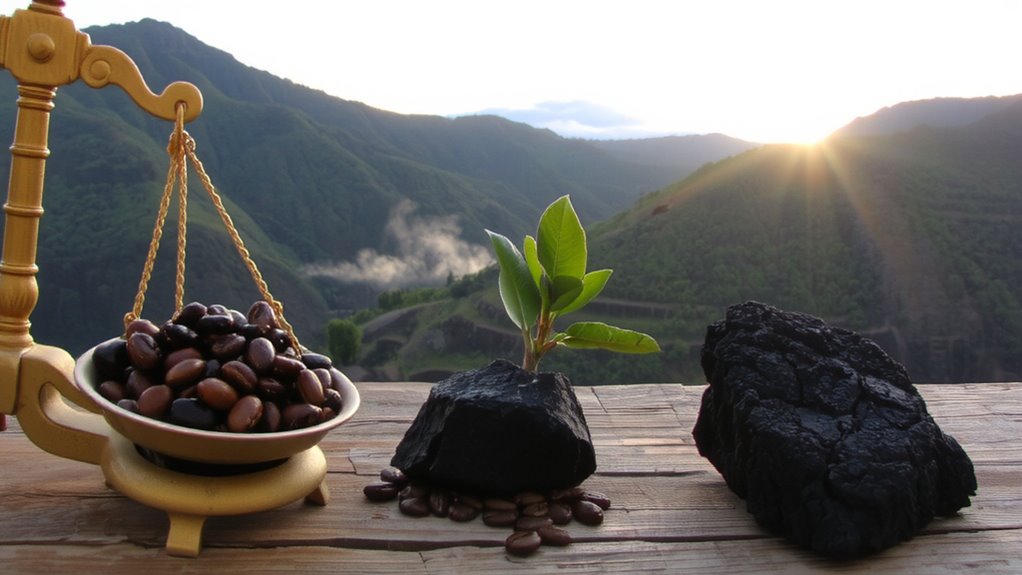
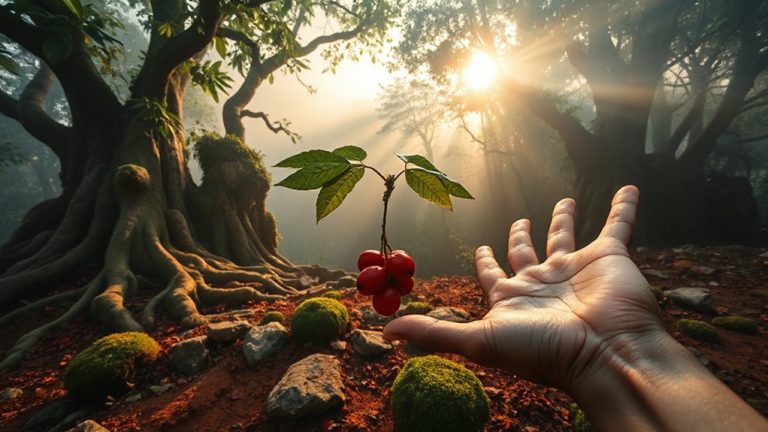
Typica didn’t just show up in Kona-it reshaped the region’s coffee identity. You see, this variety traces its historical origins to early 18th-century coffee brought to the Americas, eventually reaching Hawaii in the 1820s. When Typica took root in Kona, it wasn’t just another crop; it set a standard. Farmers quickly realized its clean, balanced cup profile worked well with local processing methods, like wet-milling and sun-drying on patios. The cultural impact was clear: Typica became synonymous with Kona coffee, influencing farming practices and branding. Even today, when you brew a cup of traditional Kona, you’re tasting that legacy. While newer hybrids offer disease resistance, Typica remains prized for its quality. If you’re roasting or brewing, expect bright acidity and floral notes-best brought out with a medium roast and a pour-over or drip method.
Why Kona’s Volcanic Soil Loves Typica Beans
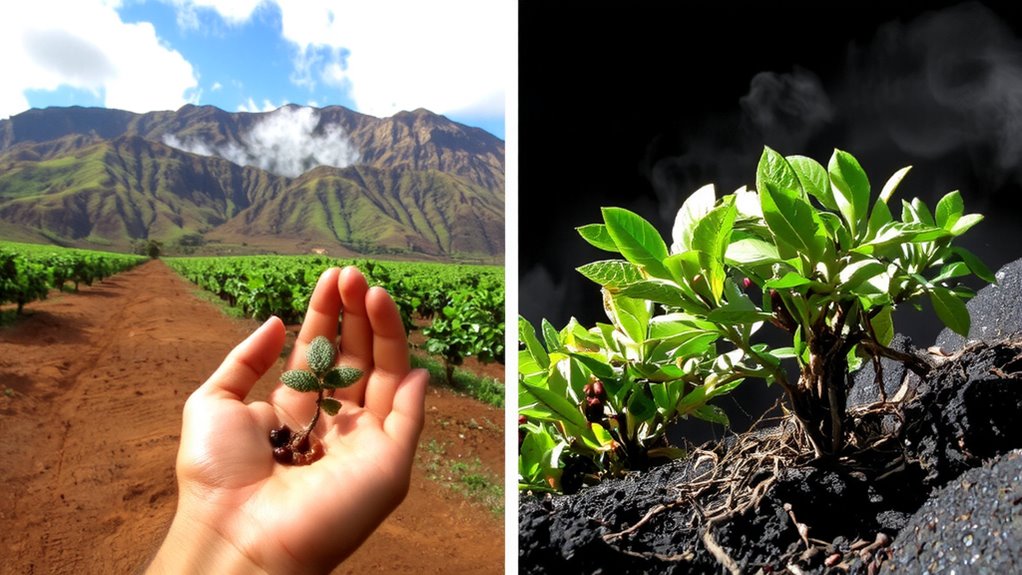
Kona’s volcanic soil doesn’t just grow coffee-it elevates Typica in a way few other terroirs can match. You’ll notice how the soil composition, rich in minerals like potassium and phosphorus from decomposed lava, supports strong root development and steady nutrient uptake. This environment encourages reliable bean adaptation, allowing Typica’s deep roots to thrive despite Kona’s variable rainfall. The porous volcanic substrate also drains well, reducing rot risk-a key factor since Typica is prone to disease in soggy conditions. Unlike in less dynamic soils, here, the coffee grows slowly, which strengthens bean density. That density matters when you’re roasting; it leads to more even heat penetration. You’re not just planting a heirloom varietal-you’re matching a delicate plant to land that buffers its weaknesses. With smart canopy shading and mulch, you can further stabilize moisture. It’s not foolproof, but with attention, the soil does much of the work for you.
How Typica Shapes Kona Coffee’s Flavor
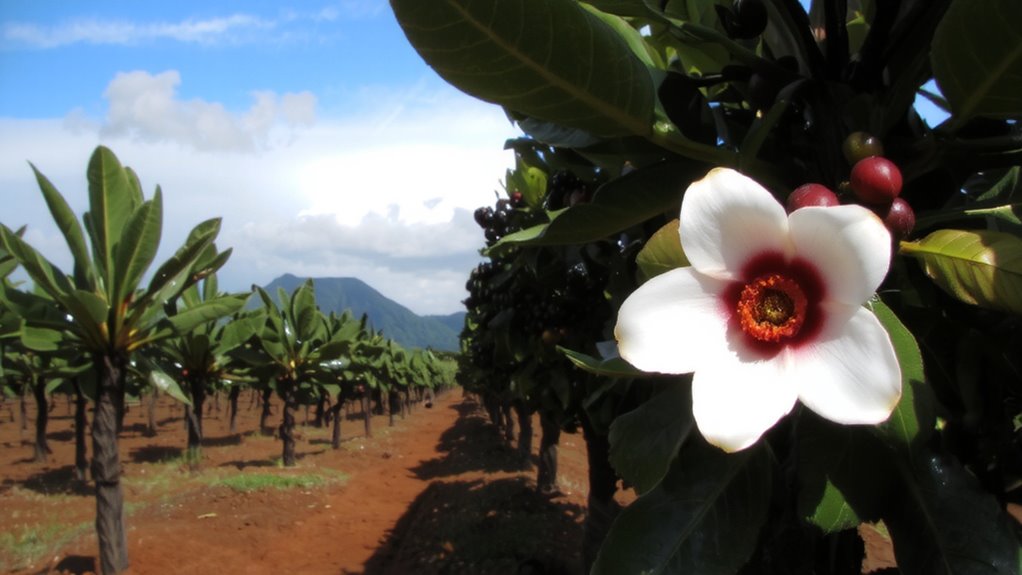
Silky body, bright acidity, and a clean finish-those are the markers you’ll often find in a cup from the Big Island, and much of that signature starts with the plant itself. Typica’s bean genetics play a major role in shaping Kona coffee’s delicate flavor profile. You’ll notice subtle notes of citrus, honey, and macadamia because Typica expresses clean, nuanced flavors when grown in ideal conditions. Unlike more common varieties like Caturra or Catuai, Typica grows taller and slower, which may contribute to denser beans and a more refined taste. When roasted lightly to moderately, the inherent sweetness and brightness come through clearly. For best results, use a pour-over or drip brewer to highlight its balanced acidity. While not as disease-resistant, Typica’s flavor profile remains a benchmark. You’re tasting what pure Arabica once offered before modern hybrids changed the game. Top-rated Hawaiian coffee picks consistently highlight Kona beans for their smoothness and complexity.
Why Typica Is Struggling in Kona Today
You can taste the quality in every sip of traditional Kona coffee, but keeping that flavor alive has become harder over time. Typica, the original cultivar, lacks strong disease resistance, making it vulnerable to coffee leaf rust and other pathogens now more common in warmer, wetter conditions. Climate change has intensified these threats, with rising temperatures and irregular rainfall weakening trees and reducing yields. You’re dealing with a plant bred for flavor, not survival in modern conditions. While Typica’s cup profile stands out, its fragility means higher labor and maintenance costs. Growers face harder choices: stick with tradition or switch to more resilient, if less nuanced, varieties. In this environment, preserving Typica isn’t just about taste-it’s a daily challenge against biology and weather you can’t control.
Saving Typica: Sustainable Farming Tactics
While preserving Typica in Kona isn’t simple, adopting sustainable farming tactics can make a real difference in keeping the cultivar viable. You can start by integrating crop diversity-planting shade trees like guava or macadamia alongside coffee reduces soil erosion and improves resilience against pests. Introducing companion plants also supports natural pest control, reducing reliance on chemicals. Water conservation is critical in Kona’s dry spells; using drip irrigation systems delivers water directly to roots, cutting waste by up to 50% compared to overhead methods. Mulching helps retain moisture and regulates soil temperature. Some farms use rainwater catchment systems to supplement supply during droughts. Rotational fallowing restores soil health, boosting long-term yields. While Typica grows slower and yields less than modern hybrids, these practices help offset its vulnerabilities. You don’t need to abandon tradition-just adapt it with practical, proven methods that protect both plant and environment.
How Typica Built Kona’s Global Reputation
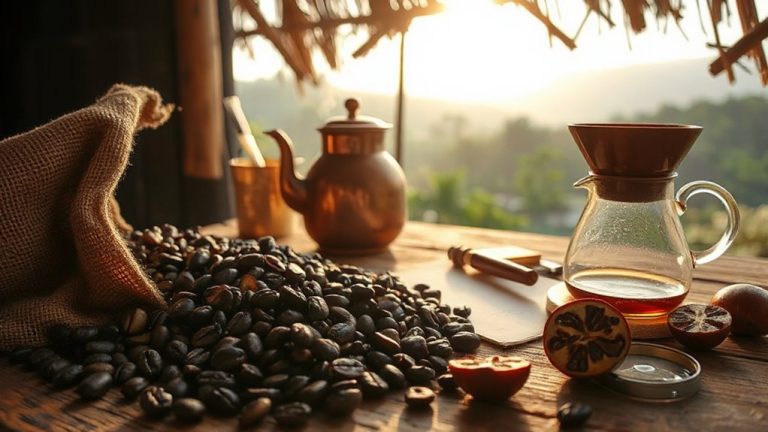
Because it was one of the first Arabica varieties planted in Hawaii’s Kona region in the early 1800s, Typica helped lay the foundation for what would become a world-renowned coffee origin. You can still taste its clean, bright profile today, a hallmark of Kona’s signature cup. Typica’s early adoption gave the region a head start in global trade, reaching European and American markets thirsty for high-quality Arabica. Its consistent performance on Kona’s volcanic slopes made it a favorite among small-scale growers, reinforcing a cultural identity tied to excellence and craftsmanship. Unlike more disease-resistant hybrids, Typica demands careful farming, but many believe the payoff in flavor justifies the effort. When brewed with precision-like using a gooseneck kettle for pour-over-you experience its nuanced sweetness and mild acidity. Typica’s legacy isn’t just historical; it’s what put Kona on the map, defining its reputation one carefully cultivated bean at a time.
The Future of Typica: Heritage Meets Resilience
Even as newer, hardier coffee varieties enter the scene, Typica remains a cornerstone of Kona’s identity, and its future hinges on balancing tradition with adaptation. You’ll need to support climate adaptation by selecting shade trees and mulching to manage heat and rainfall shifts. These practices help Typica thrive despite warming trends. Growers like those at Greenwell Farms are already adjusting elevation and irrigation to maintain bean quality. Genetic preservation is vital-organizations like the USDA’s National Coffee Germplasm Repository safeguard Typica’s pure lines. You can’t afford to overlook pests like coffee leaf rust, so pairing Typica with disease-resistant rootstock is a practical move. Though slower to yield than hybrids like Catimor, Typica’s cup profile justifies its upkeep. By combining heritage with science-preserving genetics while adjusting cultivation-you guarantee Typica stays viable for decades. Action now means flavor later.
On a final note
You rely on Typica beans for Kona coffee’s signature smoothness and bright acidity, but they’re vulnerable to disease and climate shifts. If you grow them, you’ll need shade trees and careful pruning to protect yields. While newer varieties offer resilience, Typica remains central to Kona’s reputation. To preserve quality and heritage, blend traditional care with modern sustainability-your brewing choice supports this balance.