Pulling Espresso Shots With Pre-Ground Coffee: Challenges and Workarounds
You’re losing flavor fast with pre-ground coffee because it stales within hours and often has uneven grinds, leading to sour or bitter shots. Use a fresh, nitrogen-flushed brand like Lavazza or Illy, stick to 18–20g doses, tamp evenly, and aim for a 25–30 second extraction. A calibrated scale, bottomless portafilter, and distribution tool help improve results. It’s not ideal, but these steps can get you closer. There are still key details worth knowing if you want consistent results.
Notable Insights
- Pre-ground coffee loses freshness quickly, leading to flat, less aromatic espresso due to oxidation and moisture exposure.
- Inconsistent grind size in pre-ground coffee causes uneven extraction, resulting in sour or bitter, unbalanced shots.
- Use pre-ground espresso within two weeks of roast date and store it airtight, away from light and heat.
- Opt for brands like Lavazza or Illy that use burr grinders for more uniform particles and better extraction stability.
- Employ precise dosing, even tamping, and quality tools like calibrated scales and bottomless portafilters to improve shot consistency.
How to Make Espresso With Pre-Ground Coffee
While fresh grinding is ideal, you can still pull decent espresso with pre-ground coffee if you know how to work around its limitations. Focus on coffee freshness first-choose pre-ground espresso labeled with a roast date, and use it within two weeks. Store it in an airtight container away from light and moisture. Since you can’t adjust grind consistency yourself, select a brand that uses a burr grinder before packaging; avoid those with inconsistent particles like Nescafé or generic blends. Lavazza Espresso Italiano or Illy Classico offer more uniform grind consistency, which helps extraction. Tamp evenly and firmly to compensate for uneven particles. Use a machine with stable pressure-manual or semi-automatic-and stick to a 1:2 ratio over 25 seconds. It won’t match fresh-ground quality, but it’s reliable in a pinch. For broader options beyond espresso, consider exploring top-rated pre-ground coffee picks to find a blend that suits your taste and brewing method.
Why Pre-Ground Often Fails in Espresso
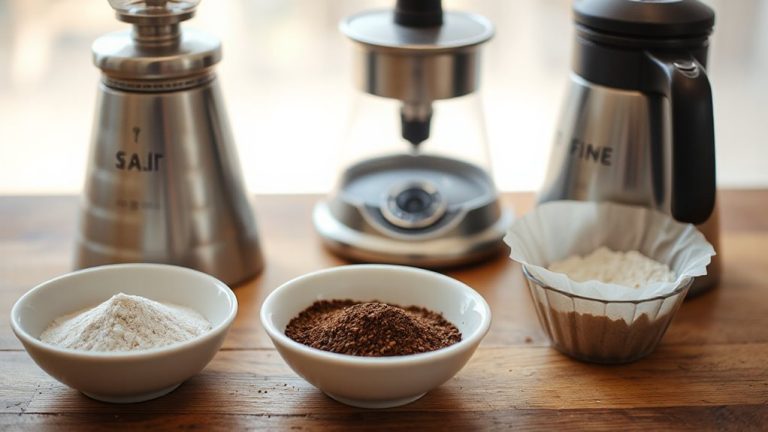
You can pull a passable shot with pre-ground coffee, but it often falls short for a few clear reasons. Grind degradation happens as soon as coffee is ground-exposure to air speeds up staling, reducing aroma and sweetness within hours. By the time you brew, the flavor’s already flat. Pre-ground also brings particle inconsistency; blades or low-tier grinders create uneven sizes, leading to over-extraction of fines and under-extraction of boulders. This imbalance results in sour, bitter, or hollow shots. Even high-quality pre-ground can’t match the uniformity of a burr grinder calibrated for your machine. While convenient, pre-ground limits control and freshness-two pillars of good espresso. If you’re using beans weeks old or stored in clear canisters, the flaws only worsen. For better results, grind fresh. When you can’t, pick dense, dark roasts to mask inconsistencies, but expect trade-offs in clarity and balance. A high-quality mill grinder can preserve bean integrity and deliver the consistent particle size essential for balanced espresso extraction.
Fix Your Shot: Dose, Tamp, and Timing
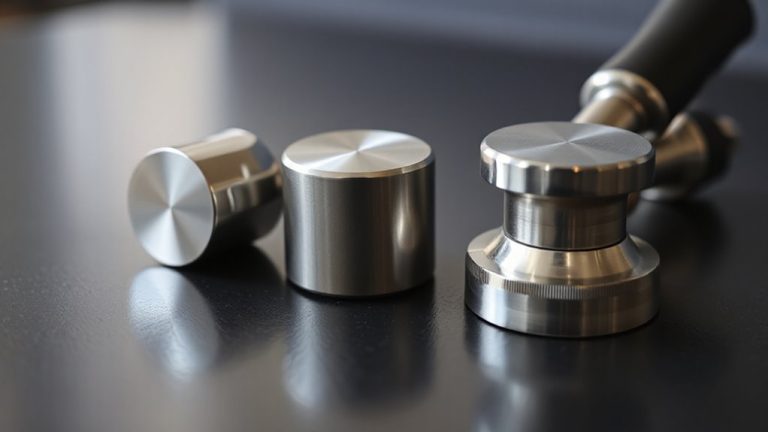
A good shot starts with the basics: dose, tamp, and timing. With pre-ground coffee, you can’t adjust grind size, so nailing these three factors becomes critical. Start with a consistent dose-typically 18–20 grams for a double shot-so your puck forms evenly. When you tamp, use even tamp pressure; either too light or too hard leads to channeling or restricted flow. A level, firm tamp guarantees water moves uniformly through the coffee. Then watch your shot timing. For pre-ground, aim for a 25–30 second extraction-any faster or slower means trouble. If the shot runs too quick, the tamp pressure might be too low; if too slow, you could be tamping too hard. Adjusting these variables helps balance flavor despite the fixed grind. Small tweaks make a real difference. You won’t fix all issues, but you’ll get closer to a drinkable espresso. For best results, consider using a calibrated commercial-grade tamper to ensure consistency across shots.
Best Tools for Better Pre-Ground Espresso
The right tools can make a noticeable difference when pulling espresso with pre-ground coffee, helping compensate for the lack of grind control. A high-quality portafilter with a tight seal, like those from IMS or Pullman, improves shot stability by minimizing channeling. A precision tamper-such as the Reg Barber or Stanley Strada-ensures even pressure, boosting extraction consistency. Your distribution tool matters, too; the OCD or WDT-9000 helps break up clumps and improve grind consistency. Don’t skip tool calibration: check your scale (like the Acaia Lunar) regularly, and verify your timer syncs with brew start. While you can’t adjust particle size, these tools let you fine-tune dose, distribution, and tamping-critical when working with static grind. A bottomless portafilter also helps you spot issues early. With calibrated, reliable gear, you’re not chasing ideal extraction-you’re building control step by step.
When Pre-Ground Coffee Is Actually Okay
How often does pre-ground coffee actually work for espresso? More than you might think-but only when you prioritize convenience over freshness. If you’re using a stovetop moka pot or a low-pressure pod machine, pre-ground is fine since those systems don’t demand the same precision as pump-driven espresso machines. Some specialty brands now offer nitrogen-flushed, finely ground espresso with batch-coded roast dates, giving better shelf life and consistency in brewing. These are practical choices for office settings or travel where grinding fresh isn’t an option. Automated espresso machines with fixed dosing also benefit from pre-measured, pre-ground pods or capsules, ensuring repeatable results. While you’ll sacrifice some flavor clarity and crema, you gain speed and simplicity. For casual use or backup situations, quality pre-ground can be acceptable-just store it airtight and use it within two weeks for best results.
On a final note
You can pull decent espresso with pre-ground coffee if you adjust your dose, tamp firmly, and tweak brew time. Freshly ground beans still deliver better flavor and crema, but a good burr grinder isn’t always an option. For pre-ground, choose a fine, consistent grind like Lavazza Super Crema or Illy Classico. Use a scale and timer to stay precise. A bottomless portafilter helps spot issues. Pre-ground works in a pinch, especially with practice and the right tools.