Coffee Water Temp for Lipids: 195–205°F Guide
You need water between 195°F and 205°F to properly dissolve coffee’s natural lipids without scorching the grounds. Too hot, and the oils break down, creating a bitter, oily mess; too cool, and the lipids won’t extract, leaving your coffee sour and thin. A gooseneck kettle like the Fellow Stagg helps maintain that sweet spot. Grind size and brew method matter too-fine for espresso, coarse for French press. Get the temp right, and your brew stays balanced, aromatic, and smooth. There’s more to mastering the details.
Notable Insights
- Water between 195°F and 205°F optimally dissolves coffee lipids for balanced flavor and aroma.
- Excessive heat above 205°F increases lipid solubility but risks oxidation and bitter, scorched flavors.
- Temperatures below 195°F reduce lipid solubility, leading to underextraction and weak, sour coffee.
- Proper temperature ensures efficient lipid extraction while preserving delicate volatile flavor compounds.
- Grind size and brewing method interact with temperature to influence lipid solubility and extraction consistency.
Why Water Temperature Matters for Coffee Lipids
While brewing coffee might seem straightforward, the water temperature you use plays a critical role in how lipids-those natural oils in coffee beans-are extracted. If your water’s too hot, above 205°F, you risk speeding up lipid oxidation, which degrades oils and leads to stale, cardboard-like flavors. But if it’s too cool, below 195°F, you’ll under-extract, missing out on richness and fullness. The sweet spot? 195°F to 205°F. This range supports better aroma retention, locking in volatile compounds that make your coffee smell and taste vibrant. Devices like gooseneck kettles with built-in thermometers help you stay precise. Paper filters can absorb some oils, but metal or cloth filters preserve more lipids. You’re not just brewing-you’re balancing chemistry. Keep temp consistent, and you’ll get cleaner, more aromatic cups every time.
How Heat Affects Lipid Solubility During Brewing
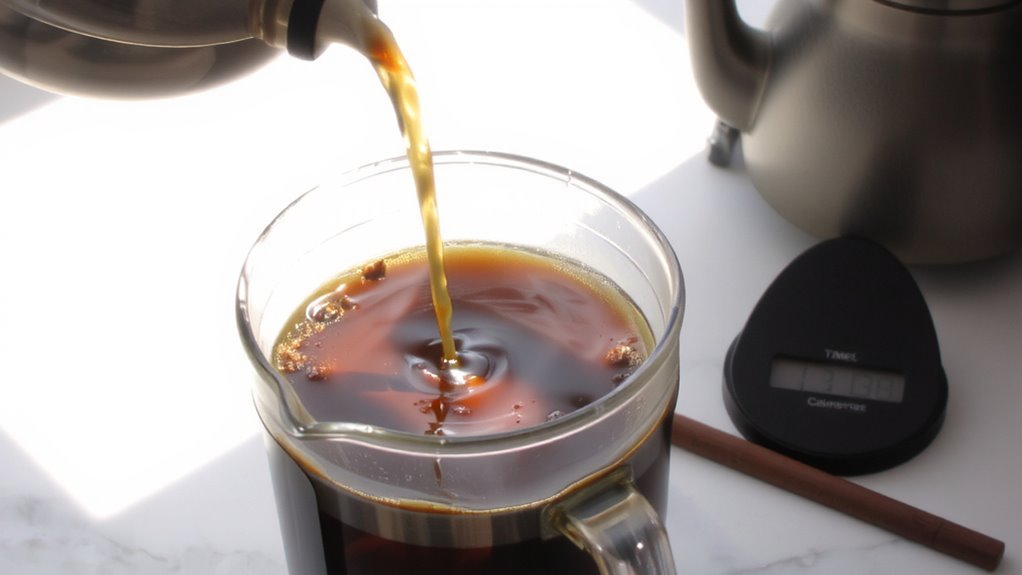
Heat is the engine driving lipid solubility in your brew, and getting it right means understanding how temperature releases oils from coffee grounds. When water heats up, it increases molecular agitation, making lipids more fluid and easier to extract. You’ll see better lipid dispersion when the water’s hot enough to break down cell structures in the coffee, but not so hot it scorches the grounds. Too low, and the oils stay trapped; too high, and you risk bitter flavors. This balance affects mouthfeel and aroma directly. Devices like gooseneck kettles with temperature control help you maintain consistency. Pour-over setups, like a Hario V60, respond well to this precision. Heat isn’t just about extraction-it’s about how evenly those lipids spread through your cup. You want them fully integrated, not floating on top. Proper agitation and heat work together for that. For optimal results, consider using one of the best coffee brewing kettles designed for precise temperature control.
The Ideal Temperature Range for Balanced Extraction
If you’re aiming for a well-rounded cup, targeting a water temperature between 195°F and 205°F is your best bet, as this range reliably extracts lipids and flavor compounds without tipping into bitterness. At this heat, you achieve ideal lipid saturation, helping oils integrate smoothly into the brew for a fuller mouthfeel. Too low, and extraction slows, weakening flavor stability; too high, and you risk scalding delicate compounds. This range works well across most brewing methods-pour-over, drip, or French press-especially with medium-grind beans. Equipment like the Fellow Staggy or Techne includes adjustable settings so you can lock in this sweet spot. Staying within these temps guarantees consistent extraction batch after batch. You’ll notice brighter acidity, richer body, and longer-lasting aroma. It’s not magic-it’s science. Stick with precision kettles and digital thermometers to stay accurate.
What Happens When Water Is Too Hot or Too Cold?
You’ve got the sweet spot nailed down-195°F to 205°F delivers balanced extraction, clean flavor, and rich mouthfeel by pulling just the right amount of lipids and aromatics. Go beyond that range, and things go sideways. Too hot? You face overextraction risks-bitterness, astringency, and too many heavy lipids that muddy the cup. Too cold? Underextraction flaws creep in: sourness, weak body, and lack of richness because lipids won’t dissolve well. Here’s what happens across temperatures:
| Water Temp | Lipid Solubility | Cup Outcome |
|---|---|---|
| 180°F | Low | Thin, sour, weak |
| 190°F | Moderate | Slightly flat |
| 200°F | Ideal | Balanced, rich |
| 210°F | High | Bitter, harsh |
| 220°F | Excessive | Oily, astringent |
Stick to the ideal range for best results.
How Grind Size and Brew Method Interact With Temperature
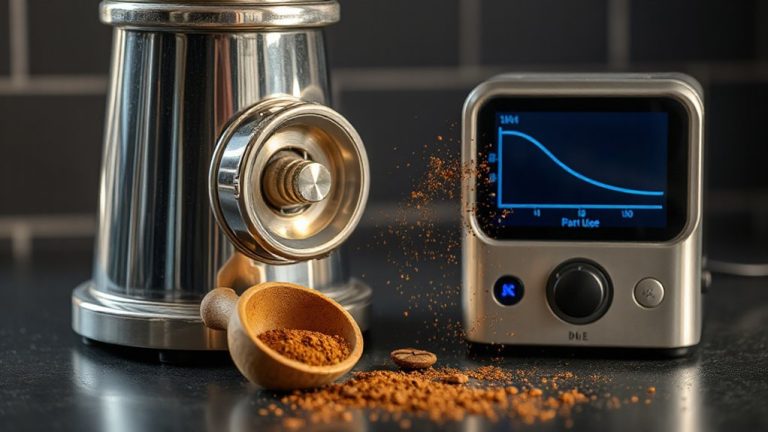
Why does the same water temperature brew one cup perfectly while ruining another? Because grind size and brew method change how water interacts with coffee. A fine grind, like for espresso, needs higher temperatures-around 90–96°C-to extract lipids and oils quickly during short brew contact. But if you use that same temp with a coarse grind in a French press, the water moves too slowly, over-extracting and making bitterness. Grind consistency is critical: uneven particles lead to mixed extraction, especially under high heat. Pour-over methods, like V60, rely on medium-fine grinds and controlled pour speed, where precise temp and even saturation guarantee balanced flavor. Cold brew, on the other hand, uses room temp or cold water with coarse grinds and long brew contact-usually 12–24 hours-minimizing heat’s role entirely. Choosing the right combo makes all the difference. For optimal results in pour-over, use a medium-fine grind that ensures even extraction and clarity of flavor.
Tips to Optimize Temperature for Smoother, Richer Coffee
Water temperature isn’t a one-size-fits-all setting-even when using the same beans and brewer. For smoother, richer coffee, aim for 195°F to 205°F; this range optimizes lipid solubility, pulling out desirable oils without scalding the grounds. Too hot, and bitter compounds overpower the flavor notes you want. Too cool, and the extraction falls flat. If using a pour-over like a Hario V60, keep your water near 200°F for balanced brightness and body. For French press, go closer to 205°F to move through coarser grinds efficiently. Cold brew, meanwhile, skips heat entirely-steeping beans in room temp or cold water for 12+ hours creates a smooth, low-acid drink with muted flavor notes. It’s less about oils, more about patience. Adjust temp based on roast: darker roasts need slightly cooler water to avoid harshness. Test small changes. Your ideal cup is precise, not guesswork. Using a gooseneck kettle with precise temperature control helps maintain consistency during pour-over brewing, and models with best gooseneck kettles are designed specifically for this level of accuracy.
On a final note
You’ll get the best lipid extraction between 195°F and 205°F-too cold and the coffee tastes weak, too hot and it pulls bitter compounds. This range works well with most methods, like pour-over or French press, especially when paired with the right grind size. Go finer for lower temps, coarser if it’s hotter. A gooseneck kettle with temperature control gives you precision. Consistency here means richer, smoother coffee every time.