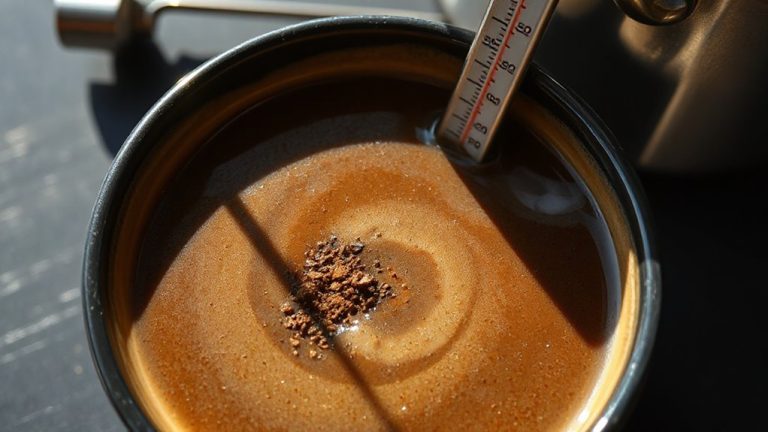
The Effect of Water Composition on Espresso Viscosity and Aftertaste
Your water’s mineral mix directly shapes your espresso’s body and finish. Too much calcium or magnesium hardens water, boosting extraction but risking bitterness and scale. Soft water leaves shots thin and sour. Sulfates highlight acidity, while bicarbonate buffers pH but can mute flavors if overdone. Aim for 50–100 ppm hardness with balanced minerals-using filtered or re-mineralized water-for smoother mouthfeel and cleaner aftertaste. Try Third Wave Water if your tap’s inconsistent. You’ll get better results the more you control the variables.
Notable Insights
- Water with balanced calcium and magnesium enhances espresso viscosity and promotes a smooth mouthfeel.
- High sulfate levels can increase perceived acidity and create a thinner, sharper aftertaste.
- Excessive bicarbonate may over-extract bitter compounds, leading to heavy body and lingering harsh aftertaste.
- Soft water often produces under-extracted espresso with low viscosity and sour, hollow aftertaste.
- Iron or unbalanced minerals in water can introduce metallic or off-flavors that distort aftertaste.
Why Water Quality Matters for Espresso
Water might seem like the simplest part of your espresso, but it actually plays a huge role in how your shot tastes and how your machine performs. If your water is too hard, it causes scale buildup, risking damage to your machine over time. Too soft, and your espresso lacks flavor clarity. Water temperature interacts directly with grind size-too hot and you risk over-extraction, especially with a fine grind. Aim for 195–205°F; outside that range, consistency drops. A stable water profile guarantees even extraction, letting your chosen grind size work as intended. Hard water can also clog group heads, increasing maintenance. For best results, use filtered water with balanced mineral content-like Third Wave Water or a DIY mix tailored to SCA standards. This isn’t just about machine health; it shapes every shot’s balance, acidity, and sweetness. Get the water right, and your grind and temperature adjustments become predictable, repeatable.
How Minerals Affect Body and Mouthfeel
Minerals in your water aren’t just background players-they directly shape the body and mouthfeel of your espresso. High sulfate levels can highlight acidity and give a lighter, almost sharp texture, which some specialty roasts benefit from. But too much can leave your shot thin and astringent. On the other hand, balanced minerals like calcium and magnesium support a fuller, smoother mouthfeel, enhancing the perceived body. Watch the iron content-elevated levels can introduce off-flavors and disrupt extraction, leading to a flat or metallic finish. Even if your water is safe to drink, excess iron might corrode equipment over time, affecting consistency. For best results, use filtered water with controlled mineral profiles-brands like Third Wave Water or Liquid Alkalinity let you customize levels. Aim for moderate sulfate and near-zero iron content to preserve both flavor clarity and the rich texture you want in a well-brewed shot. Your palate-and machine-will notice.
Hard vs. Soft Water: Impact on Extraction and Taste
You’ve probably noticed how different water changes your espresso’s texture, and that same variation plays a bigger role when comparing hard and soft water. High water hardness, from calcium and magnesium, boosts extraction, giving a bolder, more intense shot-but too much causes over-extraction and bitterness. Soft water, with fewer minerals, often under-extracts, leading to sour, weak espresso. The key is a balanced mineral profile. A good mineral balance supports stable extraction and improves mouthfeel without scaling your machine. For best results, aim for water around 50–150 ppm hardness and a moderated alkalinity. Brands like Third Wave Water or Peak Performance Mineral Solution offer pre-measured mixes designed for espresso, helping maintain consistency. Tap water varies too much for reliable results. Adjusting your water lets you control taste and machine health. It’s not just about purity-it’s about precision.
Calcium, Magnesium, and Bicarbonate Explained
While each mineral in your water plays a distinct role, calcium, magnesium, and bicarbonate are the big three that directly shape your espresso’s extraction and flavor. Calcium boosts body but can cause scale, harming machines over time. Magnesium improves extraction efficiency, pulling out more nuanced flavors-especially bright, acidic notes. Bicarbonate acts as a buffer, stabilizing pH but potentially leading to over-extraction or a flat taste if levels are too high. You’ll want balanced levels of all three to avoid off-flavors or equipment issues. Using water filtration systems like reverse osmosis combined with ion exchange helps maintain consistency, removing unwanted contaminants while restoring key minerals. These systems let you control your water profile precisely, preventing scale and optimizing flavor. For home and commercial setups, brands like Third Wave Water or Peak Water offer mineral packets that complement filtered water, giving you predictable, high-quality espresso without guesswork.
How to Optimize Your Water for Better Espresso
Now that you understand how calcium, magnesium, and bicarbonate shape extraction and machine health, it’s time to put that knowledge to work. Use filtered water with balanced minerals-aim for 50–100 ppm total hardness and 30–70 ppm bicarbonate-to protect your machine and improve flavor. Too soft, and your espresso tastes flat; too hard, and scale builds fast. Pair this with stable water temperature (195°–205°F) for even extraction. Your machine’s brewing pressure (typically 9 bars) matters, but water quality fine-tunes how well those compounds dissolve. Consider a third-wave water kit or re-mineralization drops if your tap is too soft or aggressive. Regularly descale to maintain performance. The right water doesn’t replace technique, but it guarantees temperature and pressure work consistently. You’ll notice smoother shots, better viscosity, and cleaner aftertaste-no guesswork needed.
On a final note
You’ll get better espresso by paying attention to your water. Hard water can over-extract and leave scale, while soft water may under-extract and taste flat. Aim for balanced mineral content-around 50–150 ppm total hardness-with calcium and magnesium aiding flavor but not too much bicarbonate. Use third-party test strips or a TDS meter, and consider filters like BWT or Peak Water if your tap varies. It’s not just the bean-water shapes body and aftertaste, so tweak it like any other variable.