How to Prevent Over-Extraction in Moka Pot Brewing With Precise Dose Control
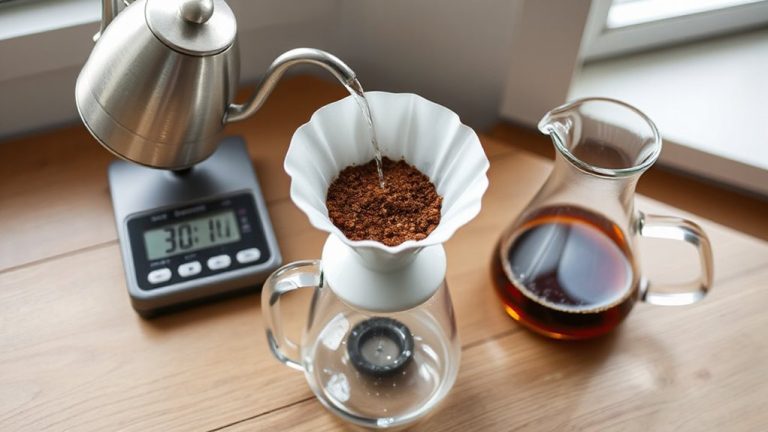
Use a scale to dose precisely-18 grams for a 3-cup Moka pot, 36 or less for a 6-cup. Overfilling causes over-extraction and bitterness. Pair your dose with a grind slightly coarser than espresso, like table salt, and avoid tamping. Level the grounds with a gentle tap. Preheat water to cut brew time, and use medium heat, lowering it once gurgling starts. You’ll get cleaner, balanced coffee every time-small tweaks make a clear difference.
Notable Insights
- Use a coffee scale to measure 18–20 grams for a 3-cup Moka pot, avoiding overfilling that causes over-extraction.
- Choose filtered water to minimize mineral interference and support balanced extraction.
- Grind coffee to a slightly coarser, table salt-like consistency to reduce extraction resistance.
- Distribute grounds evenly in the filter basket and level without tamping to prevent channeling.
- Preheat water and use medium heat, reducing flame once gurgling starts to avoid prolonged brewing.
Fix Bitter Moka Pot Coffee by Avoiding Over-Extraction
While you might think a strong, bold taste means better coffee, that bitterness from your Moka pot is usually a sign of over-extraction. You’re not brewing espresso, so that harsh, burnt note means something’s off. Poor water quality-like hard water with high mineral content-can intensify bitterness and speed up equipment wear on your pot’s seal and filter. Over time, that wear leads to inconsistent pressure, worsening extraction. Always use filtered water to protect your Moka pot and improve flavor clarity. Also, descale regularly to combat mineral buildup. Check the gasket and filter plate for cracks or warping; degraded parts cause uneven flow, forcing water through grounds too slowly. Replace worn components every few months with standard Bialetti-sized parts for best results. Clean after every use. These small steps prevent over-extraction at the source, keeping your coffee balanced, not bitter. Choosing the right beans, such as medium roast beans, can further reduce bitterness by complementing the Moka pot’s natural brewing characteristics.
Use the Right Dose to Prevent Over-Extraction
You’ll get the best results from your Moka pot when you use the right amount of coffee-too much and you risk over-extraction, leading to bitter, ashy flavors. The ideal dose depends on your pot size, but a standard 3-cup Moka pot usually needs about 18 grams. Using more than that packs the basket too tightly, slowing water flow and extending brewing time, which pulls out harsh compounds. Even a great coffee origin can taste flawed if over-extracted. Lighter roasts, often with more acidity and complexity, are especially prone to imbalance when brewed too long. Stick to level, not heaping, scoops unless you’ve tested the results. Avoid tamping-just gently shake the basket to level the grounds. This helps water pass evenly, keeping brewing time around 4–5 minutes. Consistent dose and grind size are key. For convenience without sacrificing control, consider starting with a high-quality pre-ground coffee for moka pots.
Find Your Moka Pot’s Ideal Coffee Amount
How much coffee should you actually use in your Moka pot? Start with one level scoop per cup-about 7 grams per chamber slot-and adjust from there. Overfilling or tamping leads to over-extraction, especially with dense beans from regions like Ethiopia or Kenya. Your bean origin affects density and solubility, which changes how much coffee extracts under pressure. Lighter, high-altitude beans may need slightly less dose to avoid bitterness. Water hardness also plays a role; harder water extracts more aggressively, so you might reduce coffee amount by 0.5–1 gram in those areas. For a 3-cup Bialetti, try 18–20 grams max. For a 6-cup, stay under 36 grams. Use a small scale for consistency. Finding your ideal dose means balancing these factors-start standard, then tweak based on taste, not guesswork. A precise coffee scale ensures accurate dosing and repeatable results.
Adjust Grind Size for Smoother Moka Pot Brews
A slightly coarser grind can save your Moka pot brew from turning harsh or astringent. If your coffee tastes bitter or sharp, it’s likely over-extracted, often due to too fine a grind. Finer grounds increase resistance, slowing brew time and raising pressure stability risks-this can force water through unevenly, extracting unpleasant compounds. A coarser setting, like that of table salt, promotes even flow and smoother flavor. Aim for a brew time between 4 and 6 minutes; much shorter and your coffee under-extracts, too long and it risks over-extraction. Machines like the Bialetti or Alessi need consistent grind sizing to maintain pressure stability. Use a burr grinder-such as the Baratza Encore or 1ZPresso Q2-for precision. Adjust in small increments, testing one variable at a time. Your ideal setting depends on your pot’s size and stove type, so fine-tune gradually.
Distribute Coffee Evenly to Stop Bitterness
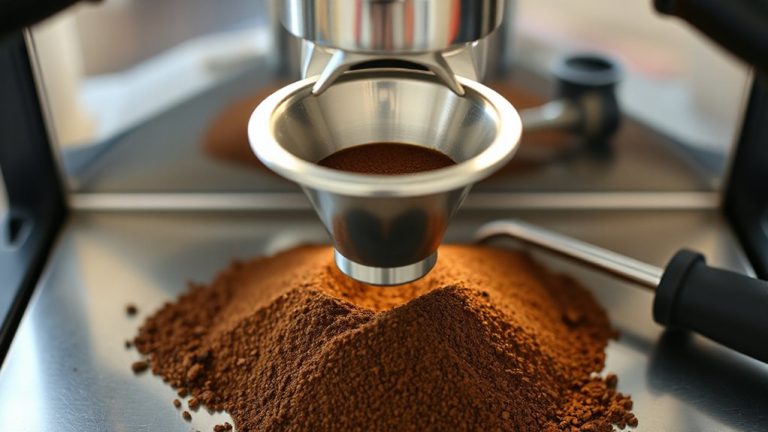
When brewing with a Moka pot, uneven coffee distribution can create channels that lead to inconsistent extraction and a bitter, unbalanced cup. You want the water to pass through all the grounds evenly, so take a second to gently shake or tap the filter basket after dosing. This helps level the coffee without needing complex tools. Avoid heavy tamping pressure-most Moka pots aren’t designed for it, and pressing too hard restricts flow, increasing the risk of over-extraction. A light, even spread is all you need. Fresh bean freshness also plays a role; recently roasted beans release more CO₂, which can disrupt water flow if the grounds aren’t distributed well. Use beans within 1–4 weeks post-roast for stable, predictable results. With even distribution and attention to tamping pressure and bean freshness, you’ll pull smoother, sweeter coffee every time.
Control Water Temp and Heat for Balanced Extraction
If you want to avoid harsh, over-extracted coffee from your Moka pot, managing heat and water temperature is just as important as how you fill the basket. Starting with water preheating gives you more control-using hot water from a kettle means the brewing phase begins faster and reduces time over heat. That helps prevent scorching the grounds. For best results, use a stove that allows precise flame modulation, like a gas range or a temperature-controlled electric burner. Start on medium heat, and once you hear the gurgling start, lower the flame. This gentle approach promotes even extraction without pushing bitter compounds out. Avoid high heat the whole way-it cooks the coffee too hard and ruins balance. With flame modulation, you keep pressure steady and avoid aggressive brewing. Preheating water and controlling your heat source consistently improves flavor, making your cup smoother and more balanced every time.
Brew, Taste, and Refine Your Moka Pot Routine
Since great coffee comes from attention to detail, your brewing process doesn’t stop at pouring-tasting and adjusting is where real improvement happens. After each brew, evaluate the flavor: is it bitter or harsh? You’ve likely over-extracted. Sour or weak? It may be under-extracted. Use these cues to tweak your dose, grind size, or heat level. The moka pot history shows generations relied on trial and error, refining by taste rather than tools. Even today, sticking to proven brewing traditions means trusting your palate. Record small changes-like reducing coffee by 1 gram or lowering the stove heat-and note the results. Consistency matters more than perfection. Over time, you’ll find the sweet spot for your beans. Unlike espresso machines, moka pots offer less control, so refining your routine manually is key. Let taste guide your adjustments, not assumptions.
On a final note
You’ve got the tools to stop bitter moka pot coffee. Use the right dose-usually 15–18g for a 6-cup Bialetti-avoid overfilling. Pair it with a slightly coarser grind than espresso. Even distribution and controlled heat matter: medium stovetop flame, preheated water. Taste each brew, tweak one variable at a time. These steps, backed by repeatable results, make smoother coffee possible without guesswork. It’s not magic-just method.