Understanding the Differences Between Blade and Burr Grinders for Coffee
You’ll get uneven grounds with a blade grinder, like the Hamilton Beach 80366, since it chops beans with a spinning blade. Burr grinders, like the Baratza Encore, crush beans between two surfaces for consistent size, improving flavor and extraction. Blade models are cheaper and compact but lack precision. Burr grinders cost more but deliver better results, especially for espresso or pour-over. Your brewing method and frequency will determine which type makes more sense - and what you might want to think about next.
Notable Insights
- Blade grinders chop beans with a spinning propeller, producing uneven particle sizes that affect brew quality.
- Burr grinders crush beans between two abrasive surfaces for consistent particle size and better extraction.
- Blade grinders are cheaper and compact but generate heat and noise, impacting flavor.
- Burr grinders offer precision for brewing methods like espresso, pour-over, and French press.
- Entry-level burr grinders like Baratza Encore provide superior performance compared to most blade models.
What’s the Difference Between Blade and Burr Grinders?
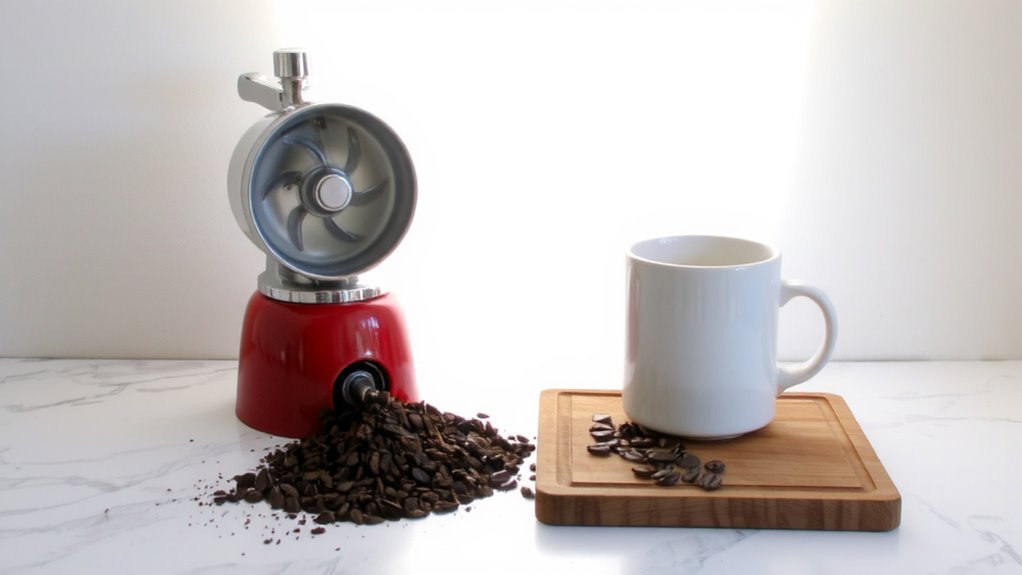
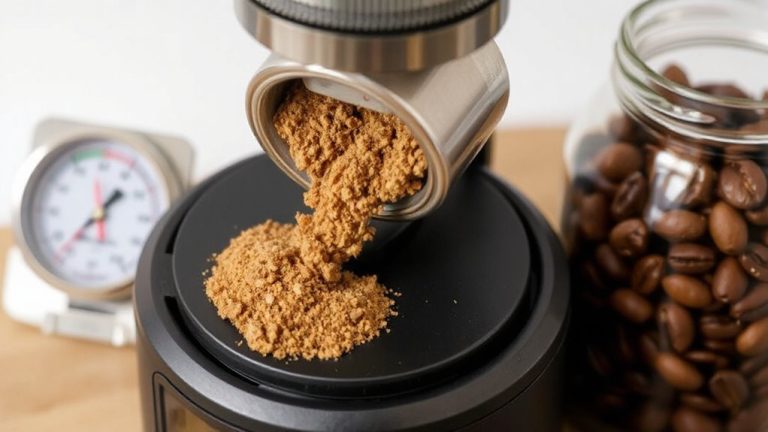
When it comes to grinding coffee, the type of grinder you use makes a real difference in your morning cup. Blade grinders use a fast-spinning propeller to chop beans, relying on motor power and timing rather than precision. They’re cheap and compact, but produce uneven grind consistency, which hurts brew quality. Burr grinders, in contrast, crush beans between two abrasive surfaces, delivering uniform particle size. This consistent grind improves extraction, especially for espresso or pour-over. Even entry-level models like the Baratza Encore outperform most blade grinders. Higher motor power in bur grinding models guarantees steady grinding without overheating. While more expensive, they’re a smarter long-term buy for anyone serious about flavor. If you want better control and repeatable results, a burr grinder is the practical choice. For those looking for top-performing options, the best mill grinders offer both durability and precise grind settings.
How Grind Size Impacts Your Coffee’s Taste?
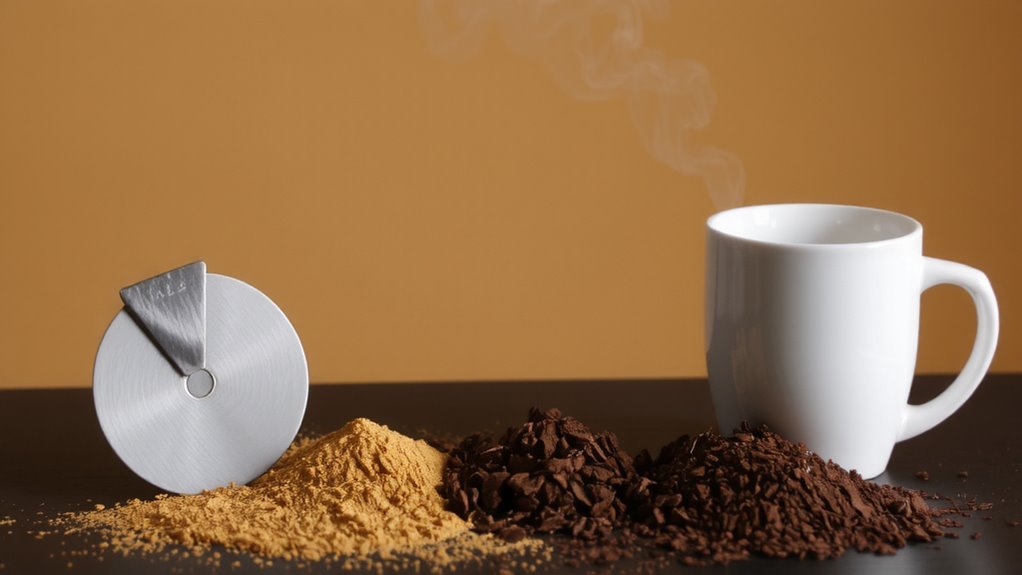
You’ve seen how burr grinders deliver a consistent particle size compared to the haphazard chop of blade models, and that uniformity matters because grind size directly shapes your coffee’s flavor. When particles are even, water extracts flavor evenly-too fine, and your coffee over-extracts, turning bitter; too coarse, and it under-extracts, tasting weak. Proper grind size guarantees balanced flavor extraction and better aroma preservation. This is critical across brewing methods:
| Grind Size | Best For | Effect on Extraction |
|---|---|---|
| Coarse | French press | Slow, low risk of over-extraction |
| Medium | Drip coffee makers | Balanced flavor extraction |
| Fine | Espresso machines | Fast, high aroma preservation |
Choose the grind size that matches your brewer-you’ll get cleaner tastes and more consistent results every time. For those seeking precision and performance, investing in a high-quality espresso grinder can significantly enhance extraction efficiency and flavor control.
Blade Grinders: Pros, Cons, and Who Should Buy One
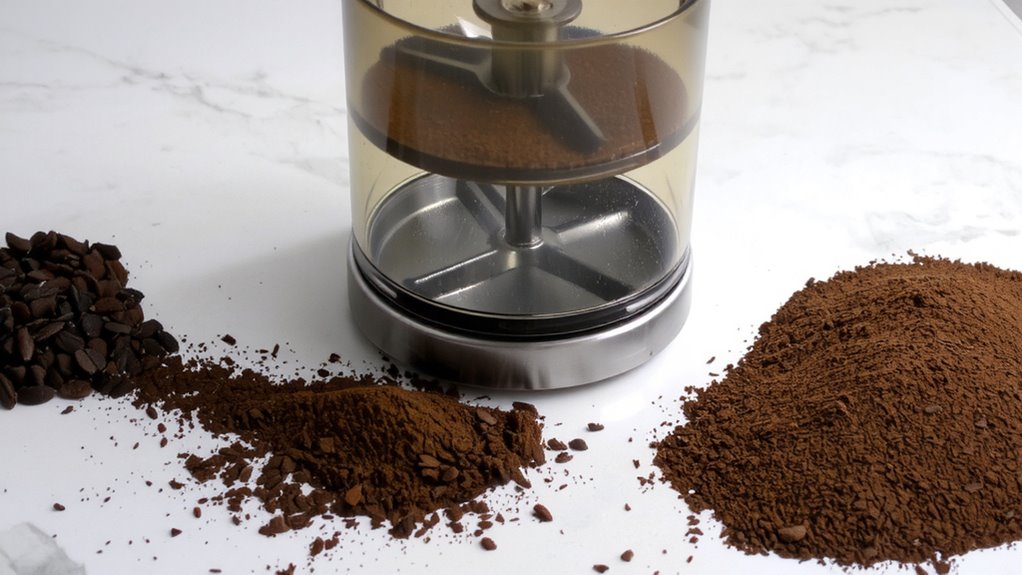
A blade grinder uses a spinning blade to chop coffee beans into grounds, making it one of the most affordable and compact options for home use. You’ll appreciate its convenience factor-just toss in beans, press a button, and in seconds, you’re done. It’s ideal if you’re new to brewing or only make coffee occasionally. However, the noise level is high, similar to a blender on max speed, which might bother you or others. Grind consistency is uneven, leading to bitter or weak coffee, but for drip or French press, it’s often “good enough.” If space or budget is tight, models like the Hamilton Beach 80366 offer basic functionality without frills. You should buy one if simplicity and low cost matter more than precision. Just don’t expect espresso-ready results. For those interested in more durable and consistent alternatives, exploring best vintage coffee grinders can provide insight into timeless options that prioritize build quality and performance.
Burr Grinders: Are They Really Better?
What if your morning coffee could be noticeably better with just one upgrade? A burr grinder might be that change. Unlike blade grinders, burr models crush beans between two rotating surfaces, giving you far better grind consistency. That means even particles that extract evenly, leading to smoother, more flavorful coffee. You’ll notice it especially with pour-over or French press. Plus, burr grinders usually have stronger motors, so motor durability isn’t as much of a concern over time. Sure, they cost more-think $80 and up for decent models like the Baratza Encore or 1ZPresso Q2-but that upfront cost often pays off in longevity and performance. Entry-level burr grinders now offer solid build and consistency, making them practical for daily use. If you care about flavor and consistency, a burr grinder isn’t just better-it’s a worthwhile long-term tool.
Which Grinder Fits Your Brew Method?
Consistency in grind size directly affects how your coffee tastes, and that’s where choosing the right grinder for your brew method matters most. For pour-over or drip, a burr grinder gives you the precise, uniform grounds you need to maximize coffee freshness and flavor. Espresso demands even more precision, so a high-quality burr grinder is essential. With a blade grinder, you’ll struggle to get consistent results, and frequent grinder maintenance won’t fix its inherent flaws. While blade grinders are cheaper, they heat up beans and create uneven particles, hurting taste.
| Brew Method | Best Grinder Type |
|---|---|
| Espresso | Burr |
| Pour-Over | Burr |
| French Press | Burr or Blade |
| Cold Brew | Burr |
Burr grinders preserve coffee freshness better and require less frequent cleaning. Your brewing style should guide your pick.
When a Burr Grinder Is (or Isn’t) Worth It
Not every coffee routine demands a burr grinder, but if you’re serious about flavor and control, it’s hard to justify skipping one. You’ll want consistent results, and burr grinders deliver superior grind consistency, which directly impacts extraction and taste. If you use a pour-over, French press, or espresso machine, that uniformity matters. Blade grinders chop beans unevenly, leading to bitter and weak flavors. While burr models cost more upfront, their cost efficiency shines over time-fewer wasted beans and better brews mean you get more from each bag. Entry-level burr grinders like the Baratza Encore or Bodum Bistro offer solid performance without breaking the bank. But if you only make campfire coffee or need quick, occasional cups, a blade grinder might suffice. For daily drinkers who value quality, a burr grinder isn’t just worth it-it’s essential.
On a final note
You’ll get more consistent results with a burr grinder, especially for pour-over or espresso, since it lets you control grind size precisely. Blade grinders chop unevenly, which can lead to bitter or weak coffee. If you’re using a French press or just want convenience, a blade model might suffice. But if you care about flavor and brew method matters, investing in a burr grinder like the Baratza Encore makes a real difference.