A Barista’s Guide to Cupping Techniques: Essential Tools for Evaluating Flavor, Acidity, Body, Sweetness, and Aftertaste
You’ll need a burr grinder like the Comandante C40 for even grounds-skip blade grinders, they mess with flavor accuracy. Use ceramic cups, a scale for 8.25g per 150ml, and a kettle that holds 195–205°F. These tools help you assess acidity, body, sweetness, and aftertaste consistently. Slurp samples to coat your palate and detect subtle notes. With the right setup, you’ll taste like a pro and know exactly how each variable shapes the cup. There’s more to mastering each step than most realize.
Notable Insights
- Use a burr grinder to achieve consistent grind size, ensuring accurate flavor extraction during cupping.
- Brew with 8.25 grams of coffee per 150 ml of water at 195–205°F for standardized evaluation.
- Slurp coffee loudly to aerate it, spreading across the palate for full taste and aroma detection.
- Evaluate flavor, acidity, body, sweetness, and aftertaste using a standardized flavor wheel and score sheet.
- Maintain a neutral environment and clean tools to prevent contamination between samples.
What Is Coffee Cupping and Why Baristas Need It
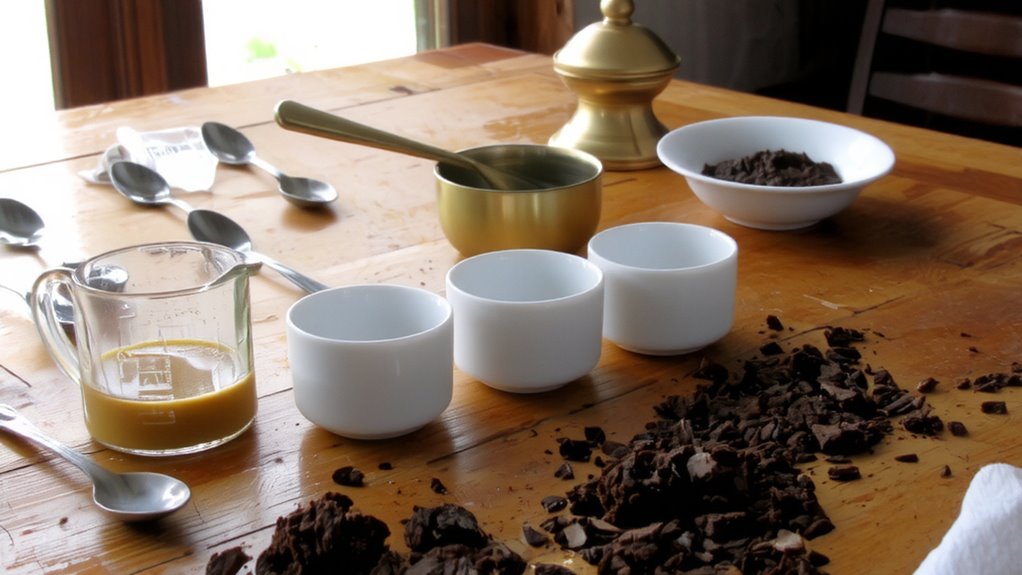
While you might think cupping is just for roasters or buyers, it’s actually an essential skill for baristas who want to understand coffee on a deeper level. Cupping lets you assess flavor, acidity, body, sweetness, and aftertaste in a standardized way. You’ll taste coffee black, without additives, so you can clearly detect its true profile. This helps you connect brewing methods to sensory results-like how a light roast from Ethiopian coffee origins might shine with bright acidity in a pour-over but taste muted in an espresso. Knowing these differences improves your brewing precision and customer recommendations. It also builds your confidence when discussing coffee with guests. You’ll start recognizing how processing, altitude, and region impact taste. With regular cupping, you’ll make smarter choices about which beans suit specific brewing methods, and why. It’s practical, repeatable, and grounded in real sensory data-no guesswork. To get started, having the right tools is crucial, and investing in best coffee cupping supplies ensures consistent and accurate evaluations.
Essential Tools for a Professional Cupping Session
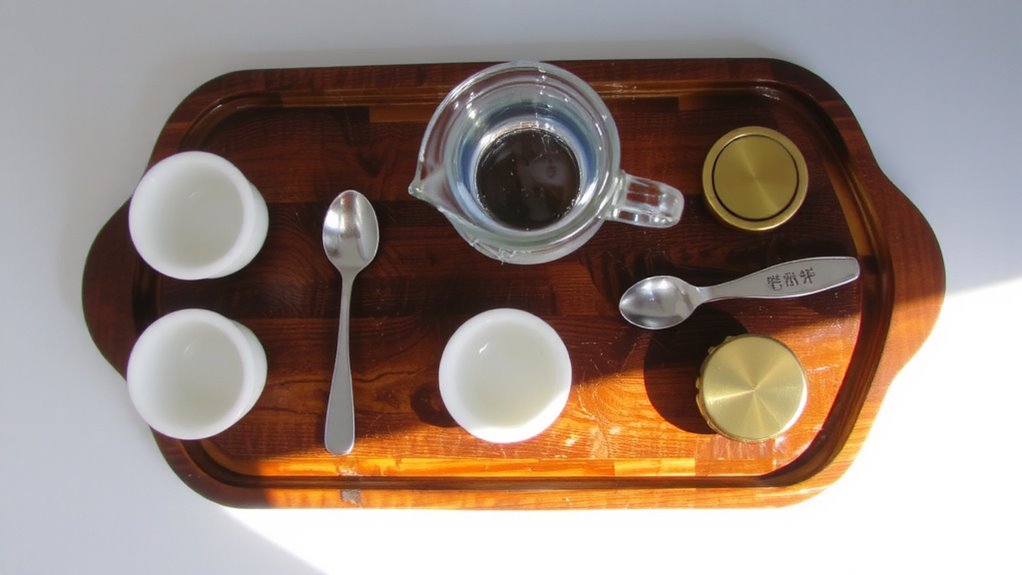
Because consistency matters in cupping, using the right tools guarantees your evaluations are accurate and repeatable. You need a good burr grinder-manual ones like the Comandante C40 give you precise grind consistency, which is essential for even extraction. Blade grinders won’t cut it; they create uneven particles that skew results. Use ceramic or stainless steel cups specifically made for cupping-standard 7- to 9-ounce bowls work best. A calibrated kettle helps maintain correct water quality and temperature (ideally 195–205°F). You’ll also need spoons with deep bowls for slurping and timers to track steep time accurately. Scales guarantee uniform coffee-to-water ratios, usually 8.25 grams per 150 ml. Without these tools, variables like grind consistency and water quality can distort flavor, acidity, body, sweetness, and aftertaste. Stick to the basics, stay consistent, and your assessments stay trustworthy. For those interested in home wellness practices, exploring a best cupping set can provide valuable insights into alternative therapeutic techniques.
How to Set Up and Run a Cupping Session
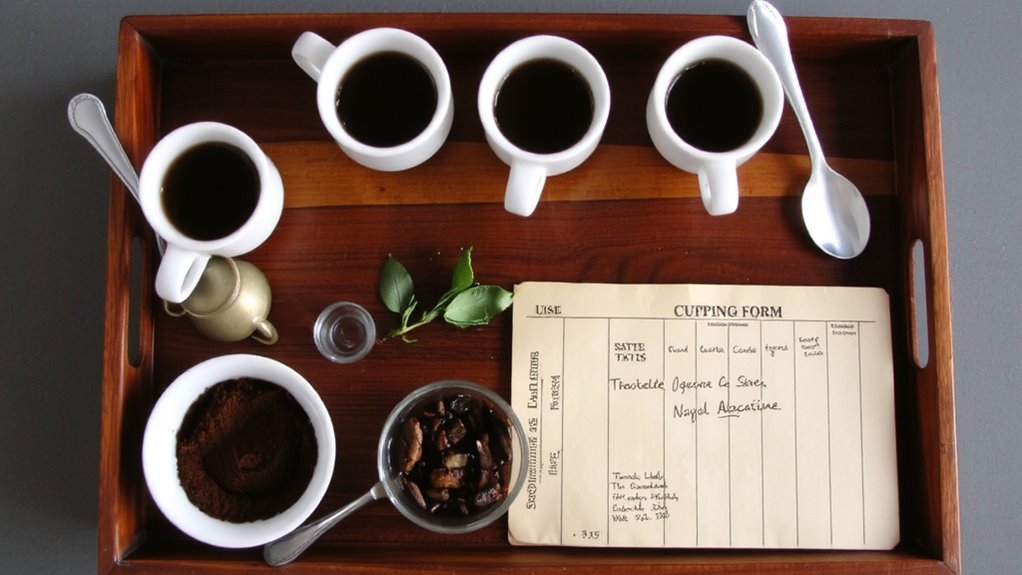
Start by laying out your setup with enough space for all samples, tools, and reference materials. Use identical cups for each coffee, label them clearly, and keep water, spoons, and score sheets within reach. Grind your beans to a consistent medium-coarse size and pour hot water (just off boil) over the grounds at the same time for each cup. Note the session timing-smell the crust after four minutes, then break it with a spoon and clear the grounds. Wait until ten minutes in to begin tasting, letting the coffee cool slightly. Practice cupping etiquette: stay quiet during tastings, clean your spoon between samples, and avoid strong perfumes or scented lotions. Take notes promptly. Keep the room neutral in smell and temperature. Stick to a structured flow so comparisons stay fair and accurate. For those looking to expand their sensory evaluation tools, a well-designed cupping kit can enhance consistency and convenience in home practice.
Taste Like a Pro: Master the Cupping Slurp
The cupping slurp is a key technique that lets you taste coffee like a pro. You’re not just sipping-you’re drawing coffee over your tongue with a quick, noisy slurp that aerates the liquid. This spreads it across all taste zones and pulls in volatile compounds that boost your perception of coffee aroma. It might feel awkward at first, but it’s essential for accurate evaluation. Slurping cools the coffee slightly and coats your palate evenly, helping you detect details others miss. Over time, this builds your taste memory, letting you recognize subtle differences between beans. Use a clean spoon and don’t rush. Consistent slurping, combined with attention to aroma and mouthfeel, trains your senses. While it takes practice, the benefit is real: sharper, more reliable tasting skills. Skip the slurp, and you’ll likely miss key nuances. Do it right, and you’ll taste like a seasoned cupper in no time.
Score Flavor, Acidity, and Sweetness Correctly
You’ve got the slurp down, and now it’s time to put that technique to work by evaluating the core pillars of coffee taste: flavor, acidity, and sweetness. Start with flavor profiling by identifying specific notes-think citrus, chocolate, or berry-using a standard flavor wheel as a reference. Accurate scoring depends on consistency, so compare samples side by side under the same conditions. For acidity, assess brightness and clarity; sharp, wine-like tang scores higher than flat or sour notes. Sweetness calibration isn’t about sugariness-it’s the absence of harshness and the presence of rounded, smooth tones. Use clean water between cups to reset your palate. Tools like the SCA score sheet help standardize ratings from 6 to 10, with clear benchmarks. Over-roasted beans often mask sweetness, while underdeveloped ones lack flavor clarity. Train regularly to build accuracy.
How Body and Aftertaste Shape Coffee Balance
Balance in coffee isn’t just about flavor intensity-it’s how body and aftertaste hold everything together. You’ll notice that a coffee with rich body often feels more complete, especially when acidity and sweetness are high. That mouthfeel complexity-whether it’s silky, creamy, or light-shapes how flavors merge and linger. Think of Sumatran coffees: their heavy body supports earthy tones, preventing them from tasting harsh. Aftertaste matters just as much. You want clean, pleasant lingering impressions, not bitterness or astringency. A balanced coffee leaves a harmonious finish, reinforcing the initial flavors. If the aftertaste clashes or fades too quickly, the balance breaks. Light roasts, like Ethiopian Yirgacheffe, can have floral aftertastes that extend sweetness, while darker roasts may leave smoky notes that overpower. Evaluating both body and aftertaste helps you gauge overall harmony-not just peak flavor, but how well it holds together from first sip to final impression.
Avoid These Common Cupping Mistakes
While diving into cupping, skipping the rinse step on your grinder can skew results more than you’d think-old grounds linger and mix with fresh, altering aroma and taste. You should also avoid overheating beans; roasting or grinding too hot degrades volatile compounds, muting flavor clarity. Always let beans cool to the proper cupping temp-around 195–205°F-before steeping. Skipping calibration on your scale or water heater introduces inconsistency; even 1–2 grams or degrees off can shift extraction. Use a calibrated thermocouple thermometer and a reliable scale like the Acaia Lunar for precision. Don’t rely on time alone-adjust brew variables based on real-time data. And always clean your spoons between samples to avoid cross-contamination. These steps aren’t fussy-they’re essential for accurate evaluation. Sticking to protocol guarantees you’re tasting the coffee, not the mistakes.
On a final note
You now have the tools and steps to run an effective cupping session. Use a standard spoon, calibrated scale, and proper grind size for consistency. Slurp correctly to aerate the coffee and coat your palate. Score each attribute objectively, referencing the SCA flavor wheel if needed. Avoid common errors like inconsistent water temperature or delayed tasting. This method sharpens your palate, improves brew decisions, and helps you compare beans with accuracy. Practice often.