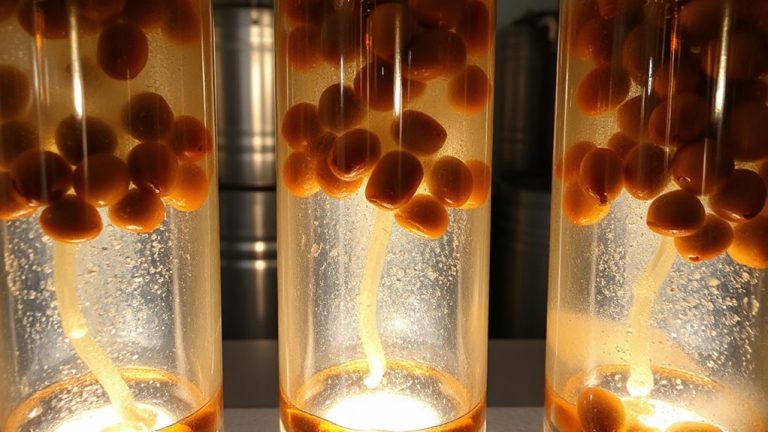
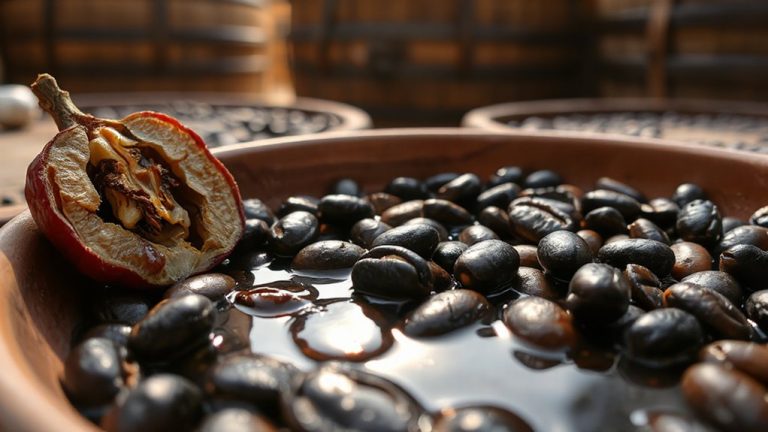
The Role of Humidity Control in Roast Quality Management: Ensuring Optimal Conditions to Preserve Bean Integrity Post-Roasting
You lose roasted coffee’s aroma and flavor fast when moisture triggers oxidation, especially above 70% RH. Keep your beans in a sealed container at 50–60% humidity to prevent mold and staling. Use a digital hygrometer to track levels-models like TempCube log data over time. Avoid burlap or open bins; switch to metallized PET or aluminum-lined bags with one-way valves. Get the environment right, and your Yirgacheffe stays bright for days. There’s more to optimizing storage that could save your batch.
Notable Insights
- Moisture exposure post-roasting accelerates oxidation, degrading volatile compounds and diminishing aroma and flavor complexity.
- Storing roasted coffee at 50–60% relative humidity preserves bean integrity and prevents mold growth or excessive drying.
- Airtight packaging with one-way valves and moisture barriers, like aluminum laminates, slows staling and protects against humidity.
- Continuous monitoring with digital hygrometers or data loggers enables early detection of harmful humidity fluctuations in storage environments.
- Climate-controlled storage and proper cooling after roasting prevent condensation, moisture absorption, and structural damage to beans.
How Moisture Ruins Roasted Coffee Freshness
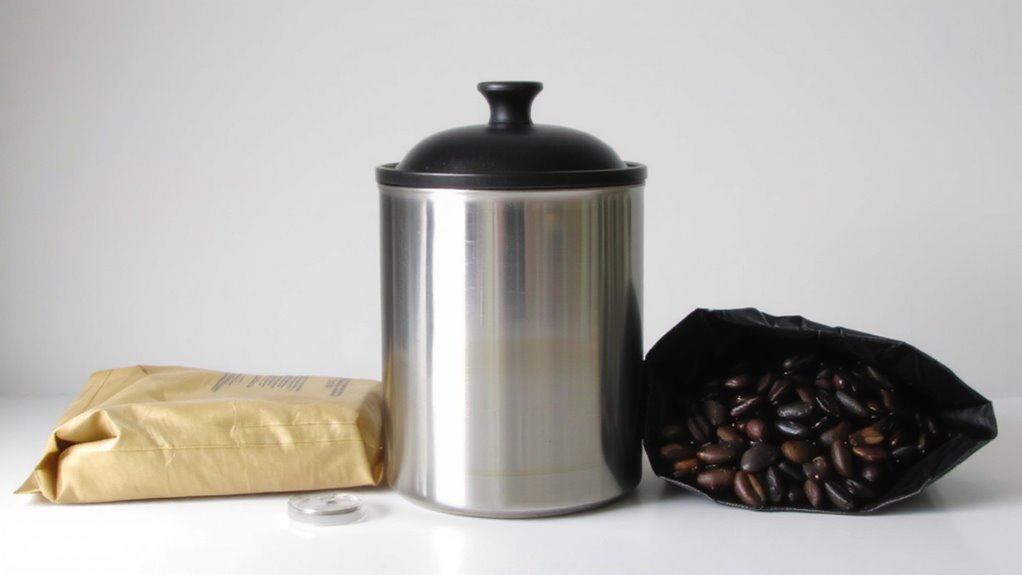
While roasted coffee might seem stable right after it leaves the roaster, exposure to moisture begins degrading its quality almost immediately. You might not see it, but water in the air speeds up oxidation acceleration, breaking down volatile compounds that give coffee its aroma and complexity. This leads directly to flavor degradation, leaving your brew flat and stale. Even in sealed bags, residual moisture or humid storage environments can compromise bean integrity within days. You’re not just losing brightness-you’re inviting mold risks and inconsistent extraction. Storing beans in a dry place, away from steam or sinks, helps, but it’s not always enough. Airtight containers with one-way valves help slow the process, but they won’t stop moisture already present. For best results, keep roasted beans in low-humidity environments and use them quickly. Consider using a compact coffee storage solution designed to minimize humidity exposure while preserving freshness.
What RH% Best Preserves Roasted Beans?
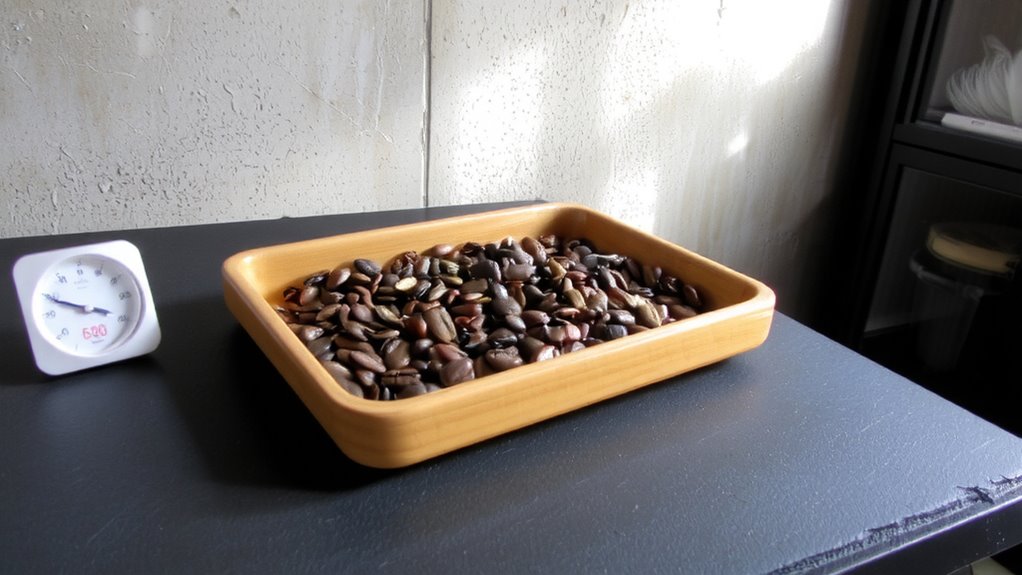
Most experts agree the ideal relative humidity (RH%) for storing roasted coffee beans falls between 50% and 60%. At this range, you preserve freshness without encouraging mold or staling. Too high, and moisture softens bean density, risking off-flavors; too low, and beans dry out, altering oils and roast color over time.
| RH% Level | Effect on Beans | Best For |
|---|---|---|
| <40% | Drying, loss of aroma | Short-term, dry climates |
| 50–60% | Balanced preservation | Most roasts, any bean density |
| >70% | Mold risk, stale taste | Avoid entirely |
You’ll want to monitor storage areas with a simple hygrometer. Storing within this RH% window helps maintain structural integrity, especially for dense beans or lighter roast color profiles that degrade faster. Avoid fluctuations-consistent conditions keep flavor stable and shelf life longer. Using an airtight container with a valve-equipped lid can further protect beans by releasing CO2 while preventing moisture ingress.
Smart Packaging to Block Humidity
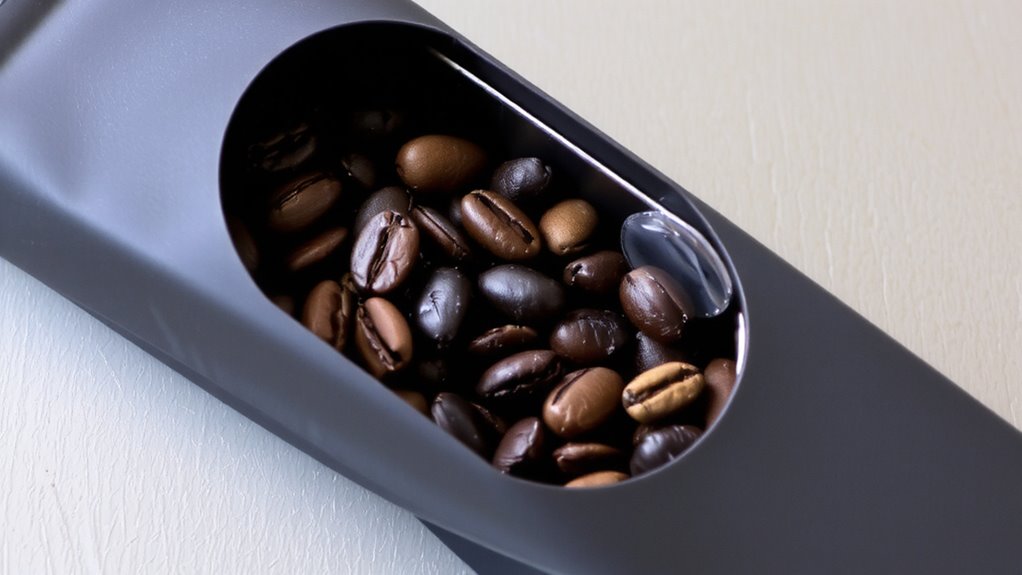
How do you keep roasted beans fresh when humidity keeps shifting? Smart packaging fights moisture with advanced barrier technology, sealing in quality. You’re not just relying on luck-you’re using material science to protect flavor and aroma. Films like metallized PET or aluminum laminates block water vapor far better than basic plastic or paper. These materials create a physical shield, slowing down moisture transfer that degrades beans. Some bags even include oxygen scavengers and one-way valves, releasing CO₂ without letting humidity in. While more expensive, they’re worth it if you store beans longer or ship them. Simpler kraft bags with thin plastic liners? They offer minimal protection in humid climates. For real defense, choose multi-layer packaging engineered for stability. It’s not overkill-it’s practical preservation. Your beans stay drier, fresher, and more consistent, roast after roast.
How to Track Humidity in Storage
What’s the point of investing in quality beans and smart packaging if you’re not monitoring the humidity where they’re stored? You need reliable tracking to maintain roast integrity. Start by placing a digital hygrometer in your storage area-look for one with high sensor accuracy, like the calibrated models from brands such as ThermoPro or AcuRite. Even small humidity swings can impact bean quality, so regular checks are essential. For better oversight, use devices that support data logging; they record readings over time, helping you spot trends and respond before damage occurs. Standalone loggers like the Tinytag or networked sensors like those from温湿度 (TempCube) offer continuous monitoring with alerts. Manual checks work for small batches, but data logging gives you an edge in larger or climate-variable environments. Choose tools that balance precision, ease of use, and cost-because consistent tracking isn’t optional, it’s part of protecting your investment. For comprehensive insights into maintaining bean quality, consider reviewing the best tools available, including top-rated coffee bean moisture meters.
Humidity Control Mistakes to Avoid
Why do so many roasters overlook the basics when it comes to humidity control? You’re likely letting beans absorb moisture after roasting, especially if you’re not sealing them quickly. High ambient humidity slows cooling and promotes condensation inside storage, which invites mold. Don’t ignore cooling inefficiencies-these trap heat and moisture, increasing the risk of over roasting issues even after the roast cycle ends. Avoid leaving beans out in the open; use airtight containers with one-way valves instead. You don’t need expensive gear-a basic hygrometer and climate-controlled room (ideally 50–55% RH) make a big difference. Skip bulky burlap sacks for long-term storage; opt for foil-lined bags. Remember, inconsistent humidity doesn’t just stale beans-it undermines all your careful roasting work. Simple, consistent steps prevent most problems before they start.
On a final note
You need to control humidity to keep roasted beans fresh. Aim for 50–60% relative humidity to prevent moisture damage without drying beans too much. Use sealed, one-way valve bags or airtight containers with desiccants like silica packs. Monitor with a basic hygrometer near storage. Avoid open bins or damp areas-moisture causes staling and mold. Simple, consistent steps beat expensive gear when done right.