The Science Behind Flavor Wheels: Using This Tool to Enhance Your Sensory Skills in Coffee Tasting
You can detect hundreds of aroma compounds in coffee, and the flavor wheel helps you identify them with precision. Developed by coffee experts, it maps flavors from broad categories to specific notes, guiding your palate step by step. Use it to sharpen your sensory skills by linking taste and smell in a structured way. Practice daily with black coffee and aroma kits to build accuracy-your palate gets better with repetition. There’s more to uncover about training your senses effectively.
Notable Insights
- The coffee flavor wheel standardizes taste and aroma language for consistent sensory evaluation across professionals.
- It organizes flavors from broad categories to specific notes, aiding precise identification during cupping sessions.
- Flavor perception combines taste and smell, with the wheel mapping volatile compounds developed during roasting.
- Regular use trains the palate to detect subtle nuances by linking sensory experiences to structured descriptors.
- Daily practice with the wheel enhances memory and accuracy in recognizing coffee’s complex flavor chemistry.
What Is a Coffee Flavor Wheel (And Why It Matters)?
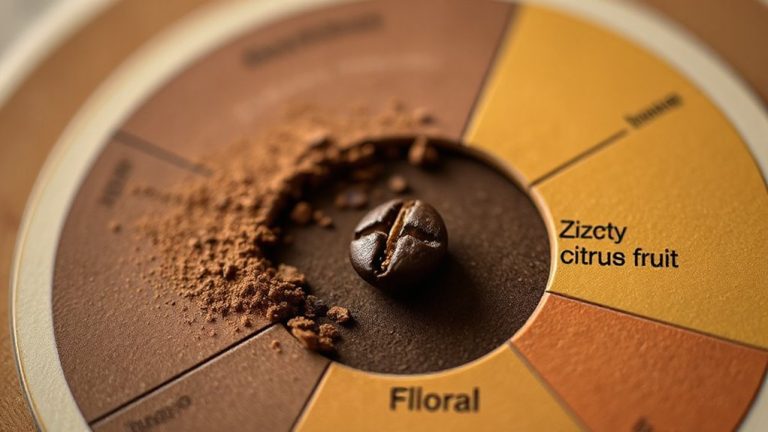
A flavor wheel isn’t just a chart-it’s a practical tool that helps you put a name to the subtle tastes hiding in your coffee. Originally developed in 1995 by the Specialty Coffee Association of America, its historical origins tie directly to standardizing sensory evaluation in coffee tasting. You’ll find it especially useful when comparing beans or refining brewing methods. The wheel’s structure guides you from broad categories like “fruity” to specific notes like “blueberry,” making communication about taste more precise. Its cultural impact is clear-baristas, roasters, and tasters worldwide now share a common language. This isn’t just for pros; home brewers benefit too, especially when experimenting with light roasts where flavor nuances are strongest. Using it consistently sharpens your palate. While some find it overwhelming at first, regular use builds confidence. Skip it, and you risk missing key details in every cup. Exploring flavor profiles systematically can be enhanced with tools found in the best coffee tasting kits.
How the Flavor Wheel Maps Taste and Smell
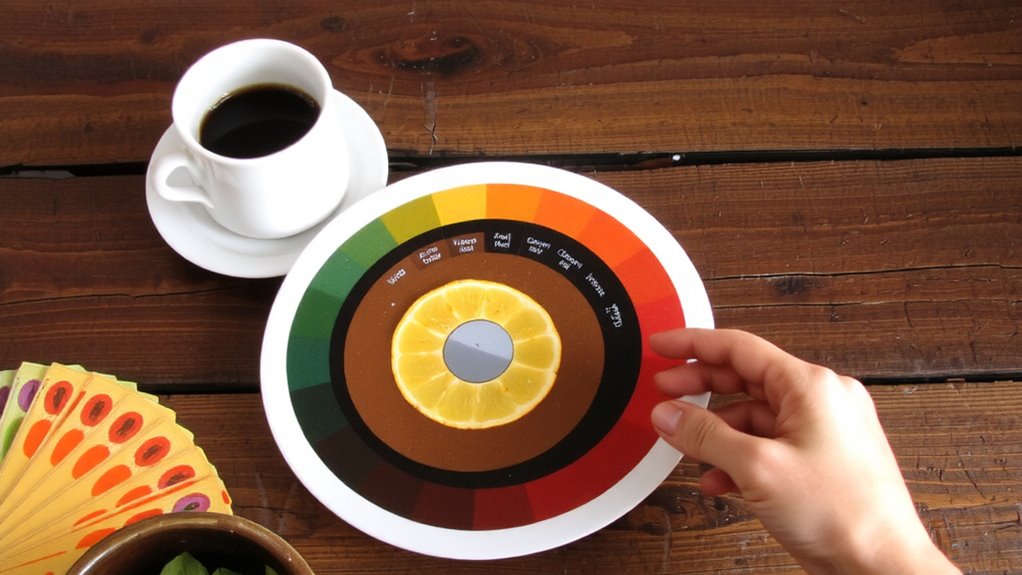
While taste and smell are distinct senses, they combine in your brain to create what you perceive as flavor, and the coffee flavor wheel maps both elements to help you identify exactly what you’re experiencing. It organizes sensations using olfactory mapping, grouping aromas from simple to specific-from fruity to apple to green apple. This structure reflects how your nose detects compounds formed during roasting, grounded in flavor chemistry. Sweet, sour, bitter, and others represent basic tastes on the tongue, while the wheel’s outer layers focus on volatile aromas you smell. Together, they give a complete picture of what’s in your cup. You’re not just guessing “it tastes like berry”-you’re pinpointing it. The wheel doesn’t interpret for you; it gives you a shared language to describe what’s actually there, making your tasting more accurate, consistent, and useful over time. Enthusiasts can deepen their understanding by exploring the Best Coffee Flavor Wheels for structured sensory training.
How to Read the Coffee Flavor Wheel Step by Step
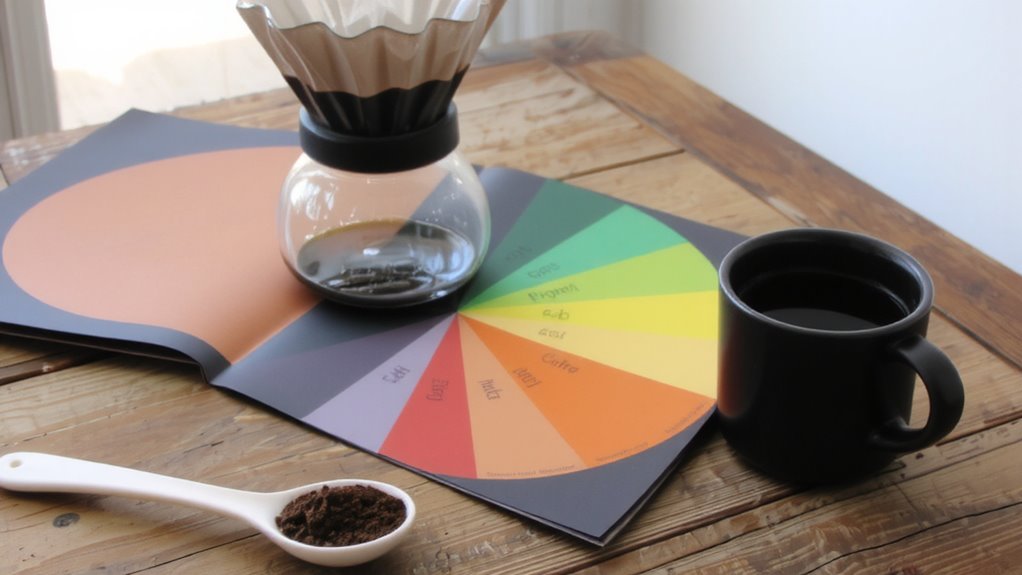
How do you make sense of all those overlapping terms on the coffee flavor wheel? Start at the center, where general categories like fruity or nutty are clustered. Move outward to more specific tasting notes-say, from fruity to berry, then to strawberry. The farther out you go, the more precise the descriptor. Flavor intensity increases toward the edges, so subtle hints stay near the middle, while bold, distinct notes land on the rim. When you taste, begin broad and narrow down by matching what you sense. Don’t force it; use the wheel to guide, not dictate. Some terms overlap, but that’s okay-coffee is complex. This tool works best when paired with actual tasting practice. Keep notes on what you detect and where it falls. Over time, you’ll use it faster and with more confidence. It’s practical, not perfect-but it sharpens your palate. A great way to build this skill is by using a structured training tool like a coffee sensory kit.
Decode Common Coffee Flavor Categories
You’ve learned how to navigate the coffee flavor wheel from center to edge, using its structure to identify what you’re tasting. Now, break down common categories like fruity, nutty, floral, and spicy. Each broad group helps you pin down specific flavor profiles-think citrus under fruity or chocolate under nutty. These aren’t just guesses; they reflect real aroma nuances detected during brewing. For example, a light roast Ethiopian might show berry notes, while a Sumatran often leans toward earthy or woody tones. Recognizing these groups improves consistency in evaluation. You don’t need expensive gear-just a clean cupping setup and focused attention. Avoid mistaking acidity for sourness or sweetness for added sugar. These categories are standardized for a reason: they let tasters communicate clearly. Use them to log notes, compare beans, or adjust brew variables like time or grind size. It’s practical, repeatable, and rooted in sensory science.
Train Your Senses to Taste Better Coffee
What if better coffee tasting isn’t about expensive gear but sharper senses? You can improve simply by training daily. Start by smelling common aroma vials or even spices like cinnamon and lemon peel to build flavor memory. The more you expose your nose and palate to distinct notes, the better you’ll recognize them in coffee. Practice sensory calibration by tasting two coffees side by side, noting differences in brightness, body, or sweetness. Use black coffee-no sugar or milk-to avoid masking flavors. Consistency matters: taste at the same time each day, since sensitivity varies. Keep a journal linking flavors to specific smells you’ve practiced. Over time, you’ll detect subtle notes others miss. It’s not magic-it’s repeated exposure and focus. Your palate adapts like a muscle, and with routine, you’ll taste coffee more accurately, making your evaluations more reliable and meaningful.
Use the Flavor Wheel Like a Pro Every Day
Ever wonder why some tasters pinpoint flavors like blackberry or dark chocolate in coffee while others taste only “coffee”? It’s not magic-it’s practice and structure. Using the flavor wheel daily sharpens your ability to detect subtle notes. Pair it with sensory journaling to track patterns and improve consistency. Over time, you’ll recognize flavor pairing opportunities, like how citrus notes enhance floral profiles in light roasts.
| Category | Example | Use Case |
|---|---|---|
| Fruity | Lemon, cherry | Identify brightness |
| Nutty | Almond, walnut | Spot roast level cues |
| Chocolate | Dark, milk | Assess body & origin |
| Spicy | Cinnamon, clove | Link to processing |
Apply this tool daily-note aromas pre-brew, then verify post-sip. Real skill builds through repetition, not guesswork.
On a final note
You now have a practical tool to sharpen your coffee tasting skills. The flavor wheel helps identify what you’re actually tasting, from fruity to earthy notes. Use it daily with different brews to build consistency. Compare beans side by side, like a light Ethiopian roast versus a dark Sumatran. Over time, your accuracy improves. No gear needed-just attention and practice. It’s not about opinions; it’s about training your senses to detect real differences.