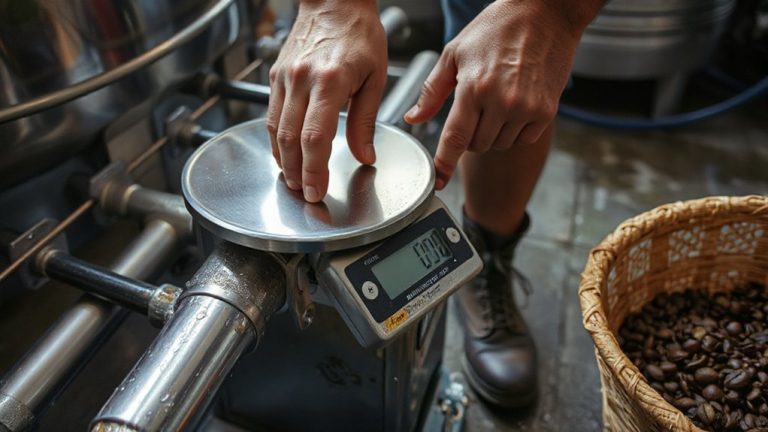
How to Adjust Grind Size for a Lighter Body Espresso Without Sacrificing Sweetness
Use a slightly finer grind to boost sweetness without making your espresso heavier. This increases surface area for better sugar extraction while keeping dose and time consistent. Aim for even tamping and a 1:2 yield in 25–30 seconds. A flat-burr grinder like the EK43 or Niche Zero helps you make precise adjustments. If it’s sour, go finer; if bitter, coarser. Matching grind to roast density matters-lighter roasts need finer settings. You’ll learn how to fine-tune flow and crema for clearer results next.
Notable Insights
- Use a slightly coarser grind than usual to lighten body while maintaining sweetness through balanced extraction.
- Prioritize even extraction by ensuring consistent tamping and distribution to avoid channeling and harshness.
- Optimize dose and brew time to preserve sweetness when adjusting grind for a lighter mouthfeel.
- Match grind size to roast density-light roasts need finer grinds, but small coarsening can reduce body without losing sweetness.
- Monitor flavor and crema: adjust incrementally if sourness or bitterness emerges during grind changes.
Grind Finer to Boost Sweetness Without Over-Extracting
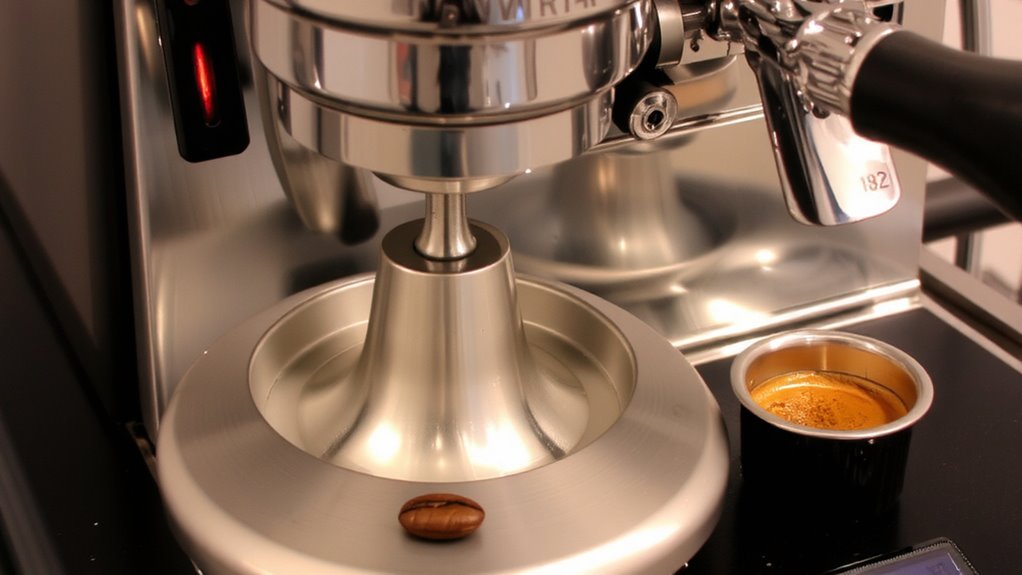
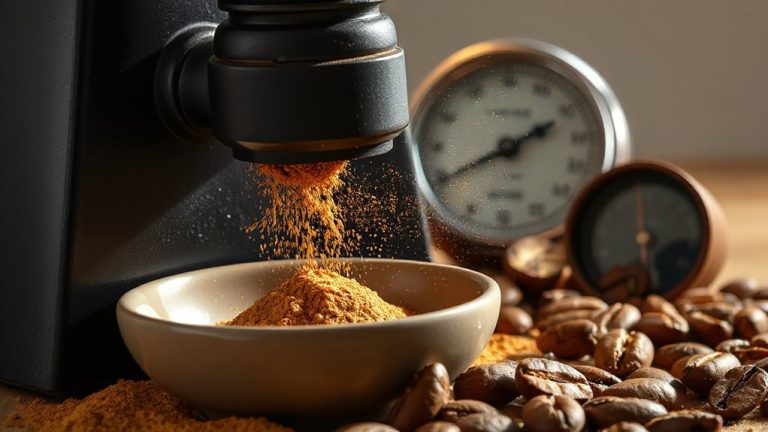
A slightly finer grind can make a real difference in pulling out more sweetness from your espresso without tipping into over-extraction, as long as your dose and brew time stay consistent. You want a finer grind to increase surface area, helping water extract sugars more efficiently. But go too fine, and you risk stalling the shot or creating bitterness. The key is small, controlled adjustments-0.1 to 0.3 notches on most grinders-so you maintain extraction balance. Flat burr grinders like the EK43 or Niche Zero give you the precision needed for these tweaks. Always monitor yield and flavor. If sweetness improves without harshness, you’re on track. Avoid making multiple changes at once; adjust grind first, then reassess. This method lets you fine-tune for sweetness while keeping the body lighter and avoiding clogging or channeling. For those on a budget, excellent espresso grinder under $200 options can still deliver the consistency needed for precise grind adjustments.
Spot Under- or Over-Extraction in Espresso Shots
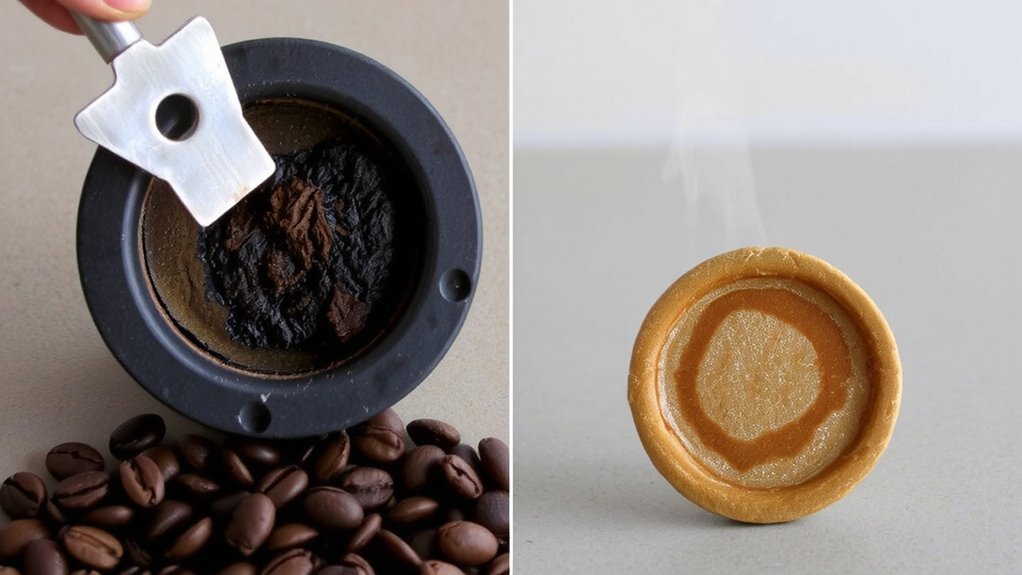
What if your espresso tastes sour or bitter despite using fresh beans and a consistent setup? You’re likely dealing with under- or over-extraction, which directly leads to taste defects. Under-extracted shots taste sharp and acidic, often with thin body and lackluster sweetness. You’ll notice the crema texture is patchy or fades too fast, showing poor emulsion. Over-extracted shots turn harsh and bitter, with dry, astringent finishes. Here, the crema might look dark or bubbly, sometimes with a burnt appearance. These issues aren’t just about flavor-they reflect imbalance in your shot’s structure. Sourness usually means the water passed through too quickly, leaving sugar compounds unextracted. Bitterness suggests the grinds held up flow too long, pulling out unwanted compounds. Watch both taste and crema texture closely-they’re reliable visual and sensory cues that your grind size or brew time needs correction. Choosing the right coffee grinder for baristas can significantly improve dose consistency and particle distribution, helping you dial in more accurate extractions.
Dial In Your Espresso in 5 Steps
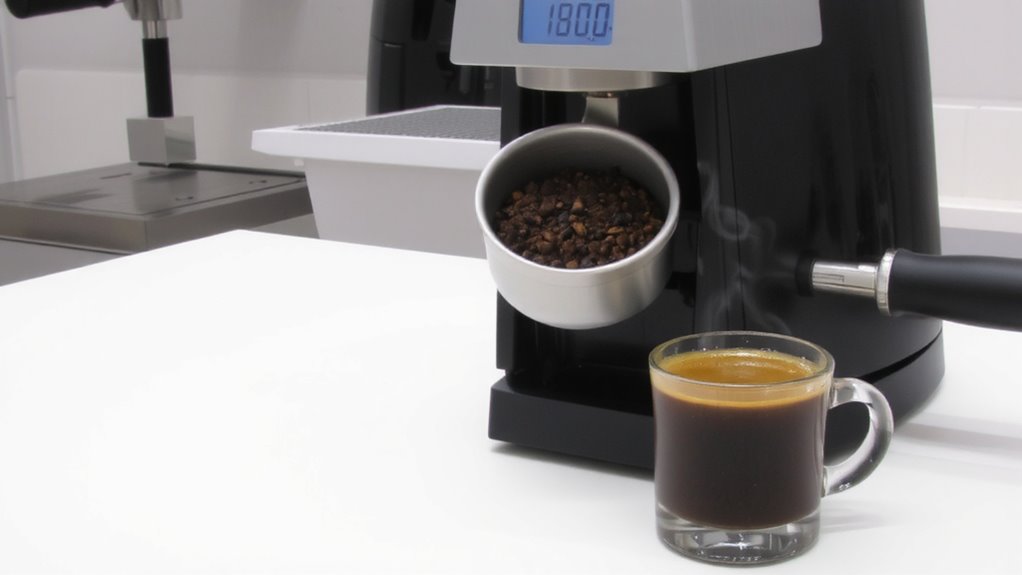
Fine-tuning your grind size is the key to accessing a balanced espresso shot. Start with a consistent dose and adjust one variable at a time. Apply steady tamping pressure-around 30 pounds-to guarantee even extraction. Monitor shot volume closely; aim for 1:2 ratio (e.g., 18g in, 36g out) in 25–30 seconds. If the shot runs too fast, go finer. Too slow? Coarsen the grind. Check flavor after each change. Upgrading to a high-quality espresso grinder can significantly improve grind consistency and shot repeatability.
| Step | Action |
|---|---|
| 1 | Set dose (e.g., 18g) |
| 2 | Adjust grind medium-fine |
| 3 | Apply even tamping pressure |
| 4 | Pull shot, measure volume |
| 5 | Tweak grind based on time/taste |
Repeat until balanced. Consistent equipment, like a calibrated grinder, improves accuracy.
Match Grind to Roast for Clarity and Sweetness
Every roast profile responds differently to grind size, so adjusting accordingly helps highlight clarity and sweetness in your espresso. Lighter roasts need a finer grind because they’re denser-high bean density means water struggles to extract flavor efficiently. If you leave them too coarse, you risk weak, sour shots lacking sweetness. Roast profiling shows that as beans roast longer, they lose density and moisture, so medium to dark roasts extract more easily and need a slightly coarser setting. Go too fine with dark roasts, and you’ll get overextraction-harsh and bitter. Adjust your grinder incrementally: for light roasts, fine-tune toward finer settings; for darker ones, back off. Matching grind to roast based on bean density and roast profiling gives balanced, sweet espresso with clean clarity, especially on consistent machines like the Lelit Anna or Rocket R58.
Fix Sour or Bitter Shots Caused by Grind Errors
You’ve matched your grind to the roast, and the espresso should be balanced-but if it’s still sour or bitter, the grind size is likely off. A sour shot usually means it’s too coarse: water zips through, under-extracting. Try a finer grind to slow flow and deepen flavor. Bitterness often comes from too fine a grind, causing over-extraction. Widen the setting slightly to speed things up. Always keep your espresso temperature stable-around 196–203°F-since fluctuations distort taste. Check your shot timing: aim for 25–30 seconds for a double. If it’s under 20 seconds, go finer. Over 35? Coarsen up. Adjust in small increments, testing after each. Machines like the Lelit Bianca or Rocket R58 let you fine-tune with precision. Consistency beats guesswork. Track changes in a log.
Optimize Flow Rate for Smoother, Sweeter Espresso
Why does one shot pull silky and sweet while another runs harsh, even with the same beans and grind? The difference often lies in flow rate. Using flow control lets you manage how water moves through the puck, giving you more consistency than pressure alone. Starting with lower flow during the bloom phase helps dissolve gases evenly, reducing channeling. Then, ramping up flow mid-shot improves extraction without forcing bitterness. Machines like the Decent EP-5 or Linea Mini allow precise flow control and pressure profiling, so you can shape the shot’s character. Pressure profiling helps too-you can start low, then increase pressure gradually for smoother results. If your machine doesn’t offer these features, adjust your pump speed via software (on compatible models) or rely more on grind and dose. Smoother flow means sweeter shots-especially with delicate, light-roast beans.
On a final note
You’ll get a lighter-bodied espresso without losing sweetness by slightly refining the grind and adjusting time or dose. This helps extract more sugars without dragging out bitter compounds. Always check shot flavor-sour means too coarse, bitter means too fine. Machines like the Lelit Anna or scales like the Acaia Lunar help maintain consistency. Rinse the puck and tweak until the shot flows smoothly in 28–32 seconds, tasting balanced.