Calibrating Scales at Wet Mills to Track Yield Loss in Washed Coffee Processing
You need to calibrate your wet mill scales weekly-or every two to three days during heavy processing-to catch real yield loss. Always calibrate before each day’s first weigh-in, after moving equipment, or when temperatures shift. Use certified test weights and a spirit level to guarantee accuracy for both cherry and parchment measurements. Faulty scales hide losses in depulping or drying, distorting your data. Digital load cells help, but they can fail silently-regular checks keep your numbers honest. Spotting small errors early reveals where your process really loses coffee.
Notable Insights
- Calibrate scales weekly, or every 2–3 days in high-volume wet mills, to maintain accurate coffee yield tracking.
- Always calibrate before daily use and after environmental shifts, equipment movement, or power outages.
- Use certified test weights to calibrate both cherry and parchment scales separately for consistent measurements.
- Place scales on stable, level surfaces away from vibrations and moisture to prevent inaccurate readings.
- Log daily cherry and parchment weights to identify real yield loss trends and processing inefficiencies.
Why Wet Mill Scales Make or Break Coffee Yield
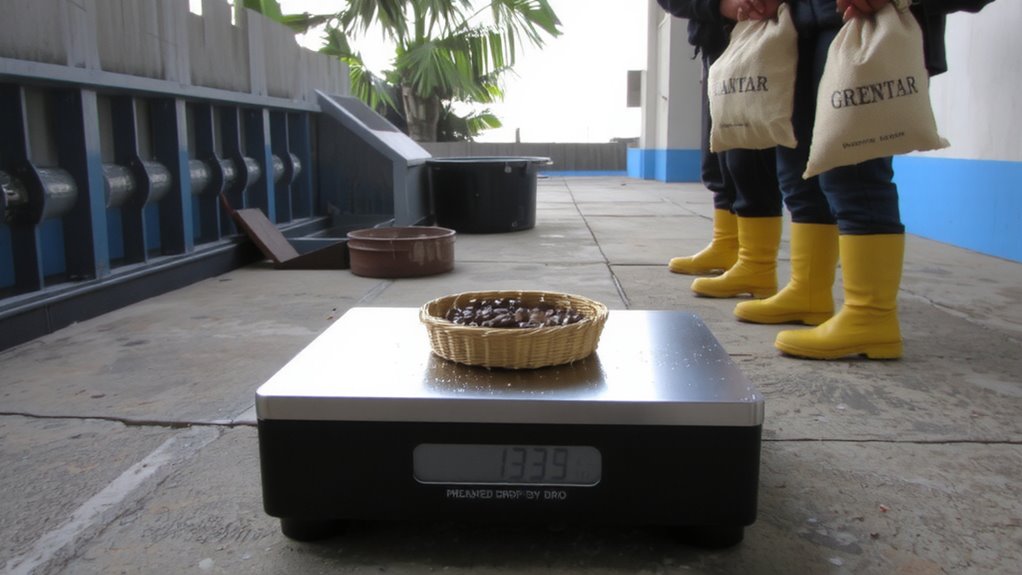
While it might seem like just another step in the process, getting your wet mill scales right can directly impact how much coffee you actually end up with. If scale placement is off-say, near vibrating machinery or in damp areas-you’ll get inconsistent readings, leading to inaccurate yield tracking. Proper placement on stable, level surfaces guarantees reliable measurements batch after batch. That accuracy isn’t just about profit; it affects your environmental impact too. Overestimating weight might push you to process more cherries than needed, wasting water and increasing wastewater output. Underestimating means undervaluing your yield, potentially reducing income. Consistent, well-maintained scales help you process only what’s necessary, minimizing resource use. Digital load cell scales, for example, offer precision if installed correctly. So check placement, calibrate regularly, and use that data to make smarter, more sustainable processing decisions-every kilogram counts.
How Faulty Scales Hide Real Loss in Processing
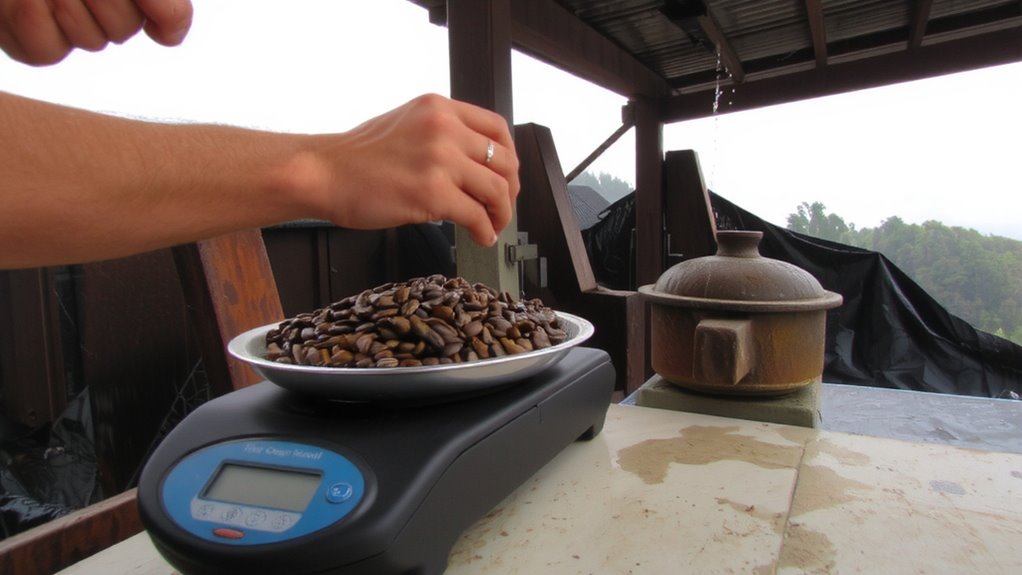
You’ve seen how scale placement and calibration affect yield accuracy, but what’s harder to spot is how faulty scales hide actual losses during processing. When scales drift out of alignment, they quietly distort weight readings, making it seem like you’re losing less coffee than you really are. This data distortion skews your yield reports and masks inefficiencies in depulping, fermentation, or drying. Even small inaccuracies add up-especially across tons of cherries. Human error often plays a role, like using damaged weights or skipping routine checks. Digital scales can fail silently, showing plausible numbers that are wrong. Without accurate data, you can’t spot real loss patterns or improve operations. Relying on faulty scales means making decisions based on fiction, not fact. You might think your process is stable when it’s actually leaking profit. Correct measurements are non-negotiable for tracking true yield and controlling waste in washed coffee.
When to Calibrate Wet Mill Scales (And How Often)

Regularly calibrating your wet mill scales is key to maintaining accurate weight measurements throughout the coffee processing cycle. You should perform scale maintenance at least once a week during active processing to catch drift early. If you’re running high volumes or your mill has frequent use, consider calibrating every two to three days. Poor calibration timing can skew yield data, making losses appear smaller or larger than they are. Always calibrate before the first weighing of the day, especially after equipment movement or power outages. Temperature shifts and humidity common in wet mills also affect accuracy, so don’t skip checks during changing weather. Digital scales may hold calibration longer, but mechanical ones need daily attention. Consistent calibration timing reduces errors in tracking and helps maintain trust in your data. Make it part of your routine-just like cleaning the depulper or checking water flow.
Calibrate Scales for Cherry and Parchment Weights
Now that you’re calibrating on a reliable schedule, it’s time to focus on what you’re weighing-specifically cherry and parchment. Accurate weights at these stages are critical for tracking yield loss in washed coffee. If your scale drift occurs between calibrations, even small shifts can create significant weight variance over time. That drift might seem minor, but across thousands of kilos, it distorts your data and hides real processing losses. Cherry weight sets your baseline, so any error here skews your entire yield calculation. Parchment weight, taken post-drying, lets you measure efficiency-but only if both scales are matched and stable. Always calibrate both scales identically, using certified test weights, to minimize discrepancies. Don’t assume both units behave the same; check each separately. Consistent measurement reduces weight variance and guarantees your yield numbers reflect actual processing, not equipment error. For precision at every stage, consider using a scale designed for coffee workflows, such as those highlighted in top coffee bean scales reviews.
Essential Tools for Scale Accuracy in Coffee Mills
A dependable scale is only as good as the tools used to maintain it. For accurate readings at wet mills, you need calibrated test weights, a reliable checklist, and tools for basic scale maintenance. Test weights-like certified 5 kg or 10 kg masses-let you verify performance daily. Digital calibrators work well for electronic scales, while mechanical scales may need spanners or screwdrivers for adjustments. Keep a log to track weight consistency over time, which helps spot drift before it affects data. A spirit level makes certain your scale sits flat, reducing error. Dust and moisture hurt accuracy, so brush sensors clean and store tools dry. Using the right equipment consistently means your parchment and cherry weights stay trustworthy. Without these essentials, even high-end scales can mislead-simple tools make all the difference.
Track Real Yield Loss Using Daily Scale Data
You’ve checked your scale with calibrated weights and made sure it’s clean and level-now put that daily data to work by tracking real yield loss across processing. Weigh cherries on arrival, then measure parchment after drying to calculate actual loss. This helps spot inefficiencies tied to pulp density and water retention, which vary by harvest and processing method. High pulp density might mean more mass stays in waste, while high water retention can inflate wet parchment weight, skewing your numbers. Track this daily to catch trends: if yields slip during certain batches, investigate equipment settings or fermentation times. Over time, you’ll see how factors like ripeness or elevation affect output. Consistent logging lets you compare dry parchment yield against cherry input, giving reliable metrics. Skip the guesswork-use scale data to make informed adjustments and improve overall efficiency in your washed coffee production. For precise measurements that support consistent data collection, consider using one of the best coffee scales designed for accuracy in brewing environments.
On a final note
You need accurate scales to track real yield loss in washed coffee. Uncalibrated scales hide inefficiencies, costing you money. Calibrate daily, especially before weighing cherry and parchment. Use certified weights and a level surface. Digital scales like the Rice Lake or Adam Equipment models offer reliability. Poor data leads to poor decisions-consistent calibration gives you the clear picture needed to improve processing efficiency and protect your margins. Don’t guess. Measure.