Cold Brew Filtration Methods: Cheesecloth, Paper Filters, and French Press as Sieves
Your cold brew’s taste and texture depend on how you filter it. Cheesecloth lets oils through for a rich body but leaves sludge; doubling it helps. Paper filters give a clean, bright cup with almost no sediment, though they can absorb some flavor. A French press is fast and full-bodied, but you’ll get grit at the bottom. Each method shapes clarity, mouthfeel, and cleanup-your routine and flavor preference decide the best fit. More details follow on matching your method to your ideal brew.
Notable Insights
- Filtration method affects cold brew’s flavor, clarity, and mouthfeel by controlling oil and sediment retention.
- Cheesecloth allows oils to pass, enhancing body but permitting fine sediment unless layered multiple times.
- Paper filters produce clean, bright cold brew by trapping oils and fines, though they may absorb some aromatics.
- French press uses a metal mesh to deliver full-bodied brew but leaves sediment, requiring careful pouring.
- Cleanup varies: paper filters are easiest, cheesecloth needs thorough cleaning, and French press requires disassembly and scrubbing.
How Filtration Shapes Cold Brew Flavor
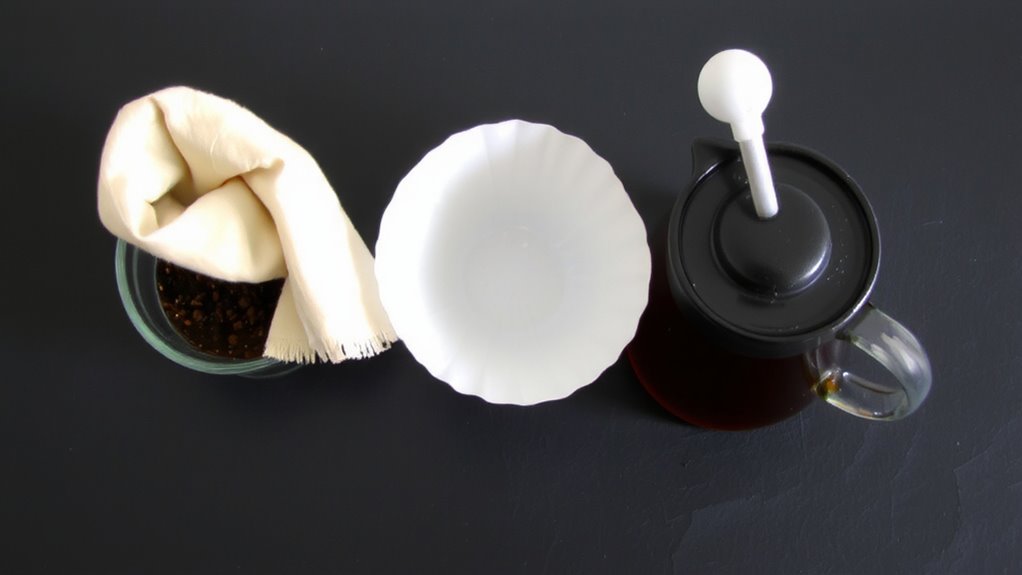
While you might think the coffee beans and brew time are the only factors that matter, the truth is your filtration method plays a crucial role in shaping the final flavor of your cold brew. The way you filter affects how much sediment and oil stays in your cup, directly influencing mouthfeel and taste. Longer brew time increases flavor extraction, but without proper filtration, you risk pulling out unwanted bitterness or cloudiness. Paper filters, like those in drip brewers, produce a clean, bright cup by trapping most oils and fine particles. Metal filters, like in a French press, allow more oils through, giving a heavier body. Your choice changes both clarity and richness. Even small differences in pore size can alter results. So match your filter to your preferred balance: clarity versus depth. It’s not just brew time or beans-it’s how you filter that defines the result. A dedicated cold brew French press can optimize this process by combining steeping and filtration efficiently, with models designed specifically for best cold brew French press performance.
Cheesecloth: Full-Bodied but Messy
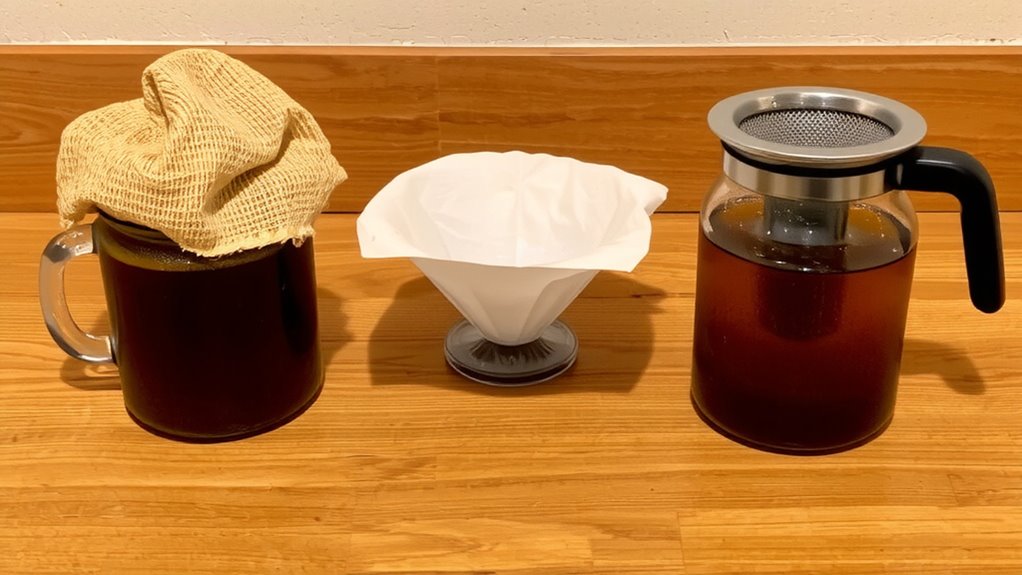
Cheesecloth gives your cold brew a rich, full-bodied texture by letting most of the coffee oils pass through while catching only the largest grounds. You’ll love the flavor depth it preserves, thanks to excellent texture retention. But be ready-sludge management is a real challenge. Fine particles slip through, clouding your brew and settling at the bottom of your glass.
| Method | Texture Retention | Sludge Management |
|---|---|---|
| Cheesecloth | High | Poor |
| Paper Filter | Low | Excellent |
| French Press | Medium | Fair |
| Metal Mesh | High | Poor |
Use double or triple layers to reduce sediment, though flow slows. Cheap and reusable, cheesecloth works in a pinch but demands extra care. Rinse it well post-brew to avoid lingering oils. Ideal if you prioritize mouthfeel over clarity and don’t mind a little cleanup.
Paper Filters: Clean Cup, Less Oil
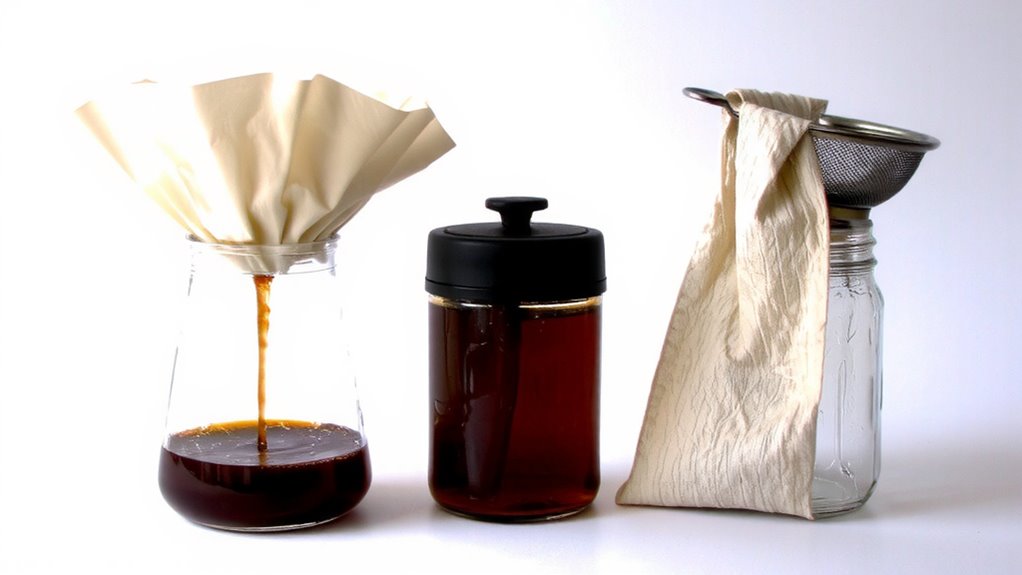
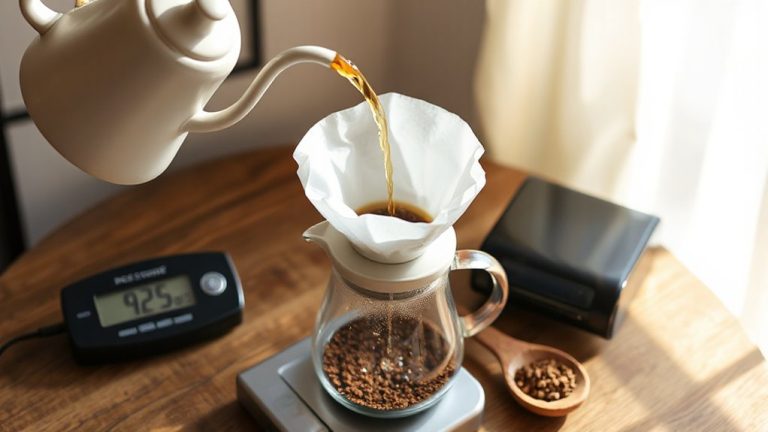
If you’re after a crisp, clean cold brew with minimal sediment, paper filters deliver consistent results by trapping nearly all fine particles and oils. The paper texture acts as a fine barrier, capturing even microscopic grounds that slip through coarser methods. Filter porosity plays a key role-most paper filters have low porosity, blocking oils and fines effectively. This results in a lighter, smoother cup with bright clarity. You’ll notice less grit and a cleaner finish, ideal if you prefer your cold brew silky and refined. Brands like Chemex or Hario use thicker paper, enhancing filtration but slowing flow slightly. While paper filters produce a pristine brew, they can absorb some aromatic compounds and may require pre-wetting to avoid paper taste. They’re disposable, so cost and waste add up over time. Still, for repeatable clarity and ease, paper’s reliability makes it a top pick when oil-free precision matters. A best coffee dripper can enhance your cold brew filtration setup by providing optimal water flow and contact time.
French Press: Speed vs. Sediment Risk
You can brew cold coffee quickly with a French press, thanks to its simple metal mesh filter that lets oils and fine particles pass through. Its design cuts brew time markedly-typically 12 to 16 hours, same as other methods-but you skip the extra filtering steps. That speed comes with a trade-off: poor sediment control. You’ll notice more grit at the bottom of your cup, especially if you pour too aggressively. The metal screen catches large grounds but allows silt to slip through. If you value full-bodied flavor and don’t mind a little sludge, the French press is convenient. For better clarity, consider decanting carefully or doing a secondary filter with paper. Still, if speed and simplicity are your priorities, this method delivers-just know the trade-offs in sediment control. The Best French Press Picks for 2024 offer improved filtration and durability for cold brew enthusiasts.
Cleanup Time: From Quick to Cumbersome
The French press may win points for speed and ease of brewing, but cleanup can slow you down if you’re not careful. After pouring your cold brew, you’re left with a layer of filter residue at the bottom-fine coffee grounds that slipped through. Getting them out means disassembling the press and scrubbing each part, which adds time. A common disposal method is rinsing grounds down the sink, but that risks clogs over time. You’re better off scraping them into compost or the trash. Paper filters, in contrast, trap nearly all sediment-the used filter and grounds get tossed, making cleanup quick with almost no residue to handle. Cheesecloth sits in the middle: effective but messy. You’ve got to rinse the cloth immediately to prevent oils from setting, and it needs regular washing. Your disposal method and tolerance for filter residue will shape how fast-or slow-cleanup feels.
Match Your Routine: Best Filter for You
How often do you brew, and how much time can you realistically spare? Your brewing frequency shapes the best filtration choice. If you make cold brew daily or every few days, a French press offers convenience-just steep, press, and pour. It’s fast and handles larger batches, though it may let some fines through, affecting clarity. For a cleaner cup that highlights your taste preference, paper filters work well but take longer and cost more over time. Cheesecloth is cheap and reusable but needs careful cleaning and multiple layers to catch fine grounds. If you brew occasionally and prioritize ease, go French press. If you value smoothness and don’t mind extra steps, use paper. Match the filter to your schedule, cleanup tolerance, and flavor priorities for the best balance.
On a final note
Your cold brew filter shapes taste and texture. Cheesecloth retains oils for richness but lets sediment through and takes work to clean. Paper filters give a clean, bright cup but remove body-enhancing oils and require disposal. The French press is fast and convenient, but grounds can slip through if not pressed carefully. Pick based on your priority: smoothness, speed, or richness. Each method works-just match it to your routine.