How Farmers in Honduras Use Catuai for Both Washed and Honey Process Coffees
You grow Catuai in Honduras because it fits small plots, delivers steady yields, and handles both washed and honey processing well. With washed, you ferment 18–24 hours for bright, clean cups. For honey, you leave mucilage on and dry slowly, boosting sweetness and body. You’ll need good drying beds and depulpers that control pulp removal. Switching mid-season works if you have space and labor. Keep lots separate to maintain quality. Proper drying with airflow is key. Use solar dryers in humid areas. Higher premiums come with honey, if done right - and there’s more to how timing and terrain shape results.
Notable Insights
- Honduran farmers grow Catuai for its high yield and adaptability, making it ideal for both washed and honey processing methods.
- They use depulpers adjusted to remove pulp while retaining mucilage for honey processing, or fully removing it for washed.
- Washed Catuai is fermented 18–24 hours to enhance acidity, highlighting bright, crisp flavor notes.
- For honey processing, Catuai beans dry with mucilage, increasing sweetness and body under controlled conditions.
- Farmers maintain strict separation and use raised beds with frequent turning to ensure quality in both processing types.
Why Is Catuai Perfect for Honduran Coffee Farms?
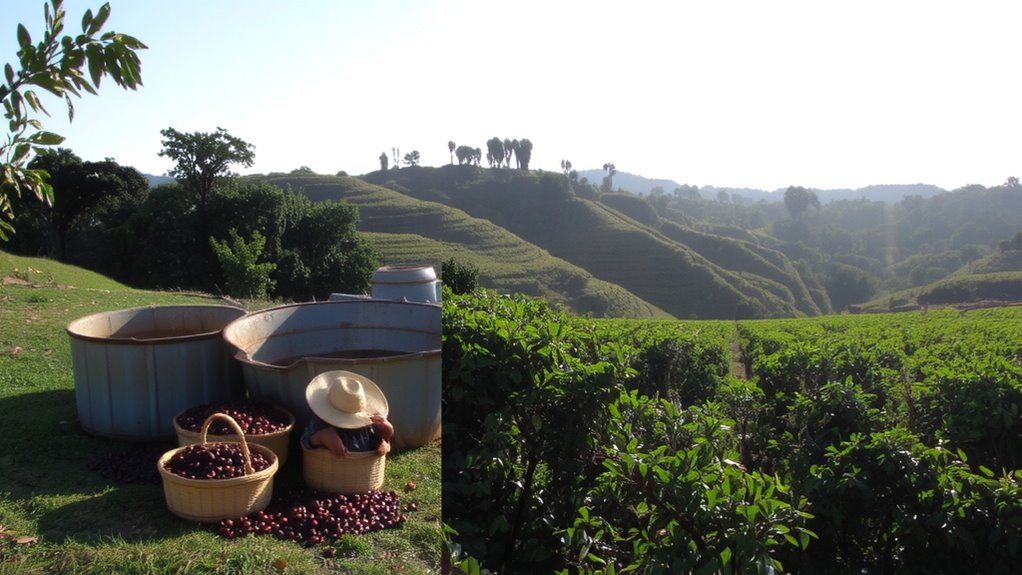
Yield matters-especially when you’re working small plots with big ambitions. Catuai delivers, packing strong output into a compact tree perfect for high-density planting. You’ll get consistent harvests without wasting space, a must where land is limited. Its soil adaptation means it thrives in varied terrains-whether volcanic slopes or clay-heavy fields-without demanding extra inputs. That adaptability cuts costs and simplifies management. More importantly, Catuai offers climate resilience, handling dry spells better than many varieties thanks to sturdy root development and reduced leaf transpiration. While it still needs shade in extreme heat, it’s less prone to stress than Typica or Bourbon. You’ll also find it easier to mechanize, since its upright structure suits pruning and harvesting. Yes, it’s susceptible to rust, so monitoring is key. But with proper care, Catuai gives Honduran farmers a practical, productive choice that balances risk and reward in changing conditions.
How Does Washed Processing Elevate Catuai’s Brightness?
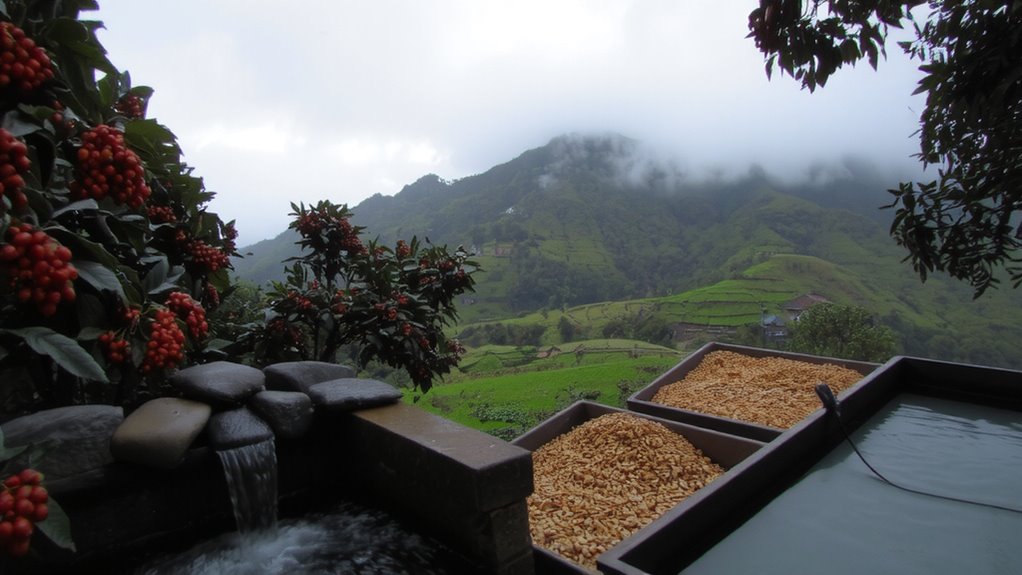
While Catuai beans already carry a naturally bright profile, washed processing sharpens that acidity in a clean, consistent way. You remove the pulp and ferment away the mucilage before drying, which leads to notable acidity enhancement. This method highlights the bean’s inherent lime-like zing and tea-like crispness without interference. Because you’re eliminating the fruit early, there’s less chance for fermentation quirks, giving you reliable flavor clarity from batch to batch. For farmers using basic fermentation tanks and clean water systems, this process works well even at small scale. It’s less forgiving than honey processing if your timing is off, but it rewards precision. Washed Catuai typically scores higher in cuppings for brightness, especially when grown at elevations above 1,200 meters. If you value a crisp, articulate cup with pronounced acidity and distinct citrus notes, washed processing is your best bet for revealing Catuai’s potential.
What Makes Honey Process So Sweet for Catuai?
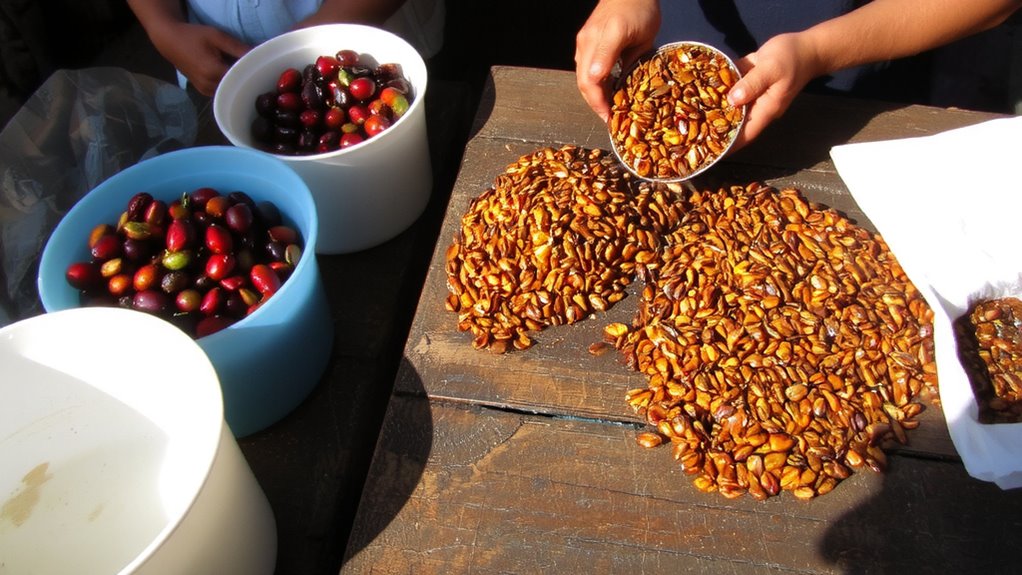
You might favor washed processing for its clean, bright results, but honey processing offers a compelling middle ground that pulls out more sweetness in Catuai without the complexity of full natural fermentation. After depulping, you leave some sticky mucilage on the bean, which slowly dries in the sun. This layer feeds microbial activity and boosts sugar development during drying, enhancing body and sweetness. Because Catuai is dense and resilient, it handles the extended drying well. You’ll often notice richer mouthfeel and distinct floral notes compared to washed lots. However, precise monitoring is key-too much moisture or heat risks over-fermentation. Raised beds with good airflow help maintain control. In Honduras, many farms use honey to target specialty markets seeking complexity without the risks of naturals. It’s not easier than washed, but done right, it adds value-especially with Catuai’s balanced profile.
Can Farmers Switch Processing Mid-Season for More Value?
How do farmers decide when to shift processing methods mid-season? It often comes down to market demand and equipment availability. When buyers show interest in honey-processed Catuai, switching can boost profits. But you can’t make that change without the right tools. Here’s what to evaluate:
| Factor | Washed → Honey |
|---|---|
| Labor | Increases slightly |
| Equipment | Needs mucilage-retaining tools |
| Drying Time | Longer, needs space |
You’ll need reliable depulpers that preserve some mucilage and expanded drying beds. If your equipment allows partial depulping and you’ve got space for slow drying, the switch is doable. Monitor market demand closely-honey lots often sell at a premium. But if your farm lacks infrastructure, sticking with washed may be smarter. Flexibility hinges on preparation, not just opportunity.
How Do You Maintain Quality in Both Washed and Honey Lots?
Since both washed and honey-processed Catuai demand consistent quality control, keeping each lot separate from harvest through drying is critical. You must monitor fermentation control closely-washed lots typically ferment 18–24 hours in concrete tanks, while honey lots skip full fermentation to preserve mucilage. Even small timing errors can lead to off-flavors. For drying consistency, use raised beds with mesh sides for airflow, turning every 30 minutes in direct sun. Spread washed beans thinner than honey lots, which need slower, more careful drying to avoid mold. Use moisture meters to confirm beans reach 10–12% before storage. Mixing lots or skipping steps risks quality and market value. Solar dryers help in high-humidity areas, offering better control than open patios. Your process determines cup clarity and sweetness-precision matters. Track each batch’s time, temperature, and weight daily.
On a final note
You can process Catuai both ways without losing quality. Washed lots give you clean, bright cups with lime and green apple notes-ideal for filter brewing. Honey-processed Catuai adds sweetness and body, great for espresso or full-bodied pour-overs. Switching mid-season works if you monitor ripeness and control fermentation. Just keep depulping and drying conditions precise. Use raised beds, frequent turning, and moisture meters to avoid defects. Both methods pay off when handled right.