Pour-Over Water Flow: 200°F, 30-Sec Bloom & Gooseneck Tips
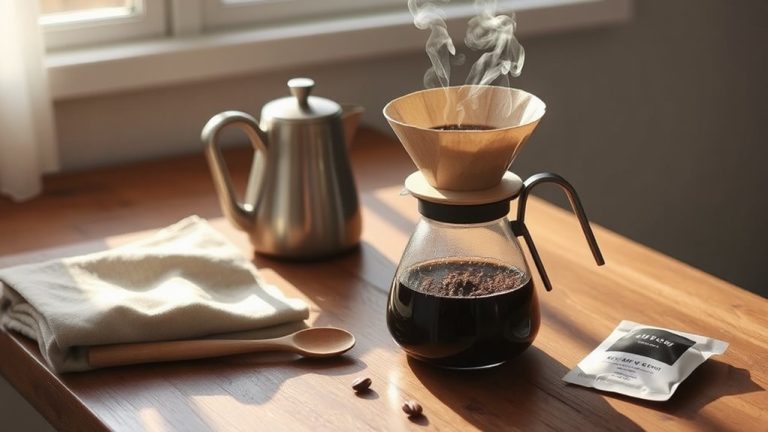
Use a gooseneck kettle like the Fellow Stagg or Brewista for precise, steady pours that prevent flooding. Start with a 30-second bloom using twice the water weight of your coffee to release trapped CO₂. Pour at a consistent speed in tight concentric circles, keeping the stream pencil-thin to avoid channeling. Keep water at 200°F-hot enough for extraction, not hot enough to scald. Grind fresh, medium-fine beans to match your brewer’s flow rate, and you’ll see how small tweaks improve every cup. There’s more to fine-tuning your method just ahead.
Notable Insights
- Use a gooseneck kettle for precise, steady pouring to maintain consistent water flow and prevent flooding.
- Initiate a 30-second bloom with twice the water weight of coffee to release trapped CO₂ and ensure even saturation.
- Pour in slow, concentric circles from center to edge to eliminate dry spots and avoid channeling.
- Maintain a thin, pencil-sized water stream at a consistent speed to promote uniform extraction.
- Brew at 200°F using temperature-controlled equipment to optimize extraction without scalding or under-extracting.
Why Water Flow Makes or Breaks Your Brew
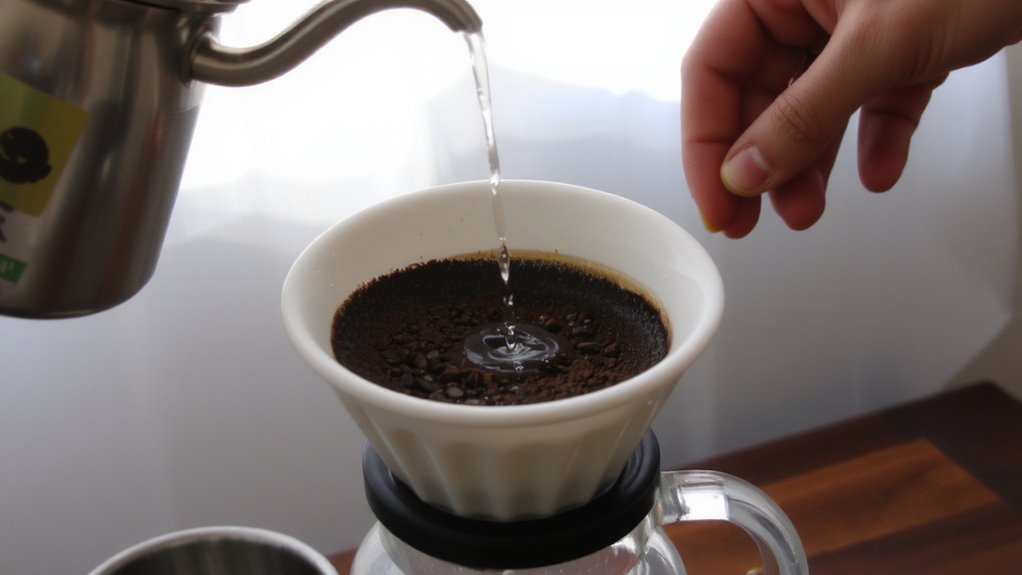
While you might think grind size or bean quality matters most, the truth is your pour over brew lives or dies by water flow. Inconsistent water pressure or poor flow consistency leads to uneven extraction-some parts over-extracted, others under-extracted. Your gooseneck kettle controls this. A gooseneck delivers slow, steady pours, unlike regular kettles that gush and flood the bed. Electric kettles with variable temp control, like the Brewista or Fellow Stagg, improve precision. But even the best kettle fails if you pour too fast. Keep your stream thin-about the width of a pencil-and pulse pour in concentric circles. That maintains flow consistency and avoids channeling. Too much water pressure forces water through weak spots, wasting grounds. Aim for a smooth, uninterrupted drip through the filter. With practice, you’ll see how stable flow directly affects clarity and balance in your cup. It’s not magic-it’s physics. Top-rated pour-over brewers like the Hario V60 and Kalita Wave are designed to complement gooseneck kettle precision for optimal extraction.
Master the Bloom for Even Saturation
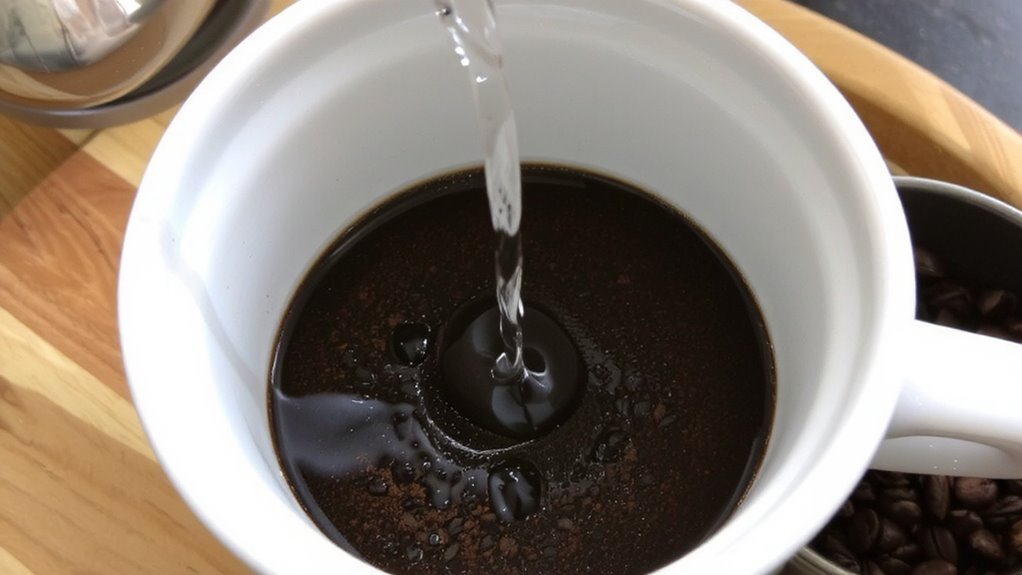
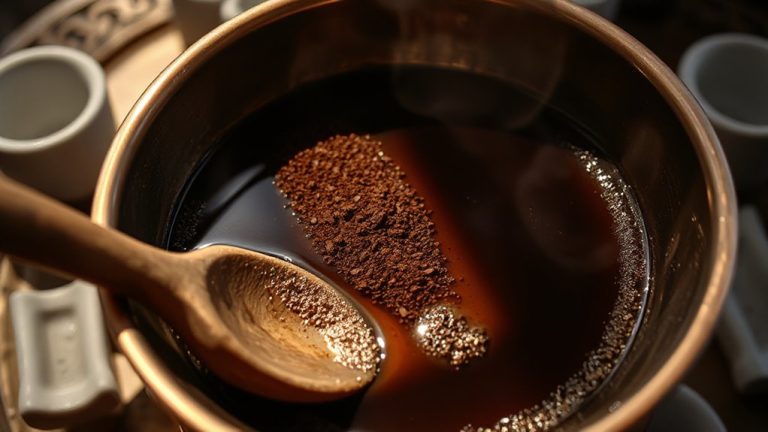
If you skip the bloom, you’re starting your brew at a disadvantage. That initial pour releases trapped CO₂ from freshly roasted beans, letting water penetrate evenly. Without it, you’ll get uneven extraction no matter how steady your hand. Coffee freshness matters-beans under two weeks post-roast release more gas, leading to a vigorous, foamy bloom. Older coffee won’t react as much, signaling lost vibrancy. Use a gooseneck kettle to control water placement and saturate all grounds uniformly. Grind consistency is just as critical-boulders or fines disrupt even saturation, causing weak or bitter spots. Aim for a medium-fine grind, like sea salt, using a quality burr grinder (e.g., Baratza Encore). A full 30-second bloom with twice the water weight of coffee guarantees gases escape before main pours. For precise control during the bloom and pour, consider using a gooseneck kettle designed specifically for pour-over brewing.
Pour at a Steady Speed to Prevent Channeling
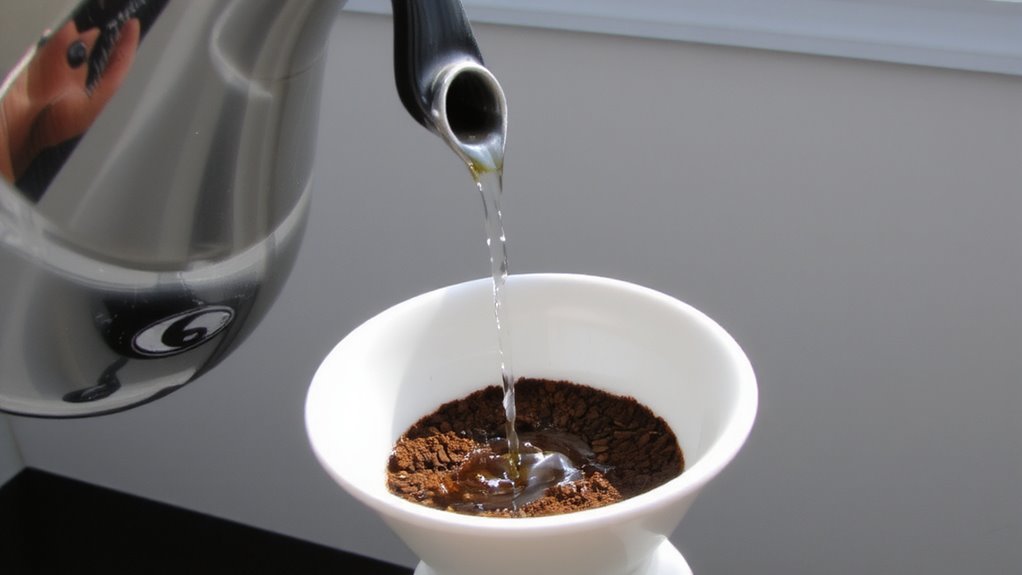
Since channeling can wreck your extraction by letting water bypass the coffee, keeping a steady pour speed is key to even flow through the bed. You want a consistent flow rate-too fast causes turbulence and uneven saturation, while too slow risks under-extraction. Aim for a smooth, controlled pour that maintains momentum without splashing. This improves turbulence control, helping water move uniformly through the grounds. Gooseneck kettles are ideal here; their narrow spouts give you precision most standard kettles can’t match. A steady hand and consistent rhythm matter more than speed, so practice matters. If the flow rate fluctuates, you risk disrupting the bed and creating channels. Keep your pour even from start to finish-no sudden starts or stops. It’s not about how fast you pour, but how steadily. That small adjustment makes a big difference in extraction clarity and cup balance. For optimal results, consider using one of the best gooseneck kettles designed specifically for pour over brewing.
Use Concentric Circles for Uniform Flow
You’ve got your pour speed under control, which helps maintain even flow through the coffee bed, and now it’s time to focus on where that water actually goes. Using concentric circles guarantees uniform saturation and prevents dry spots. Start at the center and expand outward in a consistent spiral motion, then reverse back in. This method promotes better center alignment and even extraction. Avoid haphazard pouring-it leads to uneven flow and weak coffee.
| Technique | Effect on Brew |
|---|---|
| Random pouring | Channeling, uneven extraction |
| Straight center | Over-extraction in middle |
| Spiral motion | Uniform flow, balanced taste |
| Edge-heavy pour | Weak, tangy flavors |
| Concentric circles | Even saturation, maximum yield |
Keep your hand stable and your radius small at first. A controlled spiral motion with proper center alignment makes a real difference in cup quality.
Choose a Gooseneck Kettle for Precision Control
While a regular kettle might seem like a convenient option, it won’t give you the kind of control needed for a consistent pour over. A gooseneck kettle, with its thin, arched spout, allows you to pour slowly and accurately, helping maintain a steady flow rate. This precision is key when using concentric pouring techniques. The ergonomic design of most gooseneck kettles makes them comfortable to hold and easier to maneuver during long pours. Their gooseneck balance guarantees the weight feels stable, reducing wrist strain and improving pour accuracy. Look for models like the Fellow Stagg or Bonavita, which combine stainless steel construction with user-friendly features. Electric versions offer temperature control, while stovetop ones work on any burner. Whether you choose electric or stovetop, the shape and balance of a gooseneck kettle give you far better control than a standard spout ever could.
Heat Water to 200°F for Smooth Flow
One ideal temperature for pour over coffee is 200°F-just under boiling-as it extracts flavors evenly without scalding the grounds. Your water temperature matters because too hot (like full boil at 212°F) can pull bitter notes, while too cool (below 195°F) leads to weak, under-extracted coffee. Staying near 200°F strikes a balance, dissolving sugars and acids efficiently. Heat consistency is key-fluctuations during the brew can cause uneven extraction. An electric gooseneck kettle with temperature control, like the Fellow Stagg EKG or Bonavita BV3825, makes this simple. These kettles let you set and maintain 200°F reliably, unlike stovetop kettles where you’re guessing. If you don’t have a temp-controlled kettle, boil water and wait 30 seconds before pouring. This gets you close enough. Maintaining steady heat consistency guarantees every drop works the same way, giving you a smooth, balanced cup every time.
Fix Stalls, Gaps, and Uneven Brewing
Getting the water temperature right sets the stage, but even with perfect heat, problems can pop up during the pour. If you notice stalls or gaps in water flow, it’s likely due to uneven saturation or clogged grounds. Too much water pressure early on can cause channeling, while too little leads to slow extraction. The key is maintaining consistent, gentle flow resistance by controlling your pour rate. Use a gooseneck kettle-it gives you precision and steady output. Make sure your grind size matches your brewer: too fine increases flow resistance and risks clogging, too coarse speeds things up and causes weak spots. Stir gently during bloom to eliminate dry clumps. And if pooling occurs, adjust your pour height or speed. Fixing uneven brewing isn’t about force-it’s about balance between water pressure, grind, and pour control.
On a final note
You’ve got the tools and the technique-now it’s about consistency. A gooseneck kettle gives precision, while 20 confluent pours at 200°F prevent channeling. Bloom evenly, maintain steady speed, and stick to concentric circles. If flow stalls, adjust grind or pour method. These steps beat guesswork, delivering balanced flavor every time. It’s not magic-it’s method.