Complete Guide to Cleaning and Maintaining Coffee Canisters and Storage Solutions
Wipe out your coffee canister weekly if you refill often, using warm soapy water and a soft brush-avoid abrasive pads on stainless steel. For glass or ceramic, a baking soda paste tackles stubborn stains; for stainless steel, try a vinegar rinse to kill odors. Always dry thoroughly with a lint-free cloth, then air-dry upside down for at least 30 minutes. Never store coffee in a damp container-it leads to clumping and mold. Choose airtight, opaque containers like stainless steel or ceramic to protect beans from light and moisture, and clean every 2–4 weeks depending on use. Using oily beans? Clean more often. The right routine keeps your coffee tasting fresh longer-there’s more to get right with storage and timing.
Notable Insights
- Clean coffee canisters weekly or biweekly based on usage, especially when refilling daily or storing oily dark roast beans.
- Empty old grounds, wipe residue, then wash with warm, soapy water and a soft brush to protect surfaces.
- Use material-safe cleaning methods: baking soda paste for glass or ceramic, white vinegar rinse for stainless steel, or uncooked rice with salt for textured interiors.
- Always towel dry with a lint-free cloth and air dry completely, preferably inverted, before refilling to prevent mold and clumping.
- Store beans in airtight, opaque containers like stainless steel or ceramic to block light, air, and odors for maximum freshness.
How to Clean Glass, Stainless Steel, and Ceramic Canisters
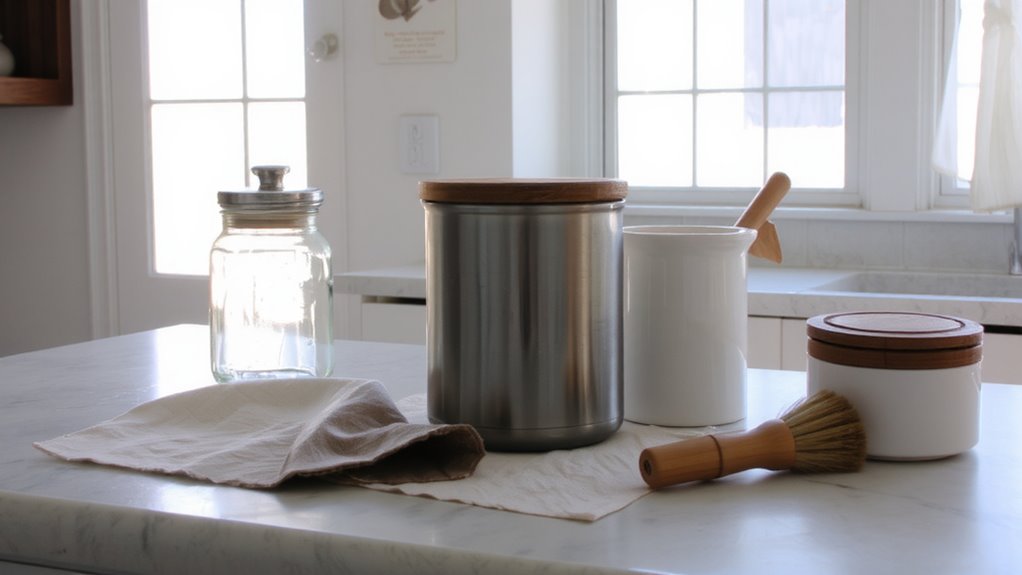
A glass, stainless steel, or ceramic coffee canister keeps your beans fresh, but it needs regular cleaning to stay effective. You should wash it weekly if you refill often. Start by emptying old grounds and wiping loose residue. Add warm, soapy water and use a soft brush to scrub stains-especially in corners or near the seal. For stubborn spots in glass or ceramic models, a paste of baking soda and water works well without scratching. Stainless steel can scratch easily, so avoid abrasive pads. Always rinse thoroughly to remove soap film, which can affect flavor. Let all parts air-dry completely before refilling to prevent moisture buildup. This simple routine maintains freshness and function. Skip harsh chemicals-they’re unnecessary and can linger. With consistent care, your canister will protect bean quality and last for years.
Remove Lingering Odors and Coffee Residue
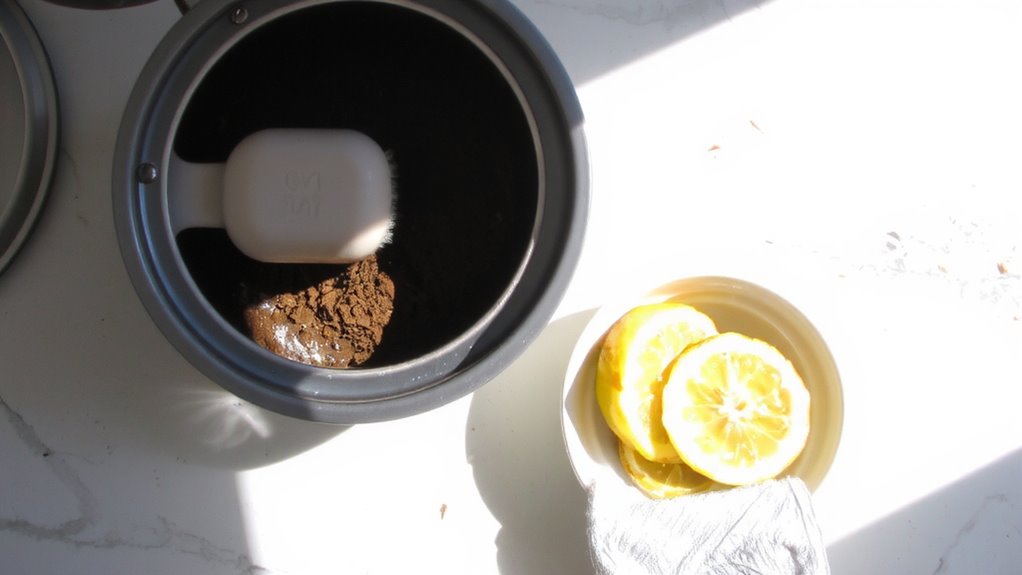
Even after regular washing, coffee canisters often hold onto stale odors and oily residue that can taint fresh beans. Over time, residue buildup from coffee oils dulls the coffee aroma you want to preserve. To restore freshness, deep-clean with natural odor absorbers or gentle abrasives. Best coffee bean storage jars are designed to minimize exposure to elements that degrade coffee quality, enhancing the effectiveness of proper cleaning. Below are effective solutions:
| Method | How to Use | Best For |
|---|---|---|
| Baking soda paste | Mix with water, scrub interior, rinse | Glass, ceramic |
| White vinegar rinse | Swirl inside, wait 10 mins, rinse | Stainless steel, stubborn odors |
| Uncooked rice + salt | Shake with damp cloth | Textured interiors |
| Activated charcoal | Leave overnight, wipe clean | All materials |
Always confirm the method suits your canister material. These steps reduce residue buildup and help maintain pure coffee aroma without harsh chemicals. Focus on thorough cleaning before storage to guarantee peak flavor preservation over time.
Dry Canisters Properly to Prevent Moisture
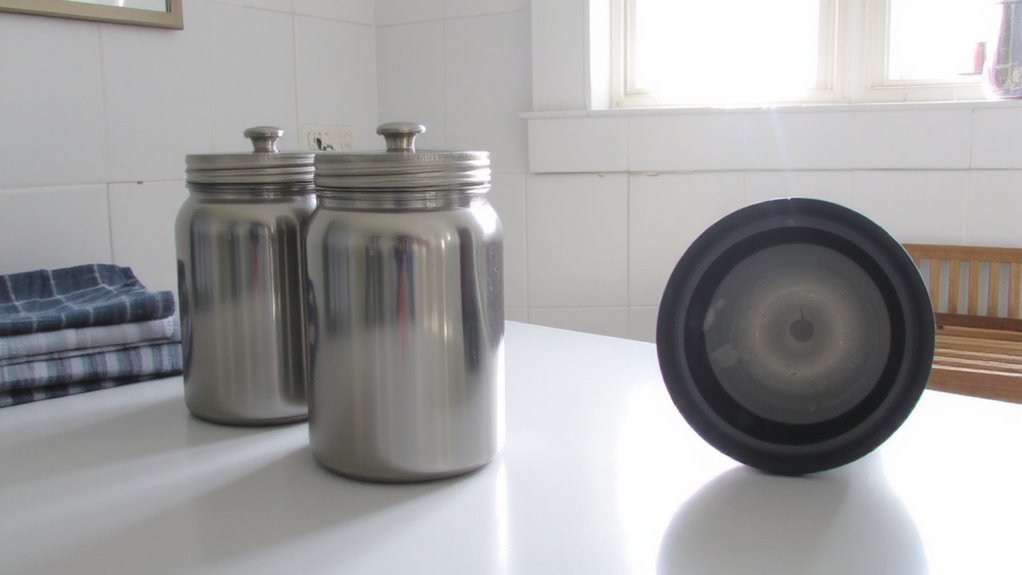
Since moisture encourages mold and degrades coffee quality, you’ll want to dry your canister completely before refilling. After washing, start with towel drying-use a clean, lint-free cloth to wipe down all interior and exterior surfaces. This removes most water quickly and reduces drying time. Then, let the canister undergo air drying for at least 30 minutes, preferably longer, with the lid off and inverted on a drying rack. Air drying guarantees any remaining moisture evaporates, especially in seams or corners towel drying might miss. Avoid skipping either step, as trapped moisture can lead to clumping or spoilage in fresh coffee. In humid environments, extend air drying time or place the canister near a dry, ventilated area. Never store coffee in a damp container-doing so ruins flavor and promotes bacterial growth. Combining towel drying and air drying is your best defense against moisture-related issues.
Choose Airtight Coffee Storage That Preserves Flavor
If you want your coffee to stay fresh, picking a container that seals tightly matters more than most people think. Airtight storage slows oxidation and preserves aroma, and both depend heavily on seal integrity. Look for containers with rubber gaskets or silicone rings-these create a tighter closure than simple screw-on lids. Material selection also plays a key role: stainless steel blocks light and resists odors, while ceramic offers stable temperature control but may chip. Glass works well if kept in dark cabinets, since it doesn’t block UV light. Avoid flimsy plastic-it can absorb odors and degrade over time. Wide-mouth jars may look nice, but narrower openings reduce air exposure when opening. Always check that lids close with a firm click or lock mechanism. For best results, store your airtight container in a cool, dark place-away from the stove or sink. Based on performance and user feedback, the best coffee bean storage containers combine airtight seals with opaque, durable materials to maximize freshness.
How Often to Clean Your Coffee Canister
You should clean your coffee canister every two to four weeks, depending on how often you refill it and the type of beans you store. Your cleaning schedule hinges on storage frequency-daily refills need more attention than weekly ones. Oily beans, like dark roasts, leave residue faster, demanding a stricter routine. For lighter, drier beans, you can stretch the interval. Stick to a consistent cleaning schedule to maintain performance and longevity.
| Storage Frequency | Suggested Cleaning Schedule |
|---|---|
| Daily refill | Every 2 weeks |
| Every 3–4 days | Every 3 weeks |
| Weekly refill | Every 4 weeks |
| Infrequent use | Monthly or as needed |
Adjust based on bean type and usage, but never skip more than a month. A quick wash with warm, soapy water keeps things running smoothly. Choosing the right coffee grounds containers can also impact how easily your canister maintains freshness and cleanliness.
Why Cleaning Your Canister Keeps Coffee Fresh
While coffee canisters help preserve freshness by blocking light and minimizing air exposure, a dirty one works against those benefits. Residue and oils build up over time, creating a breeding ground for stale flavors and bacteria. Poor container hygiene accelerates coffee oxidation, the process where oxygen degrades coffee’s essential oils and aromatic compounds, leaving your brew flat and bitter. Even an airtight seal can’t protect against this if the interior isn’t clean. Regularly wiping or washing your canister-especially after refilling-keeps it neutral and ready. Glass, stainless steel, or ceramic are easier to clean thoroughly than porous materials. A vinegar rinse or mild detergent works well; just make certain it’s completely dry before reuse. You don’t need fancy tools-just consistency. Good hygiene isn’t just about sanitation; it’s about preserving taste, quality, and the true character of your beans.
On a final note
Keep your coffee tasting fresh by cleaning glass, stainless steel, or ceramic canisters every few weeks with warm, soapy water-avoid harsh scrubbing. Dry them completely to prevent moisture buildup, which ruins beans. Choose airtight containers like the Airscape or OXO Coffee Canister to block light and air. Proper cleaning removes old oils and odors, helping preserve flavor. If coffee tastes stale, check your storage and cleaning routine.