How Specific Temperature Settings Affect the Flavor Intensity of Turkish Coffee During Preparation
You get the best flavor from Turkish coffee at 160–170°C (320–338°F), just below boiling. Too low, and the brew lacks aroma and depth; too high, and it turns bitter or scorched. Dark roasts burn easily, while light ones need steady heat to bring out origin notes. Use a copper or stainless steel cezve for even heating, especially on electric stoves. Your foam’s behavior tells you if the heat’s right-watch it closely to fine-tune the next step.
Notable Insights
- Brewing between 195°F and 205°F optimally extracts flavor without bitterness, preserving aromatic intensity and balance.
- Exceeding 205°F risks scalding grounds, releasing harsh compounds that diminish flavor clarity and increase bitterness.
- Below 195°F, extraction is incomplete, resulting in weak aroma and flat, underdeveloped flavor intensity.
- Copper cezves enhance heat control, promoting even temperature rise for consistent flavor development during brewing.
- Light roasts benefit from stable heat near 205°F to fully express delicate origin notes and acidic complexity.
What Temperature Is Best for Turkish Coffee?
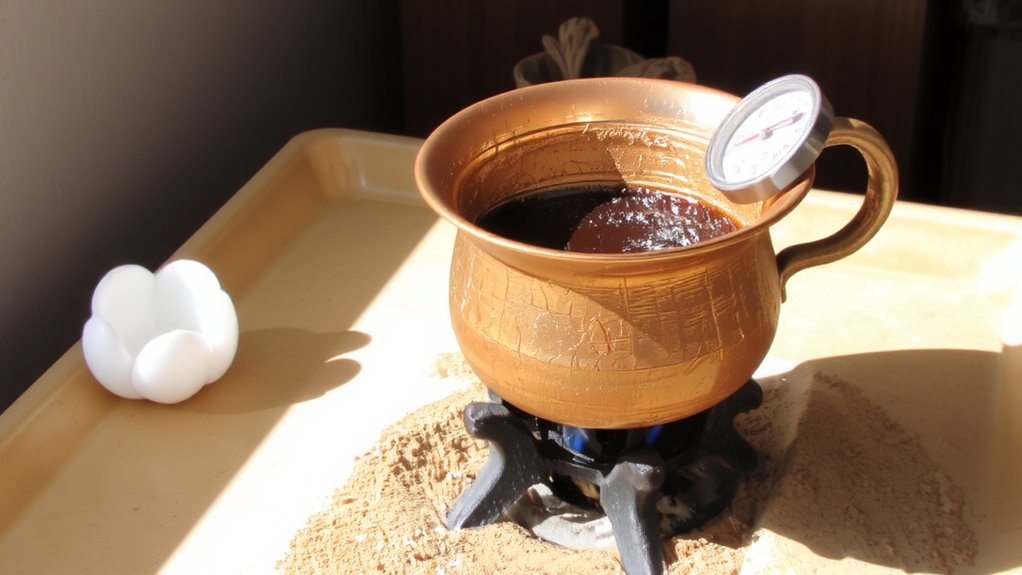
What’s the right temperature for Turkish coffee? You want it just below boiling-around 160–170°C (320–338°F)-to preserve flavor without scalding. Too hot, and you burn the fine grounds; too cool, and extraction falls flat. Your brew pot (cezve) matters: copper or brass heats evenly, helping you hit that sweet spot. Bean origin plays a role-dense beans from Ethiopia may need slightly higher heat versus softer beans from Brazil. Water quality is just as critical-use filtered water to avoid off-flavors from chlorine or minerals. Hard water masks delicate notes, while soft water highlights acidity. You’re not just heating water-you’re balancing chemistry. Avoid full boil; watch for the first foam rise. This method isn’t forgiving, but with precise heat and clean water, you get a richer, truer taste. Practice helps. Use a thermometer at first, then trust visual cues. For consistent results, consider using an electric Turkish coffee maker.
Why Heat Changes Turkish Coffee Flavor
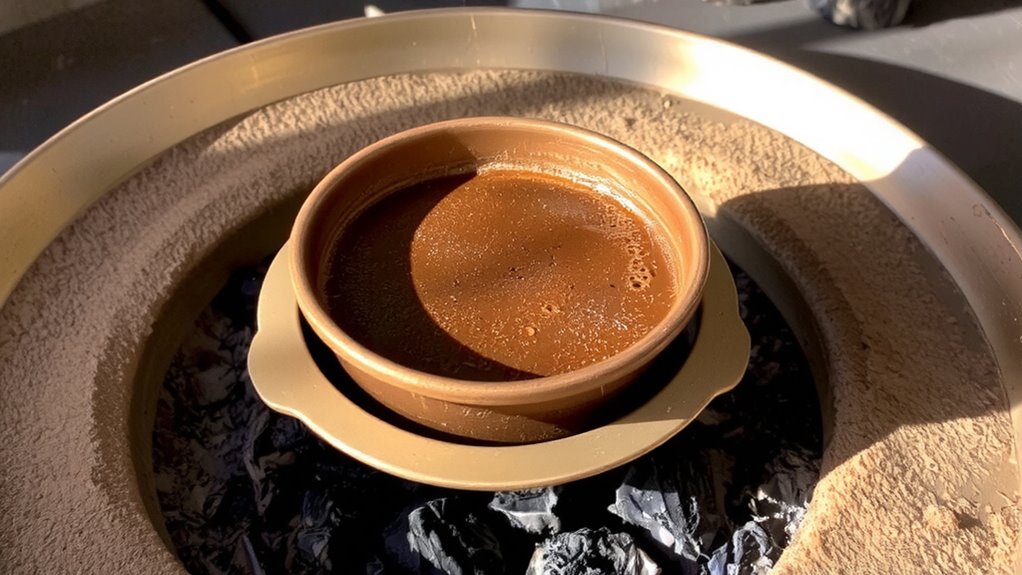
When you heat Turkish coffee too quickly or too high, the delicate compounds in the finely ground beans break down, leading to bitter, scorched flavors. The bean origin matters-Ethiopian beans, for example, have floral notes that degrade fast under high heat, while Brazilian beans can handle slightly more aggression. Your brewing altitude also affects results; at higher elevations, water boils at lower temperatures, slowing extraction and altering flavor development. That means in cities like Denver, you’ll need to adjust your heat level and timing compared to sea-level locations. Using a low, steady flame gives you control, letting flavors unfold without burning. A cezve made of copper or brass helps distribute heat evenly, reducing hot spots. You’re not just heating water-you’re coaxing out complexity. Matching heat to bean origin and elevation keeps the result balanced, not harsh.
Too Low? Your Coffee Loses Its Aroma
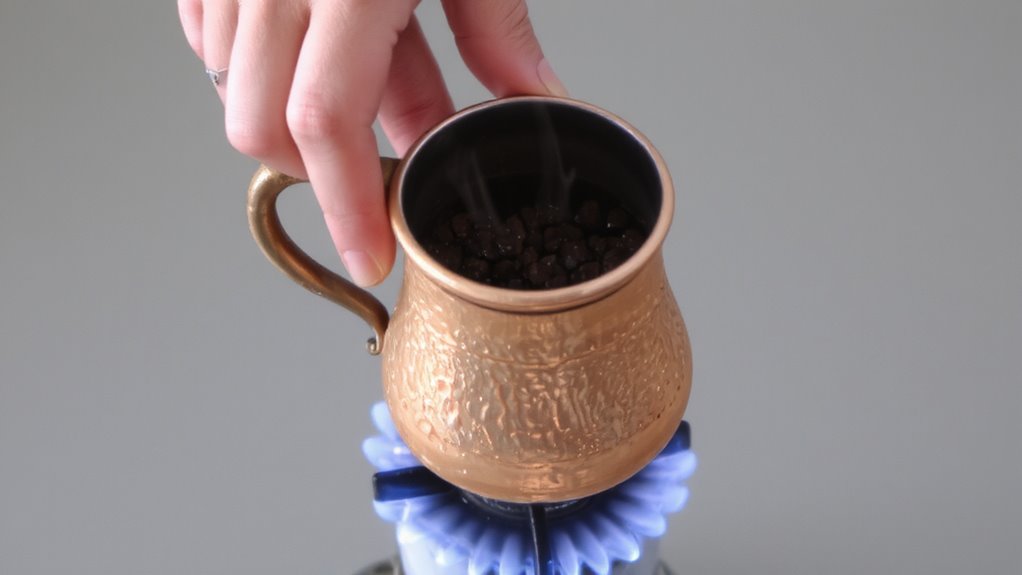
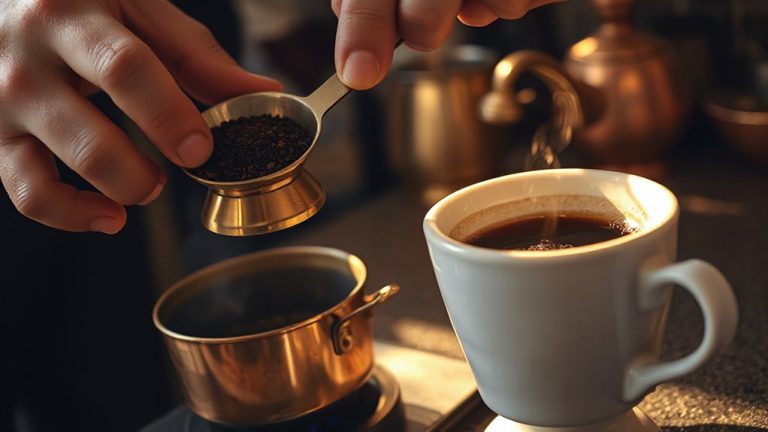
How does weak heat affect your Turkish coffee? If the temperature’s too low, you’ll face aroma loss and flavor dullness. The water never gets hot enough to release the volatile oils that carry the rich, complex notes from the finely ground beans. Without that burst of heat, your brew stays flat and underdeveloped, like coffee that forgot to wake up. Traditional cezve brewing relies on a steady climb to just below boiling-around 195°F to 205°F. Electric stoves sometimes struggle here, especially coil types that heat unevenly. A gozleme pan or small copper cezve helps distribute warmth more evenly. You want to see steam rising steadily, not a lazy wisp. Aim for a gentle foam buildup; if it takes too long, the essential oils degrade instead of lifting into the cup. Low heat means missed depth and character. Don’t let timid flames ruin your ritual-precision matters. For optimal extraction, aim for the Perfect Coffee Brewing Temperature.
Too High? Bitterness Ruins the Brew
Why does your Turkish coffee sometimes taste harsh or overly sharp? It’s likely due to overheating consequences. When you apply too much heat, the water surpasses the ideal brewing range, typically above 205°F (96°C), and begins extracting bitter compounds you don’t want. This leads directly to flavor degradation-aromatic oils break down, and sugars caramelize too much or burn. You’re left with a flat, acrid cup that masks the bean’s natural complexity. Using a cezve over high heat, especially on electric stoves that retain heat longer, increases this risk. Instead, opt for medium-low heat and monitor the temperature closely. Even seasoned baristas make this mistake when rushing. The difference between balanced and ruined coffee often comes down to a few degrees. Avoid aggressive boiling-your palate will notice the improvement. Bitterness isn’t depth; it’s a warning sign of poor thermal control.
Watch the Foam: Your Heat Warning Sign
That bitter edge you’re trying to avoid? It’s tied directly to your foam. As the coffee heats, watch the foam density rise-tight, creamy bubbles mean you’re on track. But if it starts swelling too fast or looks thin and fragile, your heat’s too high. That’s your warning. Good foam retention signals proper heat: the bubbles last, cling to the sides, and build slowly. If it collapses quickly or overflows, you’ve pushed past the ideal temperature. You want controlled expansion, not a runaway reaction. Keep the flame low to medium-low; this lets the foam develop evenly without scorching the grounds. Stainless steel cezves handle heat more evenly than brass or copper, helping maintain stable foam conditions. When you learn to read the foam-its density and how long it holds-you gain real-time feedback. Adjust the heat now, and you keep flavor balanced. Let it go, and bitterness wins.
Match Your Stove to Turkish Coffee Needs
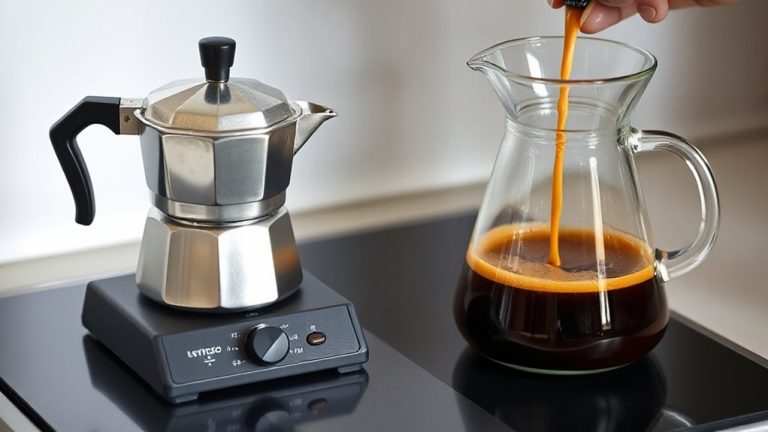
While not all stoves heat the same, your choice of burner directly affects how well you control the delicate process of brewing Turkish coffee. Electric stoves with smooth stove material often heat slowly and retain heat longer, making precise flame control tricky-you might overheat your cezve before noticing. Gas stoves give you instant feedback and superior flame control, letting you lower the heat the moment bubbles rise. If you’re using induction, guarantee your cezve is magnetic; the stove material matters for compatibility and even heat distribution. Cast iron burners respond slowly, while stainless steel or copper-lined bases on pots work best with quick adjustments. For consistent results, pair a gas stove with a small burner-it offers the most responsive heat regulation. Your stove isn’t just a heat source; it’s part of the brewing system. Choose wisely.
How Roast and Grind Change the Heat Game
A lot rides on your choice of roast and grind when brewing Turkish coffee, since both directly influence how heat interacts with the grounds during brewing. A dark roast brings out bold, smoky notes, but too much heat too fast can burn it, especially in a thin-walled brewing vessel. Lighter roasts preserve acidity and nuanced flavors tied to bean origin, like Ethiopian brightness or Sumatran earthiness, but they need precise, steady heat to extract fully. Your grind must be ultra-fine-like powdered sugar-so it suspends in the water and responds quickly to heat. If it’s too coarse, you’ll get weak coffee; too fine, and it overheats, turning bitter. Match your grind and roast to your heat source and brewing vessel material: copper ibriks heat fast and require close attention, while brass or stainless steel distribute heat more evenly, giving you a bit more leeway.
On a final note
You get the best flavor from Turkish coffee when you heat it slowly to just below boiling-around 160–185°F. Too low, and the aroma doesn’t develop; too high, and it turns bitter. Watch the foam: if it rises fast, the heat’s too high. Use a cezve on low flame or an electric kettle with temp control. Dark roasts need gentler heat, while finer grinds boost intensity. Match your method to your gear-consistency matters most.