Moka Pot Dose & Pressure Guide: 15–18g, 1:2 Ratio (Bialetti)
You don’t get true espresso from a moka pot, but proper dose and pressure control get you close. Use 15–18g of medium-fine ground coffee for a 6-cup Bialetti, leveled, not tamped. This helps steam pressure build evenly without blocking flow. Fill water just below the valve and heat on medium-too hot causes bitterness, too little leads to sourness. A consistent grind and correct dose balance extraction, giving richer, more stable flavor. Next, fine-tune heat and timing for better results.
Notable Insights
- Proper dose measurement ensures a balanced brew ratio, with 15–18 grams of coffee ideal for a 6-cup moka pot.
- Maintaining a 1:2 coffee-to-water ratio supports even extraction and prevents over- or under-brewing.
- Medium-fine grind size enables optimal pressure and flow, avoiding clogs or weak, sour flavors.
- Avoid tamping grounds, as it restricts steam pressure flow and increases risk of bitterness or damage.
- Controlled heat application sustains stable pressure, targeting a 4–5 minute brew for balanced espresso-like flavor.
How Much Coffee to Use in a Moka Pot
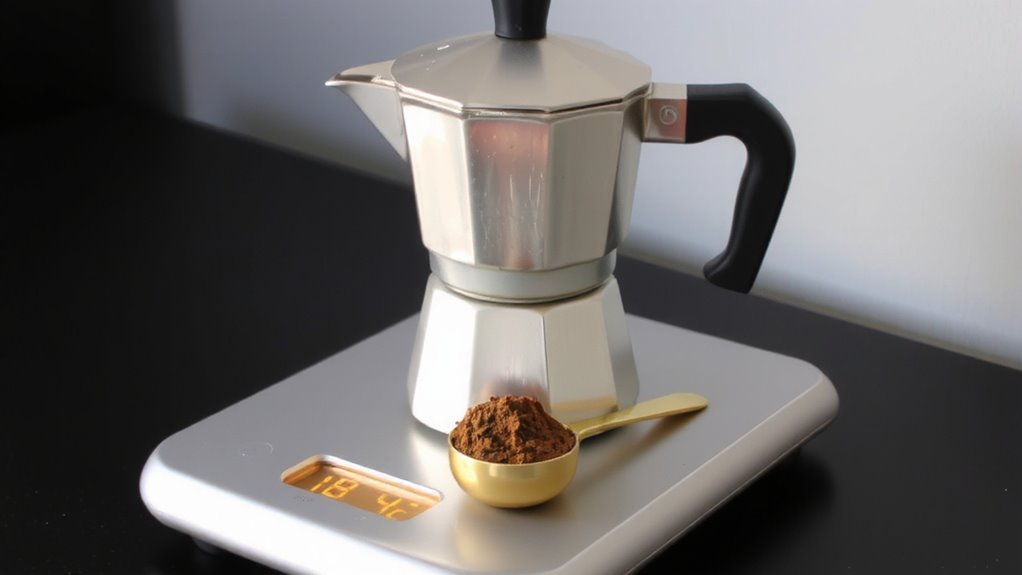
How much coffee should you actually use in a Moka pot? It depends on your brew ratio and desired strength. A standard brew ratio for Moka pot is around 1:2, meaning 1 gram of coffee for every 2 grams of water. For a typical 6-cup Bialetti (about 120ml water), use 15–18 grams of coffee. This coffee amount fills the basket without being tamped-level it off, don’t pack. Overfilling increases pressure and can cause bitterness; too little yields weak, watery results. Different models hold different volumes, so check your pot’s capacity. Using a scale improves consistency. While some prefer a stronger 1:1.5 ratio, going weaker than 1:2 often under-extracts. Finding your ideal coffee amount means adjusting based on taste, bean freshness, and machine size. Precision matters-dose control is key to balanced Moka pot espresso. For even more accuracy, consider using a mini coffee scale with a built-in timer feature to optimize your brew time and extraction.
What’s the Best Grind Size for Moka Pot Espresso?
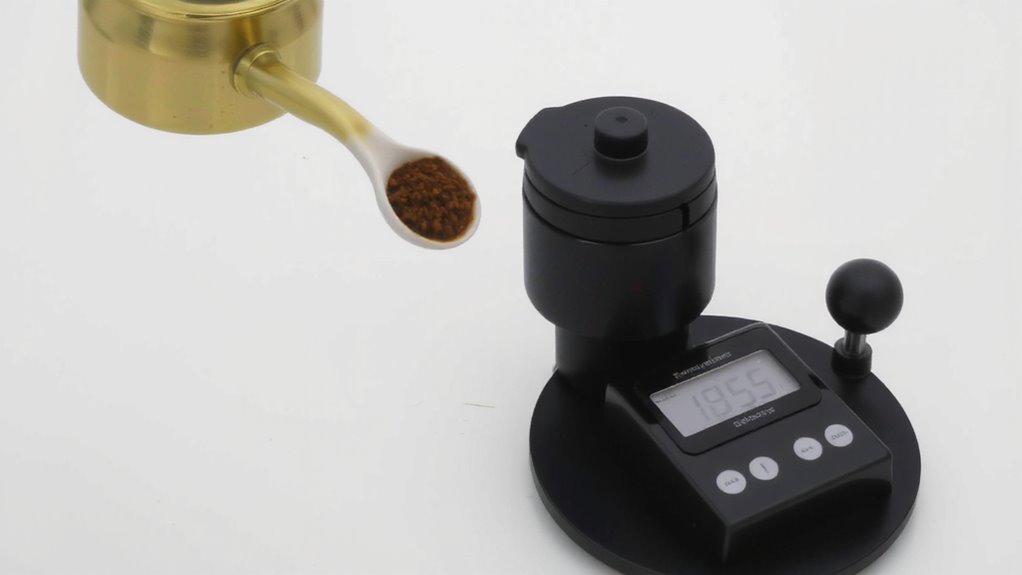
Why does your espresso sometimes taste bitter or flat? It’s often because of grind size. For moka pot brewing, you need a medium-fine grind-finer than drip coffee but coarser than espresso. Too fine, and extraction time runs long, pulling out bitter compounds; too coarse, and you get weak, sour coffee. The ideal grind consistency guarantees even water flow, which helps maintain balanced extraction time around 4–5 minutes. A burr grinder gives you that consistent particle size, while blade grinders often create uneven results, hurting flavor clarity. If you’re using a Bialetti or Fissler, stick to this sweet spot. Fine-tune based on taste: if it’s harsh, go slightly coarser. If it’s thin or sour, adjust finer. Your grind size directly shapes flavor, so consistency and proper extraction time are key to balanced moka pot espresso. For optimal results, consider investing in one of the top coffee grinders specifically recommended for moka pot brewing.
Should You Tamp Your Coffee in a Moka Pot?
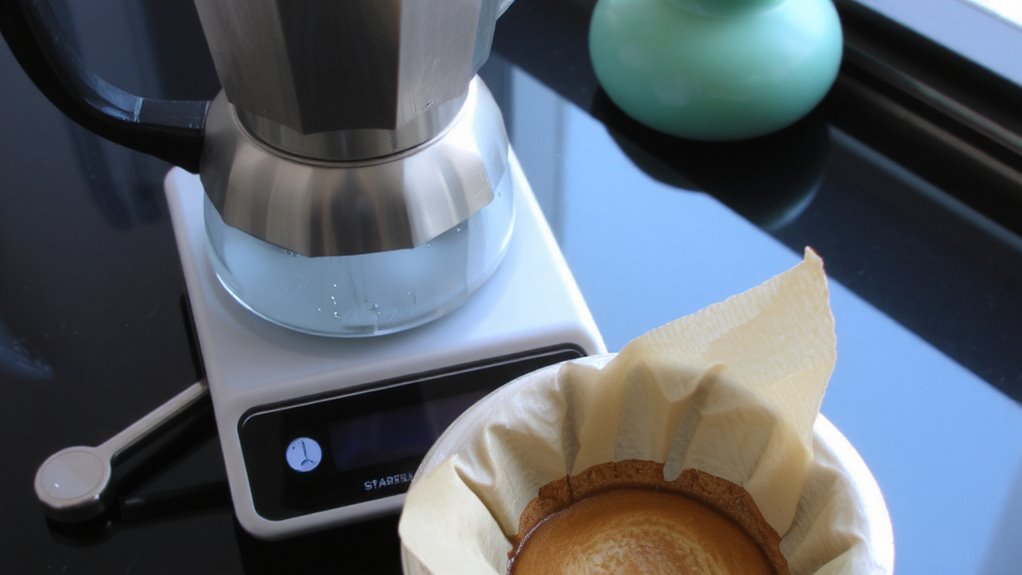
Ever wonder why tamping isn’t part of the standard moka pot routine? That’s because moka pots rely on steam pressure, not your hand strength, to move water through coffee. Applying tamping pressure can actually backfire-over-packing the grounds restricts flow, leading to clogs or excessive pressure buildup that might damage the pot. While tamping helps with flavor consistency in espresso machines, moka pots operate differently. Instead of aiming for high compression, lightly level the grounds and let the pot do the work. This guarantees even extraction without risking safety issues or bitter flavors. Some users try tamping for a richer shot, but it’s inconsistent and not recommended by most manufacturers. For predictable results and longer equipment life, skip the tamper. Focus instead on grind size, dose, and heat control-those make a real difference in your cup. For those who enjoy manual brewing methods, exploring a well-reviewed French press coffee maker can offer insight into the importance of grind and dose consistency across different brew styles.
How Steam Pressure Works (And Why It Matters)
Though it doesn’t reach the 9 bars of a traditional espresso machine, the moka pot still relies on steam pressure to brew, and understanding that process helps you get the most from your grind. As water heats, steam buildup in the lower chamber forces hot water upward through the coffee grounds. This pressure release happens when the liquid clears the funnel and enters the top chamber. Control over this flow affects flavor balance-too fast, and it’s weak; too slow, and it’s bitter. Proper grind size and dose keep this cycle consistent.
| Stage | What’s Happening |
|---|---|
| 1 | Steam buildup begins as water heats |
| 2 | Pressure builds below the coffee puck |
| 3 | Water is pushed through the grounds |
| 4 | Brew finishes with a clear pressure release |
How Water Level and Heat Change Your Brew
What if your moka pot’s output isn’t just about grind size? The water level and heat you use directly affect water temperature and brewing time, which change flavor extraction. Too much water and it boils too long, over-extracting and turning bitter. Too little, and the coffee passes through too fast, risking sourness. Always fill just below the safety valve-never above it. On the stove, medium heat gives steady pressure without scorching. High heat spikes water temperature too fast, shortening brewing time and creating harsh flavors. An electric kettle with temperature control can help start with consistent water temperature, around 93°C (200°F). Even heat distribution matters-use a thick-bottomed moka pot or a diffuser on strong burners. You’re aiming for a brew time of 4 to 6 minutes. Control these, and you’ll get more repeatable results, cup after cup.
Fixing Bitter, Sour, or Weak Moka Pot Coffee
If your moka pot coffee comes out bitter, sour, or weak, the issue usually traces back to just a few controllable factors: grind size, dose, heat level, and timing. Bitterness often means over-extraction from too fine a grind or too high heat-drop the flame slightly and aim for a brew time of 3 to 4 minutes. Sour coffee usually points to under-extraction-try a finer grind or check your heat source; low flame early on slows water flow, leading to sour notes. Weak coffee might mean too coarse a grind or underdosing-use a scale for consistent dose and make sure your grounds fill the basket without tamping. Always use fresh beans; coffee freshness drastically affects flavor clarity. Old beans lose gases and oils, dulling the brew. Match your grind to your heat: faster brew times need coarser settings. With small tweaks, you’ll balance pressure and extraction every time.
On a final note
You’ve got more control over your moka pot than you think. Use the right coffee dose-usually one loosely packed scoop per chamber-and a medium-fine grind, like table salt. Don’t tamp; it increases pressure too much. Proper water level and steady heat prevent sour or bitter turns. Steam pressure peaks around 1.5–2 bars, not true espresso, but enough for rich flavor if handled right. Adjust variables one at a time for consistent, balanced results.