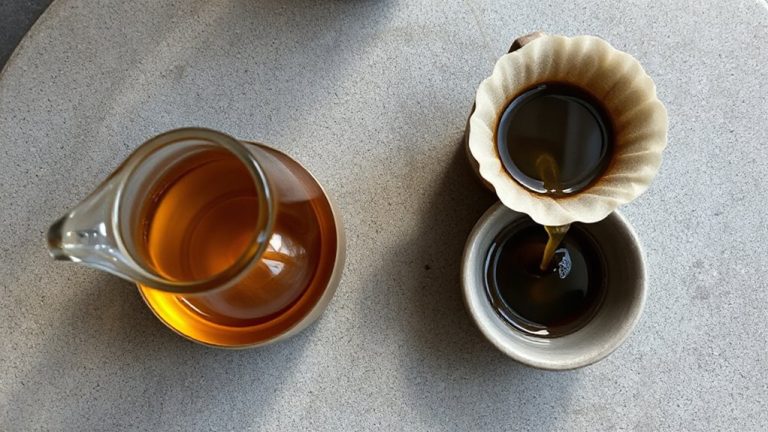
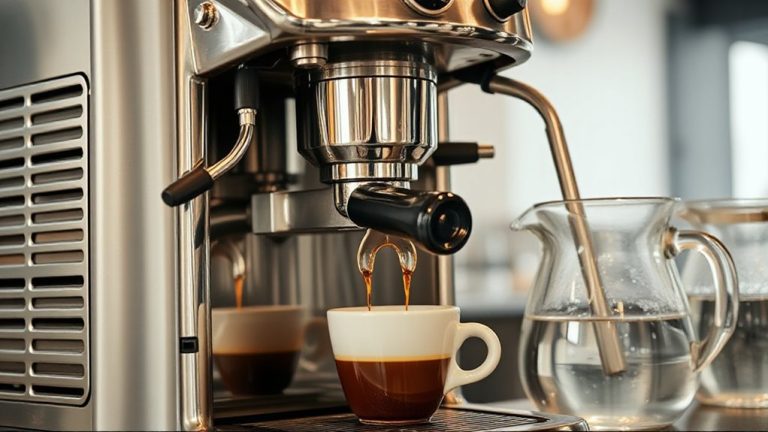
Enhance Your Cold Brew Process by Adjusting Steeping Time for Optimal Flavor Development
You’re missing peak flavor if you’re not adjusting steep time to your beans and grind. Use 12 hours for dark roasts-they extract faster-and 16 for light or dense African beans like Ethiopian Yirgacheffe. A coarse, even grind prevents bitterness, while 24-hour steeps often over-extract, creating harsh notes. Stick to glass or BPA-free containers, and tweak in two-hour blocks. Your ideal brew depends on roast, origin, and taste-small changes make big differences. You’ll find the best balance with a few targeted tweaks.
Notable Insights
- Steep cold brew for 12 to 16 hours at room temperature for balanced flavor and smooth extraction.
- Adjust steep time based on bean origin-lighter African beans may need 16–20 hours.
- Use a coarse grind to prevent over-extraction and ensure clean, smooth results.
- Dark roasts extract faster; limit steeping to around 12 hours to avoid bitterness.
- Avoid exceeding 24 hours to prevent extraction of harsh, bitter compounds.
Why Steeping Time Changes Cold Brew Flavor
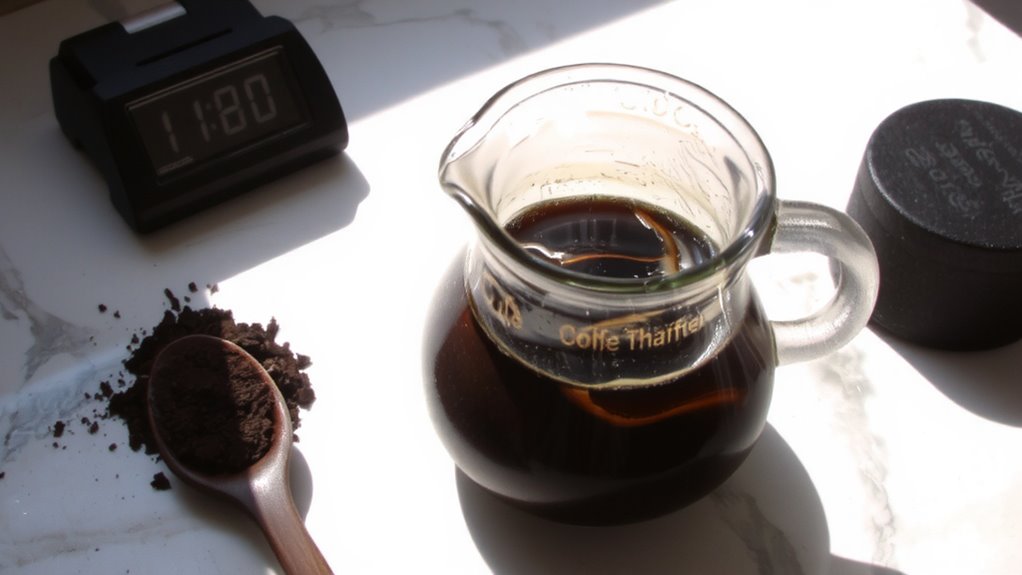
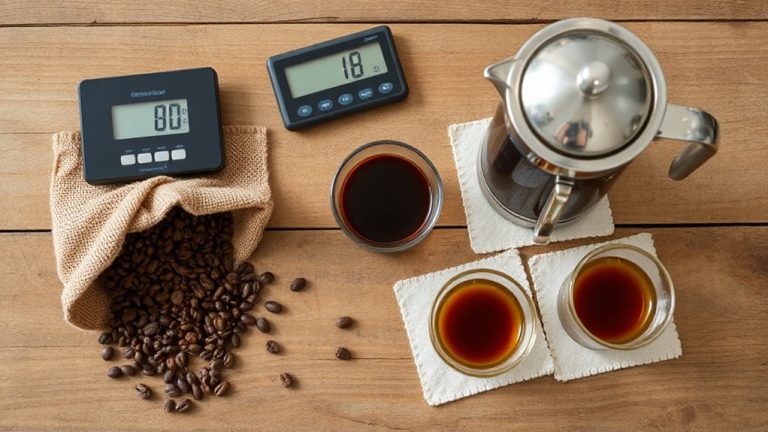
While steeping time might seem like a minor detail, it directly shapes the strength and smoothness of your cold brew. Too short, and you’ll miss out on full extraction dynamics-your coffee might taste weak or sour. Too long, and bitterness creeps in from over-extraction. Most immersion-style brewers, like the Oxo Cold Brew Maker, perform best between 12 to 16 hours at room temperature. Cold water extraction is slow, so timing affects flavor balance more than with hot brews. You’re not just pulling caffeine-you’re dissolving sugars, acids, and oils gradually. A 14-hour steep often hits the sweet spot, offering rich body without harshness. If you prefer a bolder concentrate, extend time slightly-but monitor closely. Immersion requires patience, but with consistent time, you gain predictable results. Adjust in two-hour increments to fine-tune. Your taste, water temp, and grind size all interact, so control variables one at a time. For precise results, consider using a dedicated cold brew coffee timer.
How Bean Type Affects Cold Brew Steep Time
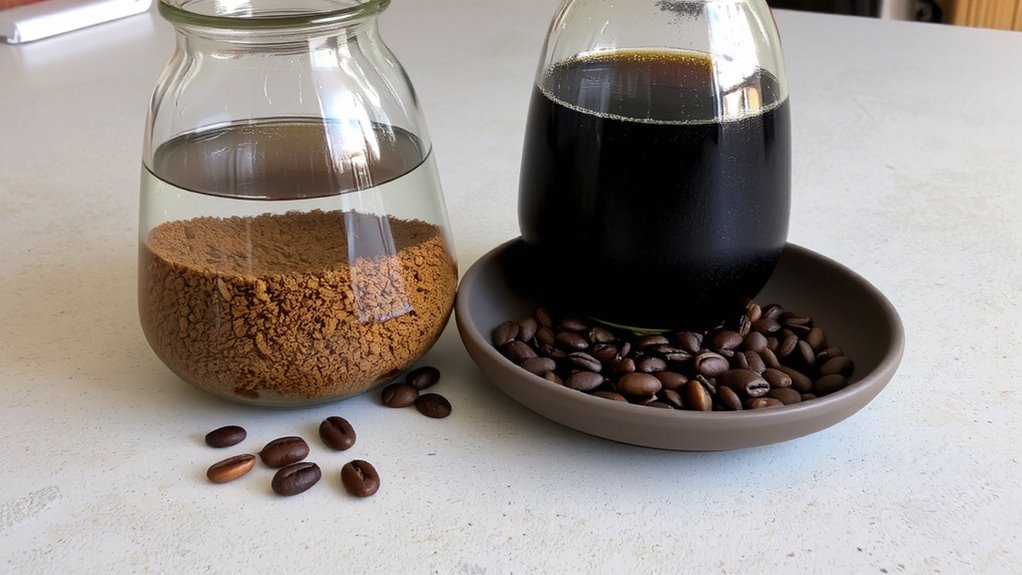
Most coffee lovers overlook how much bean type influences steep time, but it’s a key factor in dialing in your cold brew. Bean origin affects flavor compounds and density, which change extraction rates. For example, African beans like Ethiopian Yirgacheffe often need longer steeping-around 16 to 20 hours-due to fruity acids and lighter density. Central American beans, such as those from Guatemala, typically do well in 12 to 16 hours. Roast level also matters. Dark roasts extract faster because they’re more porous, so 12 hours may be enough to avoid bitterness. Light roasts, denser and more complex, often benefit from 16+ hours. If you’re using single-origin beans, adjust steep time based on both bean origin and roast level. A medium roast from Colombia? Start at 14 hours and tweak. Knowing these factors helps you refine flavor consistently. Choosing the right best cold brew coffee beans can significantly impact your steeping results and final taste.
How Grind Size Changes Cold Brew Strength
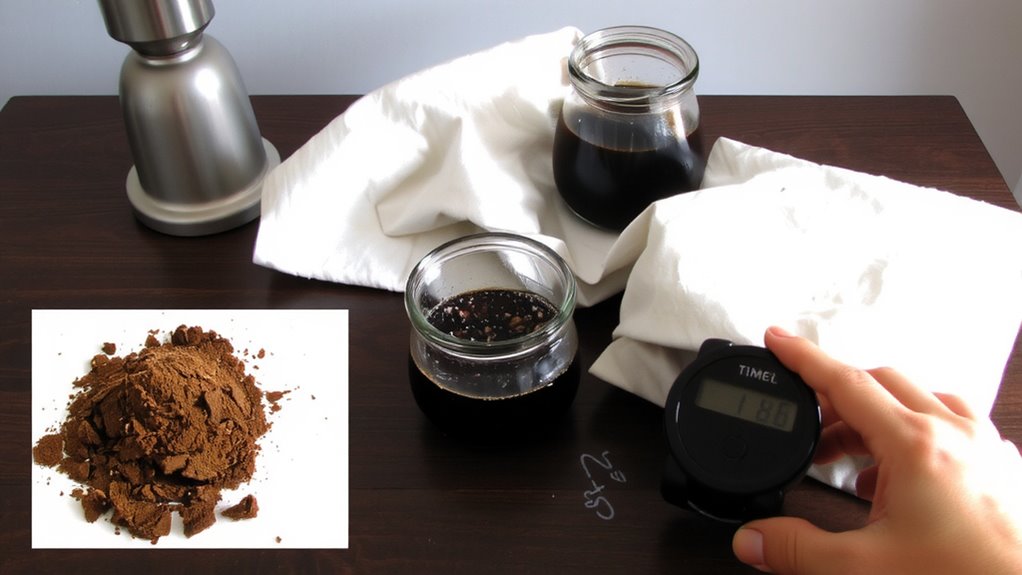
If you’ve ever wondered why your cold brew tastes weak or overly bitter, the grind size might be the culprit. Grind consistency directly affects extraction efficiency, which determines strength and balance. Too fine, and you risk over-extraction and bitterness; too coarse, and your brew comes out thin and underdeveloped. For cold brew, a coarse, even grind is ideal-think French press consistency. This slows extraction in cold water while preventing sludge and bitterness. A burr grinder guarantees uniformity, unlike blade grinders that create uneven particles.
| Grind Size | Impact on Strength |
|---|---|
| Extra Coarse | Weak, under-extracted |
| Coarse | Balanced, smooth |
| Medium-Coarse | Slightly stronger |
| Medium | Risk of bitterness |
| Fine | Over-extracted, muddy |
Stick to coarse for best results-your cold brew will be clean, rich, and consistent.
Cold Brew Steep Time: 12 vs. 16 vs. 24 Hours?
You’ve already locked in the right grind size-coarse, even, and consistent-so now it’s time to fine-tune how long you let those grounds steep. Steeping for 12 hours gives a lighter, brighter concentrate-ideal if you like your cold brew with a bit more acidity. At 16 hours, you hit a balanced sweet spot: full extraction without tipping into overdeveloped notes. Many home brewers find this duration delivers consistent results. For 24 hours, you’ll extract more compounds, but only if your water temperature stays stable-room temp or slightly below works best. Always use a non-reactive steeping container, like glass or BPA-free plastic, to avoid off-flavors. Shorter steep times suit faster preparation; longer ones require patience and proper storage. Your ideal time depends on taste preference and how you plan to serve it-consider testing all three. For optimal results, consider using one of the top cold brew coffee steepers recommended for consistent and flavorful extraction.
Too Bitter? How Over-Steeping Ruins Cold Brew
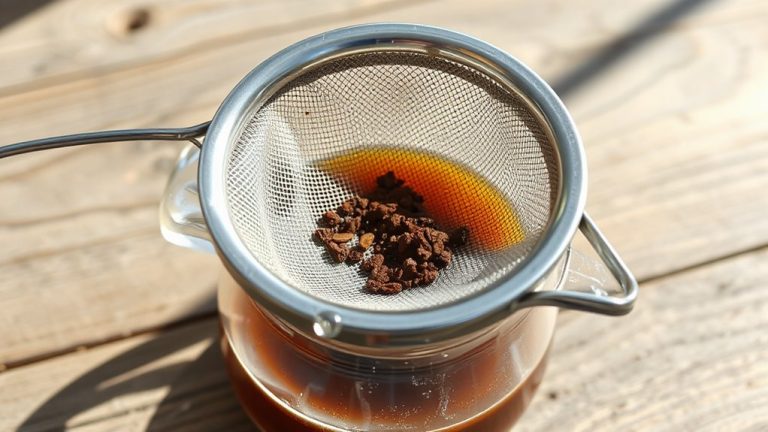
Why does your cold brew sometimes taste harsh or overly sharp? You’ve likely over-steeped it. Leaving grounds in water beyond 24 hours extracts bitter compounds you don’t want. The result? A brew that’s astringent and flat, with little of the smoothness cold brew is known for. Over-steeping also increases oily residue on the surface, a sign of excess coffee oils breaking down. This coat isn’t just unpleasant-it can clog filters and alter flavor. You’ll also see more sediment buildup in your pitcher, especially if using a basic mesh strainer instead of a paper filter. That grit doesn’t just look bad; it carries bitter particles. To avoid this, stick to 18–24 hours max. Use a burr grinder for even grounds, and always filter carefully. Your cold brew should be clean, balanced, and easy to drink-over-steeping ruins that.
Brew Lighter Cold Brew in 12 Hours
A 12-hour steep can deliver a lighter, brighter cold brew without the risk of over-extraction. If you prefer subtle, fruity notes, use a light roast, which preserves more acidity and delicate flavors during cold brewing. Steeping beyond 12 hours can mute these qualities, especially with dark roasts, but a light roast stays crisp and clean within this window. Pair it with a coarse grind to minimize bitterness and guarantee easy filtration. Too fine a grind, even in 12 hours, risks unwanted sediment and over-extraction. Use a burr grinder to maintain consistency-avoid blade grinders for uneven particles. This method works well in standard mason jars or a Toddy system, both effective for short steeps. You’ll get balanced, approachable cold brew faster, without waiting 16–24 hours. It’s ideal when you want refreshment, not intensity.
Brew Perfect Cold Brew: Time, Grind, and Beans
Getting the most out of your cold brew starts with three key factors: steep time, grind size, and bean selection. Steep too short, and your brew lacks depth; too long, and it turns bitter. Most find 12–24 hours ideal, depending on taste and method. Use a coarse grind-like that from a burr grinder-to prevent over-extraction and sludge. Fine grinds increase surface area, risking bitterness, especially in longer steeps. Choose beans based on flavor preference: medium-roast single-origins offer brightness, while dark roasts give chocolatey depth. Don’t fall for cold brew myths like “only specialty beans work” or “it’s always less acidic.” Cold brew can be smooth without being weak. These flavor myths often confuse process with preference. Experiment with time, grind, and beans to match your taste-not marketing claims. Practical testing beats assumptions every time.
On a final note
You’ve seen how steep time shapes your cold brew’s flavor. Twelve hours gives a lighter, brighter cup; 24 hours brings depth but risks bitterness. Medium-coarse grind with quality beans, like Ethiopia Yirgacheffe or Colombian Excelso, works best. Over-steeping extracts unwanted harshness, especially with finer grinds. For consistency, use a ratio of 1:8 (coffee to water) and a simple mason jar or French press. Adjust based on taste-your preferences guide the ideal time.