Essential Tips for Using a Moka Pot on Your Stovetop
Use a medium-fine grind, like table salt, for best extraction-too fine causes bitterness, too coarse gives sour coffee. Fill the water chamber to the safety valve, never above. Load the basket with loose grounds; don’t pack or tamp. Brew on medium-low heat to avoid scorching, especially with aluminum pots. Clean all parts after use with warm water and a soft brush. Let pieces air-dry separately. More details follow on how each step affects flavor and longevity.
Notable Insights
- Use a slightly coarser than espresso grind, similar to table salt, for balanced extraction and optimal flavor.
- Fill the water chamber only up to the safety valve to prevent overpressure and potential damage.
- Load coffee grounds loosely into the filter basket without tamping for even water flow and extraction.
- Brew on medium-low heat to avoid scorching and allow gradual pressure build-up for rich flavor.
- Clean all parts immediately after use with warm water, avoiding soap to preserve taste and performance.
Choose the Right Grind for Your Moka Pot
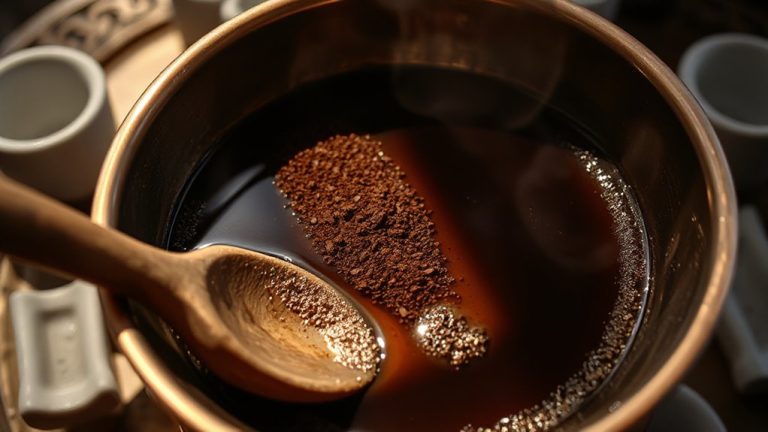
Grind size can make or break your moka pot brew. If it’s too fine, like powdered sugar, the coffee restricts flow, leading to bitterness and possible clogging. Too coarse, and you’ll get weak, sour coffee lacking espresso strength. The ideal grind sits just above espresso fineness-think slightly coarser than what you’d use in a true espresso machine. This balances pressure and extraction, helping you achieve a bold flavor profile without burning. A burr grinder gives consistent results; blade grinders often don’t. Brands like Baratza Encore or JavaPresse offer reliable, affordable options. You’ll need to experiment slightly based on your stove’s heat output and pot size. Always grind fresh-pre-ground coffee loses aroma fast. With the right grind, your moka pot delivers rich, concentrated coffee close to espresso strength and a clean, full flavor profile. Adjust in small steps until it tastes right. For more guidance, check out the best coffee grinders for Moka Pot.
Fill the Water Chamber to the Safety Valve
While it might be tempting to fill the water chamber all the way to the top, you should only pour water up to the safety valve-no higher. Exceeding this level risks overpressure and compromises water safety, which could lead to spills or even damage. The valve function is to release excess pressure if steam builds too high, acting as a critical fail-safe. When you fill beyond it, water can enter the valve mechanism, interfering with its ability to operate correctly. That defeats the purpose of having a built-in safety feature. Always use cold, fresh water and pour it slowly to avoid overshooting. Models like Bialetti or Flair rely on this correct fill level to work safely and efficiently. Overfilling won’t make stronger coffee-it’ll just create hazards. Respecting the safety valve guarantees reliable brewing and extends your moka pot’s life. Keep it simple: water up to the valve, never above. For optimal results, choose the best coffee for Moka pot to enhance flavor and aroma in every brew.
Add Coffee: Don’t Pack or Tamp the Basket
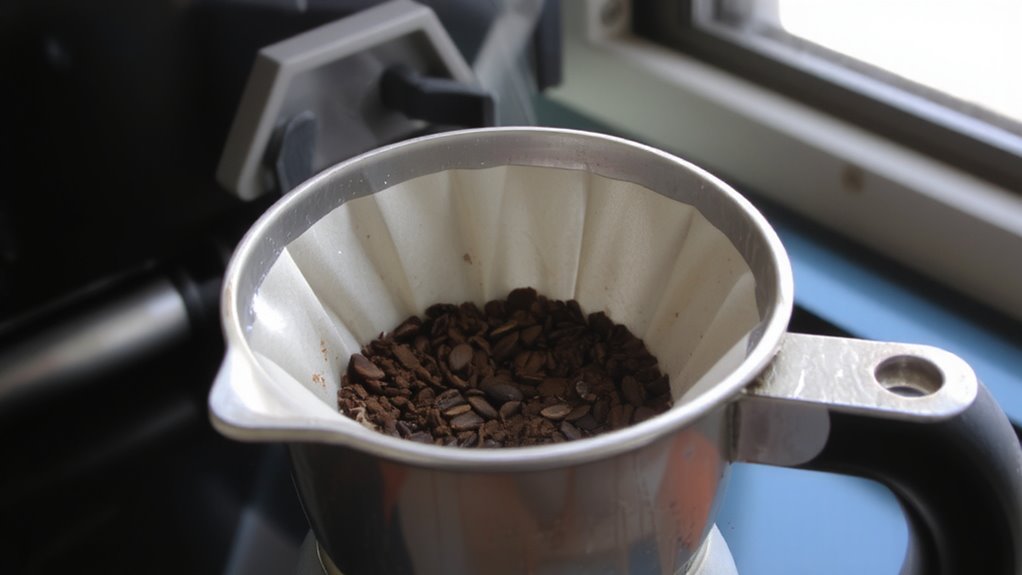
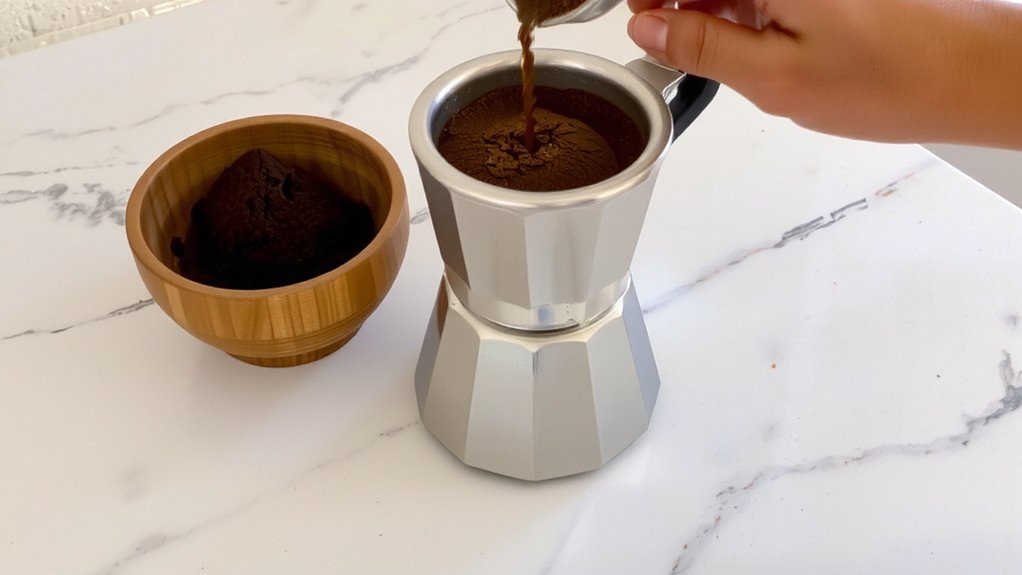
Don’t pack or tamp the coffee grounds in the basket-just fill it loosely and level it off. Pushing down the grounds restricts water flow and can cause uneven extraction or pressure buildup, leading to bitter or sour coffee. A loose fill allows steam to move evenly through the grounds, which is key to a balanced brew. Use freshly ground beans right before brewing to maximize coffee freshness-pre-ground or stale beans dull the flavor fast. This step isn’t just functional; it’s part of your daily brewing ritual, a moment to focus and set expectations for quality. Coarse or uneven grinds disrupt the process, so aim for a consistent medium-fine grind, similar to table salt. Avoid shaking the basket once filled-just tap it lightly to settle. Getting this right improves flavor and consistency every time.
Brew on Low Heat to Prevent Bitterness
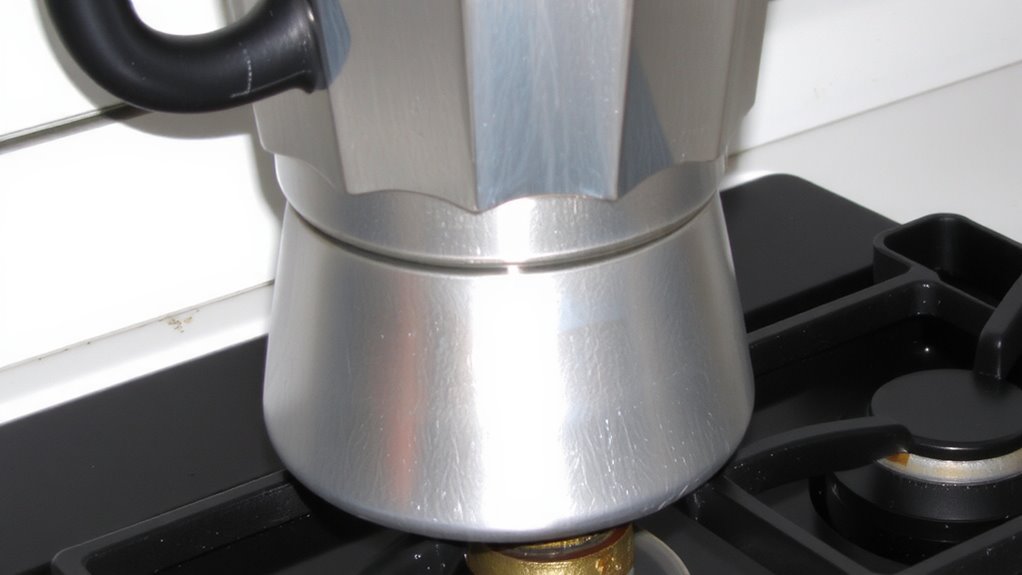
Once the basket’s filled and settled, it’s time to focus on heat control-this is where many go wrong. Setting your stove to medium-low heat guarantees a steady, gradual brew without scorching the coffee. High heat forces water through too fast, extracting bitter compounds and ruining flavor preservation. A slow rise in pressure lets the coffee develop a balanced, rich profile without the sharp edge of over-extraction. Use a burner that matches your moka pot’s size to avoid uneven heating-too big, and the edges burn; too small, and brewing stalls. Aluminum pots heat faster than stainless steel, so adjust accordingly. With proper heat control, you’ll notice clearer notes and smoother results cup after cup. Patience here pays off. You’re not rushing a process, you’re guiding it for the best outcome. Keep it low, keep it steady. For electric stoves, choosing the right best Moka pots for electric stoves ensures optimal heat distribution and performance.
Clean Your Moka Pot After Every Use
You should always clean your moka pot right after brewing-letting coffee residue sit leads to stale oils and off-flavors over time. Rinse all parts with warm water immediately; avoid soap if possible, as it can leave a film. If needed, use a soft brush to remove grounds from the filter and chamber. After washing, your drying technique matters: let all pieces air-dry separately on a clean towel to prevent moisture buildup. Never reassemble the pot while damp, as trapped water encourages mold and corrosion. For long-term care, consider durable storage solutions-keep your moka pot disassembled in a dry cabinet, not sealed in a closed container where humidity lingers. Stainless steel models resist wear better than aluminum, but both need consistent drying. Proper cleaning and dry storage extend lifespan and maintain flavor quality with every brew.
On a final note
You’ve got the basics: use a fine grind, fill water to the valve, skip tamping, and brew low to avoid bitterness. Clean your moka pot after each use to keep flavors fresh and extend its life. Compared to drip machines or French presses, moka pots are affordable and durable, like Bialetti’s classic models. They’re best for strong, espresso-like coffee without fancy gear. Just mind the heat and maintenance, and you’ll get reliable results every time.