The Role of Carbon Dioxide in Affecting Espresso Consistency and Flavor
You’re working against CO₂ every time you pull a shot. Fresh beans release more gas, causing uneven flow and sour flavors if not managed. That trapped CO₂ resists water, leading to channeling-especially with aggressive grinds or short pre-infusion. Machines like the Lelit Anna or Linea Mini handle pressure better, giving you control. Too much gas? Try a coarser grind or wait a few days post-roast. Peak balance usually hits around 5–10 days, depending on roast level-stick with that window, and your shots stay consistent, sweet, and stable. There’s a precise way to adjust for every variable.
Notable Insights
- CO₂ in fresh coffee grounds resists water flow during extraction, causing channeling and inconsistent espresso shots.
- Freshly roasted beans release more CO₂, requiring proper rest (3–5 days) to balance extraction and flavor development.
- Excessive CO₂ causes turbulent flow and pressure spikes, leading to sour or unevenly extracted espresso.
- CO₂ contributes to crema formation, with optimal levels producing thick, stable crema in freshly rested beans.
- Pre-infusion and grind adjustments help manage CO₂ release, improving shot consistency and flavor balance.
How CO₂ Affects Espresso Extraction
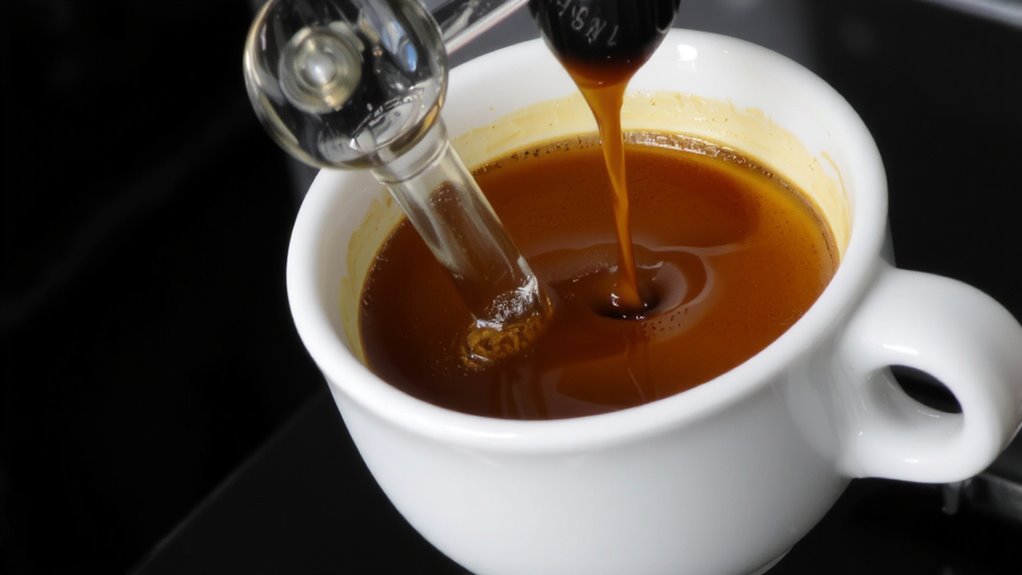
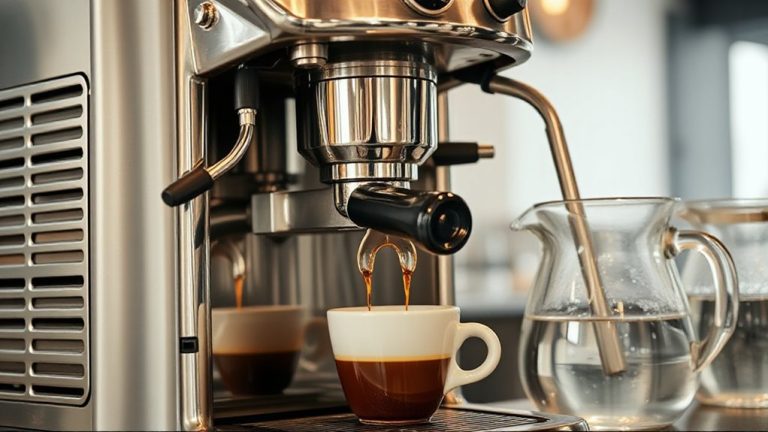
While your espresso might seem like it’s just hot water meeting coffee, the role of carbon dioxide (CO₂) is something you can’t afford to overlook. When water hits the puck, CO₂ trapped in the grounds escapes through CO₂ diffusion, creating resistance that shapes extraction. Too much gas too fast leads to uneven flow and sour shots-this happens especially if your machine can’t maintain consistent pressure equilibrium. Machines like the Lelit Anna or Rocket R56 maintain better stability, helping manage this gas release. You’ll notice fewer channeling issues and more balanced flavor. If you’re pulling short ristrettos, the CO₂ effect is more pronounced, so consider a brief pre-infusion to let gas escape gradually. You don’t need ultra-fresh beans every time, but understanding CO₂ diffusion helps you adjust grind and technique. Ignoring it means risking inconsistency, no matter how good your gear is.
Why Freshly Roasted Beans Trap More CO₂
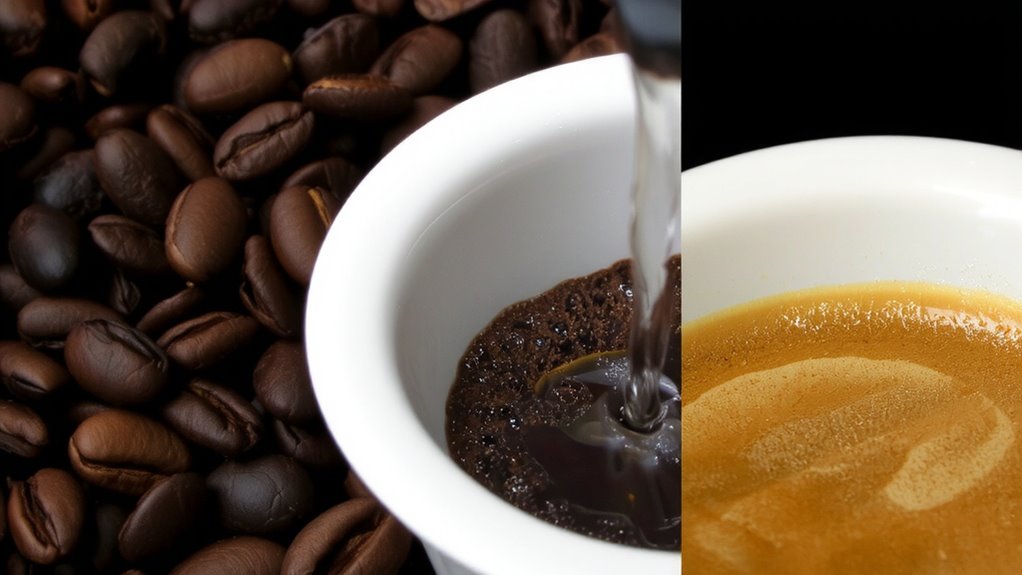
Because roasting triggers chemical reactions that produce gases, freshly roasted beans naturally hold onto more CO₂ than older ones. You see this in action when you use beans within days of roasting-especially darker roasts, which produce more gas due to intensified roasting chemistry. The high heat breaks down carbohydrates and amino acids, creating CO₂ as a byproduct. This gas gets trapped within the rigid bean structure, which acts like a sponge, locking in flavor and pressure potential. Lighter roasts retain slightly less CO₂ because they spend less time exposed to high heat, altering the internal structure differently. You’ll notice the effect when dosing and tamping: fresher beans resist water flow initially due to outgassing. For best results, wait 3–5 days post-roast before pulling shots-enough time for some off-gassing, but not so much that you lose CO₂-driven flavor and extraction efficiency.
How CO₂ Builds (and Breaks) the Perfect Crema

When you pull a shot of espresso, the CO₂ trapped in freshly roasted beans plays a key role in forming the crema-the golden-brown layer that sits on top. This process, known as crema formation, relies on CO₂ escaping under pressure to create tiny bubbles. Bubble stability depends on fresh beans and proper grind size-too coarse and bubbles collapse; too fine and flow stalls. The right balance gives you a rich, lasting crema.
| Bean Age | Grind Size | Crema Result |
|---|---|---|
| 3 days | Medium | Thick, stable |
| 7 days | Medium | Moderate |
| 14 days | Medium | Thin, fades |
| 3 days | Coarse | Patchy |
| 3 days | Fine | Over-extracted |
Stale beans or incorrect settings weaken bubble stability, hurting appearance and mouthfeel. For best results, use beans within a week of roasting and adjust grind accordingly.
How CO₂ Disrupts Extraction Timing and Flavor
That golden crema you see on a fresh shot? It’s mostly CO₂ escaping, and too much of it wreaks havoc on extraction timing and flavor. When beans are freshly roasted, they release CO₂ rapidly, creating pressure spikes in the portafilter. These spikes disrupt water flow, leading to uneven saturation and channeling. You lose turbulence control, meaning water doesn’t move consistently through the puck. Result? Over-extracted, bitter notes in some areas, under-extracted sourness in others. Machines with stable pumps-like the Decent EP5 or Linea Mini-help manage this, but high CO₂ still forces longer pre-infusion just to stabilize flow. If you’re pulling shots from beans under three days post-roast, you’re fighting gas, not refining technique. The timing gets erratic, and flavor suffers-often hollow or harsh. Let beans rest just long enough, and you regain control. CO₂’s necessary, but balance is key.
Finding the Ideal CO₂ Level After Roasting
While you can’t measure CO₂ directly without lab equipment, you can spot its sweet spot by how your shots behave. Right after roasting, beans release a lot of gas, leading to uneven extraction and bubbly pours. As roast age increases, CO₂ drops, and extraction stabilizes. Around 5–10 days post-roast, most beans hit their ideal window. Light roasts may take longer due to higher bean density, trapping more gas. Dark roasts, less dense, de-gas faster and often peak earlier. If shots spurt or taste hollow, CO₂ is likely too high. If slow and flat, it might be too low. Track roast age daily and adjust grind accordingly. Fresh isn’t always best-timing matters. For consistent results, pair roast age with bean density and dial in based on flow and taste, not calendar dates alone.
Fixing Shots Ruined by Poor CO₂ Levels
How do you rescue a shot that’s wild with foam or flat as old soda? Start with identifying the CO₂ issue-too much gas causes violent channeling, while too little leaves your espresso lifeless. For shot recovery, adjust your grind first: a coarser setting helps if the puck is outgassing too aggressively. If the shot drips too fast or looks sparse, try a finer grind or lower dose to compensate for stale beans. Remember, bean resting matters-freshly roasted beans need 3–5 days to stabilize before pulling even shots. Don’t skip this step, especially with light roasts that trap more CO₂. If your beans are too fresh, slow down extraction to manage pressure. When they’re too old, no tweak fully brings back the bloom. Track roast dates and dial in daily. Consistency comes from matching your grind and timing to the bean’s resting stage-not fighting it.
On a final note
You need balanced CO₂ for consistent espresso. Too fresh, and excess gas causes uneven extraction and bloating crema; too old, and flat beans lack aroma. Wait 5–7 days post-roast for ideal CO₂ release, especially with dark roasts. Use a scale and timer to track shots-if you see sourness or channeling, adjust freshness. A good burr grinder helps compensate, but timing matters most. For best results, buy small batches and dial in quickly.