The Influence of Coffee Bean Origin on Optimal Drip Coffee Machine Settings
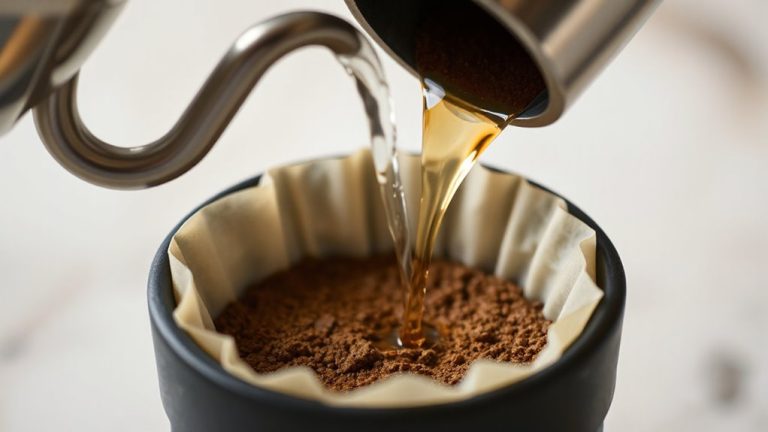
Your coffee’s origin affects how it brews, so tweak your drip machine settings accordingly. Ethiopian beans need hotter water-200–205°F-and a shorter brew time to highlight floral notes. Colombian roasts do best with a medium grind for balanced flavor. Sumatran dark roasts shine at a 1:15 ratio for smooth body. Dense African beans require finer grinding versus Central American ones. Adjust further based on roast age-older beans need finer grinds or higher heat. Fine-tune these factors, and you’ll uncover richer, more accurate flavors every time.
Notable Insights
- Ethiopian beans require water at 200–205°F and a finer grind to extract their high-density, high-altitude profile fully.
- Colombian beans perform best with a medium grind and water around 195–200°F for balanced acidity and sweetness.
- Sumatran dark roasts need a 1:15 to 1:16 water-to-coffee ratio and medium-soft water for optimal body and clarity.
- African beans, denser due to altitude, need higher brewing temperatures and finer grinds than Central American beans.
- Adjustments for roast age vary by origin: finer grinds and higher heat help aged Ethiopian beans, while older Colombian beans need minor strength boosts.
Why Bean Origin Changes Your Drip Coffee Machine Settings
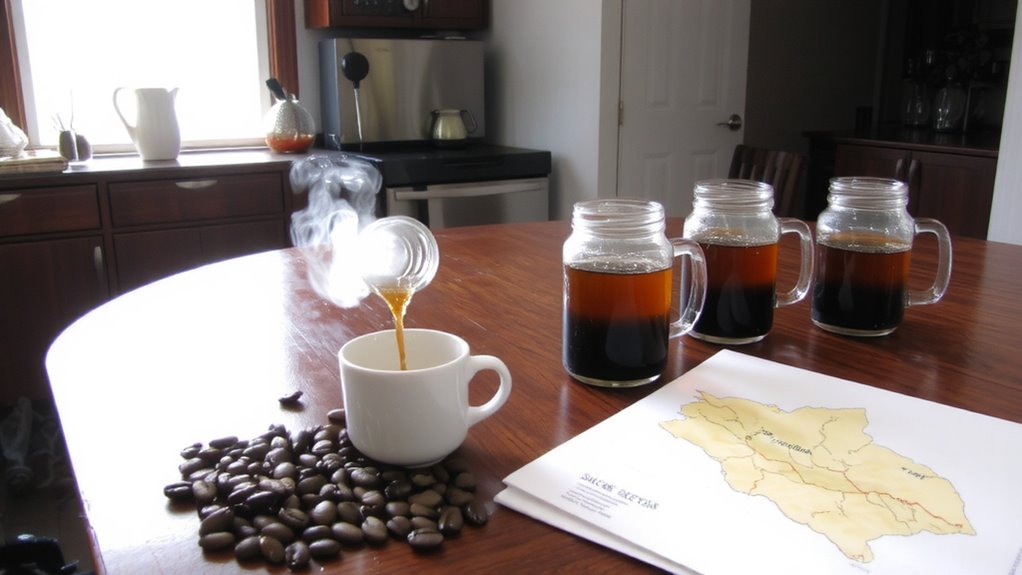
Ever wonder why your morning cup tastes flat, even when using the same coffee machine? The answer often lies in bean origin. Beans from different regions carry distinct aroma profiles shaped by soil, altitude, and climate. Ethiopian beans might deliver bright, floral notes, while Brazilian beans lean toward nutty, chocolatey tones. These differences aren’t just flavor-they affect how you should set your drip machine. For instance, softer beans from high altitudes often need slightly lower water temperatures to preserve delicate aromas. Meanwhile, water hardness in your area impacts extraction; hard water can over-extract, muting aroma profiles, while soft water may under-extract. Adjusting grind size or brew temperature based on origin helps. If you’re using Colombian beans in hard water, try a coarser grind. Matching settings to bean traits and local water conditions means a clearer, more accurate cup-every time.
Ethiopian Light Roasts: Higher Temperature, Shorter Brew Time
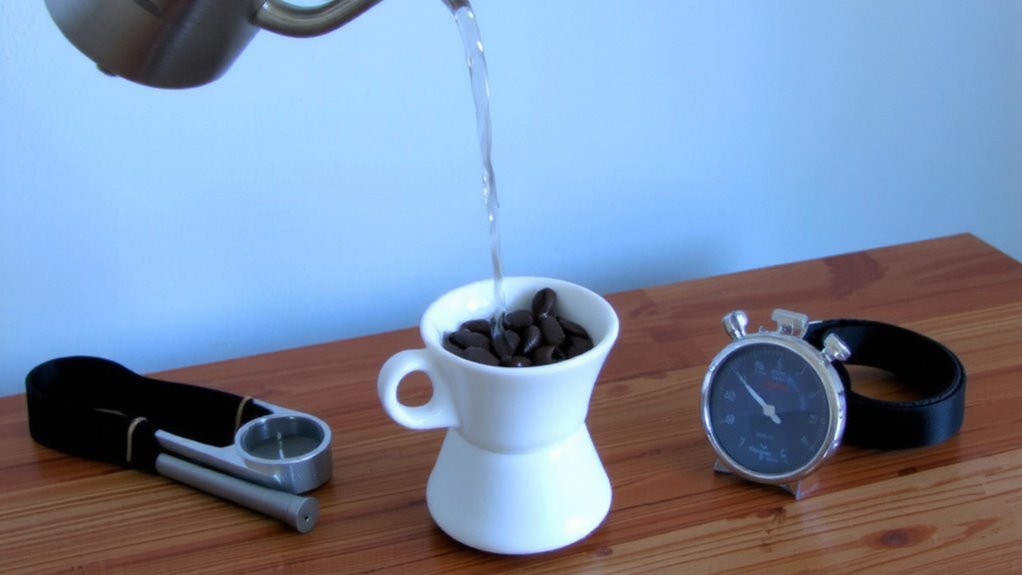
Light-roast Ethiopian beans, known for their vibrant acidity and floral or citrus notes, respond best when brewed with a bit more heat than you might expect. You’ll want to use water around 200–205°F to fully extract their complex flavors without tipping into sourness. Pair that with a shorter brew time-about 3 to 3.5 minutes-to preserve their bright fruity acidity and delicate floral notes. Too long, and you risk over-extracting the lighter compounds that make these beans special. A standard drip machine with adjustable temperature settings works well here. For the best results, start with high-quality Ethiopian coffee beans known for their distinctive regional profiles.
Colombian Medium Roasts: Grind Size for Balanced Brightness
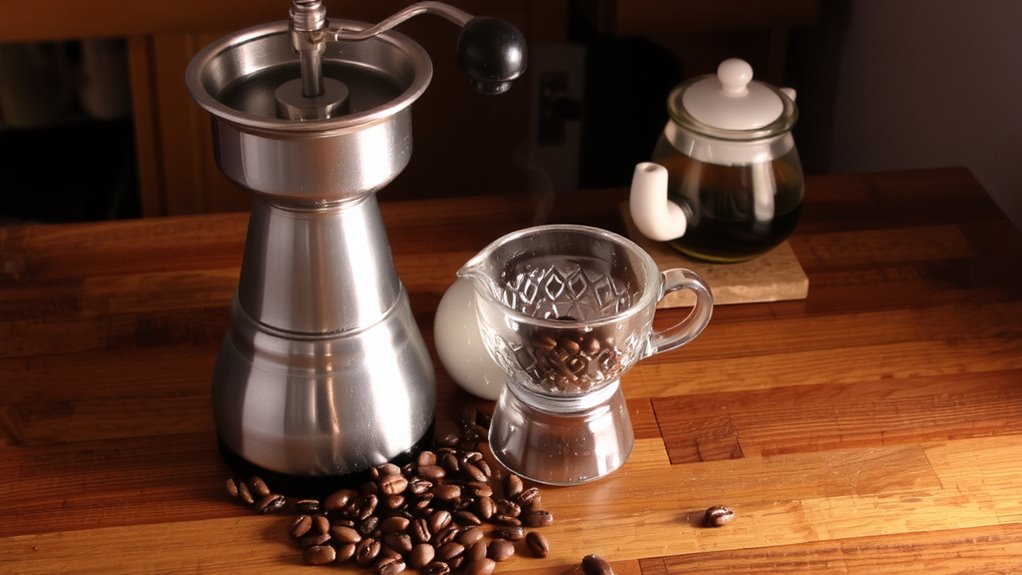
A medium roast from Colombia usually brings a balanced profile-think mild acidity, rounded sweetness, and notes of red fruit or nuts-and getting the grind size right makes all the difference. You’ll want a medium grind, about the consistency of table salt, to preserve the coffee’s acidity level without tipping into sourness. Too fine, and the acidity becomes sharp; too coarse, and the flavor notes turn flat or weak. Most drip machines work best with this middle ground, but adjustable grinders like the Baratza Encore let you fine-tune precisely. This grind size helps extract the full range of flavor notes evenly, giving you a clean, balanced cup. If your brew tastes dull, try going slightly finer. If it’s too bright or sharp, adjust coarser. Consistency matters-uniform particles mean better extraction. Stick with this setting for most Colombian beans, and you’ll get the balanced brightness they’re known for. For top-quality beans that deliver on flavor and freshness, consider trying one of the Best Colombian Whole Bean Coffee Picks.
Sumatra Dark Roasts: Water Ratio for Low-Acid Body
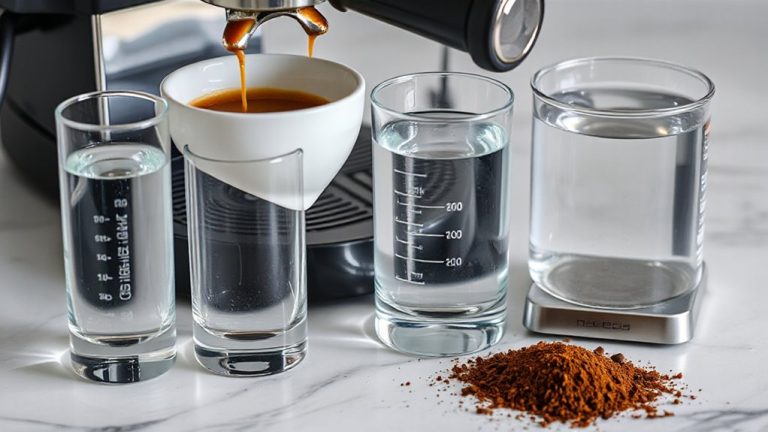
Dark roasts from Sumatra deliver a full-bodied cup with earthy, chocolatey notes and low acidity, and getting the water-to-coffee ratio right is key to highlighting those qualities. You’ll want to use a 1:15 to 1:16 ratio-about 60 grams of coffee per liter of water-to balance extraction without pulling out unwanted bitterness. Sumatran beans have high bean density, which means they resist water absorption and need slightly more contact time. To counter that, use water with medium softness (around 50–75 ppm minerals) for even extraction. Hard water over-extracts, amplifying dullness; soft water under-extracts, leaving the cup flat. Pre-wetting the filter helps stabilize temperature and rinses paper taste. Your drip machine’s shower head should fully saturate the grounds. If the result tastes muddy, try 1:17. If too sharp, adjust to 1:14. Consistency comes from matching water softness to bean density.
Africa Vs. Central America: Matching Extraction to Bean Density
Their higher elevation and tighter bean structure mean African coffees often demand different handling than Central American beans when it comes to drip brewing. African beans typically come from higher harvest altitudes-often above 5,000 feet-where cooler temps and volcanic soil composition slow growth, increasing density. These dense beans resist water, so you’ll need a finer grind and slightly hotter water, around 200–205°F, to extract fully without underdeveloped, sour notes. Central American coffees, grown at moderate altitudes with looser bean density, respond better to medium grinds and standard drip temperatures (195–200°F). Their soil composition, often less mineral-rich, leads to more even extraction with less aggressive settings. If you’re using a standard drip machine, tweak the grind first: go finer for African beans, coarser for Central American ones. Matching your brew to bean density improves clarity and sweetness with minimal effort. For those exploring these profiles, consider trying some of the top-rated Best African Coffee Picks to experience the region’s bright, complex flavors firsthand.
Adjusting Brew for Roast Age by Origin
You’ve already dialed in grind size and water temperature based on bean density, but there’s another variable that shifts over time: roast age. Aging oxidation affects flavor compounds, especially in lighter roasts from high-density origins. How you adjust depends on both bean origin and storage humidity, which can speed up staling. East African beans lose brightness quickly, needing a brew increase early on, while Central American coffees mellow more gradually.
| Origin | Weeks After Roast | Brew Adjustment |
|---|---|---|
| Ethiopia | 1–2 | +5% extraction |
| Ethiopia | 3+ | Grind finer, higher T |
| Colombia | 1–3 | No change |
| Colombia | 4+ | +2% strength, check grind |
| Guatemala | 2+ | Monitor for flatness |
Store in low-humidity environments to slow aging oxidation and preserve clarity.
On a final note
You’ll get better coffee by adjusting your drip machine settings to match bean origin. Ethiopian light roasts need higher heat and shorter brew times to highlight their brightness. Colombian medium roasts work well with a medium grind for balanced flavor. Sumatran dark roasts taste smoother with more water to reduce acidity. Freshness and density matter too-tweak settings as beans age or vary by region for consistent results.