Exploring How Different Materials Affect Final Cup Quality in Cold Brew Coffee Production
Your cold brew tastes better when stored in the right material. Glass keeps flavors pure but lets light in, speeding up spoilage. Plastic’s cheap but can soak up odors and let oxygen in, dulling taste. Ceramic holds temperature well but can crack with sudden changes. Stainless steel blocks light and air, keeps coffee fresh longer, and won’t alter flavor-ideal for bright, clean cold brew. Pick 18/8 grade for durability and performance. You’ll see how small choices shape every sip.
Notable Insights
- Glass preserves flavor purity and clarity but accelerates oxidation due to light exposure.
- Stainless steel maintains brightness and acidity while blocking light and air for longer freshness.
- Plastic may absorb odors and leach chemicals, degrading taste and increasing oxidation over time.
- Ceramic offers excellent temperature stability and light protection, preserving cold brew quality.
- Airtight, opaque containers like amber glass or vacuum-sealed stainless steel optimize shelf life and flavor retention.
Why Vessel Material Matters for Cold Brew
The material of your cold brew vessel isn’t just about looks-it affects flavor, temperature retention, and how easy it is to clean. Glass jars are affordable and won’t stain, but they’re fragile and offer poor insulation. Stainless steel bottles are excellent for vessel durability and keep your brew cold longer, ideal for busy mornings or travel. They’re also lightweight, adding to storage convenience in tight fridges or packed bags. Plastic containers are cheap and sturdy, yet they can absorb odors over time, affecting taste. If you brew in batches, choose a material that stacks or fits well in your fridge-some wide-mouth mason jars don’t, while sleek stainless steel carafes often do. Always consider how often you’ll wash it; steel and glass are dishwasher-safe, most plastics aren’t. Pick wisely-your vessel impacts daily use more than you think. For those using mason jars, consider upgrading with cold brew mason jar lids designed to improve filtration and ease of use.
How Materials Affect Oxidation and Cold Brew Freshness
While your cold brew sits in the fridge, the container it’s in plays a quiet but critical role in how quickly it oxidizes and loses freshness. Light-exposed glass jars speed up oxidation rate, especially if clear, leading to faster flavor degradation within days. Opaque or tinted containers, like amber glass or ceramic, slow this down by blocking light. Plastic can leach off-flavors over time and often has micro-gaps, letting in oxygen that also raises oxidation rate. Stainless steel-especially double-walled, vacuum-sealed-is your best bet for sealing out both light and air, preserving cold brew’s clean taste. Even the lid matters: airtight seals prevent oxygen seepage better than loose-fitting ones. If you’re storing cold brew beyond 3 days, skip standard mason jars. Choose packaging that limits exposure, and you’ll noticeably reduce flavor degradation. Your brew stays smoother, longer. Compact cold brew makers with double-walled stainless steel construction excel at maintaining freshness during both brewing and storage.
How Stainless Steel Shapes Bright Cold Brew
Even if you don’t think about it at first, choosing stainless steel for cold brew storage can make a real difference in how bright and clean your final cup tastes. Stainless steel doesn’t react with coffee’s acids, so you get a stable brew without off-flavors. Its metallic clarity means the coffee’s natural acidity and fruity notes come through crisp and defined, not muffled. Unlike plastic, it won’t absorb odors or degrade over time. The material’s structural integrity guarantees it lasts for years, resisting dents and handling daily use in busy setups. It’s also non-porous, making it hygienic and easy to clean. While not transparent like glass, stainless steel offers better light and temperature shielding than many materials. If you prioritize a bright, consistent cold brew with long-term durability, stainless is a smart, practical choice. Just stick to high-grade 18/8 or 304 for best results. For those on the move, a well-sealed portable coffee bean storage option can preserve freshness just as effectively before brewing.
How Glass Preserves Pure Cold Brew Flavor
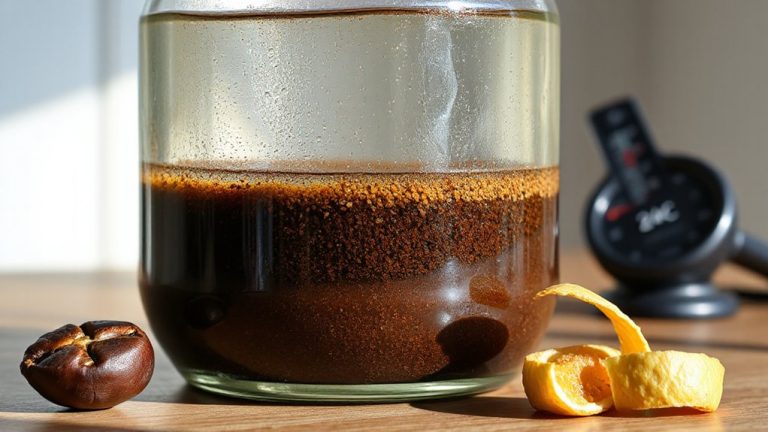
You might appreciate how stainless steel keeps your cold brew bright and stable, but if flavor purity is your top priority, glass offers something different: a completely inert environment that won’t interact with your brew at all. Thanks to its chemical inertness, glass preserves the original coffee compounds without leaching or absorbing flavors. You’ll notice better flavor clarity-subtle notes of fruit, chocolate, or nuttiness come through cleanly, just as the roaster intended. While glass doesn’t insulate like other materials, its transparency lets you monitor brewing progress easily.
| Feature | Glass | Stainless Steel |
|---|---|---|
| Flavor Impact | None (ideal purity) | Slight metallic edge |
| Chemical Inertness | High | Moderate |
| Flavor Clarity | Excellent | Good |
Why Ceramic Keeps Cold Brew Temperature-Stable
Ceramic’s dense structure gives it an edge when temperature stability matters most. You’ll notice ceramic containers keep your cold brew cooler longer than many alternatives, thanks to low thermal conductivity. That means heat moves slowly through the material, reducing how quickly the drink warms up. It also offers strong heat retention in reverse-when chilled, the material resists picking up warmth from the surrounding air. That’s useful if you’re serving over ice or storing at room temperature for hours. Unlike metal or thin glass, ceramic buffers temperature swings, acting like a quiet stabilizer. Just don’t expose it to sudden temperature shocks-going from fridge to hot water can crack some ceramics. Look for stoneware or porcelain models, which are more durable. While heavier than plastic or glass, ceramic’s balance of thermal performance and durability makes it a smart pick when consistent cold temperature matters. You’re not just storing coffee-you’re preserving serving conditions.
Why Plastic Can Taint Cold Brew
While lightweight and durable, plastic containers can absorb odors and leach chemicals into cold brew over time, especially with repeated use. You might not notice it right away, but chemical leaching can happen when plastic reacts with the coffee’s oils, especially if stored for long periods or exposed to heat. This can introduce off-flavors or even affect safety. Plastic also has high flavor absorption, meaning old coffee residues or cleaning scents linger and taint your next batch. Even thorough washing doesn’t always remove trapped tastes. Unlike glass or stainless steel, which resist stains and don’t absorb, plastic degrades in performance. If you do use plastic, opt for food-grade, BPA-free versions like HDPE or PP-and replace them regularly. For best results and flavor purity, choose non-reactive materials. Your cold brew stays cleaner, tastes better, and avoids unwanted chemical leaching or flavor absorption.
On a final note
Your cold brew’s flavor and freshness depend heavily on the vessel you use. Stainless steel keeps oxygen out, preserving brightness and extending shelf life. Glass won’t react with coffee, delivering clean, true-to-origin taste but offers less insulation. Ceramic stabilizes temperature well but is heavy and fragile. Avoid plastic-it can absorb odors and leach flavors over time. For best results, pick non-reactive, durable materials based on your storage and serving routine.