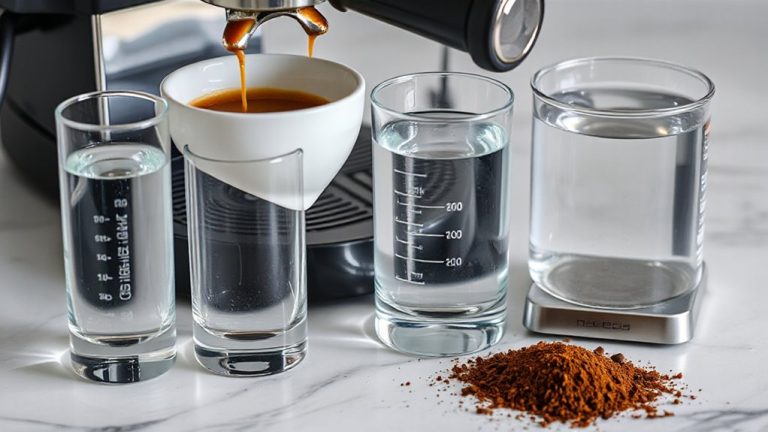
Incorporating Flavored Syrups Into Espresso Drinks Without Compromising Crema Integrity
Add low-viscosity syrups like Torani or Monin *before* pulling your shot to preserve crema. These thin, gum arabic–based syrups integrate smoothly without tearing the foam. Avoid thick, cold, or oil-based options that break the crema or cause thermal shock. Stir gently with a small spoon if needed, using just 2–3 soft turns. For best results, match syrup type to your method-lighter syrups work best with espresso. You’ll find even more precise pairings and timing tips that fine-tune flavor without sacrificing texture.
Notable Insights
- Use low-viscosity, gum arabic–based syrups like Torani or Monin to preserve crema stability and ensure even dispersion.
- Add syrup to the cup before pulling the shot to protect crema formation and maintain extraction consistency.
- Avoid thick, dessert-style syrups as they sink and disrupt the crema’s oil layer and foam structure.
- Gently stir with a smooth-edged spoon using 2–3 soft turns to blend syrup without breaking the foam.
- Use room-temperature syrup to minimize thermal shock and prevent rapid crema degradation upon contact.
Use Low-Viscosity Syrups to Protect Crema
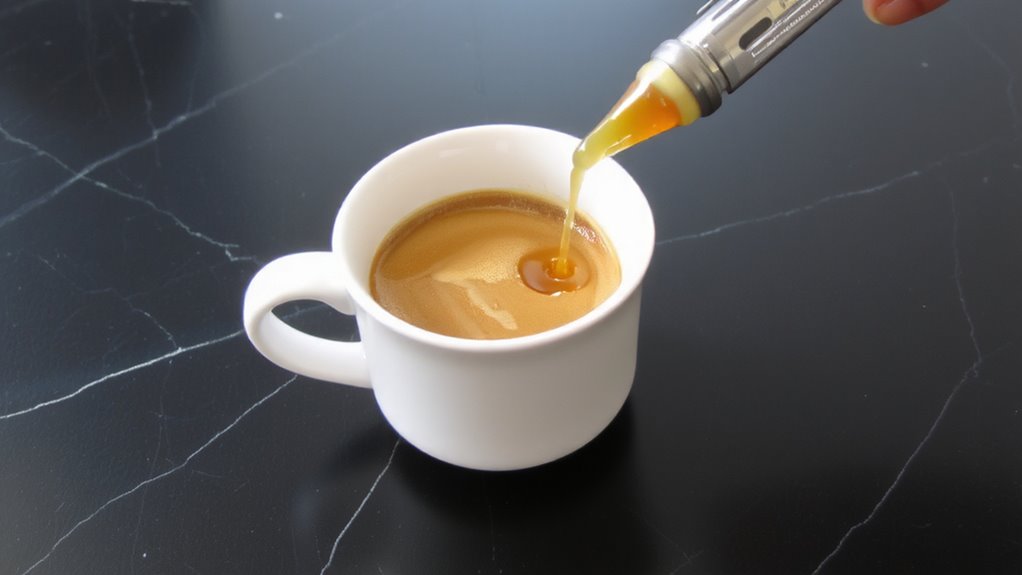
A good number of flavored syrups on the market are thick, especially those labeled as “gourmet” or used in dessert-style drinks, but going for a low-viscosity option is your best bet if you want to preserve the crema on your espresso. High syrup density can disrupt the delicate oil layer, breaking down foam stability and dulling the drink’s texture. Thin syrups-like Torani’s classic line or Monin’s standard varieties-mix smoothly without needing excessive stirring, which helps maintain that golden crema. Thicker options, such as caramel or chocolate sauces, often sink and tear the surface when poured. If crema integrity matters to you, avoid them in favor of liquid syrups designed for easy dispersion. You’ll notice better aroma retention and a cleaner mouthfeel. While thick syrups have their place in blended drinks, low-viscosity types are simply more compatible with straight espresso preparations. For the best results, choose from the best flavored syrups recommended for coffee to ensure quality and crema-friendly formulation.
Add Syrup Before Espresso to Preserve the Layer
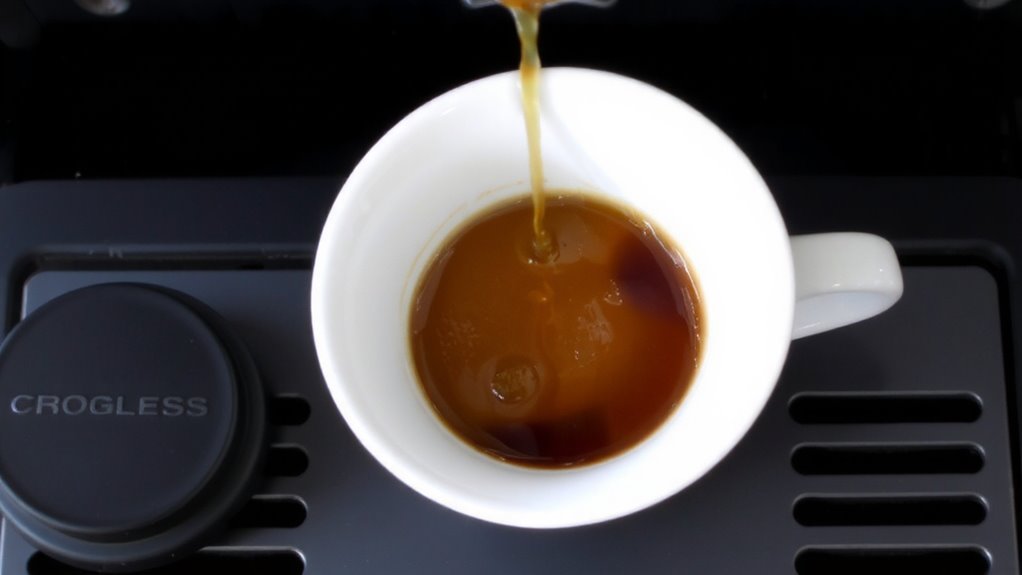
Putting syrup in the cup before pulling your shot isn’t just about even mixing-it’s how you protect the crema’s structure. When you add syrup first, the espresso flows directly onto it, letting the crema form undisturbed on top. This method supports better temperature control because the syrup doesn’t cool the shot unevenly. If you add syrup after, agitation from stirring breaks the delicate foam layer. For best results, use low-viscosity syrups and guarantee your machine’s pre infusion timing is stable-around 5 to 8 seconds works for most beans. Pre infusion helps extract evenly, so disrupting it with late syrup additions can alter flow and crema quality. Brands like Prima Coffee or BWT water filters help maintain consistency. You’re not just flavoring-you’re engineering the drink’s layering. Do it right, and the crema stays intact, visual and textural quality preserved. A popular choice for achieving consistent flavor without affecting viscosity is using Torani syrups, which are known for their balanced sweetness and wide availability.
Stir Gently With a Spoon to Save the Foam
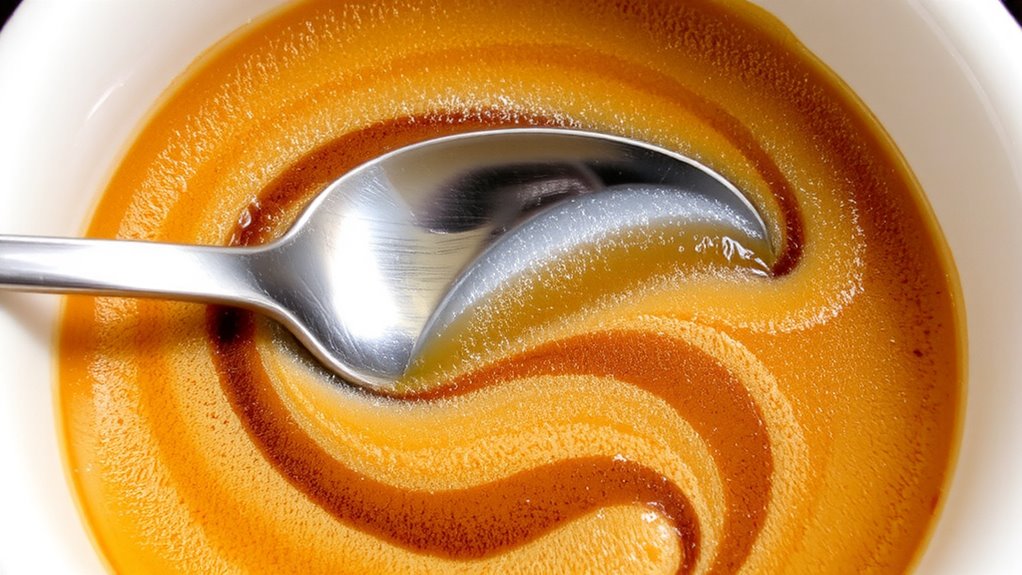
Most of the time, a light stir is all it takes to blend syrup into your espresso without wrecking the crema. Use a small spoon and twist it gently between your fingers-don’t insert or swirl aggressively. A proper spoon technique keeps foam preservation in mind by minimizing disruption to the delicate crema layer. Stainless steel teaspoons work best; their smooth edges cut through liquid without tearing foam. Stir just until the syrup integrates, usually 2–3 soft turns. Over-stirring breaks surface tension and flattens texture. If you’re adding syrup post-espresso, this step is even more critical. You’re not mixing a cocktail-go slow and stay shallow. The goal is uniform flavor without sacrificing mouthfeel. With practice, this simple motion becomes instinctive, helping maintain both taste and crema integrity in every cup. Choosing high-quality espresso syrup ensures optimal flavor balance and viscosity, which further supports crema preservation when incorporated correctly.
Pick Syrups That Won’t Break the Crema
You’ve stirred gently to preserve the foam-now make sure your syrup choice doesn’t undo that effort. Not all syrups play nice with crema density. Thinner, water-based syrups often break the delicate foam layer, especially if added too quickly. Opt for richer, gum arabic–based syrups like Monin or Torani, which integrate more smoothly. Syrup temperature matters-cold syrup straight from the fridge increases thermal shock, weakening crema faster than room-temperature syrup. Let your syrup warm up slightly before use. Avoid oil-based flavorings; they collapse crema almost instantly. Stick to aqueous solutions with moderate viscosity. Test different brands to see how they affect your shot’s surface tension. A stable crema should stay intact at least 30 seconds post-stir. Small changes in syrup formulation and syrup temperature can make a noticeable difference in crema density retention. Choose wisely.
Flavor Your Shot Without Flattening the Top
One surefire way to keep your espresso’s crema intact while still adding flavor is to add syrup *before* pulling the shot. This method allows the syrup to mix under pressure, promoting even flavor infusion without disturbing the crema’s structure. Use thin syrups-simple sucrose-based ones work best-for smoother integration. If you’re using sugar alternatives like monk fruit or erythritol blends, test them first; some can crystallize or separate during brewing, affecting texture. While pre-shot syrup addition works well for single shots, it may dilute crema in ristrettos due to reduced water volume. The key is balance: too much syrup floods the puck, too little yields weak flavor infusion. For best results, stick to 5–10ml depending on shot size. This technique suits home and high-volume settings alike, giving consistent results when precision matters.
Match Syrup Type to Your Brew Method
While your choice of syrup matters, it’s just as important to match its composition to your brewing method-otherwise, you risk clogging equipment or getting uneven flavor. Syrups with high sugar content can gunk up espresso machines, especially if they’re not diluted properly. For pour-over or French press, thicker syrups work fine since there’s no risk of clogging. But for espresso, go with thinner, lighter syrups to preserve crema and machine health. Your brewing method also affects flavor intensity-pressure and contact time change how syrup integrates.
| Brew Method | Recommended Syrup Type |
|---|---|
| Espresso | Low sugar content, thin syrup |
| Pour-Over | Medium sugar content |
| French Press | Full-bodied, higher intensity |
| Aeropress | Balanced sugar and flavor |
| Cold Brew | High flavor intensity |
On a final note
Use low-viscosity syrups like DaVinci or Torani to minimize crema disturbance. Pour syrup into the cup before pulling the shot-this helps preserve the foam layer. Stir gently with a spoon if needed, but avoid aggressive mixing. Thin syrups blend easier without breaking crema, while thick or oil-based ones often ruin it. Match syrup type to your drink: espresso shots work best with light, water-based options. For milk-based drinks, heavier syrups matter less.