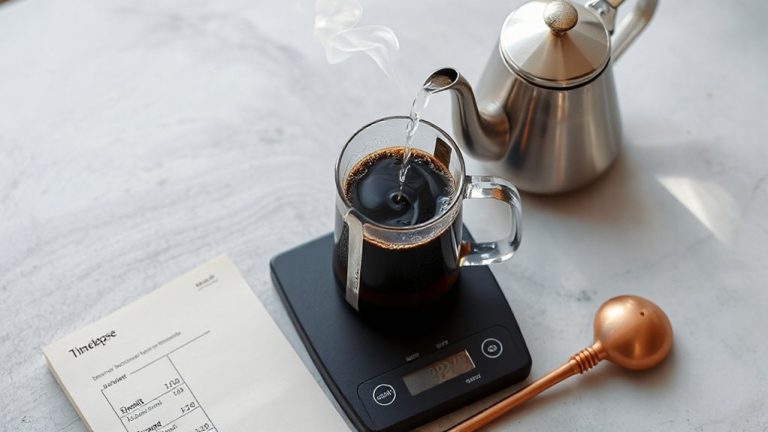
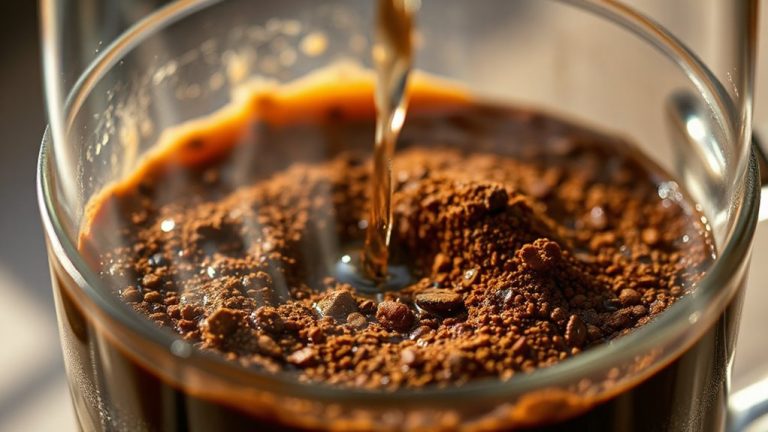
Cold Brew Extraction Time: 16-Hour Steep Guide (Coarse Grind)
You’ll get the richest, smoothest cold brew by steeping it for 16 hours-that’s the sweet spot for full extraction without bitterness. Use a coarse grind and filtered water to avoid harshness, especially with light or dense beans like Ethiopians. Steeping longer than 20 hours risks pulling out astringent notes, while under 12 hours often leaves it sour. Stick to one method-fridge or room temp-and you’ll find consistency every time. There’s more to fine-tuning your method just ahead.
Notable Insights
- Steep cold brew for 16 hours to achieve balanced extraction with smooth, rich flavor and minimal bitterness.
- Avoid steeps under 12 hours to prevent under-extraction, which yields sour, thin, and acidic results.
- Use a coarse grind size to control extraction rate and reduce risk of over-extraction and bitterness.
- Extend steep time to 18–24 hours for light roasts or high-altitude beans to enhance flavor development.
- Always use filtered water and consistent brew conditions to maintain clarity and prevent off-flavors.
How Steeping Time Changes Your Cold Brew’s Taste
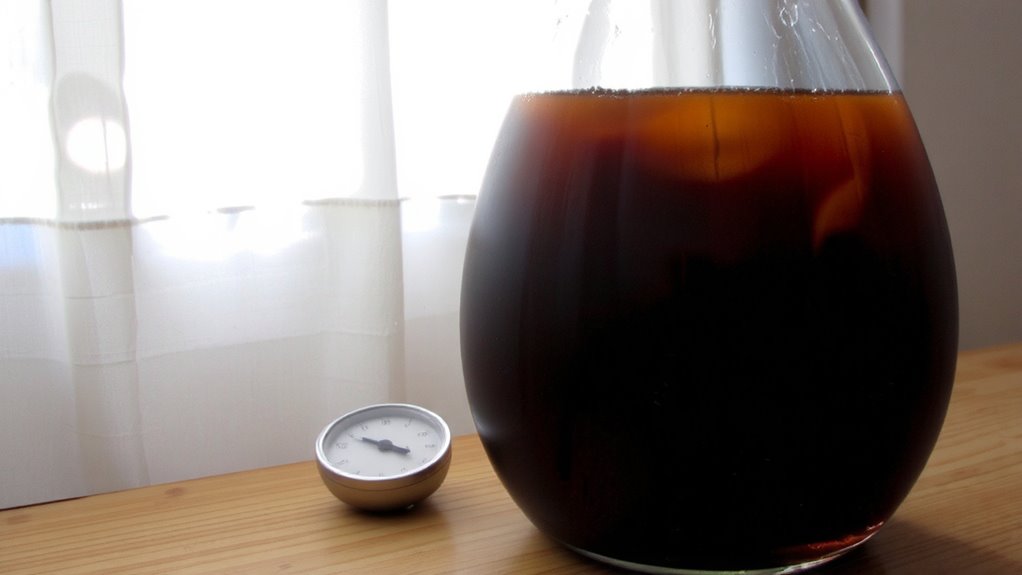
How long should you actually steep your cold brew? It depends on how bold or smooth you want the final cup. Steeping time directly drives flavor evolution-shorter steeps (8–12 hours) yield lighter, brighter profiles with subtle acidity. Longer steeps (16–24 hours) deepen the taste transformation, extracting more compounds for a richer, fuller body. But don’t assume longer is better; over-steeping risks bitterness, especially with fine grounds or high brew-to-water ratios. Coarse grinds, like those from a burr grinder such as the Baratza Encore, help control extraction and reduce sediment. Glass jars or dedicated cold brew makers, like the Toddy or OXO, offer consistent environments. If you prefer clean, nuanced notes, err on the shorter side. For intense strength and chocolatey tones, extend time slightly. Monitor each batch-your taste buds are the best tool for judging progress. Travelers who value fresh coffee on the go can benefit from portable brewing methods, such as a compact best portable coffee maker that complements cold brew preparation during trips.
Ideal Extraction Time for Balanced Cold Brew
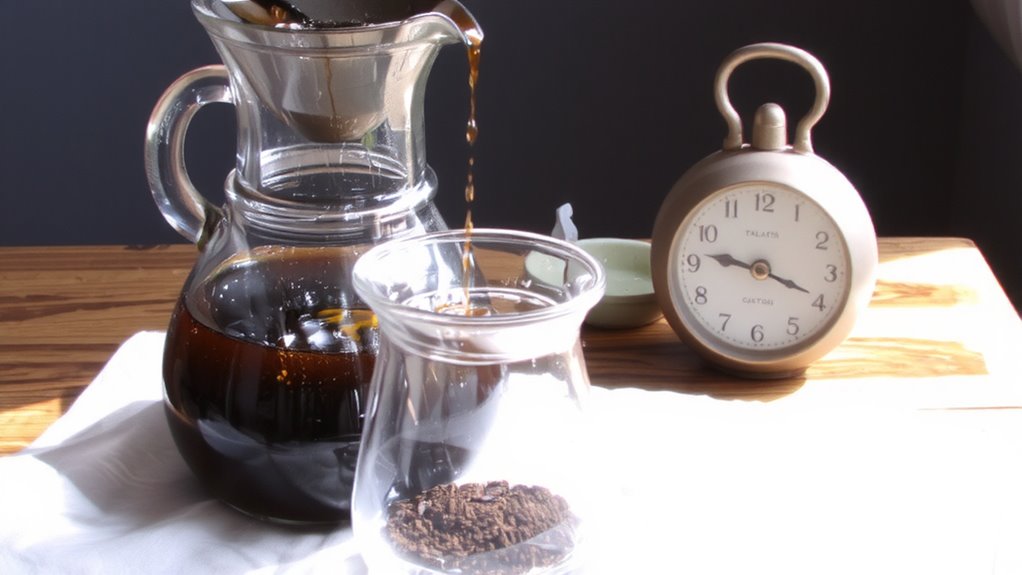
While some might lean toward longer steeping for maximum strength, you’ll often find that 16 hours hits the sweet spot for a balanced cold brew. This duration allows full extraction without overdrawn bitterness, giving you a rich flavor profile and clean, smooth finish. Steeping shorter than 12 hours risks under-extraction-your brew may taste sour or thin. Going beyond 20 hours can pull harsh compounds, muddying the taste. A well-chosen cold brew maker can enhance consistency and ease the process, especially when pairing with optimal steep times.
Here’s how time affects your results:
| Time (hrs) | Result |
|---|---|
| 12 | Mild, slightly acidic |
| 16 | Balanced, smooth finish |
| 20+ | Strong but prone to bitterness |
Use filtered water and coarsely ground beans for consistent results. A 16-hour steep at room temp or in the fridge works, though refrigeration offers more control. Stick to this window, and you’ll get the best flavor profile without guesswork.
Is Your Cold Brew Too Bitter? Check These Signs
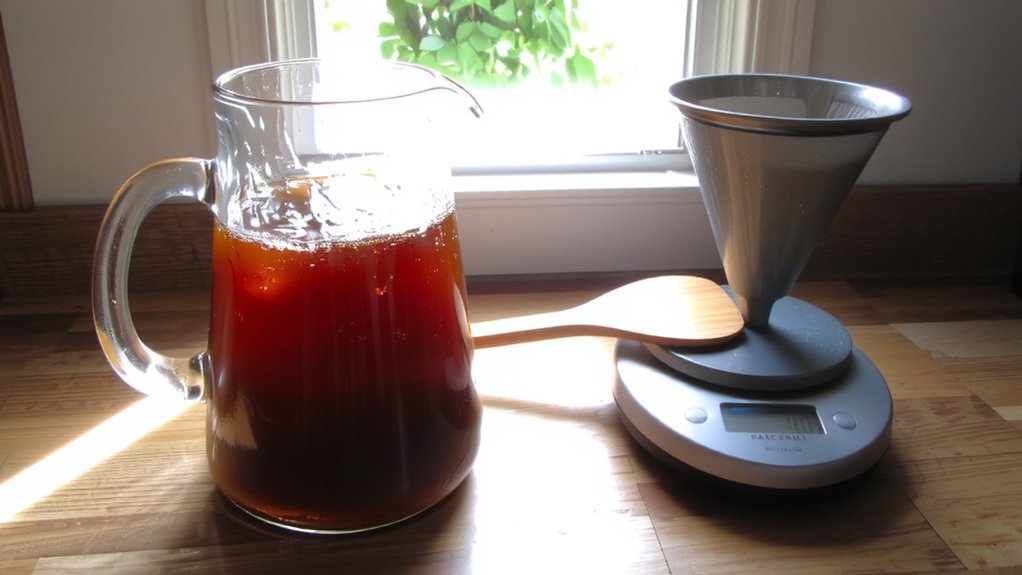
What’s making your cold brew taste sharp or unpleasantly bitter? Overextraction signs are likely to blame. When grounds steep too long or are too fine, they release unwanted bitter compounds. You’ll notice a medicinal or astringent flavor, with little sweetness or balance-clear indicators of overextraction. Water quality impact also plays a role; high mineral content or chlorine can amplify bitterness. Use filtered water to remove impurities and maintain flavor clarity. Avoid tap water with a strong smell or aftertaste, as it directly affects the final cup. If your cold brew tastes off, review both steep time and water source. Check for cloudiness or excessive sediment, which can signal poor filtration or water issues. Adjusting just one of these factors often brings noticeable improvement. Don’t assume it’s the beans-start with overextraction signs and water quality impact before changing your coffee. For convenient, high-quality options, consider trying some of the best K-Cups for coffee snobs.
Match Steep Time to Grind Size and Bean Type
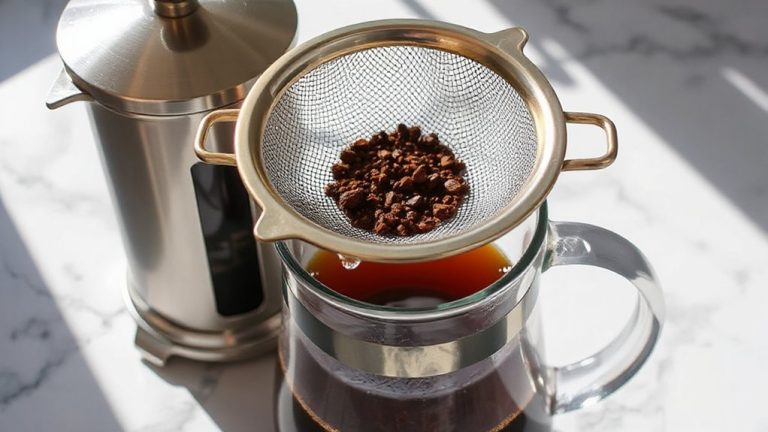
A coarser grind usually means a longer steep time, and getting this balance right matters more than most realize. If your grind is too fine, over-extraction can make your cold brew bitter-especially with beans from dense origins like Ethiopia. Lighter roasts or those from high-altitude bean origin regions often need longer steeping, around 18–24 hours, to fully extract their complex notes. With a coarser grind, you avoid clogging filters and speed up cleanup, but don’t go too coarse unless you extend steep time, or you’ll under-extract. Grind consistency is critical-a burr grinder delivers uniform particles, while blade grinders create uneven bits that extract at different rates, muddying flavor. Single-origin beans respond more dramatically to time and grind shifts than blends, so track your variables. Adjust steep duration based on both grind size and bean origin to preserve clarity and avoid flat, weak results.
How to Replicate Perfect Cold Brew Every Time
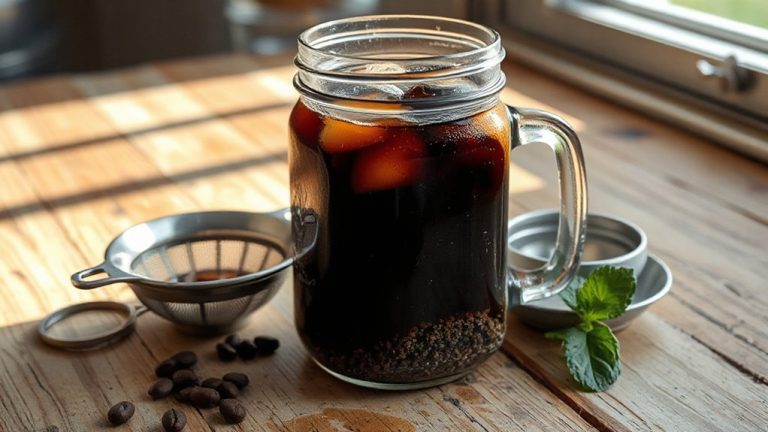
You’ve got your grind size and steep time dialed in based on bean origin and roast-now it’s time to lock in a repeatable process. Use the same brewing vessel each time, like a mason jar or a Toddy system, to guarantee consistency in volume and immersion. Always start with room-temperature water; cold tap water (around 68–72°F) works best. If the water’s too warm, extraction speeds up unevenly, risking bitterness. Too cold, and it under-extracts, leaving weak flavor. Stick to the same ratio-typically 1:4 coffee to water-and stir well at the beginning to saturate all grounds. Keep your brewing vessel sealed and steep in the fridge or at room temp, but pick one method and stick with it. Label your container with date, time, and coffee type. Once strained, clean your gear immediately. Consistency comes from repetition, not complexity.
On a final note
You’ve got more control over your cold brew than you think. Steep time directly shapes flavor-too short and it’s weak, too long and it turns bitter. Aim for 12–16 hours for balance, but adjust based on grind size and bean type. Coarse grinds need longer, light roasts may need less. Use a consistent ratio, like 1:8 coffee to water, and stick to filtered water. A French press or airtight jar works fine-no need for fancy gear. Experiment in small batches, take notes, and lock in what works. Once you find your sweet spot, sticking to it guarantees great cold brew every time-smooth, rich, and never harsh.