Maximizing Extraction Efficiency in French Press Brewing Through Precise Temperature Control and Pre-Wetting Techniques
Use water at 200°F-just off the boil and cooled 30 seconds-for balanced extraction without bitterness. Pre-wet your coarse grounds and let them bloom 30–45 seconds to release CO₂ and avoid sour flavors. Stir gently to guarantee even saturation, then steep for 4 minutes with the lid on. A double-walled French press or wrapped glass carafe helps maintain heat. Avoid fine grinds, incorrect temps, and skipping the bloom. You’ll get cleaner, fuller flavor with these fixes-and there’s more where that came from.
Notable Insights
- Maintain water temperature between 195–205°F, ideally 200°F, for balanced extraction and to avoid bitterness or weak flavor.
- Allow boiled water to rest 30 seconds before brewing to reach the optimal 200°F temperature for French press.
- Initiate a 30–45 second bloom to release CO₂ and ensure even extraction, improving flavor clarity.
- Pre-wet all grounds with a gentle stir to eliminate dry clumps and promote uniform saturation.
- Use insulated or double-walled equipment to maintain stable temperature throughout the 4-minute steep.
Why French Press Temperature Matters
Water temperature isn’t just a detail-it’s a deciding factor in how your French press brew turns out. Too hot-above 205°F-and you’ll over-extract, causing bitterness while speeding up grind oxidation. Too cool-below 195°F-and water solubility drops, leaving coffee weak and underdeveloped. The ideal range is 195–205°F, where extraction balances flavor clarity and body. At this heat, oils and solids dissolve efficiently without harshness. If using an electric kettle, set it to 200°F; if boiling water, let it sit 30 seconds before pouring. Avoid insulated presses that trap heat too aggressively, increasing oxidation risk. Stainless steel models like the Fellow Clara retain heat better than glass, but require closer timing. You’re not just heating water-you’re controlling reaction speed. Precision here improves every cup. Temperature stability means repeatable results, fewer mistakes, and better use of your beans.
Bloom First: Why Coffee Needs Pre-Infusion
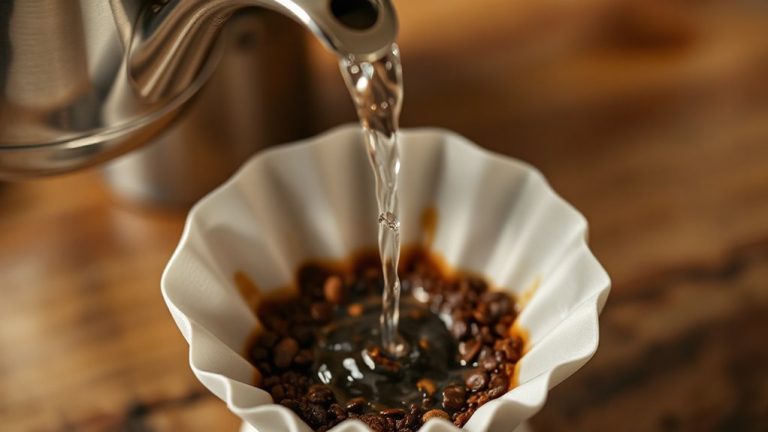
Why does your coffee suddenly puff up when hot water hits the grounds? That’s the bloom-a quick coffee expansion caused by trapped carbon dioxide escaping. Freshly roasted beans release gas over time, and when you add hot water, that leftover CO₂ bursts out. Without letting it bloom, you risk uneven extraction and flat flavor. Pre-infusion gives the grounds time to degas, improving overall brew quality. You’ll see the crust rise and bubbles form-that’s the gas release doing its job. Wait 30–45 seconds before stirring and adding the rest of the water. Skipping this step might save a few seconds, but you’re more likely to get sour, under-extracted coffee. Especially with light roasts, blooming makes a clear difference. Use a timer, stick to the interval, and treat blooming as non-negotiable in your French press routine.
Pre-Wet Grounds for Even Extraction
Letting the bloom happen is just the start-now it’s time to make sure all your grounds get wet evenly. After the initial pour, use a gentle stir to pre-wet any dry clumps floating on top. This step guarantees water reaches every particle, which is key for balanced flavor. Even with good grind consistency, some grounds can clump or stay dry without help. A quick, deliberate stir at the start improves contact and sets the stage for uniform extraction. But don’t overdo it-excessive brew agitation later can muddy your coffee by suspending fine sediment. Use a chopstick or spoon; just 2–3 seconds is enough. This simple move makes a real difference, especially with coarser grinds. Pre-wetting bridges the gap between blooming and full brewing, giving you more control. It’s an easy habit that boosts clarity and strength without extra gear. For consistent results, choose a French press with a fine mesh filter to minimize sediment, like those highlighted in top French press picks.
Use 200°F Water for Best Flavor
Most coffee experts agree that 200°F is the sweet spot for French press brewing-hot enough to extract rich flavors, but not so hot that it burns the grounds and brings out harshness. You’ll get the cleanest, most balanced cup when you use water this hot, especially if your water quality is good-filtered is best, since chlorine or minerals can affect taste. Pair that with a consistent grind consistency; a burr grinder helps you achieve even particles, which prevents under- or over-extraction. If your grind’s too coarse, the coffee tastes weak; too fine, and it becomes muddy and bitter-even at 200°F. Boil your water, then let it cool 30 seconds to hit 200°F, or use a gooseneck kettle with a built-in thermometer for precision. This temp works reliably across bean types and roast levels, giving you predictable results without guesswork. For even greater control, consider using a gooseneck kettle designed specifically for pour-over and immersion brewing.
Keep Heat In During Steep Time
To retain ideal brewing temperature during the steep, keep your French press insulated from the start-heat loss can slow extraction and lead to flat, underdeveloped flavor. Use a French press with built-in thermal insulation, like double-walled stainless steel models, which offer far better heat retention than glass. These retain temperature more consistently, ensuring even extraction over the full 4-minute steep. If you’re using a glass press, wrap it in a towel or place it on a cork mat to reduce heat loss, though results won’t match dedicated insulated designs. Effective heat retention isn’t about trapping steam-it’s about stabilizing water temperature to maintain extraction efficiency. Avoid drafty countertops or cold environments, as they accelerate cooling. While no press holds heat perfectly, choosing one with strong thermal insulation improves flavor clarity and consistency brew after brew. For optimal performance, consider a compact French press that balances portability with excellent heat retention.
Use a Kettle and Lid to Control Heat
You’ve already taken steps to maintain heat during the steep with an insulated press, but temperature control starts even earlier-with your kettle. Kettle selection matters because materials like stainless steel retain heat better than glass, helping you pour at stable, ideal temperatures around 200°F. A gooseneck kettle gives you precision, but any sturdy, heat-retaining model works if you’re brewing standard French press. Always use a lid after boiling-don’t leave it off. Lid insulation reduces heat loss during transfer and waiting. Even 30 seconds without a lid can drop water temperature by several degrees, risking under-extraction. Keep the kettle covered until you’re ready to pour. This simple step, combined with thoughtful kettle selection, guarantees your water stays hot and consistent, laying the foundation for even saturation and efficient extraction. Every degree counts.
Skip These French Press Mistakes
While it’s easy to assume French press brewing is foolproof, skipping a few common missteps can make the difference between a rich, balanced cup and a muddy, bitter letdown. Using the wrong grind size is one of the biggest errors-too fine leads to over-extraction and sludge, while too coarse causes weak, underdeveloped flavor. Aim for a consistency like coarse sea salt, which works best with most French presses. Another frequent mistake is ignoring brew time. Letting coffee steep longer than 4 minutes usually results in bitterness, especially with darker roasts. Stick to 3:30–4:00 minutes for ideal extraction. Don’t skip pre-wetting your filter or using water just off the boil (around 200°F). And always stir gently after pouring to guarantee even saturation. Small adjustments in grind size and brew time make a measurable difference in clarity and balance.
On a final note
You’ll get better flavor by controlling temperature and pre-wetting grounds. Use 200°F water-boil it, then wait 30 seconds. Pre-infuse coffee for even blooming and consistent extraction. Keep heat in with a lid and preheat the French press. A gooseneck kettle gives more precision than a regular pot. Avoid cold brew methods or wrong grind sizes; they hurt clarity and balance. These steps work with any standard 34-ounce press.