Unlock the Secrets of Pour Over Infusion Speeds and Water Flow Control
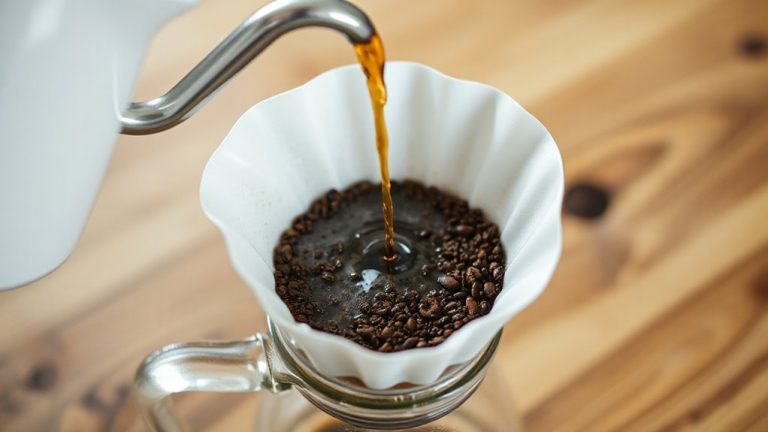
You need a gooseneck kettle-like the Hario Buono or Fellow Stagg-for precise control over water flow. Your dripper’s shape matters: V60 slows flow, while Kalita Wave spreads it evenly. Pour in slow spirals from the edge inward, keeping the spout 2–3 inches above the bed to reduce turbulence. Use medium-fine grounds and water between 195°F and 205°F. This stops channeling and dry spots. There’s more to optimizing each variable for a balanced cup.
Notable Insights
- Use a gooseneck kettle for precise control over water flow and pour placement.
- Maintain a low pour height of 2–3 inches to minimize turbulence and channeling.
- Apply a spiral pour technique, starting from the edge and pausing at the center.
- Match grind size to dripper design-medium-fine for most cones to balance flow and extraction.
- Choose a dripper shape like V60 or Kalita Wave to control brew time and saturation evenly.
How Water Flow Ruins Pour Over Consistency
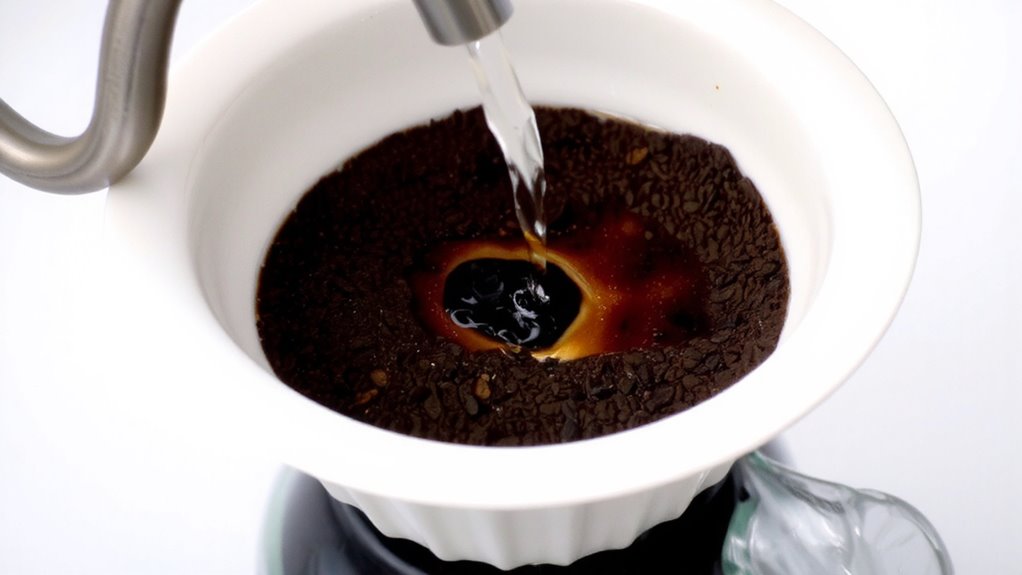
Why does your pour-over taste off sometimes, even when you follow the same steps? Inconsistent water flow is likely the culprit. When flow turbulence occurs, water rushes unevenly through the coffee bed, extracting some areas too much and others too little. This creates unbalanced flavor, often sharp or hollow. Worse, fine grounds can shift and cause channel clogging, where water gets trapped or diverts around dense spots. The result? Stale, over-extracted notes or weak, sour runs. Even minor agitation from your pour can trigger turbulence, especially with aggressive spiral pours or high flow rates. Gooseneck kettles help by offering precise control, reducing erratic splashing. Using a consistent grind size and gentle, centered pours minimizes disruptions. Pre-wetting the filter stabilizes the bed, lowering clogging risks. Flow isn’t just speed-it’s stability. Master it, and you fix the root of many off-batches.
Why Your Dripper’s Shape Changes Brew Time
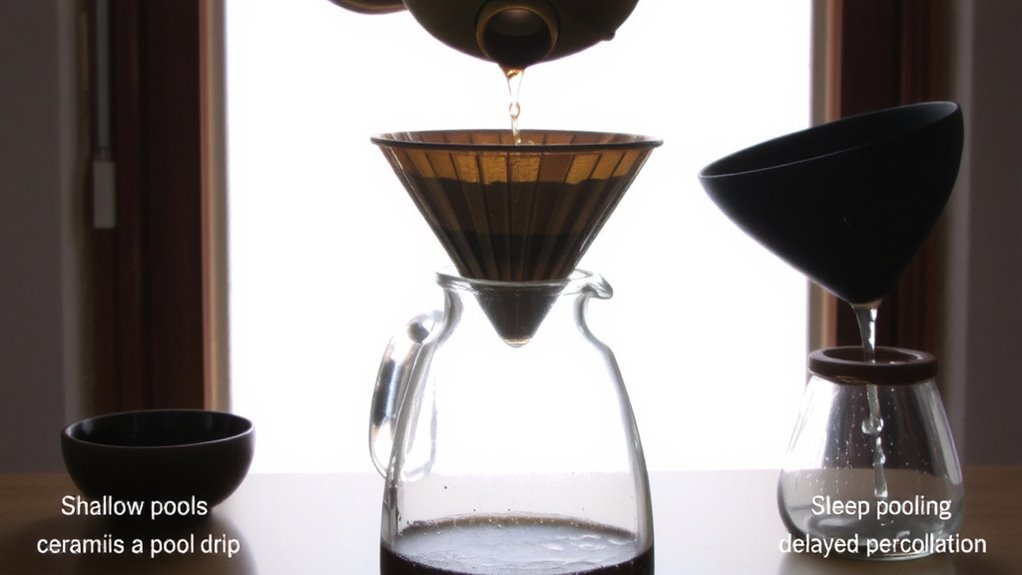
How long your brew takes isn’t just about grind size-your dripper’s shape plays a big role, too. A narrow cone like the Hario V60 slows flow, extending brew time and improving saturation control during the bloom phase. Wider brewers like the Kalita Wave spread grounds evenly, draining faster but risking uneven saturation if not pre-wet properly. Your dripper’s walls and bottom design directly affect water path and contact time. For those seeking precision, top-rated pour-over makers often feature designs that enhance flow control for optimal extraction.
| Dripper Type | Brew Time Impact |
|---|---|
| V60 (cone) | Slower, more control |
| Kalita (flat) | Faster, consistent |
| Chemex | Longest, clean cup |
| Origami | Balanced, even flow |
Choose based on your preferred time window and control level. Proper bloom phase setup guarantees degassing and even wetting, critical for extraction no matter the shape.
Use a Gooseneck Kettle for Better Pour Control
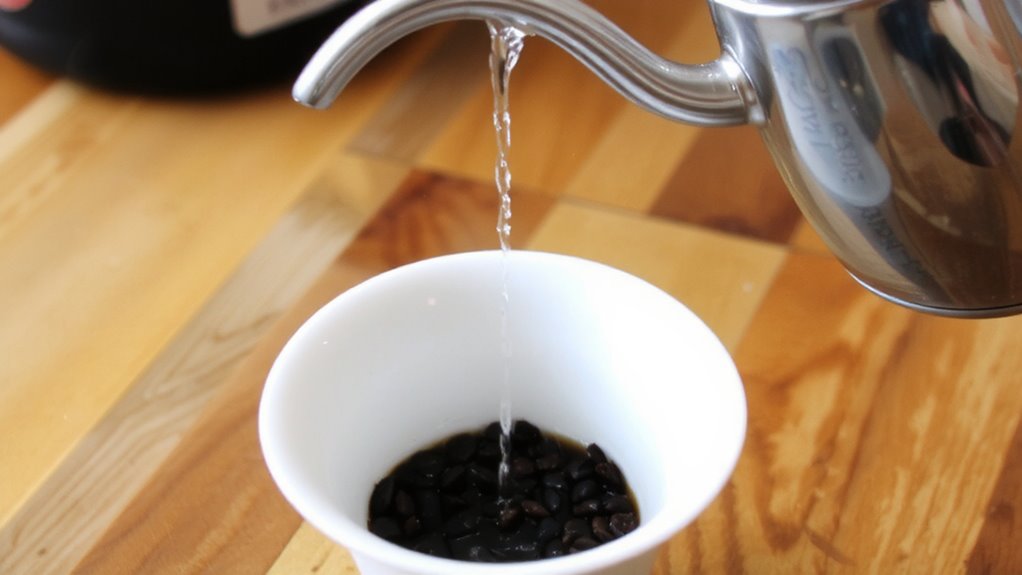
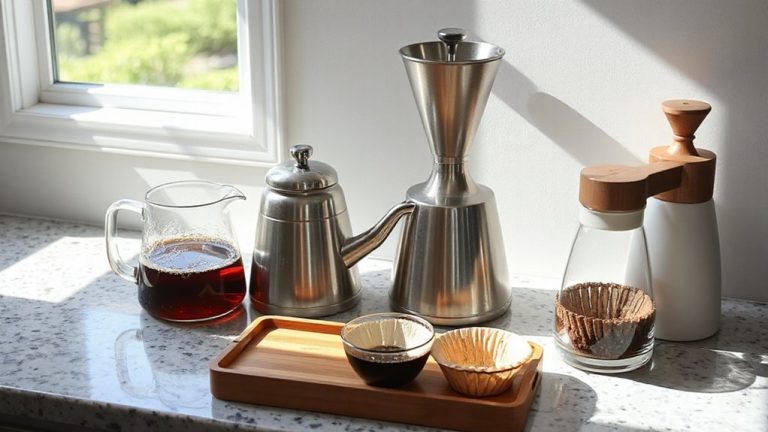
While you might think any kettle works for pour-over, a gooseneck kettle gives you far more control over water flow and placement, which directly affects extraction. Its narrow, curved spout allows for precision pouring, so you can saturate grounds evenly without disturbing the bed. This is key when doing a spiral pouring technique, where you move slowly from center to edge and back. A standard kettle’s wide spout dumps water too quickly, making it hard to stay consistent. Gooseneck kettles, like the Hario or Fellow Stagg, are designed for this kind of deliberate flow. They’re slower to use, yes, but that’s the point-better control means better coffee. You’ll notice fewer channeling issues and more balanced flavor. While they cost more, if you’re serious about pour-over, the improvement in technique and results makes it worth it. Just remember to heat water separately if your gooseneck isn’t electric. For a curated selection of top-performing models, check out the best gooseneck kettles based on performance, build quality, and user feedback.
Pour in This Pattern for Even Extraction
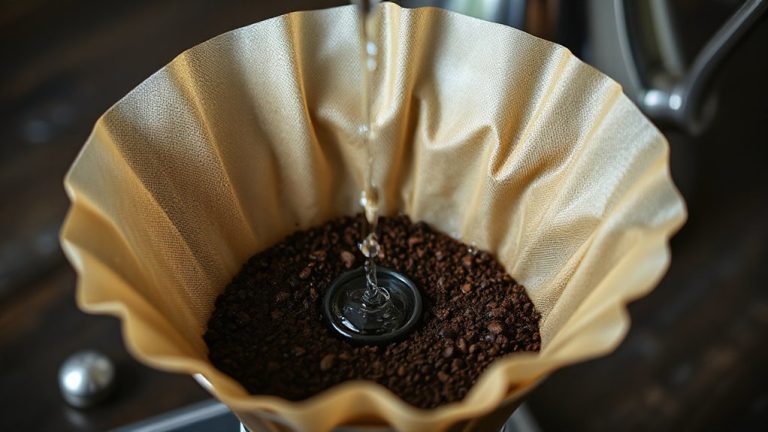
Now that you’ve got a gooseneck kettle in hand, you’re set up to make the most of your pour technique. Start with a slow, steady spiral pouring motion from the outer edge toward the center. This helps distribute water evenly and prevents dry spots in the coffee bed. Aim for consistent center saturation by pausing briefly at the middle during each spiral. A uniform pattern guarantees even extraction, improving clarity and sweetness in your cup. Avoid dumping water in one spot-this causes channel HDDing and uneven brews. Instead, maintain a controlled, circular flow that covers all grounds evenly. The Buono gooseneck, for example, makes this easy with its precision spout. Keep the pour height low-about 2 to 3 inches-above the bed to reduce turbulence. Practice smooth, continuous motions for best results. Spiral pouring isn’t just technique-it’s the key to balanced, repeatable coffee. For optimal results, consider choosing one of the best kettles for pour-over coffee that combine precision and temperature control.
Fix These Flow Issues for Great Coffee
If your coffee tastes uneven or off, poor water flow might be to blame-common issues like channeling, over-saturation, or weak extraction often stem from how water moves through the bed. Your grind size is usually the main culprit. If it’s too fine, water can’t move evenly, causing clogs and bitter flavors; too coarse, and water rushes through, yielding weak coffee. Aim for a consistent medium-fine grind, like table salt, especially with brewers like the Hario V60. Water temperature matters too-keep it between 195°F and 205°F. Too cool, and extraction stalls; too hot, and you risk scalding the grounds. Use a gooseneck kettle for control, and adjust grind size before tweaking temperature. Small, deliberate changes fix most flow problems and boost flavor fast.
On a final note
You control extraction by managing water flow and pour technique. A gooseneck kettle gives precision, helping maintain consistent speed and placement. Pour in slow spirals from center outward to wet all grounds evenly. Dripper shape affects flow-V-60s drain faster than flat-bottom designs like the Kalita Wave. If coffee tastes off, check for channeling or uneven saturation. Adjust grind size, pour rate, or water level to fix flow issues. Simple tweaks improve results more than gear swaps.