A Guide to Selecting the Ideal Cold Brew Equipment for Consistent Extraction Efficiency Based on Your Preferences
Choose a cold brew method that fits your taste-immersion like the Toddy or Takeya gives smooth, low-acid coffee with minimal effort, while slow-drip systems offer a brighter, concentrated result but need more time and attention. Match the brewer to your routine: shorter 12-hour steeps work for busy days. Pick stainless steel for durability and light protection or glass for visibility and aesthetics. Size it to your needs-1 liter for one, 2.5 liters for batches. Go for wide openings and few parts to make cleanup quicker. The right choice keeps your coffee consistent and your process simple-options get even clearer once you see how each feature performs in daily use.
Notable Insights
- Choose immersion brewing for smooth, low-acid coffee with consistent extraction over 12–24 hours.
- Opt for slow-drip percolation if you prefer a brighter, concentrated flavor with shorter 3–12 hour brews.
- Select stainless steel brewers for durability, light blockage, and better temperature retention.
- Match brewer capacity to your needs: 1-liter for individuals, 1.75–2.5-liter for groups or batch prep.
- Prioritize simple designs with wide openings to ensure easy cleaning and prevent residue buildup.
Choose the Right Cold Brew Method for Your Taste
While you might be tempted to jump straight into buying equipment, starting with the right cold brew method can make a real difference in flavor and convenience. Your choice affects both flavor profile and steeping time. Immersion methods, like a mason jar or French press, steep coarsely ground beans in water for 12–24 hours, yielding a smooth, rounded taste. Percolation, or slow-drip, takes 3–12 hours and produces a brighter, more concentrated result. Some systems, like the Toddy, favor deep extraction with long steeping time, ideal for rich iced coffee. Others, like OXO’s cold brew pitcher, streamline the process with built-in filters and shorter 12-hour steeps. Immersion gives consistency; percolation offers complexity. Your preference for boldness or brightness shapes the best method. Matching extraction style to your taste guarantees better results than gear alone. For those with limited space, a compact cold brew maker can deliver excellent results without sacrificing counter real estate.
Match Your Cold Brew Maker to Your Daily Routine
Your cold brew method shapes the flavor, but your daily schedule determines which maker actually fits your life. If you’re busy and need coffee fast, a cold brew system with a shorter brew time-like 12 hours-is ideal. Immersion brewers, such as the Takeya, offer consistent results with minimal effort; just steep and press. They’re great for batch prep and deliver a smooth flavor profile with low acidity. On the other hand, if you’re relaxed about timing and want richer taste control, consider a slow-drip setup with 24-hour brew times, though they take up counter space and require monitoring. Don’t overlook size and usability-choose a capacity that matches your daily intake. Matching your routine guarantees you get good flavor without hassle, not leftover brew or missed mornings. Prioritize convenience and consistency for long-term use. A best cold brew coffee makers list can help identify top-performing systems that balance speed, ease of use, and flavor quality.
Pick a Cold Brew Brewer Made of Glass or Stainless Steel
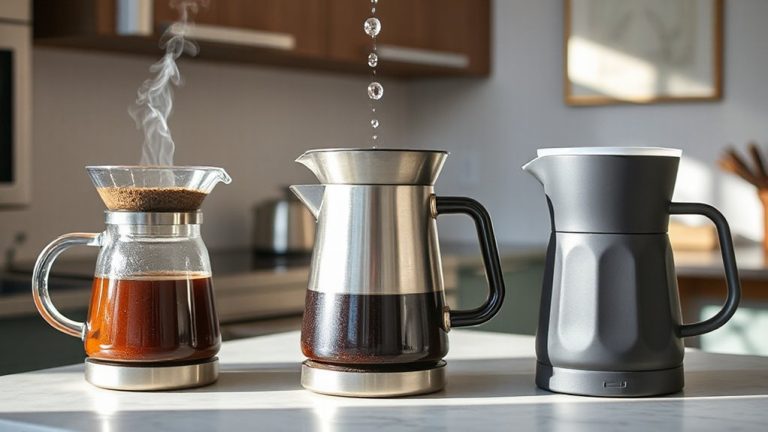
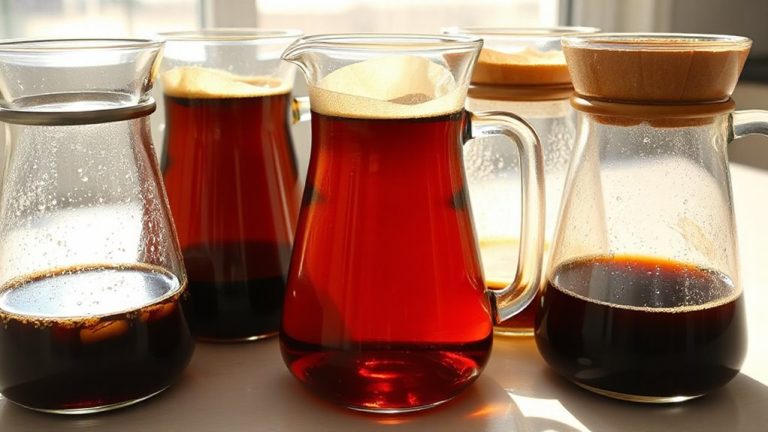
A cold brew maker’s material affects durability, taste, and how well it fits into your kitchen setup. If you prefer a sleek look that showcases the brewing process, glass models like the Hario Mizudashi offer strong aesthetic appeal and won’t absorb flavors. But they’re fragile-handle them carefully to avoid cracks. For better material durability, go with stainless steel, such as the Takeya Cold Brew System. It’s rugged, resists stains, and keeps your brew cold longer, ideal if you’re on the move. Stainless steel units also tend to block light, which helps preserve coffee quality. Glass suits those who love a classic, transparent design on their countertop, while steel fits users prioritizing toughness and portability. Both materials maintain flavor neutrality when cleaned properly, so choose based on your balance of aesthetic appeal, daily use, and how much wear you expect. For the smoothest results, aim for a coarse grind size to prevent over-extraction and ensure a clean cup, similar to what’s recommended for the Best Black Coffee.
Size Your Cold Brew Setup for One or More People
Most cold brew makers come in sizes ranging from 1 liter to 2.5 liters, so picking the right one depends on how many people you’re serving. If you’re brewing just for yourself or need a small daily dose, a 1-liter model suits a low brew volume and infrequent serving frequency. These compact options save space and minimize waste. But if you regularly serve multiple people or want cold brew ready throughout the week, go for 1.75 to 2.5 liters. Larger brewers support higher serving frequency and bigger batch prep, reducing how often you need to restart the process. Just make sure you have fridge space and consistent use-otherwise, overbrewing leads to stale concentrate. Match the brew volume to your routine: smaller setups for solo drinkers, larger ones for households or frequent entertaining. Size matters only as much as your real habits do.
Go for a Cold Brew Maker That’s Easy to Clean
When it comes to cold brew makers, skipping the cleanup isn’t an option-so choose one that’s simple to take apart and wash. Models with fewer parts and wide openings save time and reduce hassle. Glass or stainless steel parts are easier to scrub than plastic, and they resist lingering odors. Your cleaning tools matter-soft brushes and long-handled sponges help reach inside tall brewers. Check the maintenance frequency: daily rinsing prevents residue buildup, while deep cleaning weekly keeps things hygienic.
| Feature | Easy-to-Clean Maker |
|---|---|
| Material | Glass/Stainless Steel |
| Part Count | Low (3–5 pieces) |
| Cleaning Tools Needed | Brush, Sponge |
Prioritize designs that don’t trap grounds or oil, ensuring consistent extraction and less effort over time.
On a final note
Pick a cold brew maker that fits your routine and taste-slow immersion like the Hario Mizudashi works well for small batches, while systems like the Toddy suit bigger needs. Glass models are affordable but breakable; stainless steel lasts longer. Choose size based on how much you drink daily. Prioritize easy cleaning: models with removable filters or drip trays save time. Matching these features to your habits guarantees reliable, tasty cold brew every time.