Espresso Ratios: 18g In, 36g Out & Tamping Pressure Guide
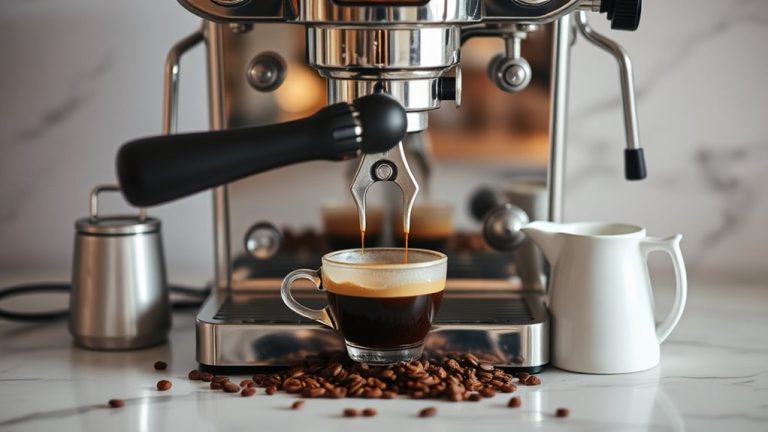
Use a 1:2 coffee-to-water ratio-like 18g in, 36g out-for balanced espresso, adjusting to 1:1.5 for stronger shots or 1:3 for lighter roasts. Grind size controls extraction: finer slows flow and increases bitterness, coarser speeds it up and risks sourness. Always use a burr grinder and weigh outputs. Tamp with 20–30 pounds of pressure evenly to prevent channeling. With stable temps and clean water, small tweaks improve flavor fast-there’s more to get right with beans and machines.
Notable Insights
- Use a 1:2 coffee-to-water ratio for balanced espresso, adjusting to 1:1.5 for stronger or 1:2.5 for lighter shots.
- Grind size critically affects extraction: finer slows flow and increases strength, coarser speeds it and reduces bitterness.
- Apply 20–30 pounds of tamping pressure evenly with a level, 90-degree angle to prevent channeling and ensure consistency.
- Dial in espresso by adjusting grind, dose, and yield while recording variables for repeatable, balanced results.
- Troubleshoot sour or bitter flavors by correcting under- or over-extraction through grind size, time, and tamping adjustments.
What Is the Ideal Espresso Brewing Ratio?
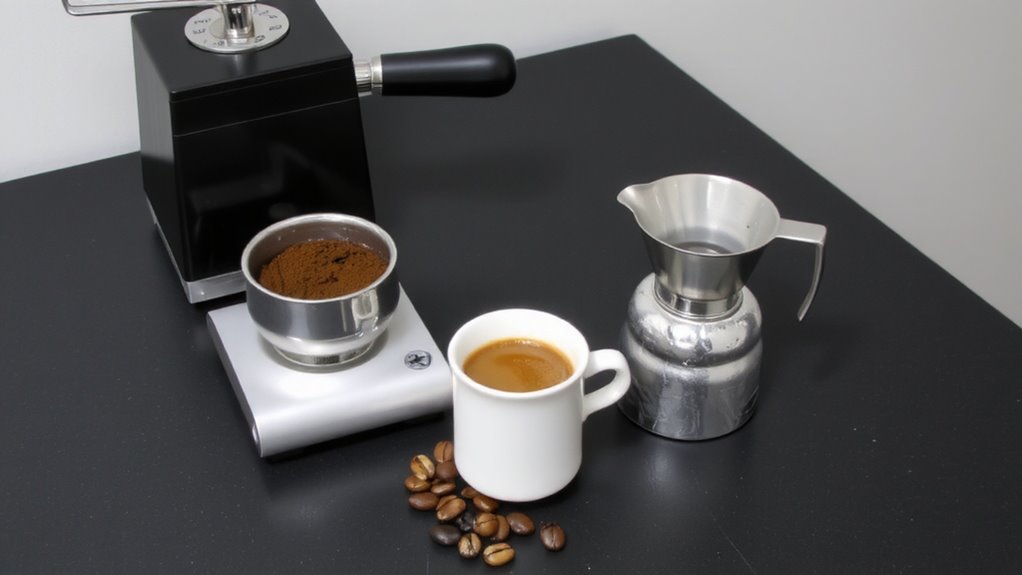
What’s the right balance between coffee and water when pulling a shot? Most baristas use a 1:2 ratio-like 18 grams in, 36 grams out-for a balanced espresso. This ratio hits a sweet spot for brew strength and flavor balance, giving you enough concentration without harshness. Some prefer 1:1.5 for a stronger, more intense shot, or 1:2.5 for a lighter, tea-like profile. Your machine matters-entry-level models may struggle with consistency, while dual-boiler units handle fine adjustments better. Light roasts often need a higher ratio (up to 1:3) to soften acidity, while dark roasts work well at 1:2 to avoid bitterness. Always weigh output; volume estimates aren’t precise. Adjust based on taste-too sharp? Try less water. Too weak? Increase the ratio. It’s not one-size-fits-all, but 1:2 is a reliable starting point.
How Grind Size Affects Espresso Extraction
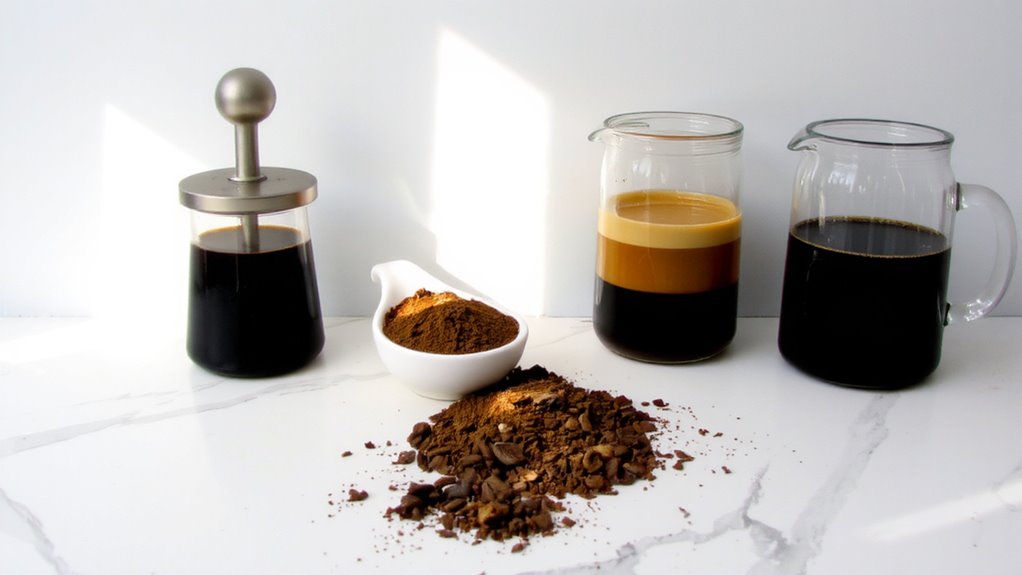
Grind size is the dial that fine-tunes your espresso extraction. If your shots pull too fast and taste weak, your grind is likely too coarse. If they drip slowly and taste bitter, it’s probably too fine. Grind coarseness directly controls how water moves through the coffee-finer grinds slow flow and increase extraction, while coarser ones speed it up and reduce it. Consistent particle distribution guarantees even extraction, preventing some grounds from over-extracting while others under-extract. Blade grinders create uneven particles, making consistent shots hard. Burr grinders, especially conical or flat burrs like those in the Baratza Encore or Eureka Mignon, offer more uniform particle distribution. Even small adjustments-0.1 mm on a good grinder-can fix a sour or harsh shot. You’ll need to tweak the grind daily, since beans change with age and humidity. Match the grind to your machine’s power and water pressure for best results. A high-quality coffee grinder can make a significant difference in shot consistency and flavor clarity.
Tamping Right: Pressure, Leveling, and Consistency
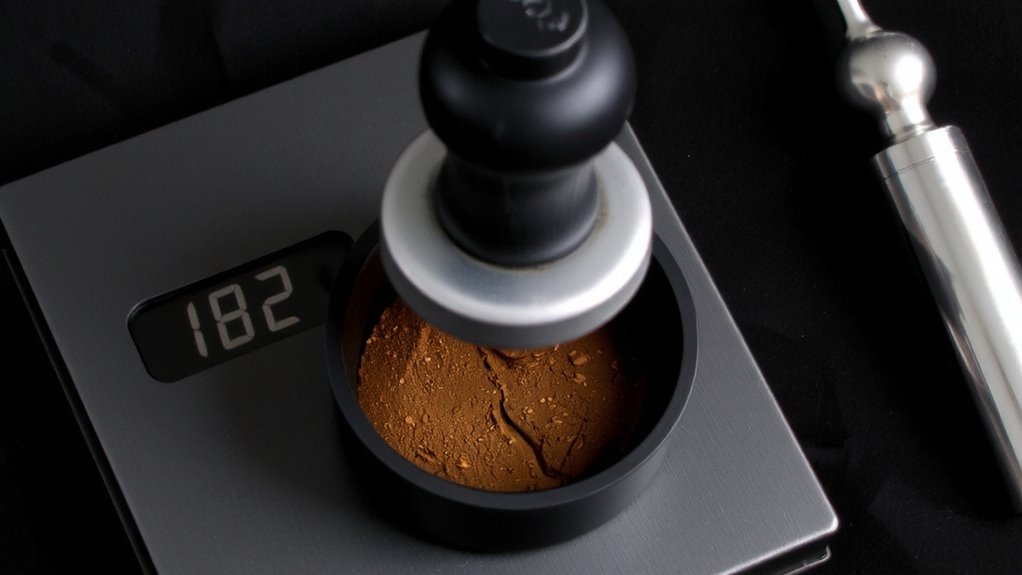
A solid tamp sets the foundation for an even espresso shot. If your tamp angle is off or base stability is weak, the water will channel through weak spots, leading to uneven extraction. You don’t need extreme force-20–30 pounds of pressure is enough. What matters most is consistency. Use a tamper that fits your portafilter snugly and offers a non-slip grip. A level, flat surface guarantees even compression. Check your base stability by tamping on a flat, sturdy surface like a countertop, not your lap or a wobbly table. Adding a durable espresso tamping mat can enhance stability and protect your countertop during daily use.
| Factor | Ideal Practice |
|---|---|
| Tamp angle | 90 degrees to puck surface |
| Base stability | Firm, level surface |
| Pressure applied | 20–30 lbs, consistent each time |
How to Dial In Your Espresso Properly
Now that your tamp is consistent and level, you can start refining your shot quality by adjusting your grind and dose-this is what dialing in really means. Start with a stable brew temperature, usually between 195°F and 205°F, depending on your machine. Even small fluctuations matter, so use a machine with good thermal stability. Water quality is just as critical-use filtered water with balanced minerals; overly soft or hard water ruins extraction. Grind finer to slow flow and increase resistance, or coarser to speed it up and reduce bitterness. Adjust in small increments, tasting each shot. A proper dial-in gives balanced sweetness, acidity, and body-not too sour, not too harsh. Keep notes on grind size, dose, yield, and time. This methodical approach guarantees repeatable, high-quality shots every time, tailored to your equipment and environment.
Adjusting Recipes for Different Beans and Machines
While no two beans or machines behave exactly the same, you’ll get the best results by tweaking your recipe to match their unique traits. Bean origin affects density and moisture, so African beans may need cooler water or finer grinds, while Brazilian beans might require higher temperatures. Light roasts often call for longer extraction times than dark roasts. Your machine calibration also plays a key role-older machines may lack temperature stability, forcing you to adjust grind or dose. Commercial machines with PID controllers allow precise heat management, making consistency easier. Best PID controllers can significantly improve temperature control for both home and professional setups. Always start with standard ratios, then modify based on how the shot pours and tastes. Test small changes: tweak grind size first, then water temperature or dose. With practice, you’ll learn how each variable interacts, letting you adapt quickly to any bean or machine setup.
Fixing Common Espresso Problems
You’ve dialed in your grind, adjusted for bean type and machine, and still end up with a sour shot or one that drips too fast-don’t sweat it, even well-tuned setups run into issues. A sour taste usually means under-extraction, often from a grind that’s too coarse or a brew time under 25 seconds. Try a finer grind or slightly increasing your dose. If your shot tastes off with a bitter aftertaste, it’s likely over-extracted-your grind may be too fine or the shot running over 30 seconds. Adjust accordingly. Uneven tamping or channeling can ruin even the best setup, leading to thin, inconsistent results instead of a rich, creamy crema. Check your distribution and guarantee even pressure when tamping. A clogged portafilter or old grinder burrs can also cause problems. Clean parts regularly and replace worn components to maintain performance. Small tweaks make a big difference.
Pro Tips for Perfect Espresso Shots
What separates a good espresso from a great one? Attention to details like espresso timing and shot temperature. Aim for a 25–30 second extraction window-any shorter and the shot tastes sour; longer and it risks bitterness. Your machine’s shot temperature matters just as much: keep it between 195°F and 205°F. Machines like the Breville Barista Express let you adjust this easily, while older models may need manual tweaking. Always preheat your portafilter and use a consistent grind size-fine, but not powdery. Tamp evenly with about 30 pounds of pressure. If your espresso tastes off, don’t change everything at once. Adjust one variable: grind, dose, or tamp. Fresh beans help, but even top-quality beans fail without proper timing and temperature control. Small, repeatable changes make the difference.
On a final note
You’ve now got the basics to make solid espresso. Use a 1:2 ratio as a starting point, adjust grind size for flow rate, and tamp evenly with about 30 pounds of pressure. Dial in using taste-bright means under-extracted, bitter means over. Different beans and machines need tweaks, so stay flexible. A good scale, grinder, and clean machine make all the difference. Stay consistent, and your shots will improve fast.