Controlling Acidity Levels Through Water Temperature Management During Cold Brew Process
Use chilled water between 35°F and 40°F to reduce acidity in your cold brew by up to 70% compared to hot brewing. Cold water slows extraction, pulling fewer acidic compounds from the beans. Keep grounds uniform with a burr grinder like the Baratza Encore and steep 12–24 hours. Avoid warmer water-it speeds extraction and increases sourness. For smoother results, chill brewed concentrate quickly with ice immersion and choose low-acid beans like Brazilian or Sumatran. You’ll find even more ways to refine flavor consistency just ahead.
Notable Insights
- Use water between 35°F and 40°F to minimize acid extraction during cold brew.
- Cold water slows extraction, reducing solubility of acidic and bitter compounds.
- Avoid warm water above 70°F to prevent accelerated extraction and increased sourness.
- Pre-chill beans and water to maintain stable low temperatures throughout steeping.
- Pair cold brewing with low-acid beans like Brazilian or Sumatran for smoother results.
How Temperature Affects Cold Brew Acidity
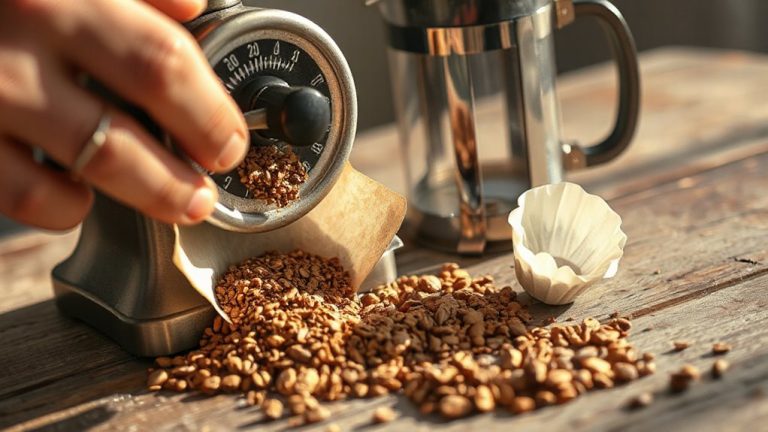
While hot brewing typically extracts more acids due to higher water temperatures, cold brew’s lower temperature slows extraction, which naturally reduces acidity. You’ll notice this especially when using beans with high bean density, like those from high-altitude farms-these resist extraction, so cold water pulls fewer harsh compounds. To get the best results, maintain a consistent grind consistency; a uniform medium-coarse grind prevents over-extraction in some particles and under-extraction in others. If your grind’s too fine, you risk increased acidity and bitterness, even in cold brew. Burr grinders, like the Baratza Encore, deliver the consistency you need. Water temperature staying between 35°F and 70°F guarantees slow, smooth extraction over 12–24 hours. Don’t just rely on time-adjust grind and bean choice to fine-tune acidity. Control these factors, and you’ll get a smoother, more balanced cup every time.
Why Cold Water Reduces Acidity in Cold Brew
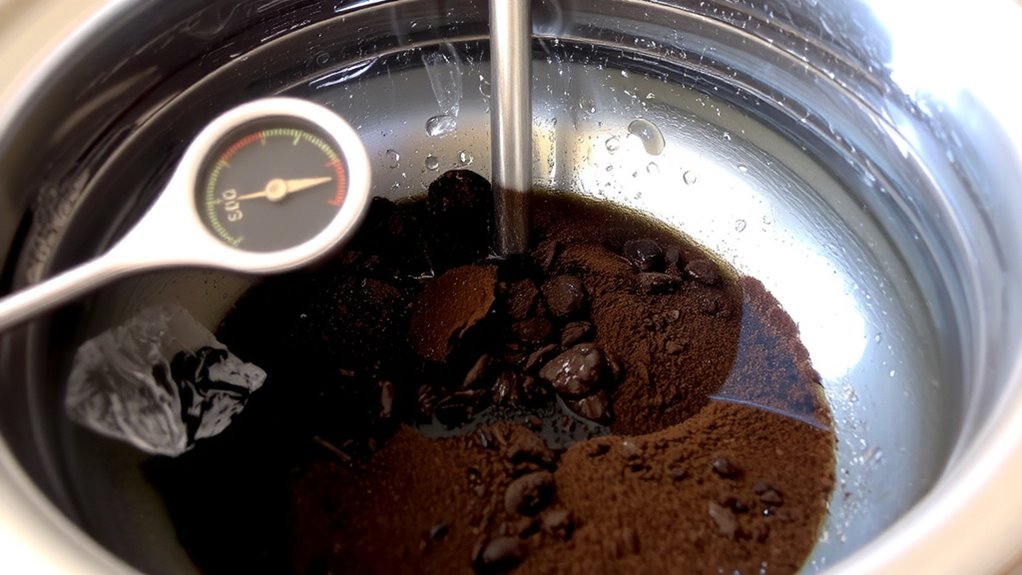
Since cold water extracts compounds more slowly than hot, it pulls fewer acidic elements from coffee grounds during steeping, which is why your cold brew ends up tasting smoother and less sharp. Cold temperatures slow down chemical reactions that release acidic and bitter compounds, giving you a naturally milder result. Solubility rates for acids and oils drop in cold water, meaning fewer of those sharp-tasting components dissolve into your final brew. You’re not just avoiding heat-you’re controlling how much and what kind of flavor is extracted. This is why, even with longer steep times, cold brew stays balanced. Your standard fridge-chilled water (around 35–40°F) works reliably, while room temp water increases acidity slightly due to faster extraction. Stick to cold water if low acidity is your goal-it’s a simple, effective way to improve taste without additives or special beans.
Best Temperature Range for Low-Acidity Cold Brew
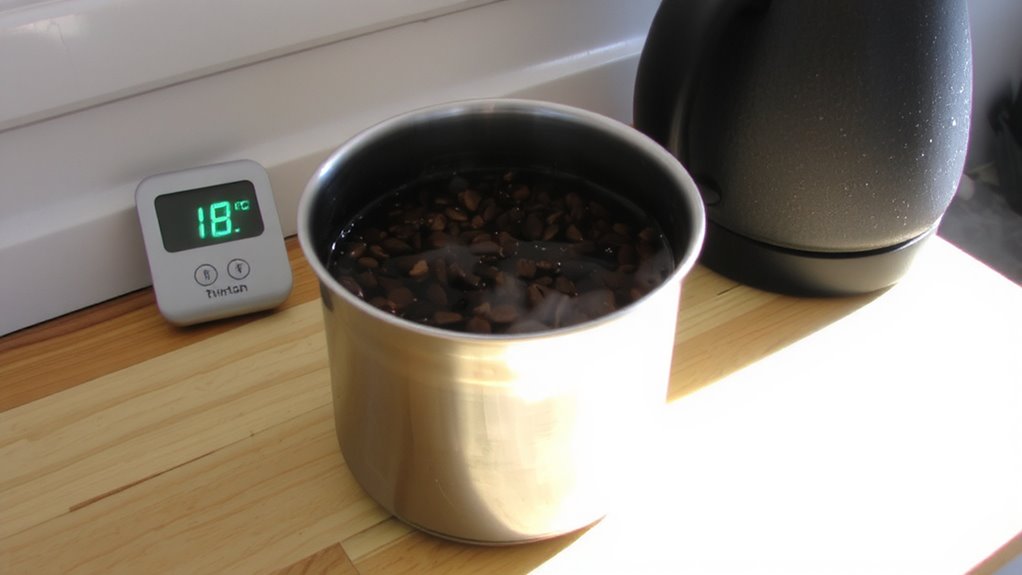
When aiming for the smoothest, least acidic cold brew, you’ll want to keep your water temperature between 35°F and 40°F-the range where acid extraction is minimized without slowing the process unnecessarily. This ideal zone supports cold infusion, where flavors extract gradually and evenly over 12–24 hours. At these temps, slow extraction limits volatile acid release, yielding a milder brew ideal for sensitive stomachs. Use filtered water and pre-chill your grounds to maintain stability. If your fridge runs above 40°F, monitor it with a standalone thermometer-consistency matters. Going colder than 35°F risks stalling extraction, leaving underdeveloped, weak coffee. Some brewers, like the OXO Cold Brew, help maintain stable temps, but any sealed container works if kept steady. Avoid room-temperature starts, as they disrupt the cold infusion process. Stick to this range, and you’ll get reliable, low-acid results batch after batch-no guesswork needed.
Effects of Warm Water on Cold Brew Acidity
What happens if you use warm water instead of cold for your cold brew? You’ll speed up flavor extraction, pulling more acids and oils from the coffee grounds in less time. This means your steep time drops-maybe to just 8–12 hours instead of 12–24-but at a cost: higher acidity and a brighter, sometimes harsher taste. Warm water activates more solubles quickly, including those responsible for sour notes, which defeats the main benefit of cold brew: smoothness. While it’s possible to make a drinkable batch, you lose control over balance. If you try it, stick to medium-hot water (around 120°F), not boiling, and monitor steep time closely. Even then, expect less consistency than with cold brewing’s slow, steady process. For low acidity, cold water remains the reliable choice. Exploring coffee sensory kits can help refine your ability to detect subtle acidity differences in brews.
Chilling Methods to Reduce Cold Brew Acidity
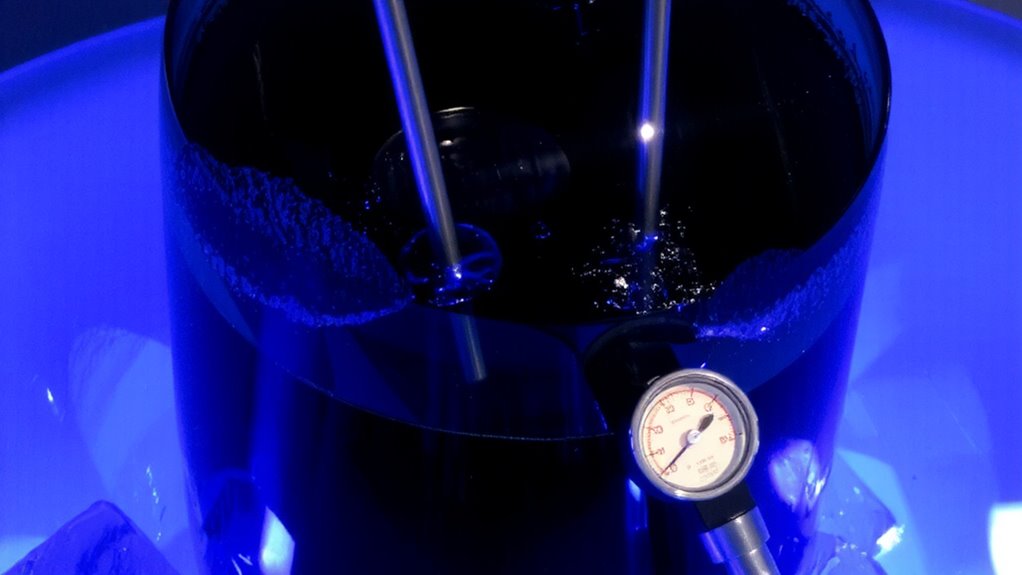
Cold water helps keep acidity low by slowing extraction, but once the brew is done, how you cool it can still influence the final taste. You’ll want to use rapid cooling to lock in smoothness and prevent lingering chemical reactions that increase perceived acidity. One effective method is ice immersion-submerging your sealed brew container in an ice bath for 10–15 minutes. It’s faster and more efficient than refrigeration alone, especially for larger batches. Some brewers even use sanitized ice packs to avoid dilution. Rapid cooling with ice immersion works best when timed right after steeping, minimizing oxidation and staving off sour notes. While a fridge will eventually chill your brew, it takes hours, allowing subtle flavor shifts. For consistent results and better acidity control, ice immersion is a simple upgrade that doesn’t require special gear-just a bowl, ice, and a few minutes.
Choose Beans for Smoother, Less Acidic Cold Brew
A good starting point for smoother cold brew is picking the right beans, and you’ll want to focus on origin, roast level, and processing method. Your bean selection directly impacts acidity-Brazilian or Sumatran beans, for example, tend to be naturally lower in acid than Ethiopian or Kenyan varieties. Opt for a dark roast profile, as longer roasting breaks down acids and develops smoother, chocolatey notes. Light roasts preserve more acidity, which may not suit your goal here. Beans processed using the natural or honey method often have rounder, sweeter profiles compared to washed beans, adding to smoothness. While origin matters, roast profile usually has a bigger effect on final taste. Avoid overly bright or fruity single-origins if minimizing acid is the goal. Instead, choose a blend labeled for espresso or cold brew-these are often formulated with low acidity in mind. For beginners, using a portable coffee maker can simplify the brewing process and help maintain consistent water temperature during preparation.
Fix Bitter or Sour Cold Brew: Temperature Causes
If you’re ending up with cold brew that’s too bitter or sour, the brewing temperature might be the culprit-even though cold brew is meant to be made with cold or room-temperature water, straying outside the ideal range can pull out undesirable flavors. Water that’s too warm-above 70°F-speeds up extraction, pulling more acidic compounds and making your brew sour, especially if the grind consistency is too fine. On the flip side, if it’s too cold, under-extraction can lead to weak, bitter notes, particularly with an uneven grind consistency. Steeping duration also plays a role: longer than 16–18 hours increases bitterness, especially with warm ambient temperatures. Keep your brew between 60–70°F for 12–16 hours, use a consistent coarse grind, and avoid heat sources like sunny countertops or warm kitchens.
On a final note
You’ll get the smoothest, least acidic cold brew by steeping coarsely ground beans in cold water between 35°F and 45°F for 12–16 hours. Warmer water increases acidity and bitterness, so avoid room-temperature brews if you’re sensitive. Use a refrigerator or ice bath for consistent chilling. Choose darker roasted, low-acid beans like Sumatran or Brazilian for better results. If your batch tastes off, check your water temp and brew time first-they’re often the real culprits.