How Different Grind Sizes Affect the Taste and Extraction Rate in French Press Brewing
Your grind size controls how water pulls flavor from coffee in a French press. Too fine, and you get bitter, muddy coffee from over-extraction-plus clogging. Too coarse, and it’s sour or weak because water moves through too fast. Aim for a consistent, coarse grind like sea salt. Use a burr grinder, like the Baratza Encore, for even particles. Start at 4 minutes with 200°F water, then tweak finer or coarser based on taste. You’ll find what works best for your setup.
Notable Insights
- Coarse grinds, like sea salt, prevent over-extraction and yield balanced, full-bodied flavor in French press brewing.
- Too fine a grind increases extraction rate, causing bitterness and a muddy, gritty cup.
- Overly coarse grinds reduce extraction, leading to weak, sour, underdeveloped coffee flavors.
- Uniform particle size from a burr grinder ensures even extraction and consistent taste.
- Adjusting grind size fine-tunes extraction: finer for sourness, coarser for bitterness, within a 4-minute steep.
Why Grind Size Matters for French Press
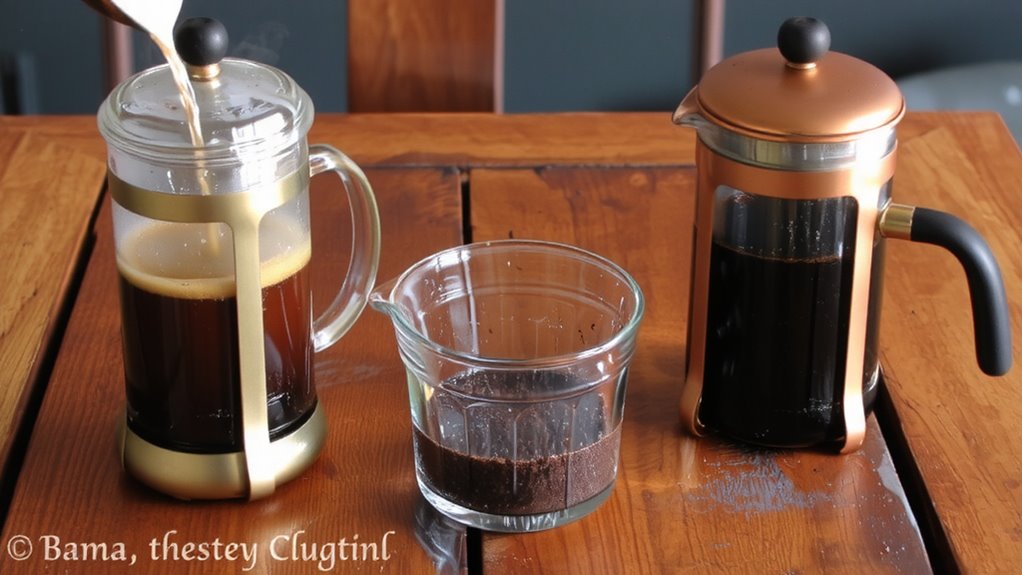
While it might seem like a small detail, getting the grind size right for your French press makes a real difference in how your coffee tastes. If your grind is too fine, over-extraction happens fast, leading to bitter flavors-especially if you don’t adjust your brew time. You’ll need a longer steep with coarser grinds, typically around four minutes, but finer particles require shorter brew time adjustment to avoid harshness. Water temperature impact also plays a key role: hotter water extracts faster, compounding issues with small grounds. Aim for 195–205°F, but slightly cooler if using a finer than ideal grind. Using a burr grinder gives you more control than blade grinders, ensuring even particles. Consistency matters because uneven sizes lead to mixed extraction-some bitter, some weak. You’ll get better results sticking to coarse grounds, but knowing how brew time and temperature interact helps fine-tune flavor when adjustments are unavoidable. A high-quality burr grinder can significantly improve extraction consistency and overall flavor.
The Ideal French Press Grind: Coarse and Consistent
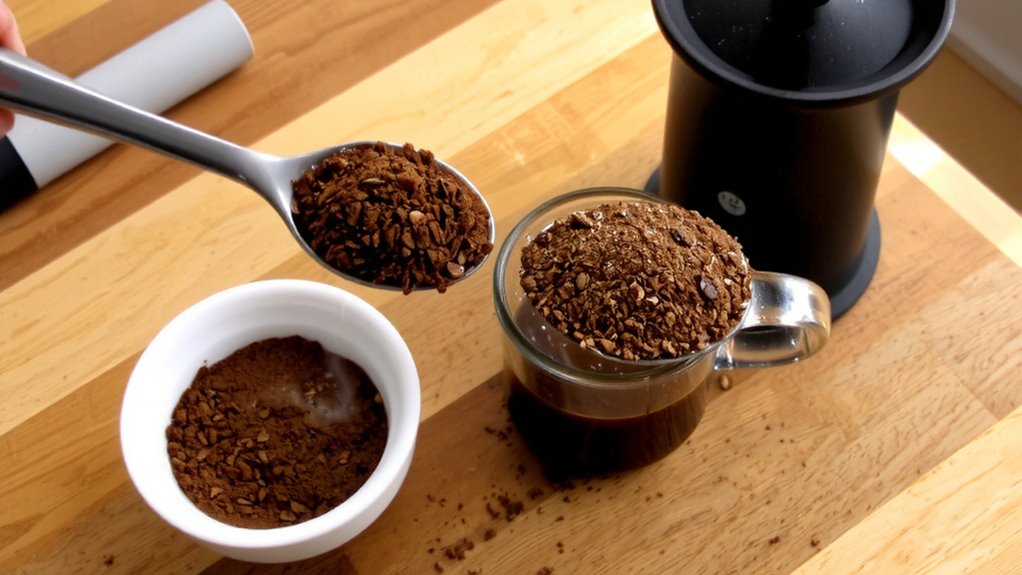
You want your French press coffee to taste balanced-clean, rich, and free of bitterness, and that starts with getting the grind right. Aim for a coarse, even grind, similar to sea salt. This size slows extraction just enough to avoid overdoing it during the four-minute steep. What really matters is grind uniformity-your burr grinder should produce consistent particles, not a mix of dust and chunks. Inconsistent particle distribution leads to uneven extraction: fines over-extract and add bitterness, while large pieces under-extract and taste flat. Blade grinders often fail here, creating a messy spread of sizes. A quality burr grinder, like the Baratza Encore or Fellow Ode, gives you control and better uniformity. With the right coarse setting and reliable grind consistency, you’ll pull out the full, rounded flavors the French press can deliver-nothing more, nothing less. For those looking to invest in a reliable option, the best coffee grinders under $500 offer excellent performance and consistency for French press brewing.
What Happens When Your Grind Is Too Fine?
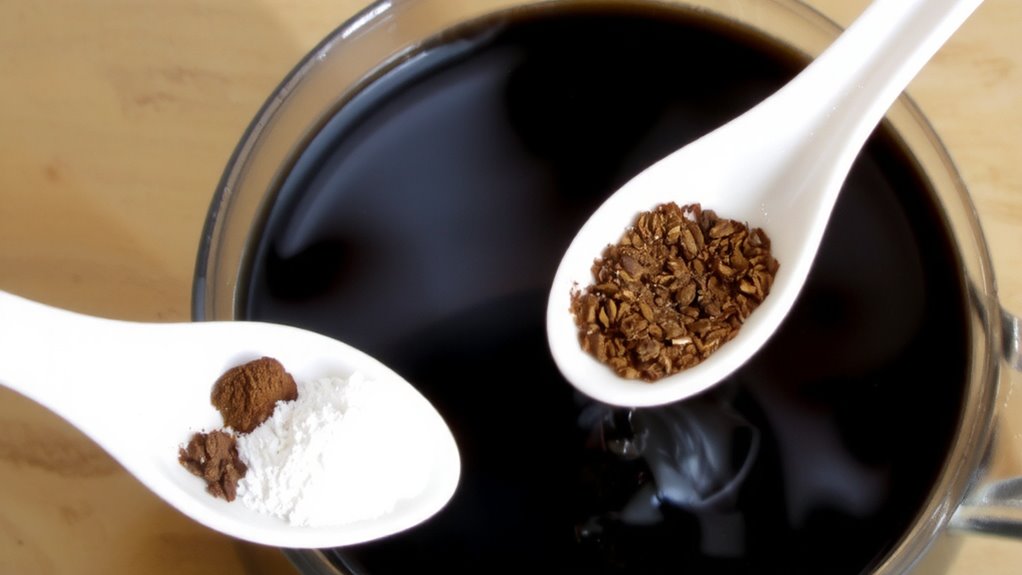
If the grind is too fine, your French press coffee will likely turn out bitter and muddy, because smaller particles extract faster and release more undesirable compounds during the steep. You’re increasing the over extraction risk, pulling out harsh flavors that overpower the coffee’s natural sweetness. That gritty mouthfeel? It’s from excess sediment buildup-tiny grounds slip through the metal mesh and settle in your cup. Unlike coarser grinds designed for immersion brewing, fine grounds (like those meant for espresso) clog the press and make plunging harder. Even a burr grinder set too low can cause this. For best results with French press, stick to a coarse, even grind-closer to sea salt than sand. Adjusting your grind size helps control extraction and minimizes gunk. If your coffee tastes sharp or feels thick, check your setting. A simple fix could mean cleaner, smoother coffee every time.
What Happens When Your Grind Is Too Coarse?
When your grind is too coarse, the water moves through the coffee too quickly, giving it less surface area to extract flavor from, and that means your brew could end up weak and underdeveloped. You’ll notice flat, sour notes because the extraction is incomplete. Unlike finer grinds, coarse grounds reduce over extraction risks-since fewer bitter compounds are pulled-but that doesn’t help if the coffee tastes thin. Plus, the larger particles mean more sediment settling slowly, so your cup might still have grit even after plunging. A French press usually needs a burr grinder set around medium-coarse; going too far toward cold brew grind just lowers contact efficiency. If you’re stuck with a coarse grinder, consider adjusting brew time or water temperature slightly, but don’t expect ideal balance. Proper grind size is key to clarity, body, and flavor in your final cup. For consistent results, using a manual coffee grinder can greatly improve control over particle size.
How to Dial In Your French Press Grind
A coarse grind leaves too much room for water to rush through, leading to weak, sour coffee with inconsistent texture-now it’s time to get it right by dialing in your French press grind. Start with a grind size just shy of sea salt-uniform and slightly finer than typical French press recommendations. Use 200°F (93°C) water temperature to promote even extraction without scalding the grounds. Stick to a 4-minute brewing time, then press slowly. If the coffee tastes flat or sour, adjust the grind finer next round. If it’s bitter or muddy, go slightly coarser. Always use a burr grinder for consistency-blade grinders create uneven particles that hurt flavor. Weigh your coffee (aim for 1:15 coffee-to-water ratio) and keep notes. Small tweaks to grind size, brewing time, or water temperature make noticeable differences. This process isn’t instant, but it’s repeatable and effective.
On a final note
You’ll get the best French press results with a coarse, even grind-think sea salt. Too fine, and your coffee turns bitter and muddy; too coarse, and it’s weak and underwhelming. A quality burr grinder, like the Baratza Encore, helps you hit that sweet spot consistently. Adjust in small increments, taste each brew, and stick with what works. It’s the simplest way to improve your coffee without changing equipment or routine.