How to Adjust French Press Brewing for High-Altitude Locations
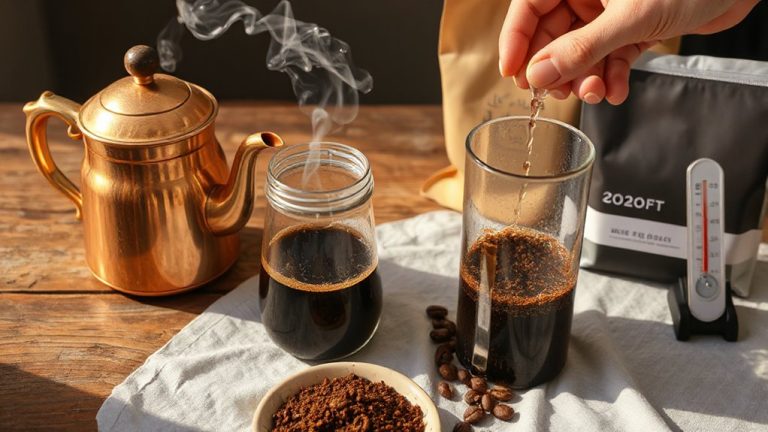
At high altitudes, water boils cooler-around 202°F at 5,000 feet-so you’ll need to adjust your French press method. Use a slightly finer, medium-fine grind to boost extraction, and steep for 5–6 minutes instead of 4. Try a stronger 1:12 coffee-to-water ratio, like 40g per 480g water, for richer results. Let boiled water sit 30 seconds if you don’t have a temperature-controlled kettle. Stick with filtered water and a burr grinder for consistency. There’s more to fine-tuning your brew under these conditions.
Notable Insights
- Water boils at a lower temperature at high altitudes, reducing extraction efficiency in French press brewing.
- Use a finer grind size to increase surface area and compensate for slower extraction at lower temperatures.
- Extend steep time to 5–6 minutes to improve extraction without exceeding 7 minutes to avoid bitterness.
- Adjust the coffee-to-water ratio to 1:12 for a stronger, more concentrated brew at elevation.
- Heat water to 195°F–205°F and use filtered water; let boiled water cool slightly if no thermometer is available.
How Altitude Lowers Water’s Boiling Point
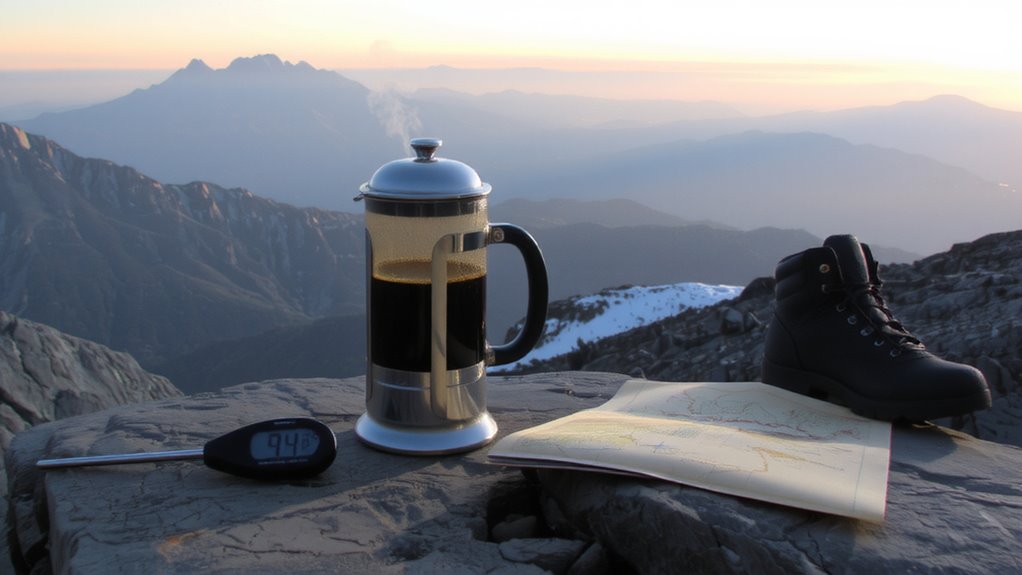
While water boils at 212°F at sea level, you’ll find it starts boiling at lower temperatures as you go higher-dropping about 2°F for every 1,000 feet in elevation. That’s due to reduced boiling pressure: higher altitudes mean thinner air and weaker atmospheric effects, so water molecules escape as steam more easily. At 5,000 feet, for example, water boils near 202°F, which impacts brewing. Lower boiling temperature slows extraction, often leading to under-extracted, sour coffee. You can’t fix altitude, but you can adjust-grind finer or extend brew time slightly. Standard electric kettles won’t compensate automatically, so using a thermometer helps. Don’t rely on boiling as a cue for ideal brewing temp. These atmospheric effects are consistent, so once you dial in your method, stick with it. Knowing your elevation helps you anticipate changes. For consistent results at high altitudes, consider using one of the best French press picks for 2024.
Adjust Water Temperature for French Press at Altitude
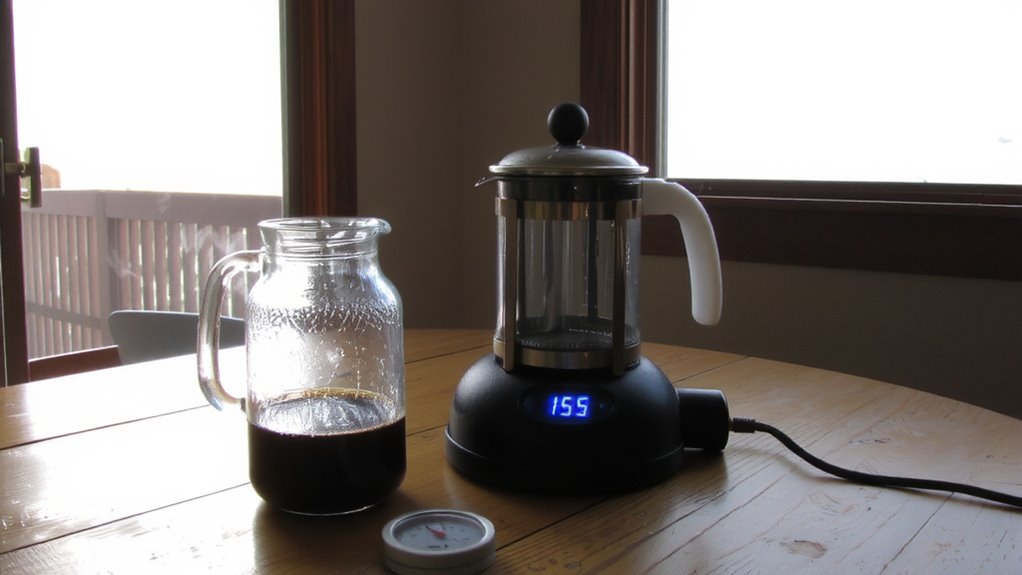
You can’t change the boiling point of water at higher elevations, but you can still control how hot your water is when it hits the coffee. At altitude, water boils below 212°F, often too cool for ideal extraction. Aim to pour between 195°F and 205°F-hot enough to extract flavor without scalding. Use a gooseneck kettle with a built-in thermometer to monitor accurately; it’s a dependable piece of brewing equipment for precision. Water quality matters-use filtered water to avoid off-flavors and guarantee consistent extraction. Avoid reboiling water, as it degrades quality and alters taste. If you don’t have a temperature-controlled kettle, let boiled water rest 30–45 seconds before pouring. This small adjustment, combined with dependable brewing equipment and clean water, enhances results markedly. Consistency in water temperature directly impacts flavor clarity and balance in your French press brew. For even greater control, consider using a standalone coffee brewing thermometer to verify water temperature before pouring.
Use a Finer Grind for High-Altitude French Press
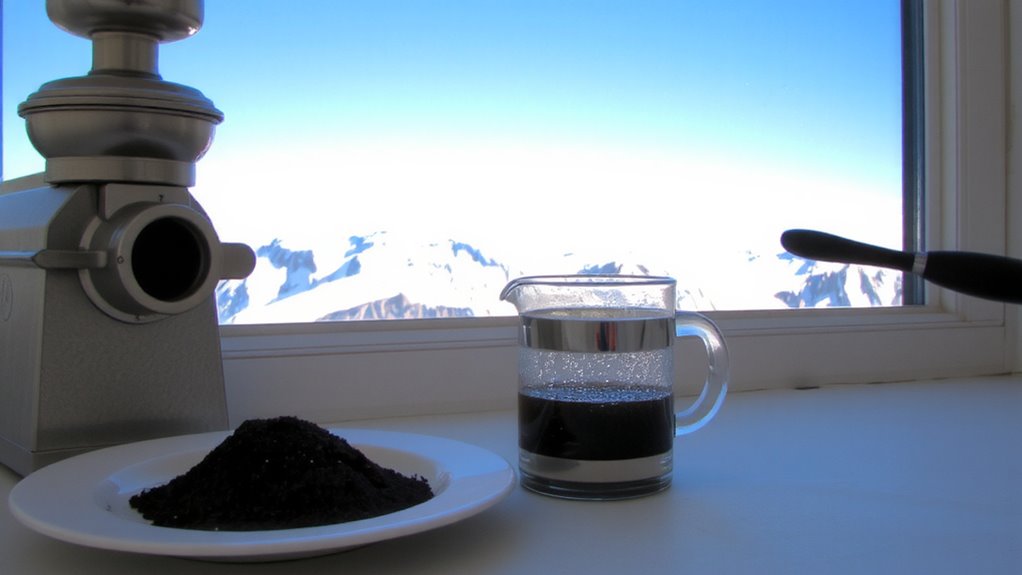
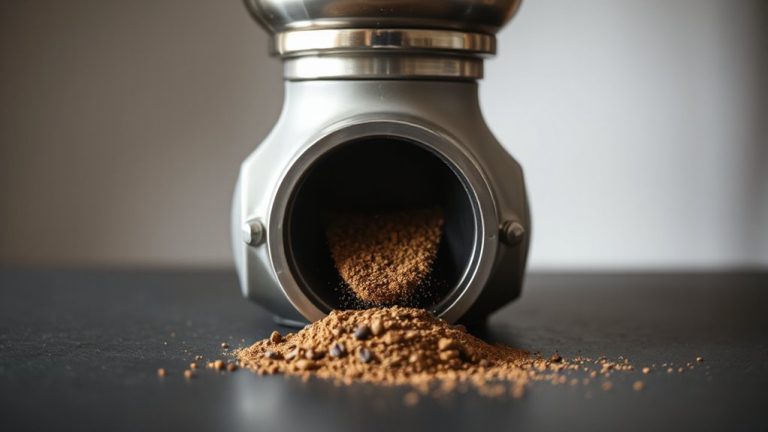
A finer grind helps compensate for lower boiling temperatures at high altitudes, where water extracts coffee more slowly. You need more surface area to get enough flavor in the cup, and adjusting your grinder is the most effective way. For consistent results, focus on grind consistency-uneven particles lead to over- and under-extraction. Your brewing equipment matters: blade grinders often produce erratic results, while burr grinders offer uniformity. Use a medium-fine setting, similar to coarse sand. A burr grinder delivers the precise and uniform particle size needed for optimal extraction at high altitudes.
| Grind Size | Extraction Speed | Best For Altitude? |
|---|---|---|
| Coarse | Too slow | No |
| Medium | Slow | No |
| Fine | Balanced | Yes |
Adjust only the grind at first. Keep other variables steady to isolate changes. A good burr grinder pays off by improving extraction with reliable grind consistency across batches.
Increase Steep Time for Mountain French Press Brewing
Water boils at lower temperatures as elevation increases, slowing extraction even with a finer grind. You’ll need to increase steep time to compensate-typically 5 to 6 minutes instead of the standard 4. The reduced atmospheric pressure changes how heat interacts with coffee, making extraction less efficient. While cold brew avoids this issue by using room-temperature water over 12–24 hours, it’s not a fix for those who want hot coffee fast. Extending steep time helps, but don’t go beyond 7 minutes or your brew may turn overly bitter. A timer and consistent technique matter more at altitude. Unlike pressure-based methods like espresso, French press relies on immersion, so pressure changes don’t affect mechanics-just flavor development. Adjusting time is your best tool. Use fresh, evenly ground beans and filtered water for best results.
Use a Stronger Coffee-to-Water Ratio at Altitude
For most high-altitude brewers, bumping up the coffee-to-water ratio helps offset weaker extraction caused by lower boiling temperatures. You’ll get more coffee strength and better brew concentration since water boils cooler in high elevations, reducing extraction efficiency. Try a ratio of 1:12 instead of 1:15-like 40 grams of medium-coarse coffee per 480 grams of water. This adjustment guarantees richer flavor despite the thin air. Lighter roasts may need it more than dark roasts due to denser beans. Just don’t go too far-overloading coffee can make sludge and increase bitterness. A stronger ratio works best when paired with proper grind size and steep time. It’s a quick fix that targets coffee strength directly, giving you a noticeably fuller cup without needing new gear. Many high-elevation baristas rely on this tweak as a baseline.
Avoid Over-Extraction at High Elevations
Lower boiling points at high altitude mean your water isn’t as hot, which slows extraction-but that doesn’t mean you should automatically extend steep time or overpack the grounds to compensate. Reduced air pressure lowers the boiling point, so your water may be 10–15°F cooler than at sea level, affecting how compounds dissolve. Pushing for more extraction with longer steeping or finer grinds often leads to over-extraction once saturation hits, especially if your French press lacks good thermal retention. A double-walled stainless steel press helps maintain temperature better than glass, slowing heat loss. Use a timer: stick to the standard 4-minute steep unless taste tests show otherwise. Taste guides your adjustments-bitterness or astringency means you’ve gone too far. Keep your grind consistent and resist the urge to overfill. Focus on stable variables, not assumptions.
Fix Weak or Flat French Press Coffee at Altitude
While your brew might come out weaker than expected at higher elevations, don’t jump straight to grinding finer or doubling the coffee-it’s often about heat loss and extraction efficiency, not just dose. You need to maintain water temperature longer for proper extraction. Preheat your French press with boiling water, use a lid, and wrap it in a towel. Extend brew time slightly-up to 5 minutes-to improve flavor balance. Unlike cold brew, which relies on time over heat, French press at altitude needs both. If it’s still flat, adjust your grind or ratio, but only after securing heat.
| Factor | Adjustment |
|---|---|
| Water Temp | Preheat vessel, use boiling water |
| Brew Time | Increase to 4–5 minutes |
| Grind Size | Slightly finer, if needed |
| Coffee Dose | Try 1:15 ratio if weak |
On a final note
You’ll need to tweak your French press routine at high altitudes since water boils below 212°F, slowing extraction. Use slightly hotter water if possible, a finer grind, and extend steep time to 5 minutes. Try a stronger ratio, like 1:12, to boost flavor. Watch for over-extraction-bitterness means adjust. These fixes help counter weak, flat coffee, giving a fuller cup despite the thin air.