Washed Coffee & Elevation: Why 1,400m+ Beans Taste Clearer
Higher elevations give you denser coffee beans because cooler temps and volcanic soils slow cherry growth, letting flavors build gradually. Those dense beans handle roasting better, especially in machines like Loring or Probat, leading to brighter, cleaner cups. With washed processing, that density helps create more uniform extraction, boosting clarity in pour-overs. You’ll taste sharper acidity and layered sweetness. Elevation helps, but only if farming and processing keep up-skip those, and altitude won’t save the cup. There’s more to how environment shapes your brew.
Notable Insights
- Higher elevations produce denser coffee beans due to cooler temperatures and slower cherry maturation.
- Dense beans from high altitudes roast more evenly, preserving bright acids and flavor complexity.
- Slower ripening at elevation allows for enhanced sugar development and improved cup clarity.
- Volcanic soils at high altitudes contribute minerals that strengthen bean structure and flavor vibrancy.
- Uniform extraction in washed coffees is easier with dense high-altitude beans, reducing flat or sour notes.
Why High Altitude Means Better Washed Coffee
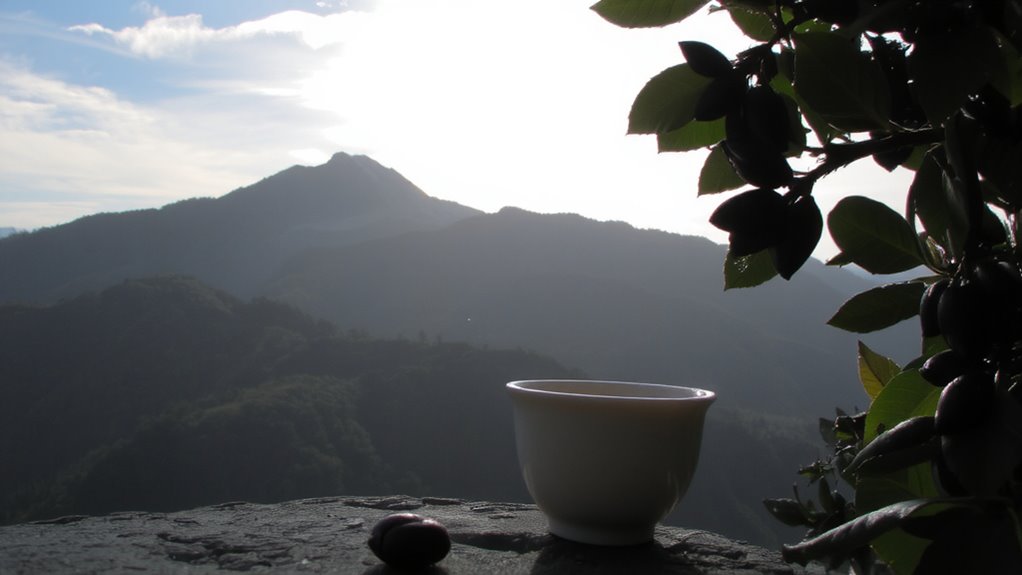
Ever wonder why so many specialty coffee guides push for high-altitude beans? It’s because elevation shapes key factors like soil composition and climate stability, both critical for quality washed coffee. At higher elevations, volcanic soils often provide rich mineral content, supporting healthier coffee plants. Cooler temperatures stabilize growing conditions, reducing stress on crops and promoting even ripening. These environments also naturally limit pests, cutting reliance on chemicals. When combined with proper processing, these growing conditions yield denser beans with cleaner cup profiles-ideal for washed methods that highlight clarity. While high-altitude beans aren’t automatically better, their consistent development supports predictable results during roasting and brewing. Just remember: altitude alone doesn’t guarantee quality. You still need skilled farming and processing. But if you’re chasing bright, clean flavors in your pour-over, seeking beans grown above 1,400 meters with strong soil composition and climate stability is a smart starting point.
How Altitude Slows Coffee Cherry Growth
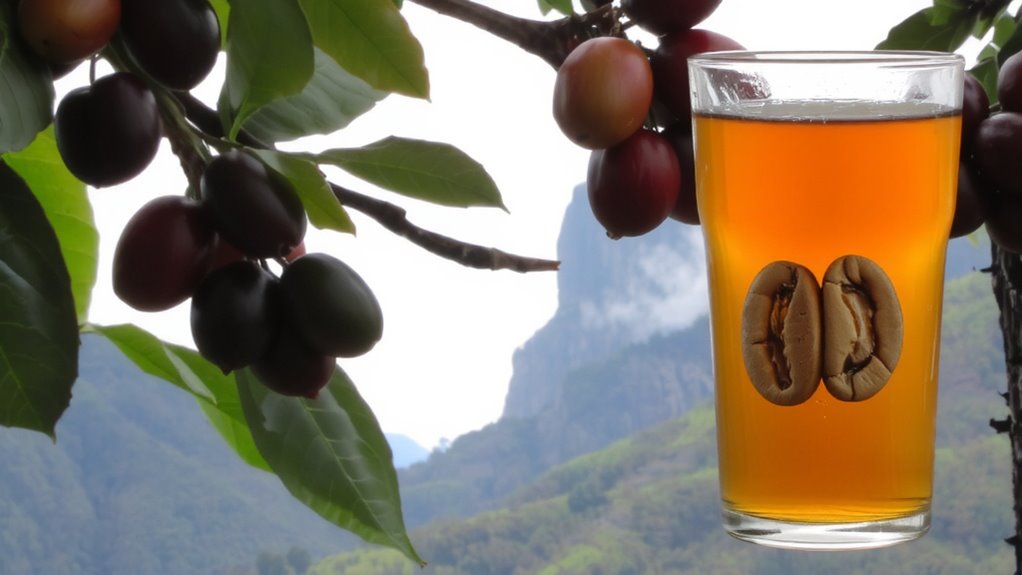
Higher elevations bring cooler temperatures, and that cooler air slows down how fast coffee cherries develop on the tree. You’ll notice this extended growing period in mountain regions, where microclimate effects like mist, cloud cover, and daily temperature swings further delay ripening. This isn’t just about cold-it’s about consistency. Slower maturation means the beans absorb nutrients gradually, building complexity. Microclimate effects combine with unique soil composition, often volcanic or mineral-rich, to influence how the plant partitions resources. Soils at high altitudes tend to be well-drained but less fertile, which forces the plant to grow slower, concentrating flavors in each cherry. You can see this in Ethiopian Yirgacheffe or Colombian Supremo-beans grown above 1,500 meters take weeks longer to ripen than lowland beans. That time investment matters. Slower growth doesn’t guarantee quality, but it creates better conditions for dense, flavorful beans when managed right.
How Dense Beans Create Brighter Washed Coffee
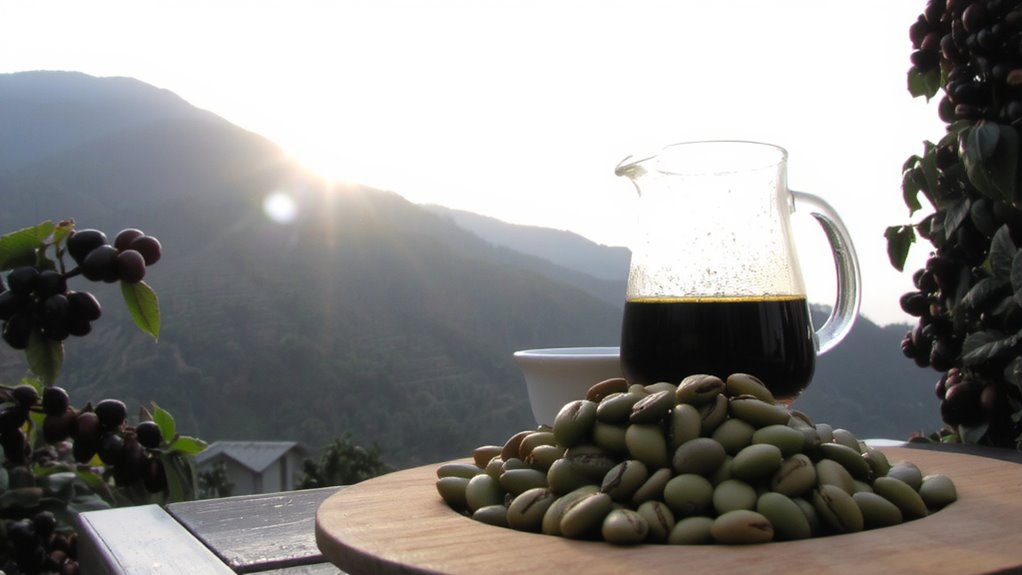
Denser beans are a hallmark of high-altitude coffee, and that density plays a direct role in how your washed coffee tastes. The compact bean structure resists heat during roasting, requiring a more controlled approach-think profile roasters with even heat distribution over quick blasts. This slow, even development preserves acids that contribute to flavor brightness, giving your cup a clean, vibrant lift. Light to medium roasts work best here; pushing too dark mutes the crisp notes. Compared to porous, low-density beans, these harder seeds extract more evenly in brewing, especially with methods like pour-over or v60, where water penetrates uniformly. You’ll notice fewer sour or flat spots in the cup. Denser beans don’t guarantee quality, but when paired with precise roasting and brewing, they support a clarity and flavor brightness hard to achieve otherwise.
Why Washed Coffee Shines at High Altitudes
While not every high-altitude coffee is exceptional, the conditions at elevation often give washed coffees a distinct edge in both density and flavor clarity. You’ll notice that cooler temperatures slow bean development, leading to harder, denser seeds that respond well to washing. This density supports cleaner, more vibrant cups. The soil composition at higher elevations tends to be rich in minerals, especially in volcanic regions like those in Ethiopia or Guatemala, helping roots absorb nutrients that boost bean quality. Microclimate influence-like frequent mist, consistent airflow, and mild daily temperature shifts-further stabilizes growth and reduces stress on plants. These factors combined help washed processing highlight, rather than mask, the bean’s inherent traits. If you’re sourcing beans, prioritize lots from 1,500+ meters with transparent farm profiles. You’ll have a better shot at clarity and balance, especially when brewing with precision gear like pour-over or espresso setups.
Roasting Dense Washed Coffee From High Altitudes
Roasting high-altitude washed beans calls for a careful touch-these dense seeds resist heat differently than their lowland counterparts. You’ll need to apply heat more gradually to avoid heat shock, which can lock in moisture and lead to uneven development. Dense beans take longer to reach first crack, so extending the drying phase helps promote even bean expansion. If you rush it, you risk baking the coffee, muting its clarity and sweetness. Use a roaster with strong airflow, like a Loring or Probat, to maintain control. Start with a higher charge temperature but reduce energy input once moisture escapes. Watch for the rate of rise-if it drops too fast, adjust heat early. Properly managed, you’ll support full bean expansion and preserve the clean, bright profile washed beans are known for. Skip the drama-steady, mindful heat wins every time.
How to Taste Elevation in Washed Coffee
Ever wonder why your favorite washed coffee tastes so clean and vibrant? That brightness often comes from high elevation. To taste elevation, use consistent brewing methods-like a pour-over with a gooseneck kettle-and apply proper tasting techniques. Start with a medium-coarse grind and water just off boil. Smell the grounds after the bloom, then slurp the coffee to aerate it across your palate. High-grown beans usually show distinct flavor notes: think citrus, stone fruit, or tea-like florals. You’ll notice a lighter body but higher clarity, with flavors that layer neatly instead of muddling. Lower-grown coffees may taste flatter or earthier in comparison. Cup multiple washed coffees side by side, ideally from the same region but different altitudes, to isolate elevation’s effect. This direct comparison sharpens your ability to detect subtle shifts in acidity, sweetness, and flavor complexity.
Debunking High-Altitude Myths in Washed Coffee
You can taste the brightness and clarity that high-altitude growing often brings to washed coffees, but that doesn’t mean higher elevation automatically equals better beans. While altitude influences bean density, microclimate variability-like daily temperature swings and cloud cover-plays an equally essential role. A farm at 1,800 meters with poor microclimate stability won’t outperform a well-managed 1,400-meter farm with consistent day-night cycles. Soil mineral content also impacts flavor development; volcanic soils in Ethiopia or Guatemala often boost sweetness and complexity more than sheer elevation alone. Equipment choices matter too-denser high-altitude beans may need higher roasting temperatures, but that’s not a rule for all. You’re better off evaluating the full picture: processing method, varietal, and farm practices. Relying only on altitude oversimplifies quality. Look at origin reports, cupping scores, and roaster notes for real insights. Trust data over marketing.
On a final note
You’ll find washed coffees from high elevations often taste cleaner and brighter due to slower cherry development and denser beans. These beans handle roasting well, especially in machines like the Loring or Probat that offer precise control. While altitude isn’t a guarantee of quality, it helps. Wash processing highlights clarity, so pair high-grown beans with careful roasting. Always consider farm practices and varietal too-elevation is just one factor that shapes your final cup.