The Step-by-Step Guide to Dialing In a New Roast Profile on Your Grinder
Start by matching your grind size to the roast-use a finer setting for dense, light roasts and coarser for brittle, dark ones. Dial in a consistent dose of 18–20g and tamp evenly with about 30 pounds of pressure. Pull a shot and taste: sourness means it’s under-extracted (go finer), bitterness means over-extraction (go coarser). Make small adjustments, track your shots, and refine until balanced-your ideal setting depends on bean age, humidity, and equipment. Small changes add up, and there’s more to fine-tuning just ahead.
Notable Insights
- Match the grind size to the roast level, using finer settings for dense light roasts and coarser grinds for brittle dark roasts.
- Start with a consistent dose of 18–20 grams, weighing within ±0.2g for accurate and repeatable extraction.
- Apply firm, even tamping pressure around 30 pounds to ensure uniform water flow through the puck.
- Adjust grind size incrementally based on taste: finer for sourness, coarser for bitterness, targeting balanced flavor.
- Record dose, yield, time, and grind setting after achieving optimal taste to replicate results for that specific roast.
Match Grind Size to Roast Level
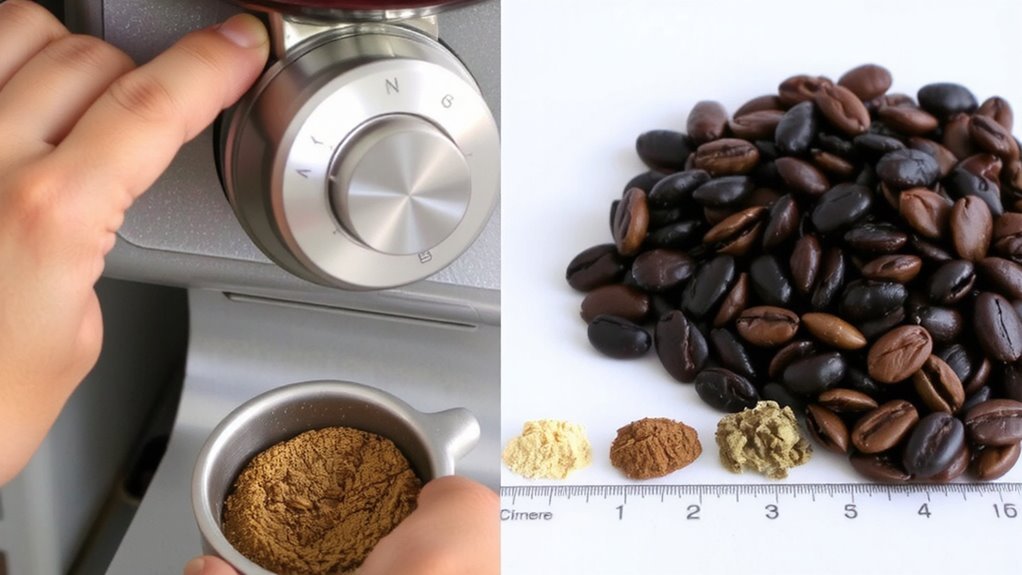
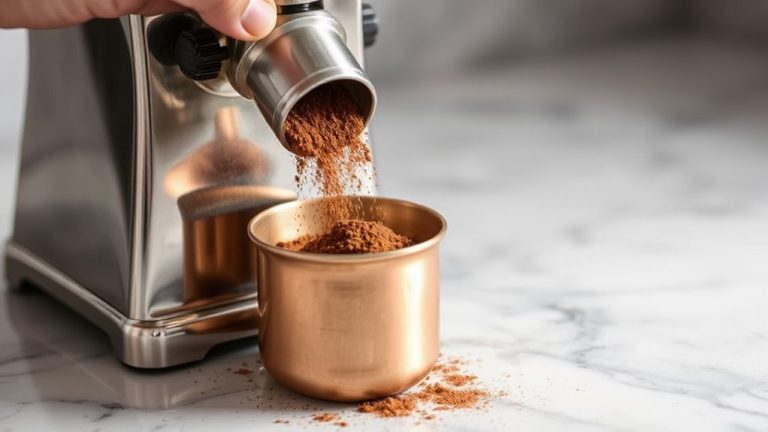
You’ll want to match your grind size to the roast level for the best flavor-lighter roasts need a finer grind, while darker roasts work better when coarser. That’s because lighter roasts have higher bean density and require more surface area exposure to extract evenly. As beans lose moisture during roasting, darker roasts become less dense and more brittle, so a coarser setting prevents over-extraction and bitterness. Roast age matters too: freshly roasted beans, especially lights, can still be degassing, which affects how they grind and extract. Beans 3–7 days post-roast may grind finer due to retained gas, so you might tweak the setting slightly. Always let roast age guide your starting point-don’t use week-old beans expecting the same results as fresh. Adjust incrementally based on taste. Consistency starts here, not just in grind size, but in understanding how bean density and roast age shape your shot.
Set a Consistent Dose and Tamp
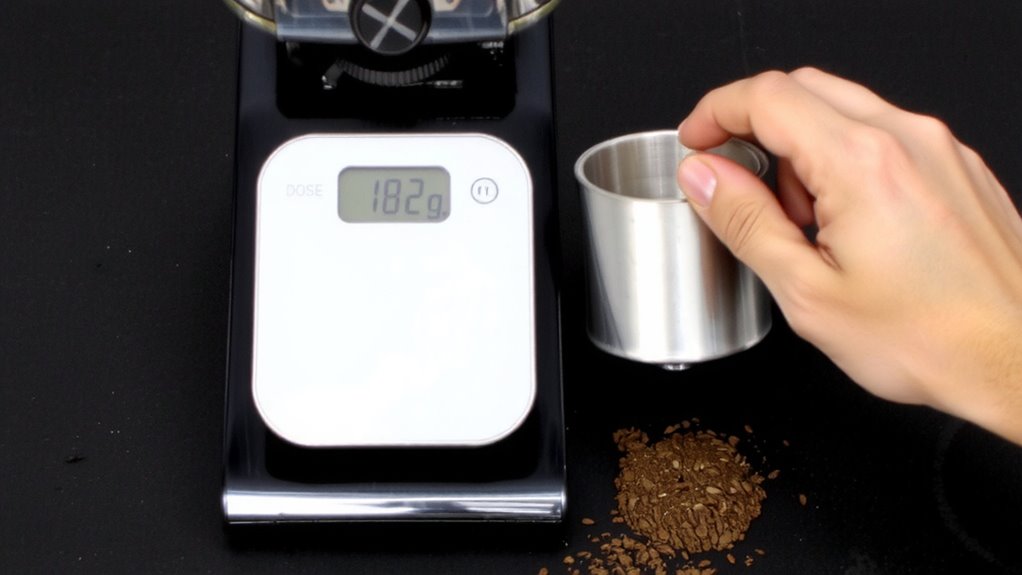
A standard dose of 18–20 grams works for most double shots, but the real key isn’t the number-it’s sticking to it. Dose consistency guarantees your shots are repeatable and adjustments make sense. If you vary the dose, you can’t isolate grind or tamp effects. Use a scale every time-even 0.5 grams matters. Pair that with even, level distribution before tamping. Tamp pressure should be firm and uniform, around 30 pounds, but the real goal is consistency, not force. Too hard won’t help and might compact unevenly. A calibrated tamper or one that clicks at proper pressure can help. For greater precision, consider using a calibrated tamper designed to ensure consistent tamping results.
| Factor | Inconsistent | Consistent |
|---|---|---|
| Dose | ±1g+ | ±0.2g |
| Tamp Pressure | Uneven/variable | Steady ~30 lbs |
| Result | Variable extraction | Predictable shots |
| Impact | Hard to diagnose issues | Clear cause/effect |
| Tools Needed | None (risky) | Scale, level tamper |
Adjust Grind for Your Roast Profile
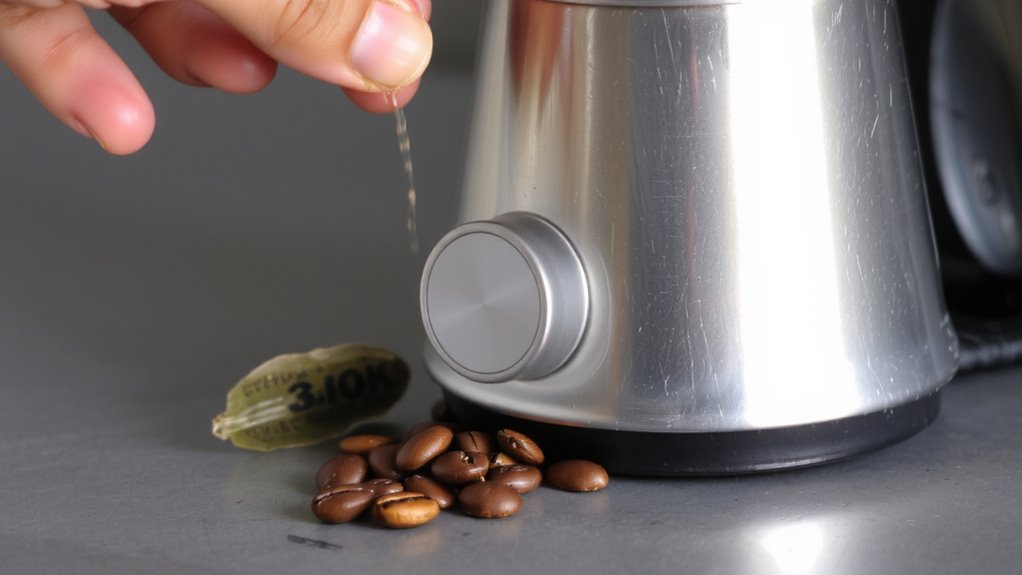
Now that your dose and tamp are locked in, the next variable to fine-tune is grind size-this is where your roast profile starts to show its true colors. Lighter roasts usually need a finer grind to compensate for less roast development, helping extract more sweetness and clarity. Darker roasts, with more roast development, often do better slightly coarser to avoid bitterness. Your grinder calibration plays a key role-small changes matter. Even a one-notch shift can alter extraction noticeably. Consistency across doses means your grinder’s burrs are properly aligned and clean. Always adjust in small increments and let the grinder settle before judging results. Remember, ambient humidity and bean age affect grind performance, so recheck calibration regularly. A stable grind sets the foundation for predictable shots. This step isn’t about perfection yet-just getting close enough to move forward.
Taste for Balance: Fix Under- or Over-Extraction
How does your espresso taste-sharply sour, or flat and bitter? These clues point to under- or over-extraction. Light, fruity roasts have higher solubility rates and extract faster, risking over-extraction if your grind’s too fine. Darker roasts, with lower solubility rates, can turn ashy if under-extracted. You want balanced flavor clarity-clean, distinct notes without harshness. Choosing the right best coffee grinders can significantly improve your ability to achieve precise and consistent grind sizes for optimal extraction.
| Taste Issue | Likely Cause | Quick Fix |
|---|---|---|
| Sour, sharp | Under-extraction | Grind finer |
| Bitter, hollow | Over-extraction | Grind coarser |
| Weak sweetness | Low solubility rate | Increase dose/time |
| Muddy clarity | Uneven extraction | Check distribution |
| Bright but thin | Fast solubility | Coarsen slightly |
Adjust based on taste, not time alone. Flavor clarity reveals whether solubility rate is matched to your grind and brew approach.
Fine-Tune and Save Your Winning Settings
With your taste issues dialed in, it’s time to lock in what’s working. Make small tweaks to your grinder calibration until the flavor notes match your ideal cup-say, bright citrus in a light roast or chocolatey depth in a medium. Confirm consistency by pulling a few shots or brewing multiple cups. If flavors stay balanced, you’ve found your sweet spot. Record your grinder’s setting, dose, yield, and time. Save these details in a notes app or dedicated log. This helps replicate results, especially after changes in beans, humidity, or machine maintenance. Not all grinders offer micro-adjustments; budget models may need more frequent rechecking. Avoid assuming one setting fits all roasts-each profile needs individual tuning. Saving your winning settings means less guesswork next time and faster dial-ins. It’s not magic-it’s repeatable science. Stick to the data, and you’ll pull better coffee, cup after cup. Investing in one of the best espresso grinders can significantly improve grind consistency and dial-in precision.
On a final note
You’ve matched your grind size to the roast, set a consistent dose and tamp, and adjusted for extraction. Now, taste critically: if it’s sour, go finer; if bitter, go coarser. Small tweaks make big differences. Once balanced, record your settings-dose, grind, time, flavor notes-so you can replicate it. Not every bean behaves the same, so stay flexible. Save winning profiles for quick recall. Your grinder’s repeatable settings are key to consistent, drinkable results, cup after cup.