How to Grind for a Balanced Ibrik Brew With Consistent Ultra-Fine Texture
Use a high-quality burr grinder like the 1Zpresso JX-Pro or Baratza Sette 270 for a consistent, ultra-fine grind ideal for ibrik brewing-avoid blade grinders, as they generate heat and uneven particles. Set the grind as fine as flour or sifted sugar, adjusting slightly based on bean density. Prevent oxidation by grinding right before brewing and avoid humid conditions to reduce clumping. Check consistency by tapping the ibrik; uniform powder means proper extraction. You’ll learn how to fine-tune each step for perfect foam and balance.
Notable Insights
- Use a high-quality burr grinder like 1Zpresso JX-Pro for uniform, ultra-fine particles essential to ibrik brewing.
- Set grind size to powder-fine, similar to sifted sugar, ensuring optimal extraction and rich mouthfeel.
- Avoid blade grinders-they create uneven grounds and heat that degrade flavor and consistency.
- Minimize grind retention and static to preserve fines and ensure even dosing in the ibrik.
- Adjust grind fineness based on bean density and taste, refining for balance between sourness and bitterness.
Choose the Best Grinder for Ibrik Coffee
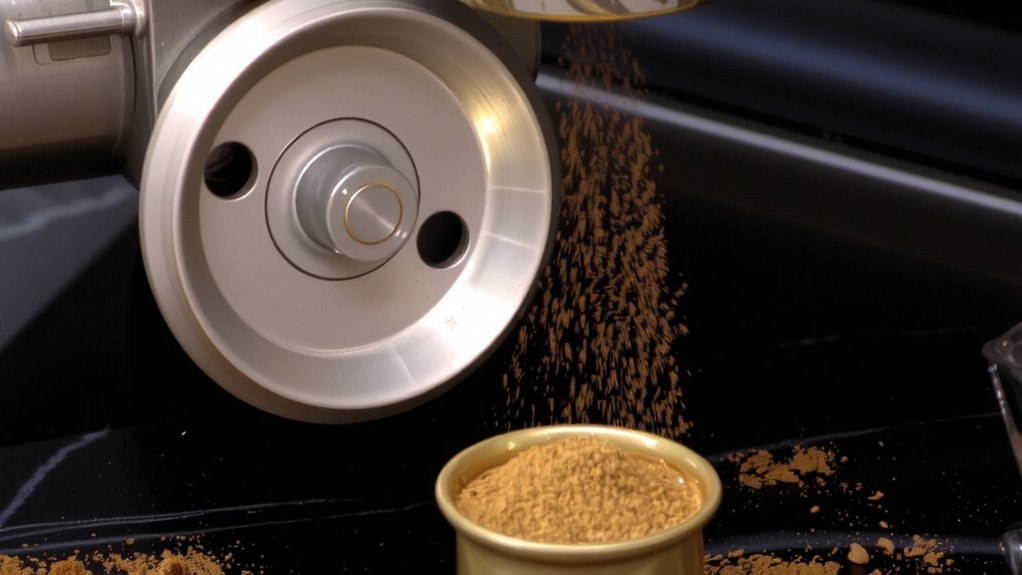
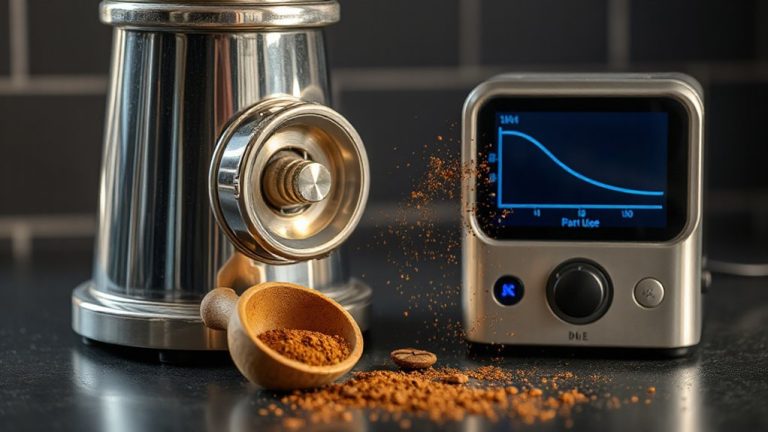
A consistent grind sets the foundation for a balanced ibrik brew, and your choice of grinder makes all the difference. For ultra-fine, even particles, a high-quality burr grinder is essential. Blade grinders won’t cut it-they produce uneven results and heat the beans, harming flavor. Instead, opt for a burr model with precise burr alignment, which guarantees uniform grounds critical for smooth extraction. Poor alignment leads to boulders and fines, muddying your brew. Look for grinders built with strong metal burrs and solid construction to guarantee long-term grinder durability. Models like the 1Zpresso JX-Pro or Baratza Sette 270 deliver consistent performance and fine control, ideal for ibrik. While more expensive, they outlast cheap alternatives and maintain performance over years. Avoid plastic-bodied grinders; they wear faster and risk wobbling. A dependable grinder pays off in every cup-reliable, repeatable, and built to last. Choose wisely-your coffee depends on it. For more guidance, check out our Best Mill Grinders & Buying Guide to find the right fit for your brewing needs.
Set the Finest Grind for Turkish Coffee
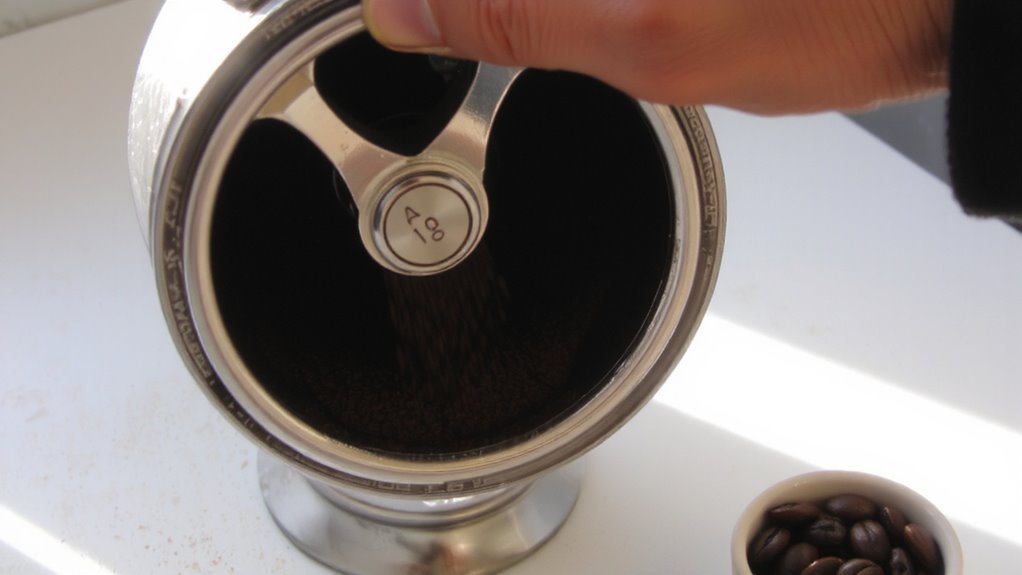
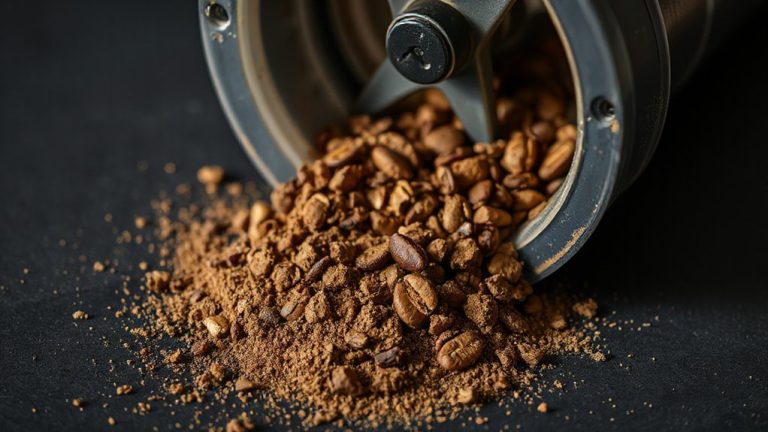
You’ll want to set your grinder to the finest setting available-think powder-fine, like sifted sugar or flour-since Turkish coffee demands the most finely ground coffee of any brew method. Proper grind calibration is essential; even small adjustments can impact extraction and mouthfeel. Blade grinders often lack the precision needed, producing uneven results. For consistent particle uniformity, a high-quality burr grinder-like the Baratza Encore or 1ZPresso JX-Pro-is a smarter choice. These models allow fine-tuned control, helping you achieve the silky texture critical for a balanced ibrik brew. Without uniform particles, you risk over-extracting some grounds while under-extracting others, leading to bitterness or weak flavor. Make sure your grinder can reliably hit and maintain this ultra-fine setting over time, as wear or poor calibration can degrade results. Regular cleaning and calibration checks keep performance stable. For more insights, check out the Best Turkish Coffee Grinders buying guide.
Avoid These 5 Ibrik Grind Mistakes
Even if you’ve dialed in the right grind size, common missteps can still ruin your ibrik brew-so steering clear of these five mistakes is key. First, using a blade grinder creates inconsistent particles and heat, increasing particle oxidation and dulling flavors. Second, letting grounds sit too long before brewing exposes them to air, speeding up oxidation and degrading aroma. Third, high grind retention in low-quality grinders wastes precious fines and unbalances extraction-look for grinders like the 1ZPresso JX-Pro, which minimizes retention. Fourth, static buildup can scatter grounds, leading to uneven dosing. Fifth, grinding in humid conditions causes clumping, disrupting flow and consistency. Always grind fresh, use a burr grinder with low retention, and store beans airtight. These steps preserve freshness and guarantee uniform, ultra-fine particles-critical for a balanced ibrik brew. For espresso enthusiasts seeking precision, choosing the best espresso grinders can significantly improve grind consistency and overall brew quality.
Test Your Grind for Perfect Foam
How do you know if your grind is really right for that rich, golden ibrik foam? Test it by brewing a small batch the traditional way-slow heat, no boil. Watch the foam rise: ideal foam density means a thick, velvety layer that clings to the surface, not thin bubbles or a flat sludge. That kind of foam only comes from a consistent, ultra-fine grind. If your foam is weak or uneven, your grind consistency is likely off-chunks or varied particle sizes disrupt extraction. A burr grinder, like a 1Zpresso J-Max or Timemore C2, gives better results than blade grinders, which create irregular particles. Tap the portafilter or gently shake the ibrik to check for uniform powder-no clumps, no grit. Foam density reflects your grind’s quality, so if it’s lacking, reevaluate your setup. Don’t guess-observe and adjust based on real results.
Adjust for Balanced Turkish Coffee Taste
What does it take to get that rich, balanced Turkish coffee taste without bitterness or sourness? You need to adjust your grind based on bean density and water temperature. Denser beans, like Ethiopians, resist grinding and often need a slightly finer setting to extract fully. Lighter beans might over-extract if ground too fine, turning bitter. That’s why knowing your bean’s origin and density helps dial in the right consistency. Water temperature matters just as much-always use water just under boiling, around 195–205°F. Too hot, and you scorch the grounds; too cool, and the coffee tastes sour. If your brew’s off, tweak the grind first: finer for weak or sour coffee, coarser if it’s harsh. With consistent practice and attention to these details, you’ll hit that sweet spot every time.
On a final note
You’ll need a quality burr grinder like the Baratza Encore or 1Zpresso J-Max to hit the ultra-fine, flour-like texture Turkish coffee demands. Set it to the finest setting, but tweak based on your ibrik size and heat. Skip blade grinders-they overheat and create uneven particles. Test your grind by brewing: consistent foam and no grit mean you’re on track. Adjust slightly if the brew tastes bitter or weak.