Understanding the Impact of Mineral Content on Espresso Extraction
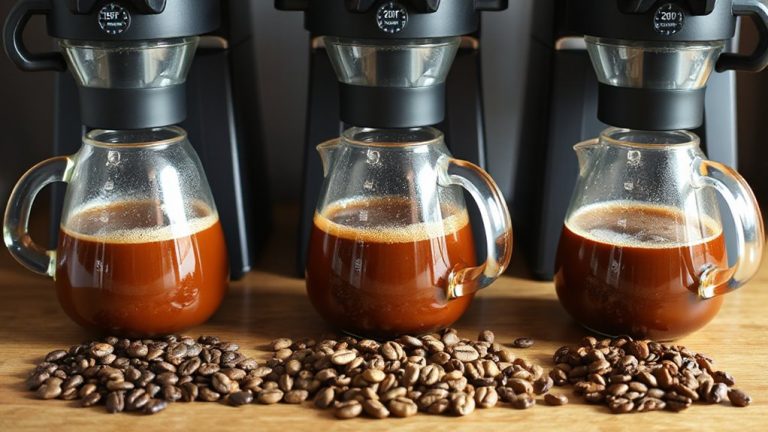
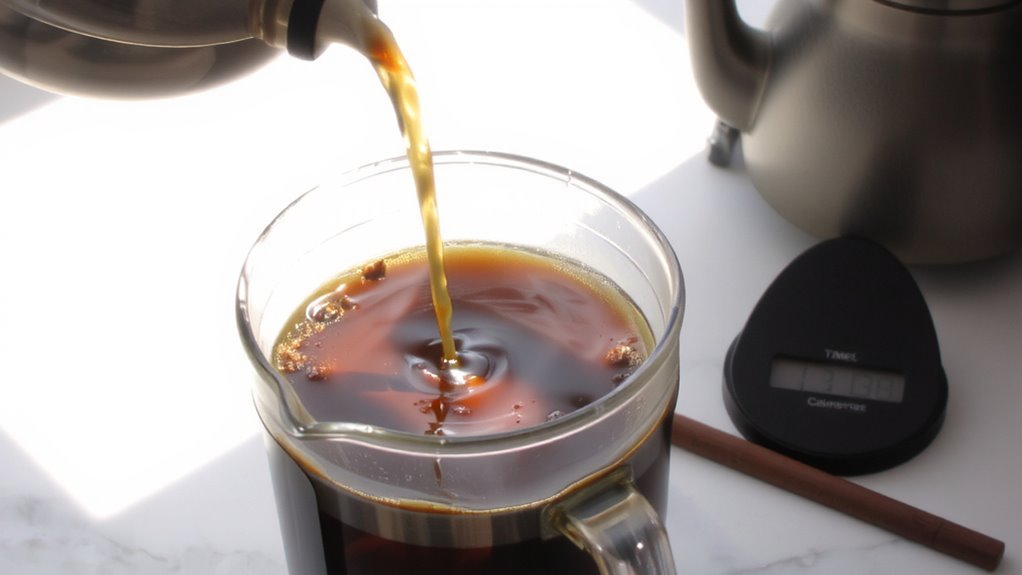
Your water’s mineral content directly shapes your espresso’s taste and machine life. Too much calcium causes scale, damaging equipment, while too little leads to flat shots and corrosion. Magnesium boosts bright notes; calcium adds body. Aim for 50–150 ppm total minerals, with balanced bicarbonate to control acidity. Use a TDS meter and re-mineralization if needed. Get this right, and you’ll pull better shots-plus, there’s more to fine-tune for consistent results.
Notable Insights
- Calcium and magnesium levels between 50–100 ppm enhance flavor extraction and espresso body.
- High mineral content causes scale buildup, reducing machine efficiency and longevity.
- Low mineral content leads to under-extraction and flat, dull-tasting espresso.
- Magnesium highlights bright, fruity notes, while calcium adds richness and intensity.
- Bicarbonate stabilizes pH; too much or too little affects acidity and flavor balance.
Why Water Quality Makes or Breaks Espresso
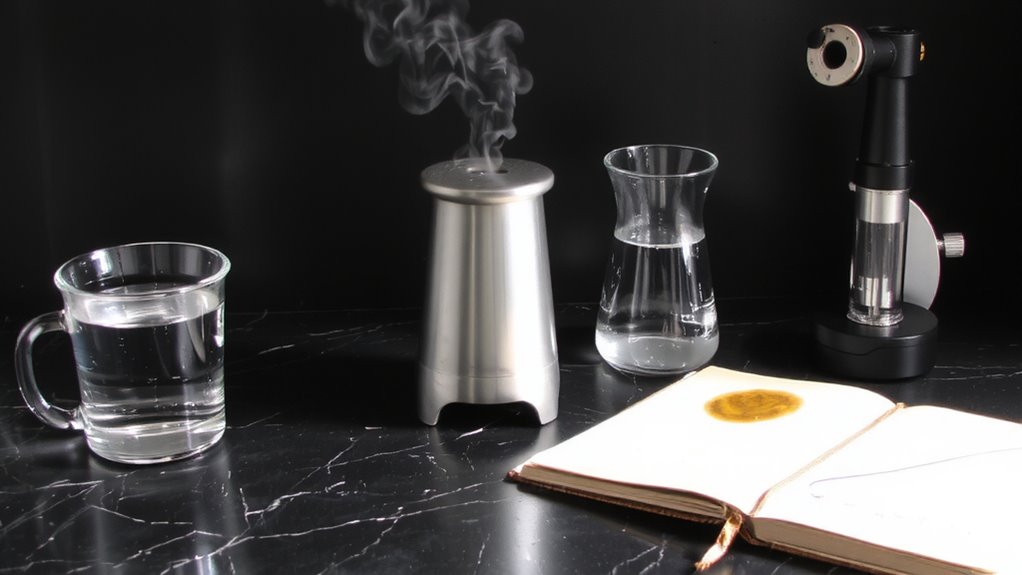
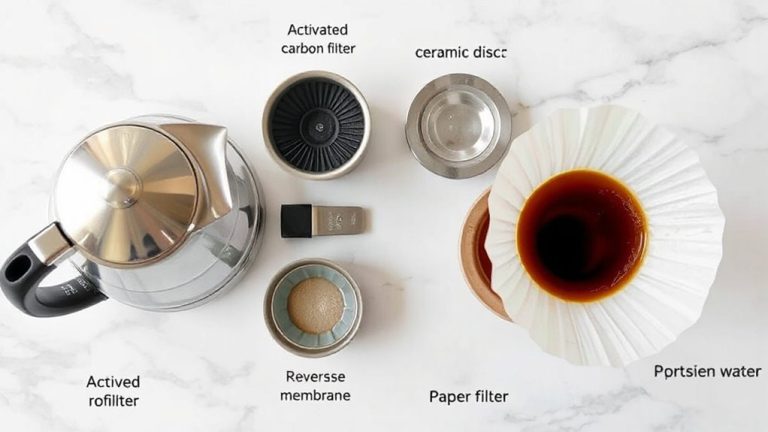
Water is the silent player in your espresso game, and its mineral content quietly shapes every shot you pull. You might not see it, but the minerals in your water affect extraction, flavor, and even how long your gear lasts. Poor water sourcing-like untreated tap water with high calcium-leads to scale buildup, which damages boilers and clogs valves over time. That hurts equipment longevity and means more repairs or early replacements. On the other hand, water too low in minerals can corrode metal parts and under-extract coffee, yielding flat, sour shots. Balanced, filtered water with controlled mineral content gives consistent extraction and protects your machine. Many baristas use third-party filters or reverse osmosis systems paired with re-mineralization cartridges to get it right. You don’t need lab-grade precision, but knowing your water’s source and treating it properly is essential. It’s one of the simplest upgrades with the biggest payoff. For optimal flavor, consider water with ideal mineral balance as recommended by coffee quality standards.
Hard vs. Soft Water: Which Is Best for Espresso?
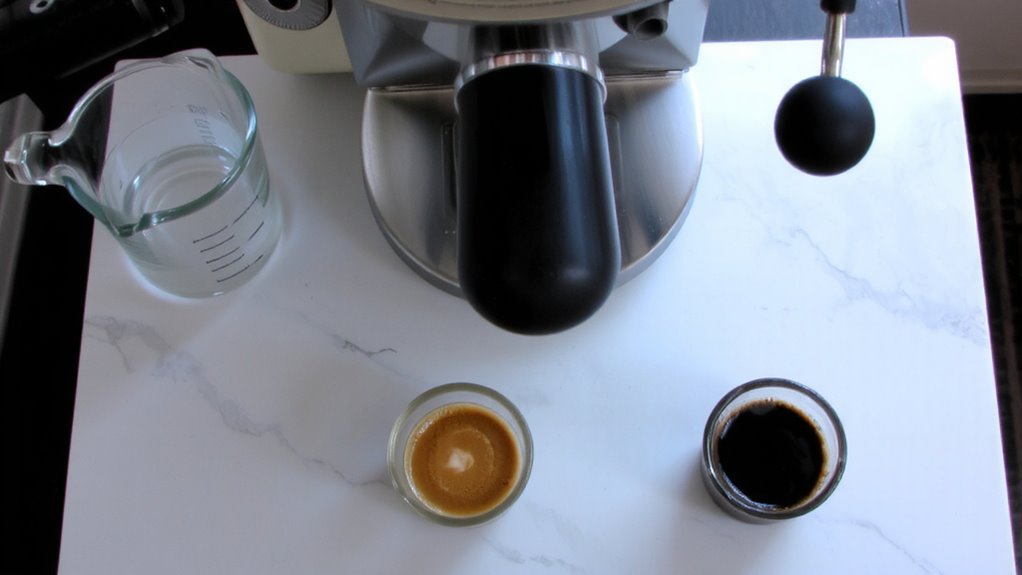
So, what happens when hard water meets your espresso machine? High water hardness means excess minerals, especially calcium and magnesium, which can build up and damage your machine over time. While some minerals help extraction, too much leads to scale that clogs heating elements and reduces efficiency. On the flip side, soft water might seem safer, but it often lacks the necessary mineral balance for proper espresso flavor and can even corrode metal parts. You’re better off avoiding extremes-distilled or reverse osmosis water strips too much, while untreated hard water risks scale. The sweet spot? Moderately hard water with a balanced profile, like that from a quality filtration system such as the BWT Magnesium Mineralizer or a third-party blend like Third Wave Water. Aim for balanced water hardness and a stable mineral balance to protect your machine and pull consistent shots. For those seeking optimal results, investing in one of the best espresso machine water filters can make a significant difference in both machine longevity and shot quality.
Calcium & Magnesium: Driving Extraction and Flavor
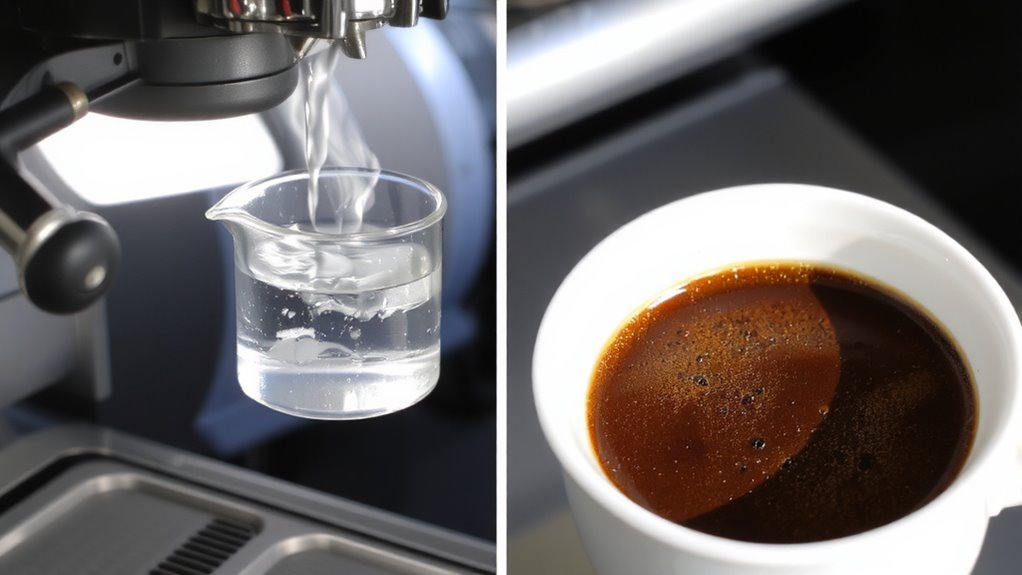
You’ve probably heard calcium and magnesium mentioned in discussions about water quality, but their role goes beyond just protecting your machine-they directly shape how your espresso tastes. These minerals aid extraction by helping pull flavor compounds from coffee grounds. Calcium tends to boost body and intensity, while magnesium emphasizes brighter, fruitier notes-key for flavor modulation. Together, they create a mineral synergy that balances clarity and richness. Too little, and your espresso tastes flat; too much, and it risks becoming harsh or over-extracted. For best results, aim for 50–100 ppm combined calcium and magnesium using water like Third Wave Water or a calibrated blend. Avoid distilled or softened water-they strip complexity. Balanced mineral content guarantees consistency, especially with high-end machines that rely on stable conductivity.
Bicarbonate and Espresso Acidity: Finding Balance
While mineral balance affects flavor extraction, bicarbonate plays a distinct role in stabilizing the acidity of your espresso by buffering the water’s pH. It acts as a shield against wild swings in pH stability, keeping your shots tasting balanced instead of sour or harsh. Too little bicarbonate and your water can’t neutralize acids effectively-your espresso might taste sharp or thin. Too much, and it overbuffers, muting delicate flavors and creating flat, dull shots. You want moderate levels that support mineral neutrality without dominating. For most machines, aim for 40–80 ppm alkalinity (as CaCO₃) to maintain control. This range suits the majority of beans and roast profiles. Unlike aggressive re-mineralization cartridges, simple carbon filters often fail here since they don’t restore bicarbonate. Using precision blends like Third Wave Water or custom-mixed additives gives better results when consistency matters.
Test & Adjust Your Water for Better Shots
How do you know if your water’s actually helping or hurting your espresso? The only way is to test it. Use a water test kit or TDS meter to check mineral levels-ideal ranges are 50–150 ppm with balanced calcium and bicarbonate. If your numbers are off, scale buildup or flat-tasting shots are likely. Invest in a targeted water filtration system, like a reverse osmosis unit paired with re-mineralization cartridges, to control what goes into your machine. Don’t assume your tap water is fine-hard water damages equipment and affects extraction. Adjusting water chemistry improves clarity and balance in your espresso. Pair this with stable brewing temperature-between 92°C and 96°C-for consistent results. Even the best grinder and technique can’t fix bad water. Test, adjust, and treat your water like a key ingredient, because it is. For optimal flavor, consider using expert-recommended water profiles designed specifically for coffee brewing.
Pro Tips for Consistent Espresso on Any Water
Even with perfect water chemistry, small variables can still throw off your espresso-so knowing how to adapt to whatever water you’re working with makes a real difference in daily consistency. When minerals fluctuate, you’ll need to tweak your grind size and water temperature to stay on target. Hard water may require a slightly coarser grind to avoid over-extraction, while soft water often works better with a finer setting. Adjusting water temperature by just 5–10°F can also compensate for extraction inconsistencies.
| Factor | Adjustment for Hard Water | Adjustment for Soft Water |
|---|---|---|
| Grind Size | Slightly coarser | Slightly finer |
| Water Temperature | Lower by 5°F | Raise by 5–10°F |
Dial in fresh each morning, especially if your water source changes seasonally. These small moves keep your espresso balanced, shot after shot.
On a final note
Your espresso’s taste hinges on water minerals. Too little, and shots lack sweetness; too much, and bitterness or scale ruins balance. Calcium and magnesium help extract flavor, while bicarbonate buffers acidity. Test your water with strips or a TDS meter-aim for 100–150 ppm and a neutral pH. If needed, adjust with filtered blends like Third Wave Water or use a reverse osmosis system. Consistency starts at the tap, not the grinder.