French Press Water Temperature: 195°F–205°F Guide by Roast
You need water between 195°F and 205°F for balanced French press coffee-cooler than that, and your brew tastes sour; hotter, and it turns bitter. Use filtered water, let boiled water sit 3-moving seconds, or use a temperature-controlled kettle. Match finer grinds with lower temps, coarser grinds with higher heat, and adjust brew time accordingly. Light roasts do best near 205°F, dark roasts at 195°F. Nail this, and you’ll access richer, more consistent flavor.
Notable Insights
- Use water between 195°F and 205°F for optimal extraction and balanced flavor in French press coffee.
- Lighter roasts benefit from 205°F water to fully extract complex sugars and acids.
- Dark roasts extract well at 195°F–200°F to avoid bitterness from overextraction.
- Let boiling water sit 30 seconds to reach the ideal 195°F–205°F range if no thermometer is available.
- Adjust grind size and brew time when using off-temperature water to compensate for under- or over-extraction.
What Your Water Temperature Does to French Press Coffee
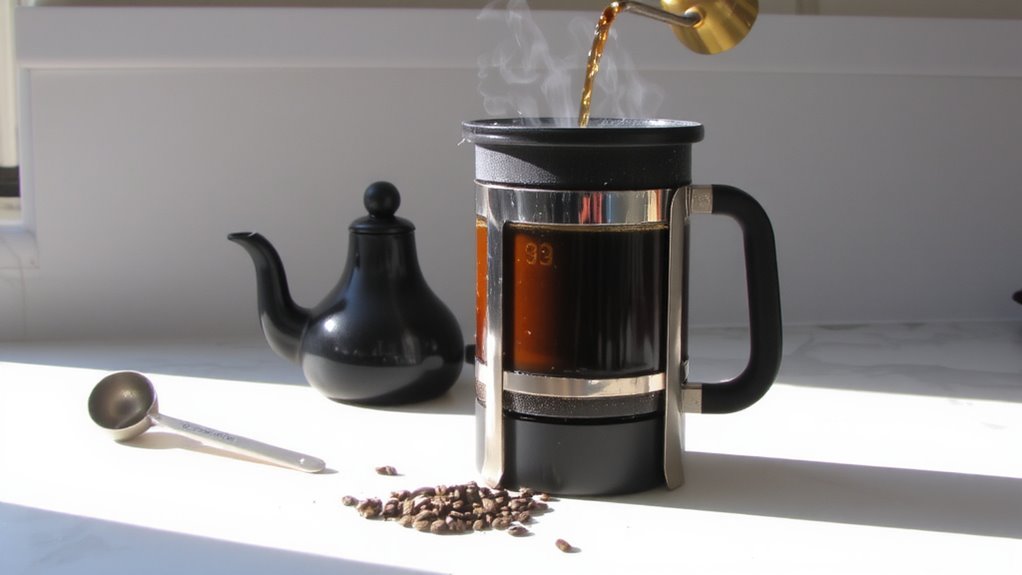
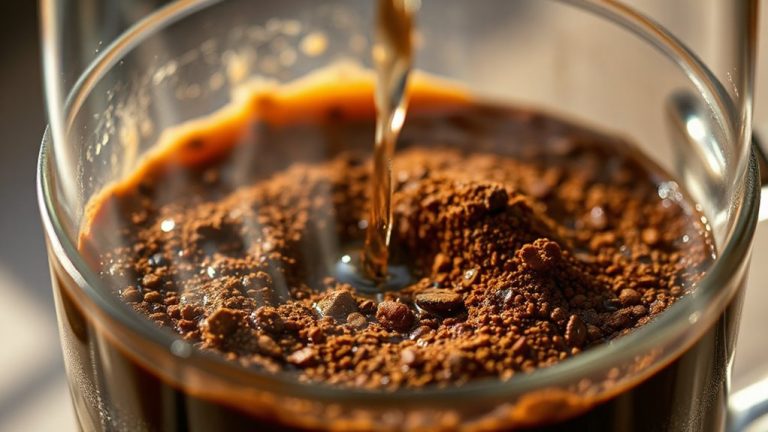
Why does your water temperature matter when making French press coffee? Because it directly affects extraction, starting with the bloom effect. When you pour water over the grounds, trapped gases escape, allowing even saturation. If the water’s too cool, this bloom is weak, and solubility rate drops-meaning fewer flavor compounds dissolve, leaving you with a flat, under-extracted cup. Water that’s too hot causes over-extraction, bringing out harsh bitterness. The right heat level guarantees maximum solubility rate, pulling balanced sweetness, acidity, and body from the beans. You don’t need a lab-grade thermometer; a gooseneck kettle with a built-in temp reader like the Fellow Stagg EKG works reliably. Avoid boiling water straight off-let it sit 30 seconds. This simple step improves control and consistency, especially with medium to dark roasts commonly used in French press brewing.
The Ideal French Press Water Temperature (195°F–205°F)
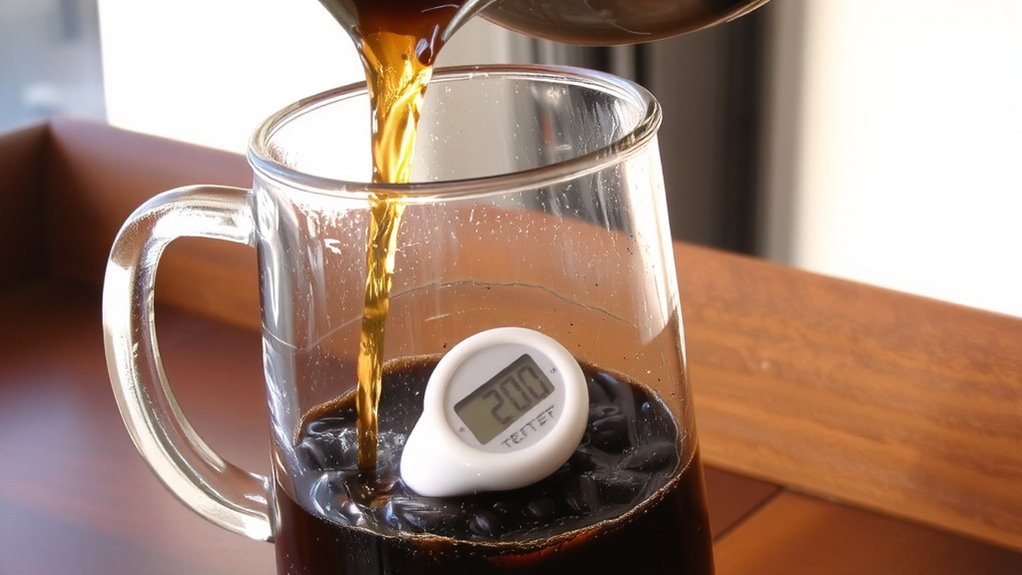
While you might be tempted to use boiling water for your French press, staying between 195°F and 205°F gives you the best shot at balanced extraction. Water hotter than 205°F can scorch your grounds, making coffee bitter-especially with lighter roasts. If it’s below 195°F, you risk under-extraction, leaving your cup flat or sour. This range works well across most bean origins, whether you’re using bright African beans or earthy Indonesian ones. Lighter roast levels benefit from the higher end of the range-closer to 205°F-since they need more heat to extract fully. Darker roasts, often more soluble, do best just below, around 195°F to 200°F, to avoid harshness. Matching water temperature to both bean origin and roast level guarantees clarity, body, and flavor stay in harmony. You’ll get cleaner results with a gooseneck kettle that holds steady heat, but any reliable kettle works if you wait 30 seconds off boil. Maintaining the correct brewing temperature is key to optimal coffee extraction.
How to Heat Water for French Press Like a Pro
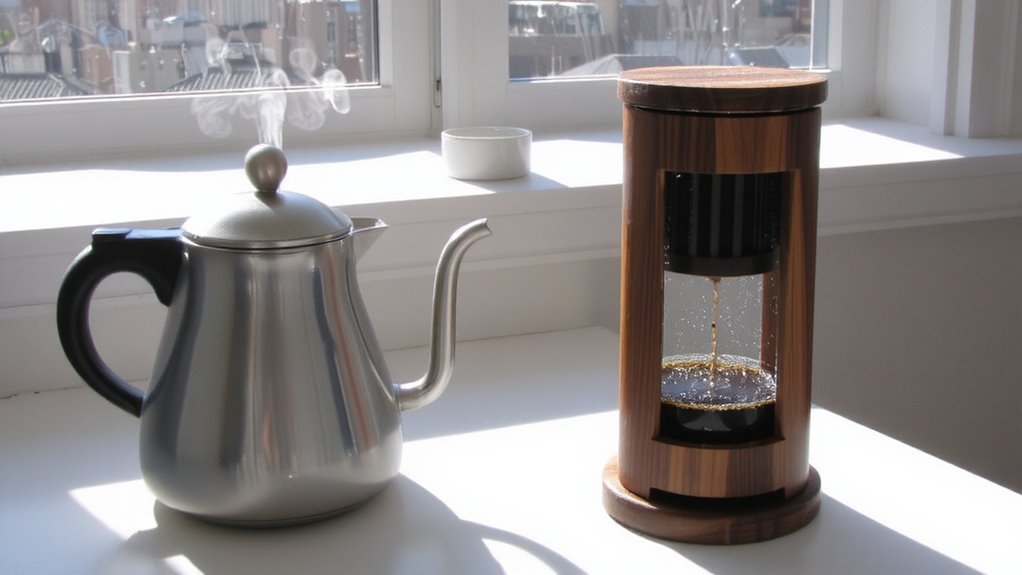
How do you get water into that ideal 195°F–205°F range without a lab setup? You rely on solid water sourcing and smart equipment calibration. Start with filtered water-your tap matters. Then, use tools calibrated for accuracy. An electric kettle with temperature control is ideal, but a stovetop kettle with a thermometer works if you check it mid-boil. For precise pour control, consider a gooseneck kettle, which offers improved accuracy when saturating coffee grounds.
| Method | Temp Accuracy | Best For |
|---|---|---|
| Electric Kettle | High | Consistent brewing |
| Stovetop + Thermometer | Medium | Budget precision |
| Boil & Wait | Low-Medium | No-gear situations |
Let boiled water sit 30 seconds to drop from 212°F to range. Calibrate thermometers yearly. With clean water and reliable gear, you’re not guessing-you’re brewing.
Too Hot or Too Cool? What Wrong Temperatures Do to Your Brew
Getting the water temperature right isn’t just about hitting a number-it directly shapes how your coffee tastes. If your water’s too hot-above 205°F-you boost overextraction risks, pulling out bitter, astringent compounds that ruin balance. French press already promotes full extraction, so excessive heat amplifies harshness, especially with longer brews. On the flip side, water below 195°F brings underextraction flaws: weak, sour flavors and muted aroma, since it can’t dissolve enough sweetness or body. You’ll notice this fast with dense beans like Sumatran or dark roasts. For most setups, 195–205°F delivers ideal results. An electric kettle with temp control makes this easy, but boiling water off-gas and cooling 30 seconds works too. Avoid guesswork-consistency starts with heat.
How Grind and Brew Time Change With Heat
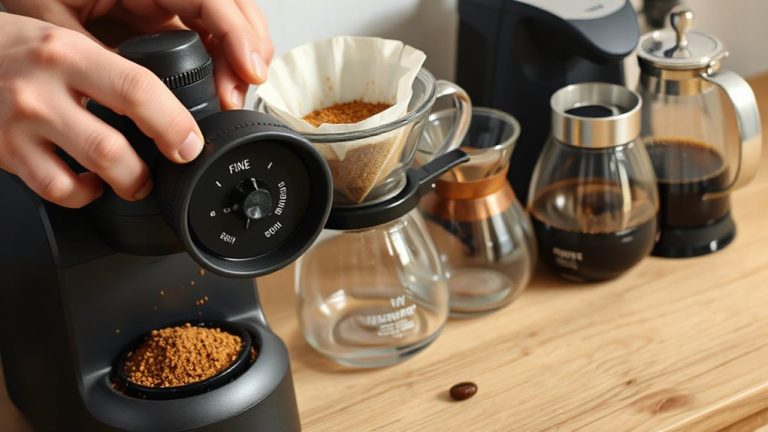
Since water temperature affects extraction speed, you’ll need to adjust both your grind size and brew time to keep flavors balanced. Higher heat increases extraction speed, so you’ll use a coarser grind to slow it down and prevent bitterness. Cooler water slows extraction, meaning a finer grind and possibly longer brew time help achieve full flavor. Grind coarseness is your main control for tuning extraction when temperature shifts. A reliable French press pick can make it easier to maintain consistent brew conditions for optimal results. Below is how adjustments align:
| Water Temp | Grind Coarseness | Brew Time |
|---|---|---|
| 212°F (boiling) | Coarser | 3.5–4 mins |
| 205°F | Medium-coarse | 4 mins |
| 195°F | Medium-fine | 4.5 mins |
| 185°F | Fine | 5+ mins |
| 175°F | Fine | Up to 6 mins |
Match your grind and time to temperature for consistent, balanced coffee every time.
Common French Press Temperature Mistakes (And Fixes)
One of the most frequent issues you’ll run into with French press brewing is using water that’s too hot-straight off a rolling boil at 212°F can scald the grounds, leading to bitter, over-extracted coffee, especially if your grind isn’t adjusted accordingly. Letting water sit 30–60 seconds off-boil brings it to the ideal 195–205°F range for balanced extraction. Inconsistent heating is another common problem; microwaved water often heats unevenly, creating hot and cool spots that disrupt brewing. Use a gooseneck kettle on a stove or electric hot water kettle with temperature control for better results. Improper storage of beans worsens temperature-related flaws-exposing coffee to air, light, or moisture degrades freshness, making it more sensitive to heat mistakes. Keep beans in an airtight container away from heat and sunlight. These fixes help guarantee reliable, flavorful French press coffee every time.
3 Ways to Keep Your French Press Temperature Perfect
While a perfectly brewed French press starts with great beans, keeping the temperature stable throughout the process is just as critical. Use preheating techniques-rinse the carafe with hot water before adding grounds-to minimize heat loss during brewing. This simple step prevents early temperature drops that hinder extraction. Choose a French press with double-wall thermal insulation, like those made from stainless steel, to retain heat better than standard glass models. These retain heat considerably longer, especially useful in cooler environments. If you’re using a glass press, wrap it in a towel or place it on a wooden surface to reduce heat transfer. Avoid brewing in drafts or cold kitchens, as ambient temperature affects stability. Pour water just off the boil (around 200°F), and keep the lid on during steeping. These steps, combined, give you reliable, consistent results-without added complexity.
On a final note
You’ve got the tools to nail your French press brew. Stick to 195°F–205°F for best extraction-boil water, then wait 30 seconds. Too hot, and coffee turns bitter; too cool, it’s weak. Match finer grinds with slightly cooler water and shorter steeping. A gooseneck kettle or thermometer helps, but a stable boil works. Preheat the carafe, use a consistent grind, and you’ll see the difference fast.