Maximize Flavor in French Press by Mastering Pre-Wetting Techniques
You’ll get better flavor from your French press by pre-wetting the grounds with hot water at 200°F-use twice the weight of water to coffee and let it sit 30–45 seconds. This bloom phase releases trapped CO₂, helping coffee extract evenly and reducing sour or bitter notes. Always use a medium-coarse grind and stir after blooming. Fresh beans and filtered water make a noticeable difference. Skip this step, and you’re leaving flavor behind. There’s more to fine-tune for consistent, clean cups.
Notable Insights
- Pre-wet coffee grounds with twice the water by weight to ensure even saturation and optimal extraction.
- Use water at 200°F (93°C) to maximize CO₂ release and avoid scalding or under-extraction.
- Allow a 30–45 second bloom time to let trapped gases escape before completing the pour.
- Stir after blooming to break the crust and eliminate dry spots for uniform extraction.
- Use fresh, recently roasted beans and filtered water to enhance bloom activity and flavor clarity.
What Is Coffee Bloom and Why It Matters
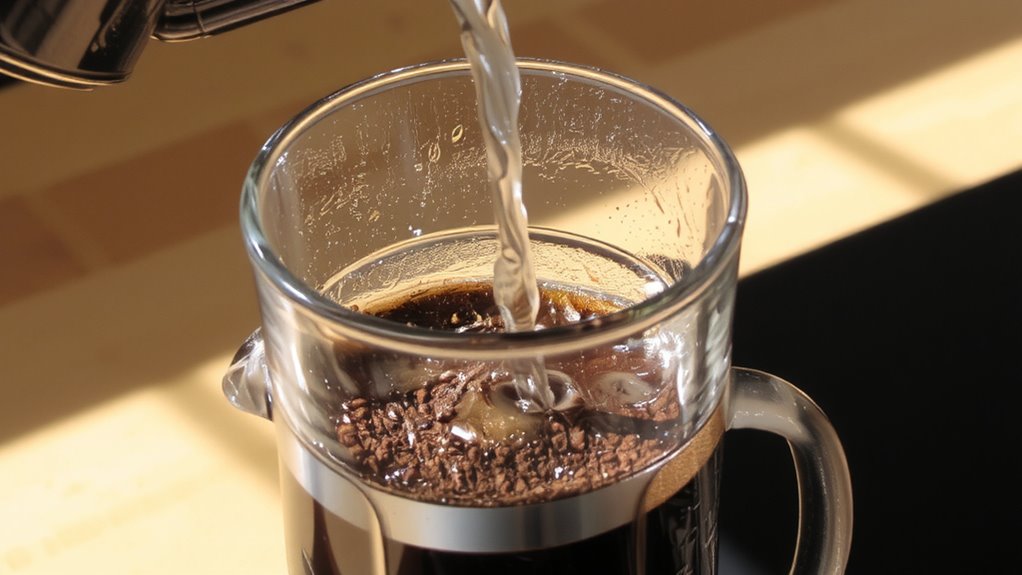
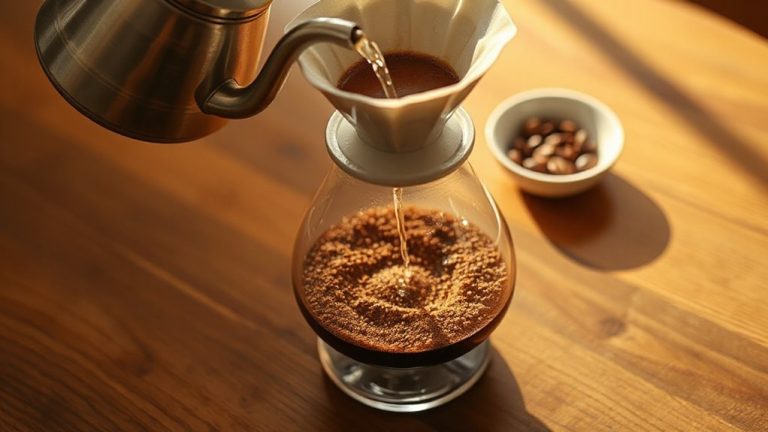
While you might not think twice about dumping hot grinding over your coffee grounds, paying attention to the bloom could make a real difference in your French press brew. The bloom is that brief moment when coffee grounds puff up after first contact with water. This happens due to trapped carbon dioxide escaping-a key part of coffee chemistry. Fresh beans release more gas, so you’ll see a stronger bloom. Skipping this phase means trapped gases interfere with even extraction. You’re not just making coffee; you’re managing a small chemical reaction. Properly addressing gas release guarantees more consistent flavor. You don’t need special gear-just pour a little hot water (about twice the weight of the grounds), wait 30 seconds, then proceed. It’s a simple step, but one backed by real changes in how your coffee compounds dissolve. Ignore it, and you risk uneven, muted results. For those using a cold brew French press, adapting pre-wetting techniques can enhance clarity and smoothness in the final cup.
How Pre-Wetting Improves French Press Flavor
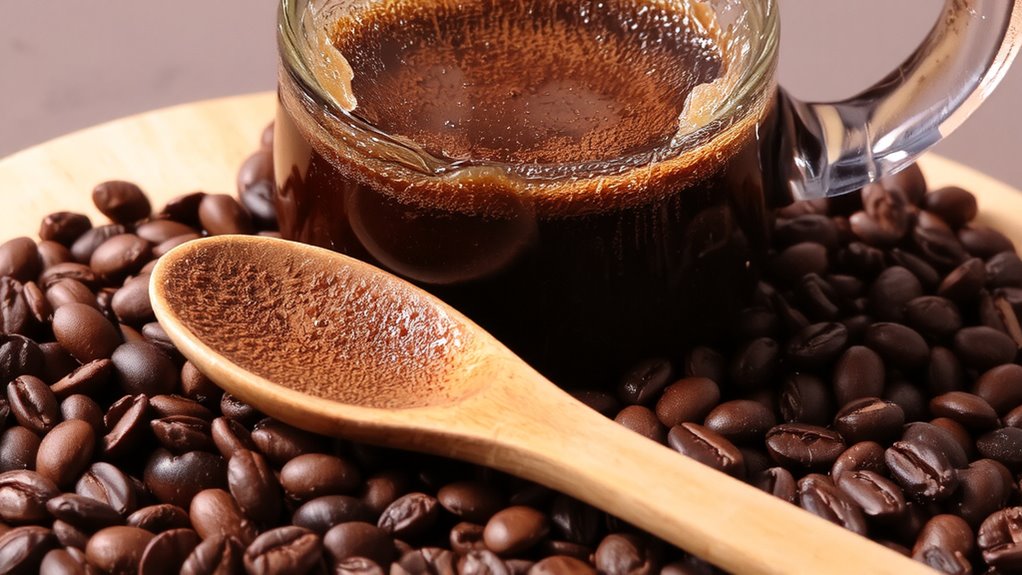
Since evenly saturated grounds extract more consistently, pre-wetting your coffee before the full pour can make a noticeable difference in flavor. You’ll notice better flavor consistency because all the grounds start brewing at the same time, reducing under-extracted or bitter notes. This simple pause also boosts aroma enhancement, releasing volatile compounds that contribute to the coffee’s complexity. Without pre-wetting, dry spots can remain, leading to uneven extraction and flat taste. Just add twice the weight of water to coffee-let it sit 30–45 seconds-then pour the rest. It works with any French press, whether it’s a classic Bodum or a sealed Fellow Oyster. Just don’t skip the stir after pre-wetting; it guarantees full saturation. This step doesn’t require extra gear, just attention to timing. Done right, it sharpens clarity and balance in every cup. For best results, use a high-quality French press that ensures consistent temperature retention and durable construction.
Best Water Temperature for a Strong Bloom
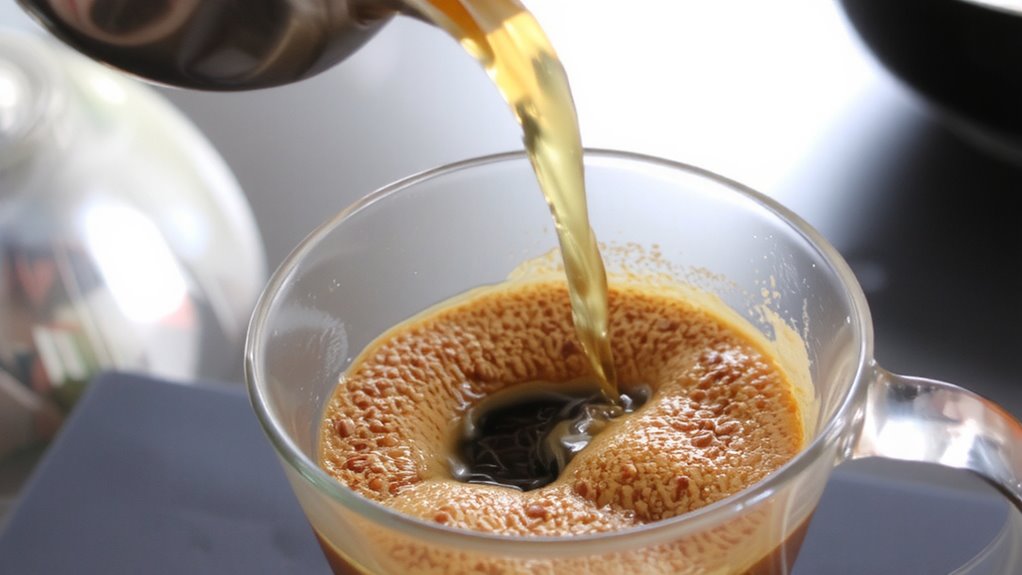
Aim for 200°F-that’s the sweet spot for a strong bloom in your French press. At this temperature, you extract gases efficiently without scalding the grounds, which supports ideal water chemistry and flavor development. Too hot-above 205°F-and you risk bitterness; too cool-below 195°F-and the bloom timing stalls, leading to under-extraction. This range works well with most tap water, but if your water has high mineral dominant content, consider filtered water to stabilize reactions. Use a gooseneck kettle with a built-in thermometer or an instant-read thermometer for accuracy. Digital kettles like the Fellow Stagg EKG deliver consistent results. Proper water temperature guarantees a full, even bloom, setting up the rest of your brew for balance and clarity. Don’t guess-measure. That small step makes a noticeable difference in your final cup. For precision and control, consider using a gooseneck kettle designed for pour-over brewing.
How to Pre-Wet Coffee Grounds Like a Pro
You can access better extraction by pre-wetting your coffee grounds before plunging, plunging. Start by adding just enough hot water-about twice the weight of the grounds-to saturate them evenly. Let it bloom for 30–45 seconds. This step guarantees trapped CO2 escapes, especially important with fresh beans; coffee freshness directly affects gas release and, in turn, flavor clarity. Use a gooseneck kettle for control, and check your grinder’s equipment calibration-consistent particle size helps water penetrate evenly. If grounds are too coarse, pre-wetting won’t help much; too fine, and you risk over-extraction. Stick to a medium-coarse grind, like sea salt, for French press. Stir gently after blooming to break any formed crust. This quick step corrects inconsistencies and boosts flavor. With calibrated gear and fresh beans, pre-wetting becomes a reliable part of a repeatable, pro-level routine.
Why Your Bloom Fails (And How to Fix It)
That bloom you counted on to lift the crust and release trapped gases might fall flat-and when it does, your brew pays the price. Poor water quality is often to blame; if your water’s too hard or full of chlorine, it hampers CO₂ release, leading to weak blooming. Use filtered tap water or blends like Third Wave Water for consistent results. Bloom visibility matters, too. If you can’t clearly see the coffee expanding and bubbling, you might miss signs of underperformance. Use a clear French press or a wide-rimmed vessel for better observation. Fresh beans should bloom robustly-limited expansion signals old or poorly stored coffee. Make certain your beans are no more than 2–3 weeks off roast. Adjust your pre-wet pour to guarantee even saturation, starting from the center and spiraling outward to maximize contact. These small fixes improve bloom success, setting the stage for a richer final cup.
How Grind Size Affects Bloom in French Press
While a coarse grind is typically recommended for French press to avoid over-extraction and sediment, it also plays a critical role in bloom performance. You need enough surface area exposed to let CO₂ escape quickly, but not so fine that it clumps or blocks water flow. A uniform grind consistency guarantees all particles bloom evenly-irregular sizes cause some grounds to over-bloom while others underperform. If your grind’s too fine, you’ll see a foamy, rushed bloom with shortened bloom duration, risking stale flavors. Too coarse, and the bloom’s weak, letting trapped gases interfere with extraction. Aim for a consistency like sea salt, using a burr grinder for better uniformity. This helps achieve a full, controlled bloom in about 30–45 seconds. Good grind consistency directly improves bloom duration and stability, setting the stage for balanced flavor.
From Bloom to Press: Brew Perfect Coffee
A solid bloom sets the foundation, but what you do in the minutes after determines whether your French press brew hits its mark. After pouring the full volume of hot water, place the lid on with the plunger up and let it steep. Bean freshness matters here-recently roasted beans release more CO2, which can affect extraction, so aim to brew within 2–14 days post-roast for balanced flavor. Stick to a brewing time of 4 minutes for best results; going longer can over-extract and make coffee bitter, especially with finer grinds. At 4 minutes, press the plunger down slowly and evenly-don’t force it. Pour all the coffee out immediately to avoid continued brewing in the carafe. Leaving it sitting leads to sediment buildup and inconsistent temperature. Using a timer and quality press with a fine-mesh filter, like the Bodum Chambord, guarantees cleaner, more even results.
On a final note
You’ve seen how pre-wetting boosts flavor by triggering a strong bloom. Use water just off boil-around 200°F-for best results. Grind coffee medium-coarse to let gases escape without over-extraction. Skip this step, and your French press may taste flat. Pre-wet evenly, wait 30 seconds, then brew. It’s a small move that makes a real difference in your cup.