Advanced Pour Over Methods for Enhanced Aroma and Flavor Intensity
Use water between 195°F and 205°F-just off the boil-for balanced extraction without bitterness. Grind your beans to a table salt consistency, adjusting slightly finer for light roasts, coarser for dark. Pour in pulses of 10–15 seconds to prevent channeling, especially with a V60. A gooseneck kettle gives precise control for even saturation. Bloom with twice the water weight of coffee and stir gently to eliminate dry spots. There’s more to optimizing each variable for peak flavor.
Notable Insights
- Use water between 195°F and 205°F to optimize extraction and preserve aromatic complexity.
- Grind coffee to a consistent table salt texture for balanced brew time and flavor clarity.
- Apply pulse pouring with 10–15 second intervals to prevent channeling and enhance even extraction.
- Employ a gooseneck kettle for precise water control, improving saturation and aroma development.
- Ensure full saturation during bloom with gentle stirring to eliminate dry spots and improve flavor intensity.
Start With the Right Water Temperature for Balanced Extraction
Getting the water temperature right is one of the most important steps in pour over brewing, and it’s something you can control without needing expensive gear. You’ll want water between 195°F and 205°F-just off the boil for most home setups. Too hot, and you risk over-extracting bitter compounds; too cool, and your coffee tastes weak or sour. This range helps extract flavors evenly, especially when your water chemistry supports it. Good mineral balance in your water-like that in third-wave water packets or filtered tap-improves extraction efficiency. Low minerals lead to flat, underdeveloped coffee, while too many can cause scaling or harshness. A kettle with a built-in thermometer is helpful, but a separate thermometer works fine. Avoid boiling too long; oxygen loss dulls flavor. Consistency here, paired with proper mineral balance, sets a strong foundation for clarity and sweetness in every cup. For optimal results, consider using best water for coffee machines to ensure ideal mineral content and purity.
Choose the Ideal Grind Size for Your Beans and Brew Time
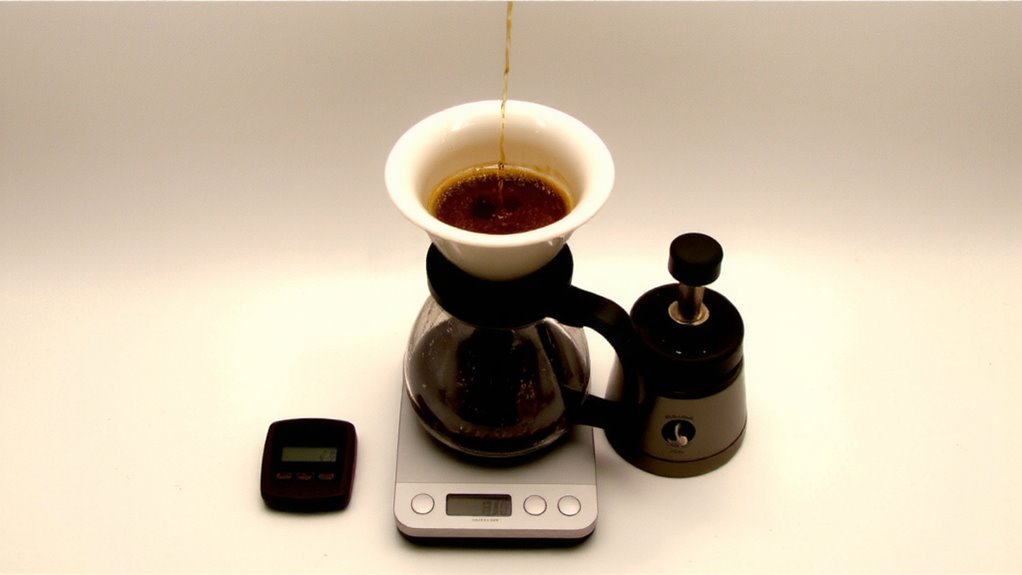
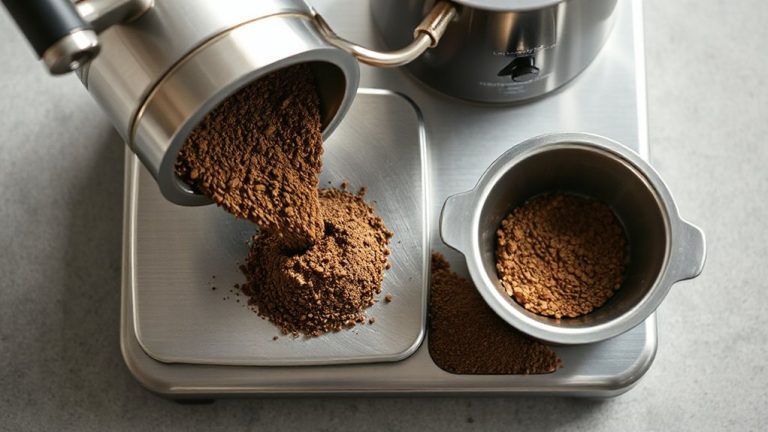
Grind size is one of the most critical factors in shaping your pour over’s flavor, and it’s something you can fine-tune with almost any burr grinder. If your grind is too coarse, water rushes through too fast, leading to weak coffee and short brew duration. Too fine, and you risk over-extraction, with bitterness and a stalled flow. Aim for a size similar to table salt-consistent and even. Uniform grind consistency guarantees all particles extract evenly, avoiding sour or bitter notes. Lighter roasts often need a slightly finer grind, while darker roasts do better a touch coarser. Your ideal setting depends on bean freshness, roast level, and target brew duration-usually 2:30 to 3:30 minutes. Adjust in small increments, and keep notes. A good grinder like the Baratza Encore or Fellow Ode makes this easier. Dialing in takes effort, but the control is worth it. For consistent results, consider investing in one of the best burr grinders recommended for coffee enthusiasts.
Use Pulse Pouring to Prevent Channeling and Improve Clarity
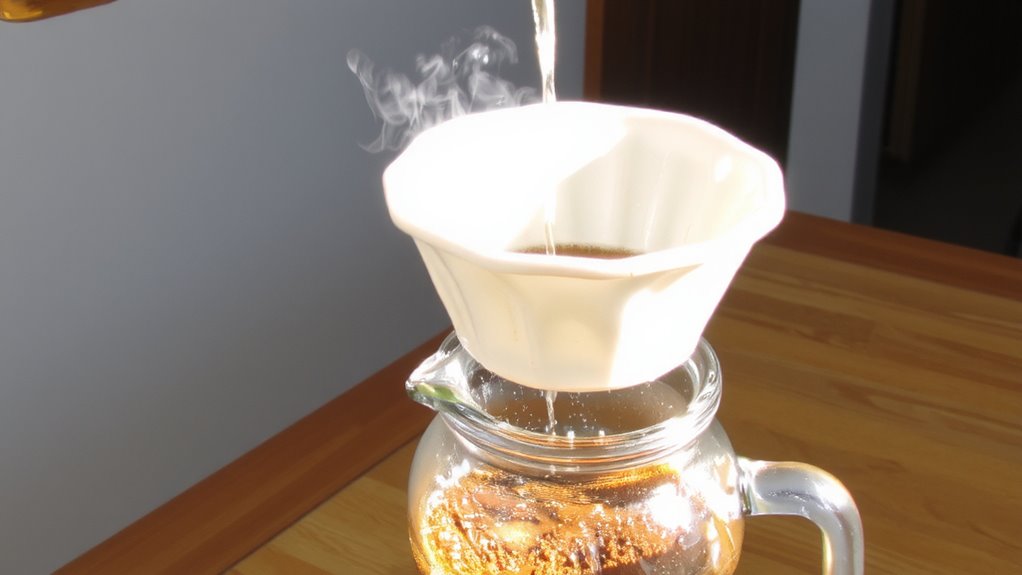
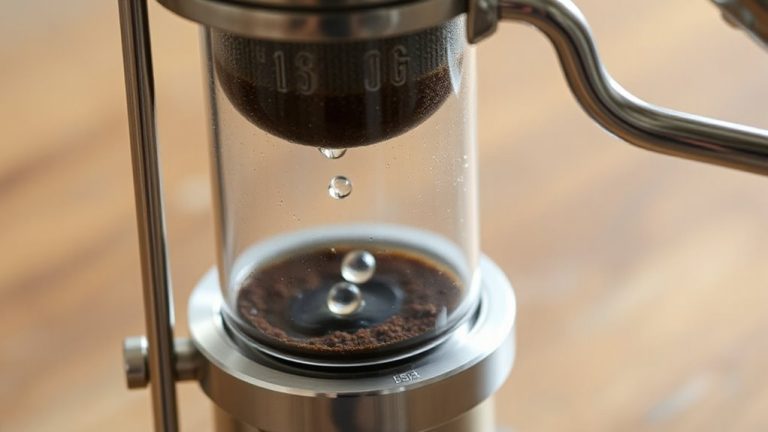
One effective way to improve extraction and reduce channeling in your pour over is pulse pouring-breaking the total water volume into several smaller pours instead of one continuous stream. This method lets the coffee bed stabilize between inputs, promoting even saturation and clearer flavor. You’ll want to pay close attention to pulse timing-typically 10 to 15 seconds per pulse works well for most 15–20 gram doses. Shorter pulses help control heat and prevent overflow, especially with medium to fine grinds. Maintaining a consistent flow rhythm guarantees water disperses evenly, reducing the risk of channeling where water bypasses grounds. Pulse pouring works particularly well with V60 and Origami brewers, though it’s effective across most cone-shaped filters. Unlike continuous pouring, this technique gives you more feedback during brewing, letting you adjust based on brew time and water level. For best results, consider using one of the top-rated pour-over coffee makers that are designed to enhance flavor clarity and control.
Pour Steadily With a Gooseneck Kettle for Total Control
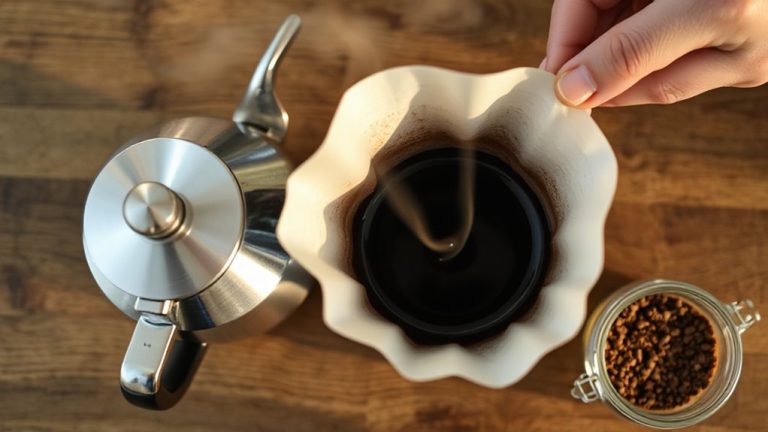
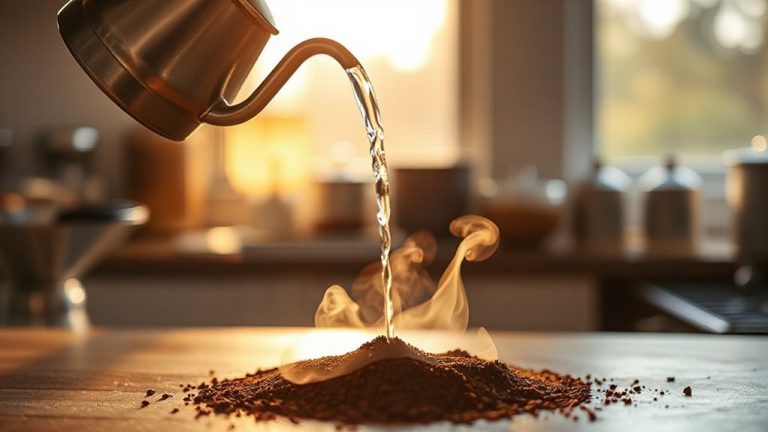
While you can pour evenly with any kettle, hitting the right flow rate and consistency is nearly impossible without a gooseneck. The kettle design gives you unmatched pour precision, letting you control water placement down to the millimeter. That slim, angled spout slows down the flow and reduces splashing, making it easier to maintain a steady, circular pour. Regular kettles often dump water too fast, leading to uneven extraction. With a gooseneck-like the Fellow Stagg or Hario Buono-you get real-time control, essential for advanced techniques. You’ll notice better aroma development and cleaner flavor, especially with light roasts. Electric goosenecks offer temperature control, but stovetop models are cheaper and durable. Either way, the design is worth the investment. For total control over your pour, nothing else compares. Pour steadily, and let the kettle do the work.
Saturate Evenly to Eliminate Dry Spots and Bitterness
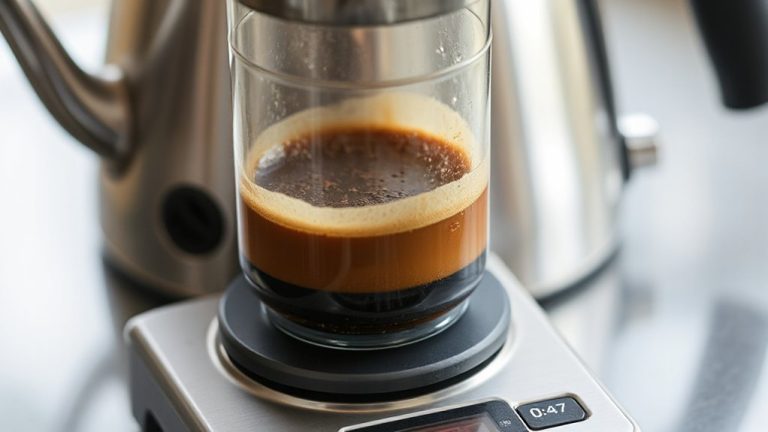
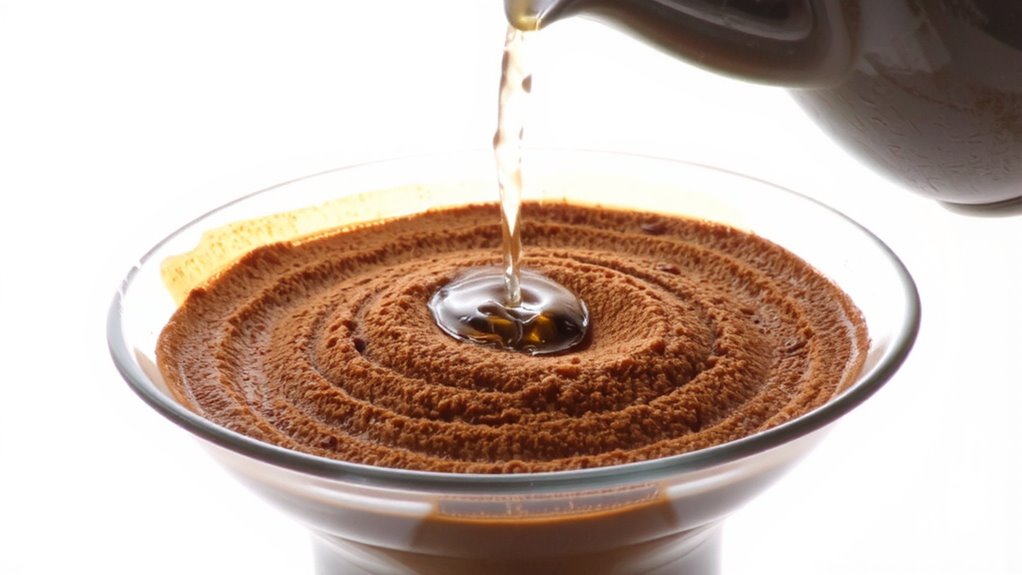
A steady pour from a gooseneck kettle sets the stage, but your technique during the initial saturation makes or breaks the brew. You need uniform saturation to extract evenly-this means getting all the grounds wet quickly and consistently. Start by pouring in tight, concentric circles from the center outward, avoiding the filter edges. This approach helps eliminate dry patches that lead to uneven extraction and bitterness. Dry spots don’t contribute to flavor; instead, they force other areas to over-extract, creating harsh notes. Use enough water during the bloom-about twice the weight of the coffee-to guarantee full immersion. Give the slurry a gentle stir or swirl if needed, especially with stubborn grounds. V60 and Kalita Wave filters respond well to this method, though the flat bottom of the Kalita promotes more consistent saturation. Master this step, and you’ll improve clarity, sweetness, and balance in every cup.
On a final note
You’ve got the tools and techniques to boost your pour over game. Use a gooseneck kettle for steady, even pours that prevent channeling. Keep water between 195–205°F for balanced extraction. Match your grind size to brew time-too fine risks bitterness, too coarse leads to weakness. Pulse pouring helps clarity and flavor. Saturate all grounds evenly at the start. These steps, done consistently, deliver cleaner, more aromatic coffee every time.